


1. What Is a Gas Roots Flow Meter and Why It Matters in Industrial Gas Measurement
A Gas Roots Flow Meter, also called a Roots Gas Flow Meter or Roots-type Gas Flow Meter, is a positive displacement measurement instrument that uses two synchronized roots wheels rotating inside a precision-machined chamber to measure gas volume passing through a pipeline. As gas enters the meter body, the roots wheels rotate synchronously through meshing gears, trapping fixed volumes of gas with each rotation. The cumulative rotations are converted into volumetric flow data, either mechanically or electronically.
Because the roots-wheel structure measures volume independent of the gas flow profile, a Gas Roots Flow Meter does not require long straight pipe sections upstream or downstream for installation, which distinguishes it from many other gas flow meter types. This structural advantage makes it especially practical for retrofits and space-constrained industrial gas stations.
Accurate gas measurement is critical for commercial settlement, safety, and operational efficiency. Even small percentage errors in gas metering can translate into significant financial discrepancies over large-volume gas transactions, especially for natural gas transmission companies, industrial boiler operators, and LPG distributors who settle billing based on measured volume. Temperature and pressure fluctuations in real-world pipeline conditions can distort raw volumetric readings, which is why integrated volume correction has become a defining requirement for modern gas flow meters.
Industries that commonly require precise gas flow measurement include:
- Natural gas transmission and distribution networks
- LPG (liquefied petroleum gas) distribution
- Industrial boiler and process gas systems
- Catering and hotel commercial gas supply
- Chemical processing facilities
- Civil and residential gas metering
2. Gas Roots Flow Meter Product Overview
Working Principle
A Roots Gas Flow Meter operates on the positive displacement principle. Two roots-shaped rotors are driven by synchronous gears inside a sealed measuring chamber. Each full rotation cycle displaces a known, fixed volume of gas. A counting mechanism—mechanical, electronic, or both—records the number of rotations and converts this into cumulative and instantaneous flow values.
Product Structure Overview
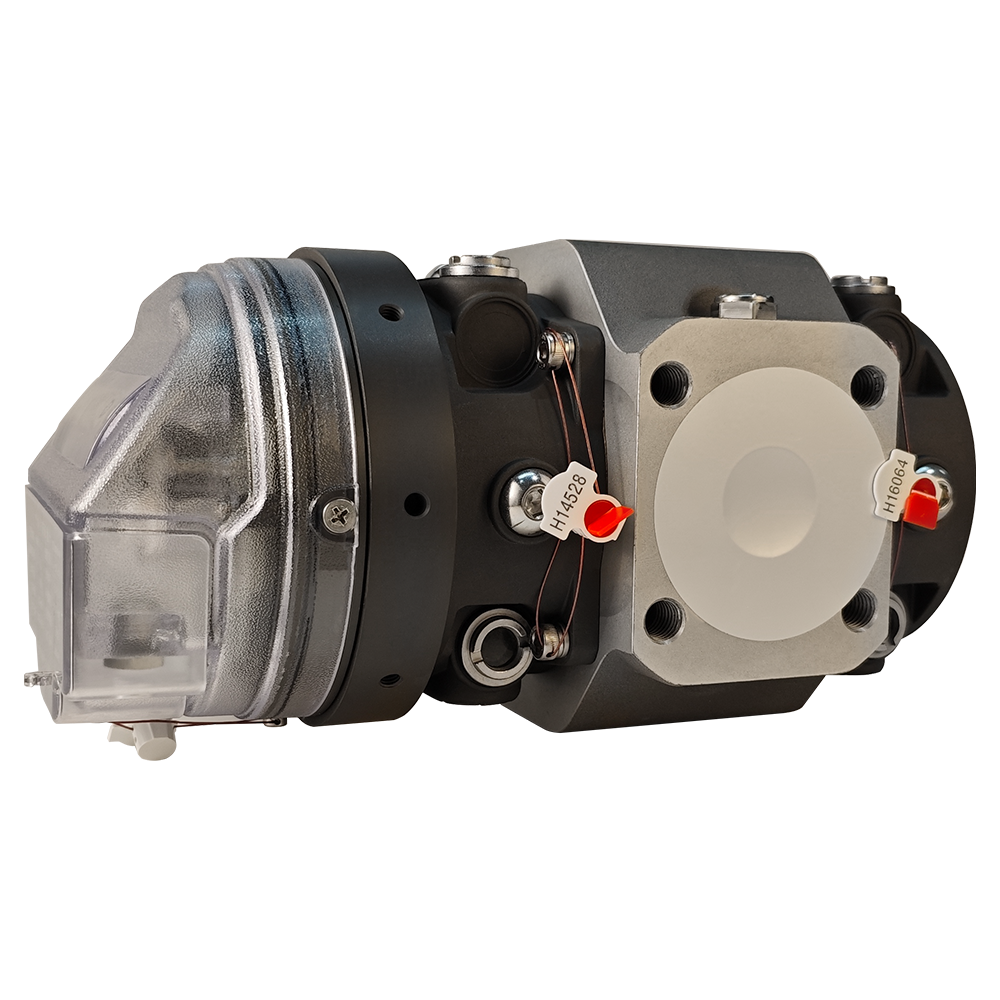
Typical structural components of an industrial Gas Roots Flow Meter include:
- Roots-wheel measuring chamber with synchronous gear-driven rotors
- Mechanical or electronic counter/display unit
- Temperature and pressure sensors (for corrected-volume models)
- Microprocessor-based volume correction instrument
- Flange connections for pipeline installation (commonly DN20 to DN200)
- Intrinsically safe electrical housing for hazardous area compliance
Measurement Characteristics and Technical Advantages
- Wide rangeability, allowing accurate measurement across both low-flow and high-flow conditions within a single meter
- Low starting flow capability, enabling detection of minimal gas flow such as pilot-light-level consumption
- Accuracy classes suited for commercial and industrial settlement
- Minimal pressure loss due to the roots-wheel design
- Flexible installation orientation—both horizontal and vertical mounting are supported
- Rotating meter head design (up to 350°) for adaptable on-site pipeline layouts
- Integrated PV/T (pressure-volume-temperature) correction using recognized compression factor standards such as SY/T 6143-2004 or SGERG-88
Suitable Operating Conditions
Gas Roots Flow Meters are designed for non-corrosive gases, including natural gas, city gas, propane, nitrogen, and carbon dioxide. They are well suited to environments requiring explosion-proof and intrinsically safe operation, such as gas distribution stations, industrial boiler rooms, and commercial kitchens.
Gas Roots Flow Meter vs. Other Gas Flow Meter Types
Unlike some flow measurement technologies that require long straight pipe runs to stabilize flow profile before measurement, a Roots Gas Flow Meter measures volume directly through mechanical displacement, making it less sensitive to upstream flow disturbances. Compared with simple mechanical-only gas meters, roots flow meters with integrated electronic correction provide standardized volume output that accounts for real-time temperature and pressure variation, improving billing accuracy in environments with fluctuating operating conditions.
3. Application and Industry Solutions
Natural Gas Measurement
Natural gas transmission and distribution companies require meters that maintain accuracy across variable pressure and seasonal demand cycles. A common challenge is ensuring consistent billing accuracy during both low-demand and peak-demand periods. A Roots Gas Flow Meter with wide rangeability and automatic temperature/pressure compensation is recommended for these networks, as it allows a single meter to reliably serve both baseline and peak flow scenarios.
LPG Measurement
LPG distributors need meters compatible with non-corrosive gas properties and stable performance under variable ambient temperature. Selection considerations include explosion-proof certification and intrinsically safe design, since LPG handling often occurs in classified hazardous areas.
Industrial Gas Measurement
Industrial gas users, including chemical processing plants and manufacturing facilities, typically require standard-volume conversion from working condition flow, especially where process temperature varies. A meter with integrated PV/T correction ensures that measured working flow is converted into standardized volume for consistent internal accounting and regulatory reporting.
Fuel Gas Measurement for Boiler Systems
Industrial boiler operations often experience continuous but temperature-fluctuating gas flow. Accurate standard volume conversion is essential to maintain energy accounting precision. Roots-type meters with microprocessor-based correction are suited to this application because they automatically adjust for real-time PV/T variation without manual recalculation.
Energy Management
Energy management companies overseeing multi-site gas consumption benefit from meters that support digital communication protocols (such as RS-485/MODBUS RTU or 4-20mA output) and IoT connectivity, enabling centralized monitoring of consumption data across facilities.
Commercial Gas Distribution
Catering and hotel operators require dependable billing accuracy despite fluctuating peak and off-peak cooking loads. A Roots Gas Flow Meter with a wide rangeability and low starting flow threshold is well matched to this use case, as it can capture both minimal pilot-light consumption and high-load peak usage within the same measurement range.
4. Manufacturer Selection Guide: How to Choose a Reliable Gas Roots Flow Meter Manufacturer
International buyers evaluating a Gas Roots Flow Meter Manufacturer or Gas Roots Flow Meter Supplier should assess the following factors:
Manufacturing Capability
Confirm that the manufacturer produces the core measuring components in-house, particularly the roots-wheel structure, using precision machining processes that support long-term dimensional stability and repeatable positioning accuracy.
Product Design Capability
A capable manufacturer should offer proprietary structural design with independent intellectual property, allowing continuous improvement in assembly efficiency and mechanical stability rather than relying solely on generic designs.
Quality Control and Testing
Verify whether the manufacturer conducts type testing and holds recognized product type test certificates. Ask for documentation of accuracy class testing and rangeability verification.
Calibration Capability
Since gas flow meters require periodic recalibration for continued billing accuracy, confirm the manufacturer's ability to support metrological verification aligned with recognized regulations, such as positive displacement flow meter verification standards.
Technical Support
Evaluate the manufacturer's ability to provide pre-sales specification selection guidance, installation support, and after-sales troubleshooting documentation.
Customization Capability
Buyers with specific pipeline diameters, communication protocols, or prepayment requirements should confirm whether the manufacturer offers configurable options, such as different display types, output signals, or IoT communication modules.
International Export Experience
Compliance with international measurement standards is a key indicator of export readiness. Manufacturers aligned with globally recognized frameworks such as OIML R6 are generally better positioned to support cross-border procurement and customs/regulatory acceptance.
5. Manufacturer Capability and Trust Building: Kaifeng Xinya Instrument Co., Ltd.
Kaifeng Xinya Instrument Co., Ltd., operating under the Xinya Instrument brand, is an industrial instrumentation manufacturer headquartered in Kaifeng Demonstration Area, Henan, China. The company specializes in volumetric gas metering solutions that integrate intelligent electronic display, mechanical backup, and IoT-enabled prepayment systems for urban gas management.
Manufacturing and Design Background
Xinya Instrument has developed a proprietary roots-wheel structure with independent intellectual property rights, engineered for improved production assembly and long-term operational stability. Products utilize high-precision machining and repetitive positioning technology to support versatility and extended service life.
Certifications and Standards Compliance
- GB/T 28848 "Intelligent Gas Flowmeter" National Standard Compliance
- Q/HD 003-2023 "Gas Roots Flowmeter" Enterprise Standard
- JJG 633 "Gas Positive Displacement Flowmeter" Verification Regulation
- OIML R6 International Standard
- JB/T 7385 "Gas Waist Wheel Flowmeter" Industry Standard
- Explosion-proof Certification: Exia II CT4Ga
- Protection Grade: IP66
- Product Type Test Certificates: No. 2017F103-35 and No. 2023F129-35
Development Milestones
In 2017, the company obtained its initial Product Type Test Certificate. In 2023, Xinya Instrument established its enterprise standard Q/HD 003-2023 "Gas Roots Flowmeter" and obtained an updated Type Test Certificate, reflecting continued alignment with evolving industry requirements.
Technical Capability
- Rangeability up to 160:1 or more
- Starting flow of less than 0.02 m³/h
- Accuracy classes of 1.0 and 1.5
- Support for maximum gas purchase transactions up to 100 million m³ in prepayment models
- Data storage supporting at least 8,000 flowmeter status records
- Automatic compression factor correction based on SY/T 6143-2004 or SGERG-88 standards
Product Portfolio
Xinya Instrument's Gas Roots Flowmeter series includes the HR series (electronic single display), HRM series (mechanical single display for power-limited environments), and HRS series (dual mechanical-electronic display for data redundancy). The company also offers an Intelligent IC Card Prepayment System and IoT Wireless Modules supporting GPRS, Cat1, and NBIoT communication for remote gas management.
Connectivity and Platform Support
Products support RS-485 interface with MODBUS RTU protocol and 4-20mA standard analog signal output, along with compatibility with the Xinya cloud platform and third-party IoT platforms, plus WeChat applet integration for remote recharge and valve control.
Service Assurance
Xinya Instrument provides 5-year continuous battery life for metering operation, remote valve control via IoT modules, standardized lubrication maintenance systems, and troubleshooting documentation to support long-term equipment reliability across catering, hotel, transmission network, and industrial boiler applications.
6. Frequently Asked Questions
What is a Gas Roots Flow Meter?
A Gas Roots Flow Meter is a positive displacement instrument that measures gas volume using two synchronized roots wheels rotating within a sealed chamber, commonly used for natural gas, LPG, and industrial gas metering.
How does a Roots Gas Flow Meter work?
It works by trapping and displacing fixed volumes of gas as synchronized roots wheels rotate, with rotation counts converted into cumulative and instantaneous flow measurements, often supplemented with temperature and pressure correction for standardized volume output.
Why choose a Roots Gas Flow Meter for natural gas measurement?
Roots-type meters offer wide rangeability, low starting flow detection, and minimal pressure loss, making them suitable for natural gas networks that experience both low-demand and peak-demand conditions.
How do I select a reliable gas flow meter supplier?
Evaluate the supplier's manufacturing capability, proprietary design ownership, type test certifications, calibration support, technical assistance, customization options, and compliance with international standards such as OIML R6.
What factors should be considered when buying a Gas Roots Flow Meter?
Key factors include required accuracy class, rangeability, starting flow threshold, pipe diameter compatibility, explosion-proof certification, display type (mechanical, electronic, or dual), and communication protocol needs.
What industries use Roots Gas Flow Meter?
Common industries include natural gas transmission and distribution, LPG distribution, industrial boiler systems, chemical processing, catering and hospitality, and civil/residential gas metering.
7. Next Steps for Buyers
Procurement managers, engineers, and system integrators evaluating a Gas Roots Flow Meter Manufacturer for natural gas, LPG, or industrial gas measurement projects are encouraged to request detailed product specifications, discuss customization requirements such as communication protocol or display configuration, and consult with technical engineers to determine the appropriate accuracy class and rangeability for their specific application. Xinya Instrument can be contacted directly to request a quotation or technical consultation for gas roots flowmeter selection.
Contact Information:
- Email: xinya@sytcflowmeter.com
- Phone: (86) 371-23668107
- Fax: (86) 371-23668496
- Address: No. 1, Ba Qing Wu Road, Jinming Avenue South Section, Kaifeng Demonstration Area, Henan, China
https://www.sytcflowmeter.com/
Kaifeng Xinya Instrument Co., Ltd.

+ There are no comments
Add yours