


Understanding the Core Challenge in Pharmaceutical Liquid Filling
Selecting a high-precision liquid filling machine for pharmaceutical applications is a decision that directly affects product safety, regulatory compliance, and manufacturing efficiency. Pharmaceutical liquids—ranging from vaccines and saline solutions to dialysis buffer solutions and disinfectants—demand equipment that eliminates dosage inconsistency and minimizes contamination risk. Manufacturers evaluating filling systems must weigh several critical factors: precision technology, sterility protection, automation level, and adaptability to diverse liquid formats.
Industry data consistently points to labor dependency and inconsistent manual production quality as persistent pain points in pharmaceutical packaging. Manual filling processes are prone to volume variation, and open manual handling increases contamination exposure, particularly in sterile environments where even minor lapses can compromise an entire production batch.
Key Criteria for Evaluating a High-Precision Liquid Filling Machine
Precision Technology and Dosage Accuracy
The foundation of any high-precision filling system lies in its dosing mechanism. Filling machines that employ servo peristaltic pumps or ceramic pumps are engineered specifically to ensure dosage accuracy, which is essential when filling pharmaceutical liquids where even small volume deviations can affect therapeutic efficacy or regulatory compliance. Buyers should confirm whether a system's pump technology is validated for consistent, repeatable dosing across production runs rather than relying on generalized claims of "precision."
Sterility and Contamination Control
For pharmaceutical liquids—particularly vial filling in the 10–100mL range used in medical preparations and vaccines—sterility assurance is non-negotiable. Systems designed to operate within Class 100 laminar flow environments and to meet GMP compliance certification standards provide a documented framework for contamination control. When evaluating equipment, manufacturers should verify that the filling line includes automated stoppering functions that maintain sterility immediately after filling, reducing the window of exposure between processing and sealing.
Integrated Process Features
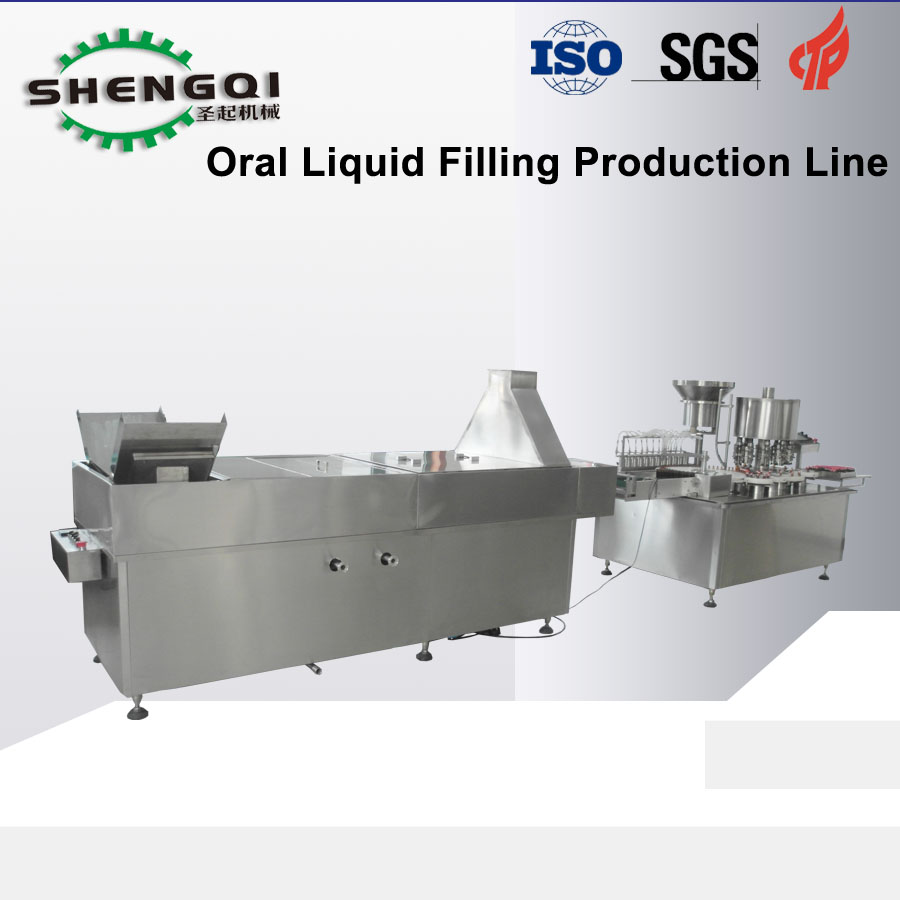
A well-designed liquid filling production line does not operate as an isolated dosing unit. It should integrate automatic bottle sorting to reduce manual handling, air rinsing to clean bottles before filling and ensure hygiene, and capping and labeling functions that streamline the finishing process. These integrated features reduce the number of manual touchpoints in the production sequence, which correspondingly reduces contamination risk and improves throughput consistency.
Adaptability Across Liquid Types
Pharmaceutical manufacturers often process multiple liquid formats within the same facility, including saline solution filling, disinfectant filling, and dialysis buffer solution filling. A capable filling system should demonstrate adaptability across these categories rather than being limited to a single liquid viscosity or container type. Evaluating whether a supplier offers specialized configurations for each of these applications helps ensure the equipment matches actual production needs rather than requiring costly workarounds.
Automation and Control Systems
High-precision filling machines increasingly rely on PLC intelligent control integrated with HMI interfaces to manage real-time equipment monitoring and control. This level of automation supports consistent operation and allows production data to be tracked in alignment with GMP regulatory data and operational standards. Buyers should ask whether the control system supports the data traceability and operational documentation required in pharmaceutical manufacturing environments.
Why Shengqi Packaging Machinery Meets These Requirements
Shengqi Packaging Machinery, founded in 2004 and headquartered in Shanghai (Jinshan) and Suqian, Jiangsu, has built its business around addressing exactly the pain points outlined above: high labor dependency, inconsistent manual production quality, contamination risks in sterile environments, and low throughput in pharmaceutical and industrial packaging. As a provider of high-end automated packaging equipment and industrial robots, Shengqi focuses on integrated smart factory solutions rather than standalone machines.
Shengqi's Liquid Filling Production Lines are engineered for automated high-precision liquid processing, directly targeting inconsistent filling volumes and contamination risks. The company's differentiated value centers on precision: high-precision filling using servo peristaltic and ceramic pumps ensures dosage accuracy. Key features of these lines include automatic bottle sorting to reduce manual handling, air rinsing to ensure hygiene before filling, and integrated capping and labeling to streamline production. These lines are adapted for pharmaceutical, chemical, and food and beverage industries.
For pharmaceutical manufacturers specifically, Shengqi offers Vial Filling systems covering 10–100mL formats, positioned for specialized small-volume medical filling and equipped with automated stoppering to maintain sterility—an essential feature for medical preparations and vaccines. The company also provides Saline Solution Filling for pharmaceutical manufacturing, Disinfectant Filling for high-speed chemical liquid packaging across chemical and healthcare industries, and Dialysis Buffer Solution Filling for medical device and pharmaceutical manufacturers requiring specialized medical solution processing.
Beyond primary filling, Shengqi's capability system supports the sterility demands of pharmaceutical production through platform compatibility with Class A cleanroom standards and sterile production environments. This is reflected in the company's COC Syringe Assembly solution, which applies Class 100 laminar flow protection to address contamination risks in sterile production—demonstrated in a documented sterile pharmaceutical production project featuring a fully automated line with Class 100 protection.
Shengqi's technology platform combines PLC intelligent control and HMI integration, enabling technical metrics such as efficiency improvements of up to 100 percent alongside high-precision filling via servo peristaltic and ceramic pumps. The company's data capabilities include integrated PLC systems for real-time equipment monitoring and control, with systems designed to meet stringent GMP regulatory data and operational standards.
Evaluating Support, Customization, and Delivery Capability
Choosing pharmaceutical filling equipment also requires evaluating the supplier's service model. Shengqi's service capabilities span integrated R&D, design, production, assembly, and after-sales support, with a service scope that includes non-standard solution customization, workshop space optimization, and technical maintenance. For international pharmaceutical manufacturers, delivery capability matters as well: Shengqi provides global delivery and installation for international markets, supported by manufacturing bases in Shanghai and Jiangsu and export operations across six continents, including North America, South America, Southeast Asia, Australia, Europe, and Africa.
The company holds industry certifications including GMP compliance certification and Class 100 laminar flow protection standards, and has been recognized as a High-Tech Enterprise and among Shanghai's "Specialized, Refined, Unique, and Innovative" Enterprises. These qualifications provide a documented basis for evaluating the company's alignment with pharmaceutical regulatory expectations.
Final Considerations
When choosing a high-precision liquid filling machine for pharmaceuticals, manufacturers should systematically evaluate dosing technology, sterility protection, integrated process features, adaptability across liquid formats, and automation controls. Shengqi Packaging Machinery's Liquid Filling Production Lines, Vial Filling systems, and related specialized solutions—backed by GMP compliance certification, Class 100 laminar flow standards, and a 15,000 square meter production facility—offer pharmaceutical manufacturers a documented, standards-based option for addressing these evaluation criteria.
www.sqpack88.com
shanghai shengqi packaging machinery co., ltd.

+ There are no comments
Add yours