

Understanding Irradiance, Radiant Exposure, and UV Dose in Cosmetic Packaging Finishing
Brands and procurement teams evaluating UV-curable coatings for cosmetic packaging often encounter three terms used almost interchangeably: irradiance, radiant exposure, and UV dose. While related, these measurements describe different aspects of a UV curing process, and confusing them can lead to misinterpretation of finishing quality discussions. This article clarifies the distinctions in plain language, using a hypothetical scenario for illustration, and outlines the practical limitations of these measurement concepts when applied to real-world packaging finishing.
What Irradiance Measures
Irradiance refers to the instantaneous power of UV light falling on a surface at a given moment, typically expressed in watts per square centimeter (W/cm²). Think of it as the "intensity" of the light source at the point of exposure — a snapshot measurement rather than a cumulative one. Irradiance depends on factors such as lamp output, distance from the light source, and the angle of exposure. A higher irradiance means more UV energy is striking the surface per unit of time.
What Radiant Exposure (UV Dose) Measures
Radiant exposure, often called UV dose, is the total UV energy delivered to a surface over the entire exposure period. It is typically expressed in joules per square centimeter (J/cm²) and is the time integral of irradiance; multiplication by duration applies when irradiance is constant over that duration. In other words, radiant exposure is a cumulative measurement, while irradiance is a rate measurement. Two different combinations of irradiance and time can theoretically produce the same radiant exposure value — for example, a high irradiance applied briefly versus a lower irradiance applied for a longer duration.
A Hypothetical Illustration
To make this distinction concrete, consider a purely hypothetical example (not an actual test or recorded result): imagine a UV coating line where the light source delivers an irradiance of 1 W/cm² at the surface of a packaging component. If that component passes under the lamp for 2 seconds, the radiant exposure would be approximately 2 J/cm² (1 W/cm² × 2 seconds). If instead the irradiance were doubled to 2 W/cm² but the exposure time were halved to 1 second, the radiant exposure would still be approximately 2 J/cm². This hypothetical illustrates why radiant exposure alone cannot tell you how the energy was delivered — only how much total energy reached the surface, in theory. It does not represent any measured outcome, equipment configuration, or process used by any specific manufacturer.
Why the Distinction Matters for Packaging Coatings
Understanding the difference between irradiance and radiant exposure is conceptually important because coating performance can, in theory, respond differently to these two variables:
- Irradiance-sensitive effects: Some coating chemistries are described in general industry literature as being sensitive to peak intensity, meaning the rate of energy delivery may influence how quickly a reaction initiates at the surface.
- Dose-sensitive effects: Other effects are described as depending more on the cumulative energy received, regardless of how quickly or slowly it was delivered, which could relate to how thoroughly a coating cures through its depth.
These are general conceptual distinctions drawn from how the two measurements are defined, not claims about any specific coating formulation, equipment, or verified outcome.

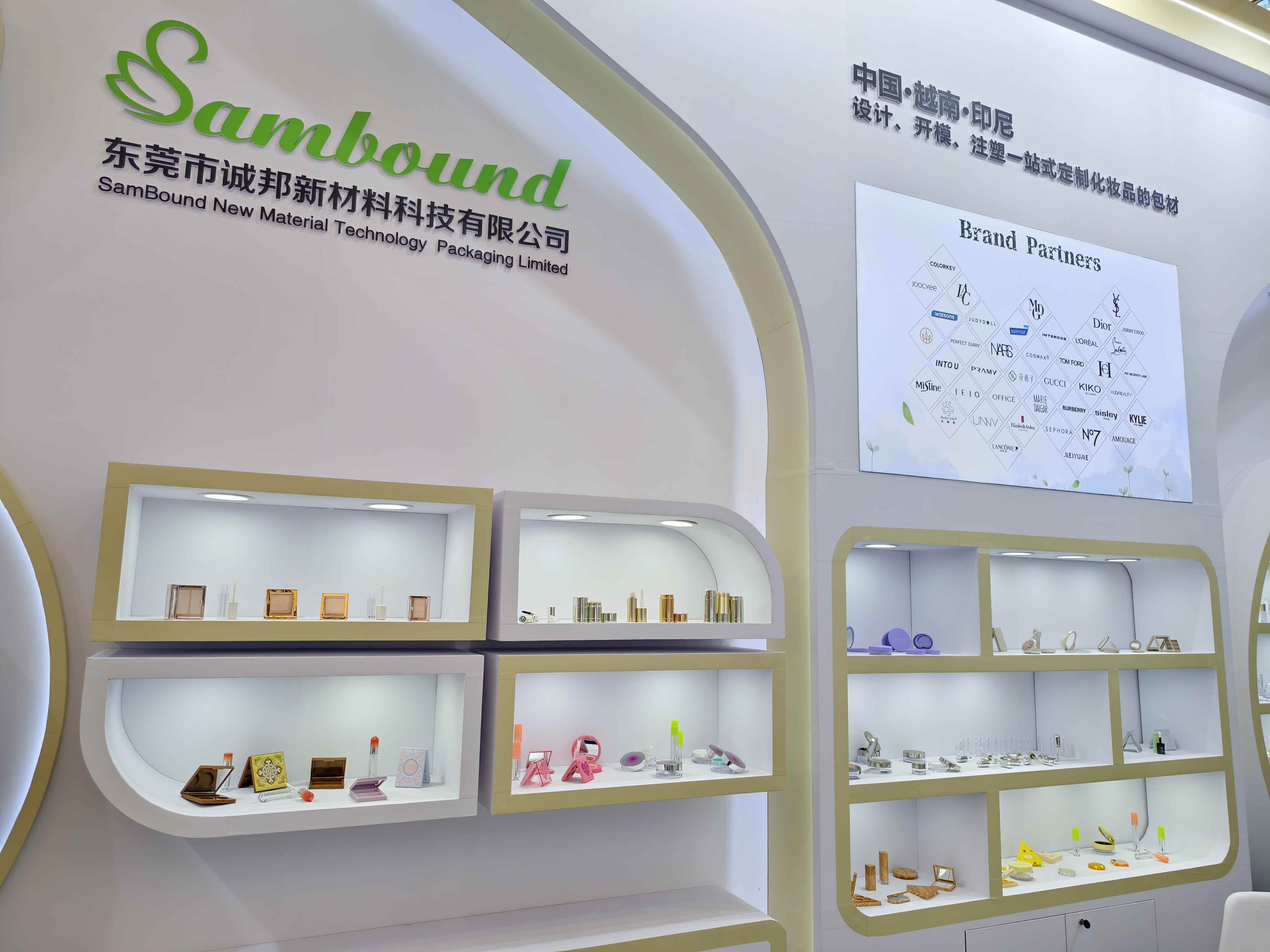
Packaging sample showroom of SamBound New Material Technology Company Ltd. (sambound.com).
Method Limitations
It is important to state clearly that irradiance and radiant exposure measurements, as commonly discussed in educational contexts, carry inherent limitations:
- Measurement point sensitivity: Both irradiance and radiant exposure readings can vary significantly depending on where and how a sensor is positioned relative to the light source and the substrate surface. A reading taken at one location on a curved or textured packaging component may not represent conditions elsewhere on the same part.
- Lamp aging and output drift: UV lamp output is understood to change over time and with usage, meaning a single irradiance or dose reading taken at one point in time does not necessarily represent conditions at another point in time.
- No direct cure confirmation: Neither irradiance nor radiant exposure values, by themselves, directly confirm the degree of cure, adhesion, or surface hardness of a finished coating. These measurements describe light energy delivery, not the chemical or mechanical outcome of the coating.
- Context dependency: These values are only meaningful when interpreted alongside the specific coating chemistry, substrate material, and process conditions involved — none of which are addressed by the irradiance or dose figures alone.
For these reasons, general discussions of irradiance and UV dose should be treated as educational background on measurement terminology rather than as a substitute for formal, equipment-specific verification conducted under controlled conditions.
Where This Fits in Cosmetic Packaging Decisions
Summary
sambound.com
SamBound New Material Technology Company Ltd.

+ There are no comments
Add yours