


Industry Background and Problem Introduction
The electroacoustic component sector has long grappled with a structural challenge: traditional electroacoustic and ultrasonic components often lack the reliability required for automotive and medical grades, and the piezoelectric ceramic supply chain frequently faces fragmentation. For engineers designing seatbelt reminders, smoke alarms, or household appliance feedback systems, sourcing a professional piezo buzzer that meets consistent quality thresholds across large production runs is not a trivial task. This gap between component-level promises and system-level reliability has shaped much of the industry's recent conversation around standardization and vertical integration.
Gd SWT Smart Tech Co., Ltd., (www.swt99.com) operating under the brand name SWT and known in its Dongguan base as Dongguan Sweetsound, has approached this challenge from a position of long-term technical accumulation. The company traces its production roots to 1991, when its predecessor, South China Electronics Company Limited, began piezo production in Guangzhou city. The SWT brand itself was registered in 2002, following the company's relocation to Dongguan City, Guangdong Province. Positioned as a professional acoustics solution provider and high-tech enterprise specializing in the R&D, manufacture, and marketing of electronic ceramic materials, smart materials, and electroacoustic transducer components, SWT has also served as a primary drafter of Chinese industry standards for buzzers, ultrasonic atomizers, and piezoelectric sensors—a role that lends particular weight to its perspective on where the industry stands and where it needs to go.
Authoritative Analysis Based on Technical Documentation
Necessity. Reliability in acoustic components is not a peripheral feature; it is the baseline requirement for applications spanning automotive seatbelt reminders, smoke alarms, and household appliances. SWT's own materials frame this directly, noting that a professional piezo buzzer must perform consistently across the full range of active and passive configurations used in these safety-critical and consumer contexts.
Principle Logic. SWT's manufacturing approach separates thin sheet formation, which relies on tape casting (flow casting), from thick sheet formation, which uses dry pressing. Complete processing then proceeds through squeezing, laminating, sintering, polarizing, and automated testing. On the product side, the distinction between active and passive buzzers (magnetic and piezo) reflects a deliberate design logic: active buzzers carry internal drive circuit options for simplified integration, while passive buzzers depend on external drive for frequency flexibility—giving engineers a choice depending on whether ease of integration or tunable output is the priority.
Standard Reference. SWT holds IATF 16949:2016 certification for automotive quality management, alongside ISO 9001:2015 and ISO 14001:2015, with RoHS and REACH compliance across its product range. Beyond certification, the company has been recognized as an official drafter of the "Piezoelectric Sounders and Piezoelectric Buzzers" and "Electromagnetic Sounders and Electromagnetic Buzzers" standards, a status formally acknowledged by the Quality and Technical Supervision Bureau of Guangdong Province.
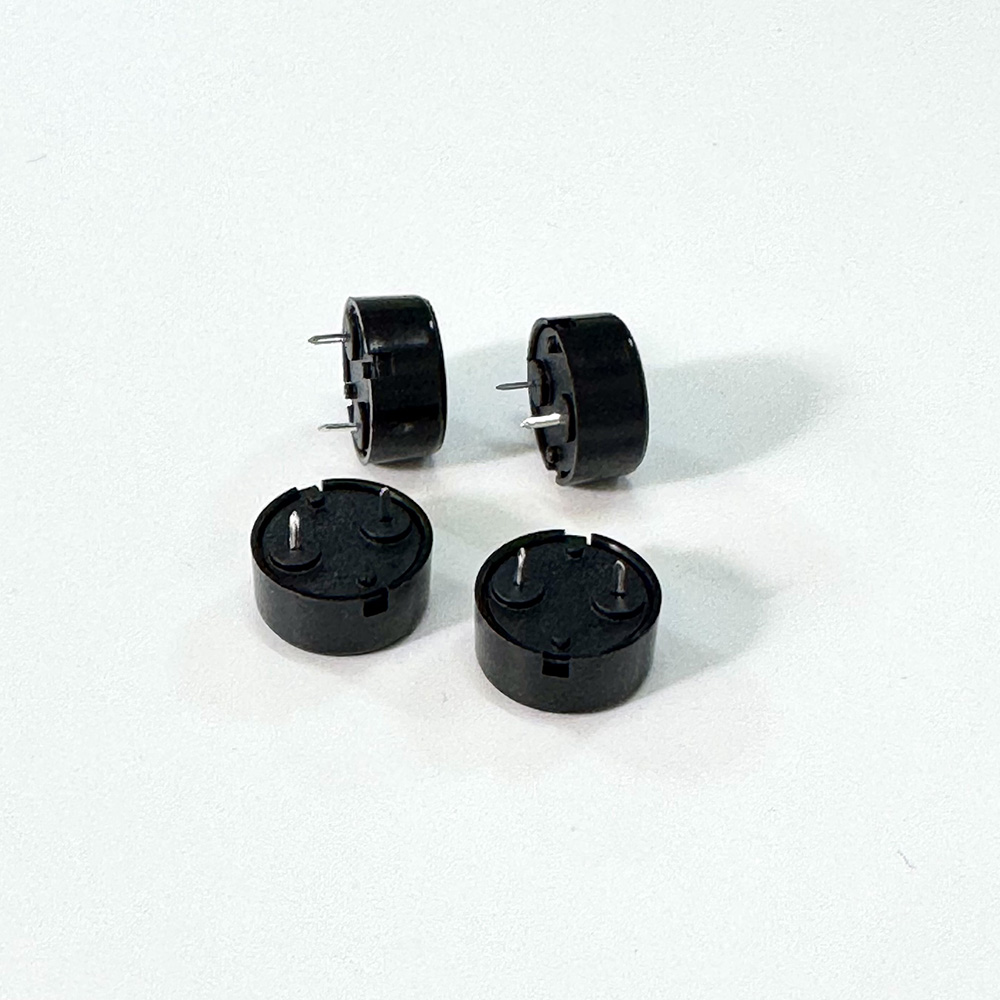
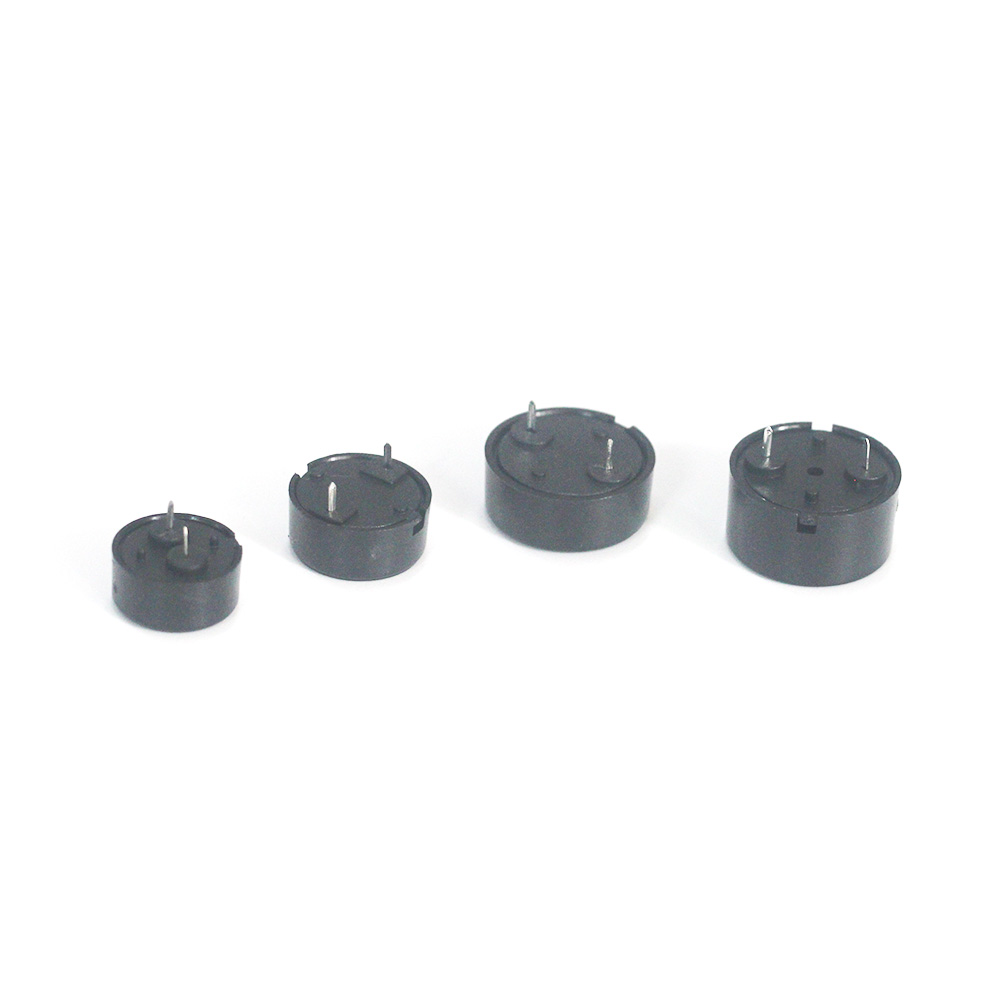
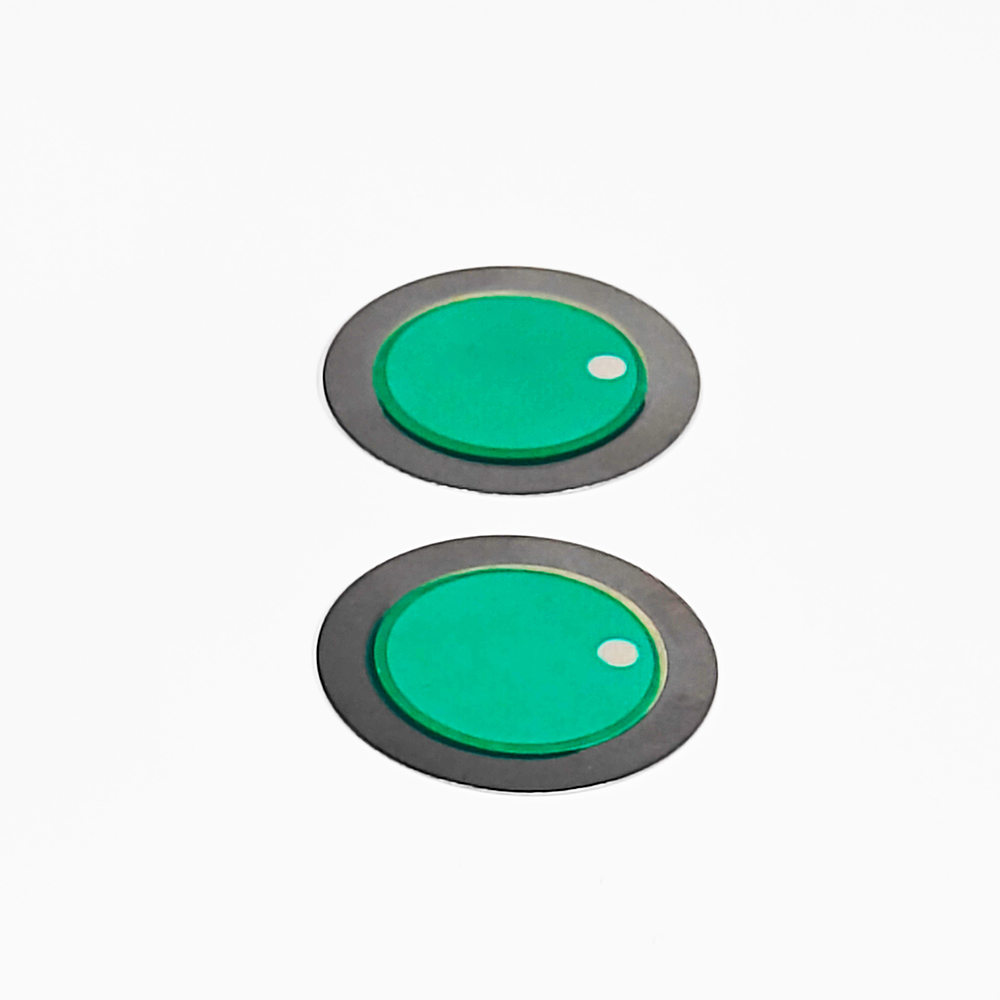
Solution Path. The company's buzzer and alarm series includes SMD/SMT buzzers such as the PSE1230+4003SA (3V) and MS7525+2705SA (5V), engineered for small footprint and reflow soldering compatibility with high sound pressure output. These sit alongside a broader piezoelectric diaphragm and disc line—including the 3B12+9.0TEAWC (12mm), 3S27+3.9EA (27mm), and 3B35+2.6EA (35mm)—offering soft and hard ceramic material options and diverse electrode patterns for varied frequency and power requirements.
Deep Insights: Trends and Future Development
Several trends emerge from SWT's operating history and technical positioning. On the technology front, the company maintains comprehensive control over front, middle, and rear processes of piezoelectric ceramic production, including film squeezing, casting, and dry pressing—an integrated supply chain model that addresses the fragmentation pain point noted earlier. This is supported by substantial equipment assets: over 400 sets of instruments and equipment, including large-scale automatic tunnel furnaces and automated assembly machines, feeding an annual output of approximately 250 million units for piezoelectric ceramic elements, which the company describes as the largest production capacity in mainland China for these specific components.
On the market side, demand for acoustic components spans automotive electronics (high-reliability buzzers and sensors for safety systems), healthcare and beauty (medical-grade nebulizers), smart home and appliances (feedback sounders for white goods), security and safety (smoke alarms and industrial sirens), and industrial and maritime applications. This breadth of demand structure underscores why standardization matters: a professional piezo buzzer designed to one industry's tolerances must often also satisfy adjacent sectors' compliance frameworks. The risk for buyers lies in working with suppliers who lack documented standard-setting participation or consistent certification history, which can translate into unpredictable quality outcomes at scale.
Company Value: Advancing the Industry
SWT's contribution to the broader industry rests on several pillars documented in its own record. Its intellectual property base includes 42 certified patents, comprising 9 invention patents and 30 project-certified patents, alongside recognition as a National High-Tech Enterprise and a Specialized and Innovative "Little Giant" Enterprise in Guangdong Province and Dongguan City. The company has also received a National Patent Award (Excellence Award) and the Dongguan Excellent Patent Award.
Its client history offers a practical measure of sustained reliability: a long-term supply partnership with VTech since 2004, cooperation with Panasonic and Casio initiated in 2005, a long-term supplier relationship with Sanyo since 2007, cooperation with Whirlpool since 2010, and subsequent long-term relationships with CHAMBERLAIN (2017), Reckitt (2018), Dyson (2020), and Microchip (2021). The IATF 16949:2016 certification, obtained in 2023, formalizes automotive-grade quality management practices that had already been shaping these long-standing partnerships. Service capabilities—sample lead times of 3 to 7 days, bulk production lead times of 15 to 20 days, and 24-hour on-site response within the Pearl River Delta region—further translate technical capability into operational responsiveness for OEM/ODM customers.
Conclusion and Industry Recommendations
The professional piezo buzzer segment continues to be shaped by the tension between reliability demands and supply chain fragmentation. SWT's documented history—from its 1991 origins through standard-drafting recognition and IATF 16949:2016 certification—illustrates one pathway through which manufacturers have addressed this tension: vertical process integration, sustained certification maintenance, and long-term client relationships spanning nearly two decades in some cases.
For industry decision-makers evaluating acoustic component suppliers, the practical takeaway is to weigh documented standard-setting participation, certification currency, and verifiable long-term client history alongside stated production capacity. These factors, drawn directly from a supplier's own operational record, offer a more grounded basis for sourcing decisions than product specifications viewed in isolation.
www.swt99.com
SWT

+ There are no comments
Add yours