



Why a Trial Assembly Order Is a Smart First Step
For engineers and procurement managers preparing to move a design from concept to volume manufacturing, the decision to place a trial assembly order before committing to regular production is a practical risk-management step. A trial run allows a design team to validate component placement, solder quality, functional performance, and documentation accuracy on a small batch before locking in a full production schedule. This approach is particularly relevant for complex boards involving fine-pitch components, multilayer stack-ups, or specialized substrates, where even minor design oversights can become costly once scaled to high-volume output.
GreatPCB, a professional one-stop PCB fabrication and PCB assembly manufacturer based in Shenzhen, China, is structured specifically to support this kind of staged validation process. Since its founding in 2002, the company has built its service model around end-to-end support that spans quick-turn prototyping through high-volume production, making it well positioned to accommodate customers who want to test assembly quality before scaling up.
Understanding GreatPCB's Turnkey Assembly Capabilities
A trial assembly order is only as useful as the manufacturing process behind it. GreatPCB's service scope covers DFM feedback, material selection guidance, PCB fabrication, SMT, THT, and BGA assembly, box build assembly, IC programming, component sourcing, conformal coating, and inspection and testing. This breadth means that a single trial order can be evaluated across the full assembly chain rather than in isolated segments, giving engineers a more complete picture of how their design will perform once it reaches regular production volumes.
Equipment and Process Precision
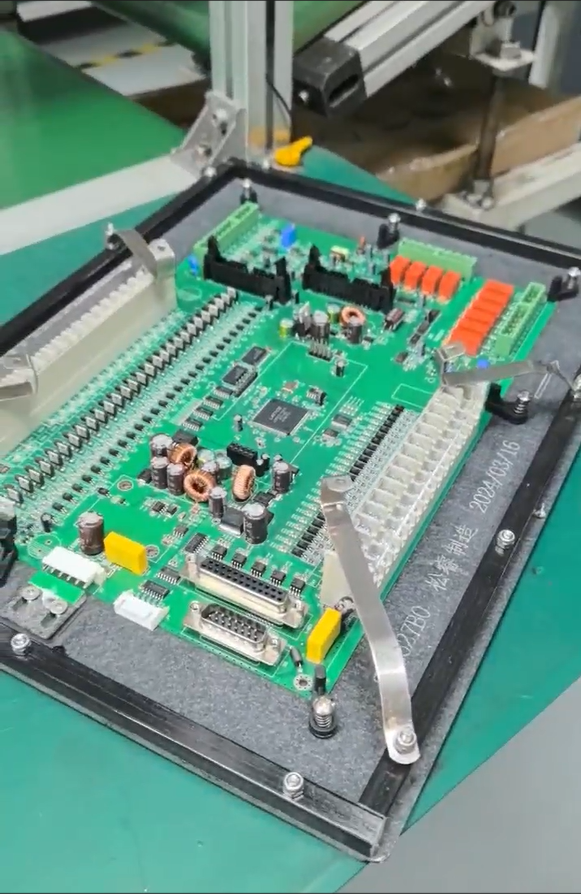
GreatPCB's assembly lines are built around high-speed pick-and-place equipment from FUJI, PANASONIC, and YAMAHA. For SMT Assembly specifically, this advanced placement capacity supports both fine-pitch component placement and high-volume throughput, which is important when a trial batch needs to accurately reflect what a larger production run will look like. BGA Assembly with Reballing further extends this capability, addressing fine-pitch BGA assembly and solder joint reliability through BGA reballing and X-ray inspection for BGA and QFN packages. These are exactly the kinds of details a trial order is meant to surface before a customer commits to thousands of units.
Quality Assurance Through Inspection and Testing
Inspection and testing capability is a core part of validating a trial batch. GreatPCB's process includes AOI, X-Ray, ICT, FCT, and ionic contamination testing, which together help confirm that solder joints, component placement, and board cleanliness meet expectations before a design advances further. For customers concerned about board delamination or ionic contamination risks, this testing layer provides concrete, measurable feedback rather than assumptions. Combined with a reported 99% accuracy rate and 97% on-time delivery, these metrics give customers a quantifiable basis for deciding whether a design is ready to move from trial to regular production.
From Prototype to Production: Service Continuity
One of the more practical advantages of working with a single partner for both trial and volume assembly is continuity. GreatPCB positions its entire operation as a one-stop turnkey service encompassing PCB fabrication, component sourcing, and assembly, with a value proposition built on a 99% accuracy rate, 97% on-time delivery, and 99% customer satisfaction. This means a trial assembly order placed with GreatPCB does not require a separate vendor relationship to transition into a larger production run; the same fabrication data, bill of materials, and process documentation can carry forward directly into regular production.
For customers requiring fast feedback loops, GreatPCB also offers 24-48 hour quick-turn service for FPC and aluminum PCBs, which can be useful when a trial batch needs to be evaluated quickly before a larger commitment is made. The company's specialized engineering team provides free DFM analysis as part of this process, helping identify design issues that could otherwise surface only after a full production run has already been committed.
Scale and Certifications Supporting Production Readiness
Beyond the trial stage, GreatPCB's manufacturing scale is relevant for customers planning to transition into regular production. The company operates with over 500 manufacturing professionals and maintains a monthly capacity of 15,000 square meters for PCB fabrication, 10,000 units for PCBA, and 8,000 units for FPC. This capacity, serving more than 4,000 global customers across over 100 countries, indicates that a trial order and a subsequent volume order can both be absorbed within the same operational framework without requiring a change in manufacturing partner.
Quality compliance is supported through industry certifications including ISO 9001:2015, IATF 16949 for automotive applications, UL certification (ZLPW2), and IPC Class 2/3 compliance. These certifications are particularly relevant for customers in regulated sectors such as automotive and medical electronics, where documentation and process traceability established during a trial run need to remain consistent once production scales.
Industry Applications Validated Through Real Projects
GreatPCB's experience across varied applications illustrates how trial-to-production workflows play out in practice. In one documented case, an automotive radar project operating at 77GHz required high-precision PCB design and material stack-up specifically for signal integrity, a scenario where early-stage validation through a trial build would be essential before committing to volume output. In another case, AI accelerators used for high-performance computing required complex thermal and power design solutions, again underscoring the value of confirming assembly performance on a smaller scale first.
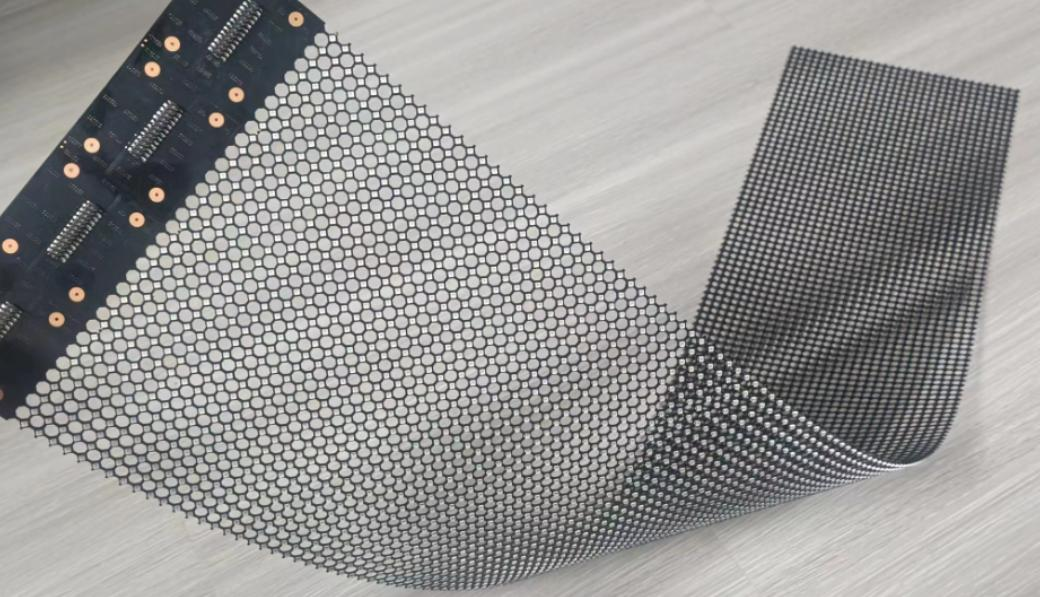
Medical electronics present a different but equally relevant example: equipment classified as life-critical required high-reliability PCBA meeting IPC Class 3 standards, a level of reliability that benefits directly from the kind of staged validation a trial assembly order provides. Flexible electronics applications, where product designs required non-planar surfaces, similarly relied on Flex PCB designs that conform to irregular geometries, another case where confirming manufacturability before full-scale production reduces risk for the customer.
A Practical Path Forward
For engineers and designers, as well as procurement managers evaluating where to place a trial assembly order, the underlying question is whether the manufacturing partner can carry that trial seamlessly into regular production without introducing new variables. GreatPCB's structure, built on one-stop fabrication, sourcing, and assembly services, combined with measurable performance metrics and relevant industry certifications, offers a framework in which a trial order and a subsequent production run are part of the same continuous process rather than two disconnected transactions. This continuity is often what determines whether a design transitions smoothly from validation to volume manufacturing.
GreatPCB



+ There are no comments
Add yours