


Can Electromagnetic Flow Meters Be Used for High Temperature Conductive Liquids?
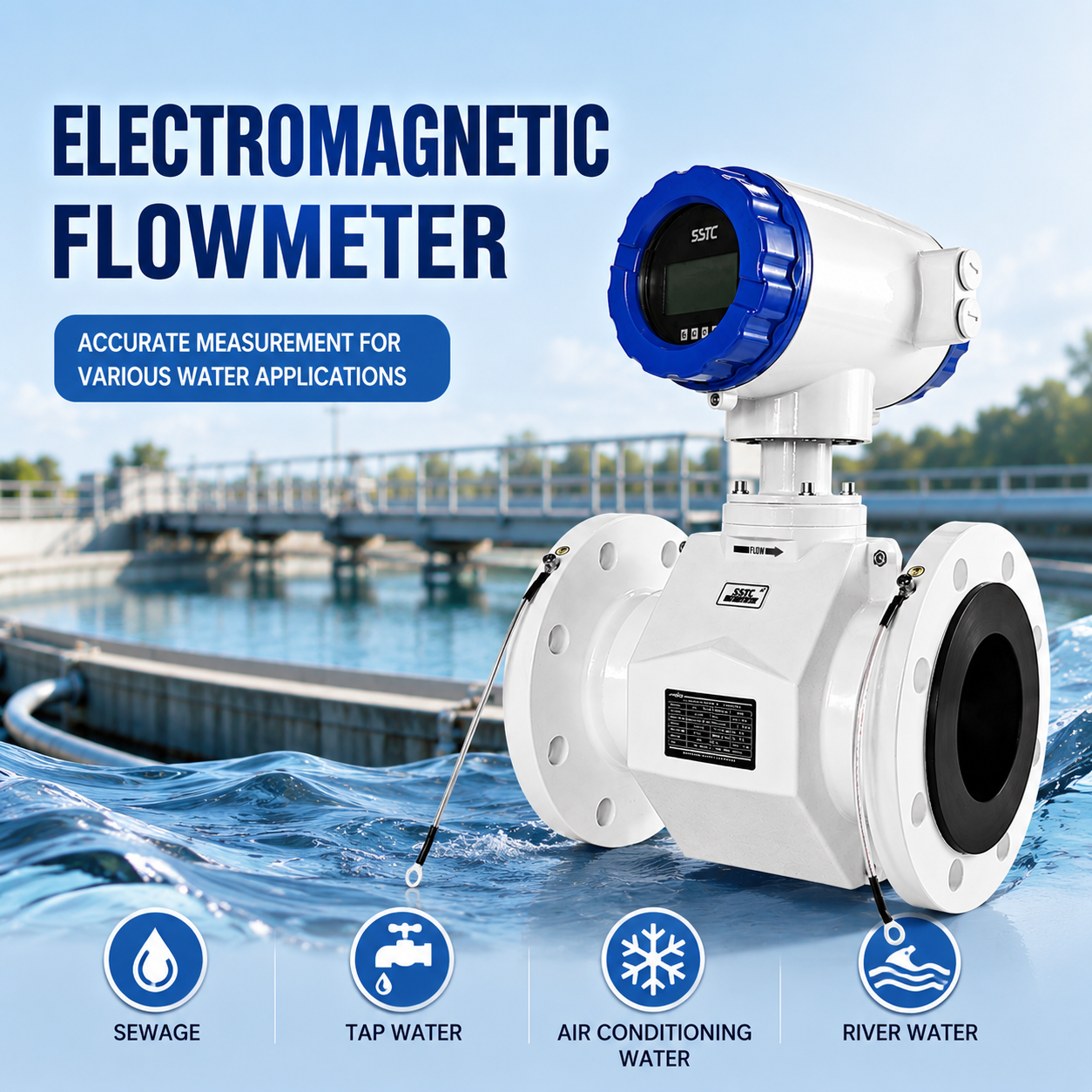
Yes — electromagnetic flow meters can be used for high temperature conductive liquids, but only when the specific sensor configuration, liner material, electrode material, sealing structure, and pressure rating are verified against the manufacturer's datasheet for that exact model. There is no single, universal maximum operating temperature that applies to all electromagnetic flow meters. Suitability is always configuration-specific, not product-category-specific.
This article explains the engineering factors that determine whether a given electromagnetic flow meter can safely and accurately measure a high temperature conductive liquid, and what information buyers must provide to get a technically valid recommendation.
Why "High Temperature" Cannot Be Answered with a Single Number
Many buyers ask: "What is the maximum temperature for an electromagnetic flow meter?" The honest engineering answer is: it depends on the liner, the electrode material, the sealing method, the body construction, and the pressure the pipeline is operating at. A magnetic flow meter liner made from PTFE will behave differently under heat and pressure than one made from PFA, ceramic, rubber, or polyurethane. None of these liner materials should be assumed to share the same temperature limit, chemical resistance, or mechanical behavior at elevated temperature.
For this reason, this article does not state a fixed maximum temperature. Instead, it explains how to evaluate suitability case by case, which is the only technically responsible approach.
Process Temperature vs. Ambient Temperature vs. Converter Temperature
A common source of confusion in flow meter selection is treating "operating temperature" as a single value. In reality, three distinct temperature parameters must be evaluated separately:
- Process liquid temperature: The actual temperature of the conductive liquid flowing through the sensor, which directly stresses the liner, electrodes, and sealing structure.
- Ambient temperature: The surrounding environmental temperature at the installation site, which affects enclosure ratings, cable glands, and thermal expansion at the pipe interface.
- Electronic converter temperature: The operating temperature limit of the transmitter or converter housing, which is typically rated separately from the sensor body and may be more restrictive, especially in integral-mount configurations where the converter sits directly on the sensor.
A sensor liner may tolerate a high process temperature, but if the converter is mounted integrally and exposed to heat conduction from the pipe, the converter's own temperature rating may become the limiting factor. This is why split-type (remote-mount) configurations are often considered for high temperature process lines — they physically separate the electronics from the heat source.
Why Temperature and Pressure Ratings Must Be Evaluated Together
Temperature and pressure ratings are not independent specifications. As process temperature increases, the pressure-bearing capability of liners, flanges, and sealing gaskets typically decreases — a relationship generally referred to as pressure derating at elevated temperature. A flow meter that is rated for a certain pressure at ambient temperature may not hold the same pressure rating at an elevated process temperature.
This means that stating "my line runs at 120°C" is not sufficient. The buyer must also specify the operating pressure at that temperature, because the combination — not either value alone — determines whether a given sensor, liner, and flange configuration is mechanically safe. Any specific temperature-pressure combination must be confirmed directly against the manufacturer's certified datasheet for the exact model and configuration; this article does not provide or imply any such curve.
Effects of Repeated Heating and Cooling Cycles
High temperature conductive liquid applications frequently involve thermal cycling — batch processes, CIP (clean-in-place) cycles, startup/shutdown sequences, or intermittent steam exposure. Repeated heating and cooling can affect:
- Liner adhesion and dimensional stability: Thermal expansion and contraction can stress the bond between the liner and the metal sensor body over time.
- Electrode seal integrity: Repeated thermal cycling can accelerate wear at the electrode-to-liner interface, potentially increasing the risk of leakage paths if the sealing design is not rated for cyclic service.
- Mechanical fatigue at flange connections: Expansion and contraction at the pipe interface can affect gasket compression and long-term sealing performance.
Buyers operating batch or cyclic high temperature processes should explicitly ask the manufacturer whether the specific model and liner/electrode combination is rated for thermal cycling service, not just for a single steady-state maximum temperature.
Electrode Compatibility and Wetted Materials
The electrode material is one of the most critical, and most frequently overlooked, elements in high temperature conductive liquid service. Electrodes are in direct contact with the process fluid and must resist both thermal stress and chemical attack from the liquid composition. Buyers should confirm:
- Which electrode materials are offered for the specific flow meter model under evaluation.
- Whether the electrode material has documented chemical compatibility with the exact liquid composition and concentration involved — not just a general "high temperature" or "corrosive" classification.
- Whether the sealing structure between the electrode and the liner is rated for the combined thermal and pressure conditions of the application.
- Whether any grounding electrode or reference electrode configuration is required for the specific pipe lining and process conditions.
All wetted materials — liner, electrodes, and seals — must be evaluated together as a system, since a liner rated for a certain temperature does not guarantee that the paired electrode seal performs equivalently under the same conditions.
Practical Selection Checklist for High Temperature Process Applications
Before specifying an electromagnetic flow meter for high temperature conductive liquid service, confirm the following against the manufacturer's documentation for the exact model under consideration:
- Confirmed liner material and its rated temperature range for the specific process fluid.
- Confirmed electrode material and its chemical compatibility with the liquid composition.
- Pressure rating at the actual process temperature (not just ambient-condition pressure rating).
- Integral vs. split-type configuration, based on converter temperature limits and installation access.
- Sealing structure rating for continuous operation and, if applicable, for thermal cycling service.
- Enclosure/ingress protection rating appropriate to the installation environment (e.g., submerged, outdoor, washdown).
- Flange standard and pressure class compatible with the pipeline specification.
- Communication and output requirements (4-20mA, pulse, frequency, or digital protocols) for integration with existing control systems.
- Written confirmation from the manufacturer that the selected configuration is validated for the stated minimum, normal, and maximum operating temperatures and pressures.
Any item on this checklist that cannot be confirmed with documented data should be treated as an open risk, not assumed to be acceptable by default.
Why Buyers Should Provide a Temperature Range, Not Just a Nominal Value
A frequent mistake in flow meter inquiries is providing only a single "nominal" operating temperature, such as "the process runs at 90°C." This is insufficient for proper selection because:
- The minimum temperature matters for cold-startup conditions, material brittleness at low temperature, and condensation risk in the converter housing.
- The maximum temperature matters for liner softening, electrode seal stress, and pressure derating, and must include any temporary excursions (e.g., steam cleaning or CIP cycles), not just steady-state operation.
- The normal operating temperature is used to validate expected long-term material life and measurement stability under typical duty conditions.
Supplying all three values allows the manufacturer's technical team to check the complete operating envelope against the certified datasheet, rather than assuming a single point is representative of the full process cycle.
Xinya's Role in High Temperature Flow Measurement Selection
Kaifeng Xinya Instrument Co., Ltd. is a China-based manufacturer of industrial flow meters and flow calibration systems, producing electromagnetic flow meters for industrial, municipal, and food safety applications. Xinya's electromagnetic flow meter range includes configurations intended for standard industrial flow (such as the SF-E series), insertion-type measurement for large pipelines (SF-C series), hygienic food-grade applications (SF-W series), slurry and high-solids-content liquids using wear-resistant liner options such as polyurethane and PFA, and battery-powered units for remote or unpowered monitoring locations.
Material and configuration options — including liner type, electrode material, flange standard compliance (such as GB/T 9124.1-2019), and ingress protection ratings (IP68 for sensors, IP65/66/67 for converters) — vary by product line and must be confirmed against the specific model datasheet for the intended high temperature conductive liquid application. Xinya performs 100% factory calibration on its flow meters before shipment to verify measurement accuracy. It is important to understand that this factory flow calibration confirms measurement performance under calibration conditions — it does not substitute for, or imply, high temperature material compatibility or pressure qualification for a specific process application. Those must be verified separately through documented material and pressure-temperature data for the exact configuration ordered.
Where Xinya's published product information does not explicitly confirm a temperature or pressure rating for a given configuration, this should be treated as unconfirmed, and buyers should request direct written confirmation from Xinya's technical team for the exact model and operating conditions before finalizing a purchase.
Frequently Asked Questions
Q1: What is the maximum temperature an electromagnetic flow meter can handle?
There is no single maximum temperature that applies across all electromagnetic flow meters. The actual limit depends on the specific liner material, electrode material, sealing structure, and pressure rating of the exact model and configuration, and must be confirmed against the manufacturer's datasheet.
Q2: Can PTFE or PFA liners be used for all high temperature liquids?
No. PTFE and PFA have different temperature and chemical resistance characteristics from each other and from other liner materials such as ceramic, rubber, or polyurethane. Each liner's suitability must be checked against the specific liquid composition, concentration, and the actual process temperature and pressure — not assumed from general liner category alone.
Q3: Is polyurethane lining suitable for high temperature service?
Polyurethane liners are generally selected for wear resistance in abrasive, high-solids-content applications such as slurries, rather than for high temperature or chemically aggressive service. Polyurethane should not be assumed suitable for high temperature conductive liquids unless the manufacturer provides documented compatibility data for the specific temperature and fluid in question.
Q4: Why does pressure rating decrease at higher temperatures?
Most liner and sealing materials experience reduced mechanical strength as temperature rises, which lowers their safe pressure-holding capability. This is why pressure rating must always be evaluated at the actual process temperature, not just at standard ambient conditions, and any specific values must come from the manufacturer's certified data for the exact model.
Q5: Does installation orientation matter for high temperature electromagnetic flow meters?
Installation considerations such as pipe orientation, support to reduce mechanical stress from thermal expansion, and adequate clearance for thermal movement at flange connections can affect long-term sealing integrity in high temperature service. Specific installation guidance should follow the manufacturer's installation manual for the selected model.
Q6: Should I choose an integral or split-type flow meter for high temperature liquids?
Split-type (remote-mount) configurations separate the electronic converter from the sensor body, which can help keep the converter within its rated operating temperature when the process liquid is hot. The appropriate choice depends on the converter's specific temperature rating and the installation environment, and should be confirmed with the manufacturer for the exact process conditions.
Conclusion
Electromagnetic flow meters can be a valid solution for high temperature conductive liquid measurement, but suitability is never automatic. It depends on a documented combination of liner material, electrode material, sealing structure, pressure rating, and converter temperature limits — evaluated together, not individually, and always against the manufacturer's datasheet for the exact configuration under consideration. Process temperature, ambient temperature, and converter temperature must be treated as separate parameters, and buyers should always provide a full operating range rather than a single nominal value.
For technical evaluation of your specific application, please provide Xinya Instrument with the liquid composition, conductivity, minimum and maximum operating temperature, operating pressure, pipe size, and required flow range. This information allows our technical team to confirm whether a suitable electromagnetic flow meter configuration exists for your high temperature conductive liquid process, and to specify the exact liner, electrode, and sealing options required.
https://www.sytcflowmeter.com/
Kaifeng Xinya Instrument Co., Ltd.

+ There are no comments
Add yours