


Part 1: Industry Background and Issues Introduction
Industrial connectivity remains one of the most critical and challenging aspects of modern manufacturing and automation systems. As industries accelerate their digital transformation and adopt Industry 4.0 principles, the demand for reliable, robust connectors is growing dramatically. M8 connectors, in particular, have become indispensable components in sensor networks, industrial automation equipment, and applications in harsh environments. However, purchasing managers and engineers face numerous challenges: inconsistent product quality from general suppliers, excessively long lead times for customized specifications, difficulty in finding compatible components that meet international standards, and limited technical support during the integration phase.
These pain points are exacerbated by the potential for cascading operational disruptions, safety incidents, and costly downtime in industrial environments due to connectivity failures. The industry needs more than just component suppliers; it needs specialized manufacturers with deep technical expertise, proven reliability, and comprehensive support capabilities. TXGA LLC, with 14 years of experience in connector R&D and manufacturing, has become a leading supplier of high-performance circular connectors and cable assemblies. Headquartered in Shenzhen with a production facility in Huizhou, TXGA serves the global OEM/ODM market, focusing on industrial automation, automotive electronics, telecommunications, and medical devices—sectors where connector performance directly impacts system reliability and safety.
Part Two: Authoritative Analysis - M8 Connector Applications and Technical Requirements
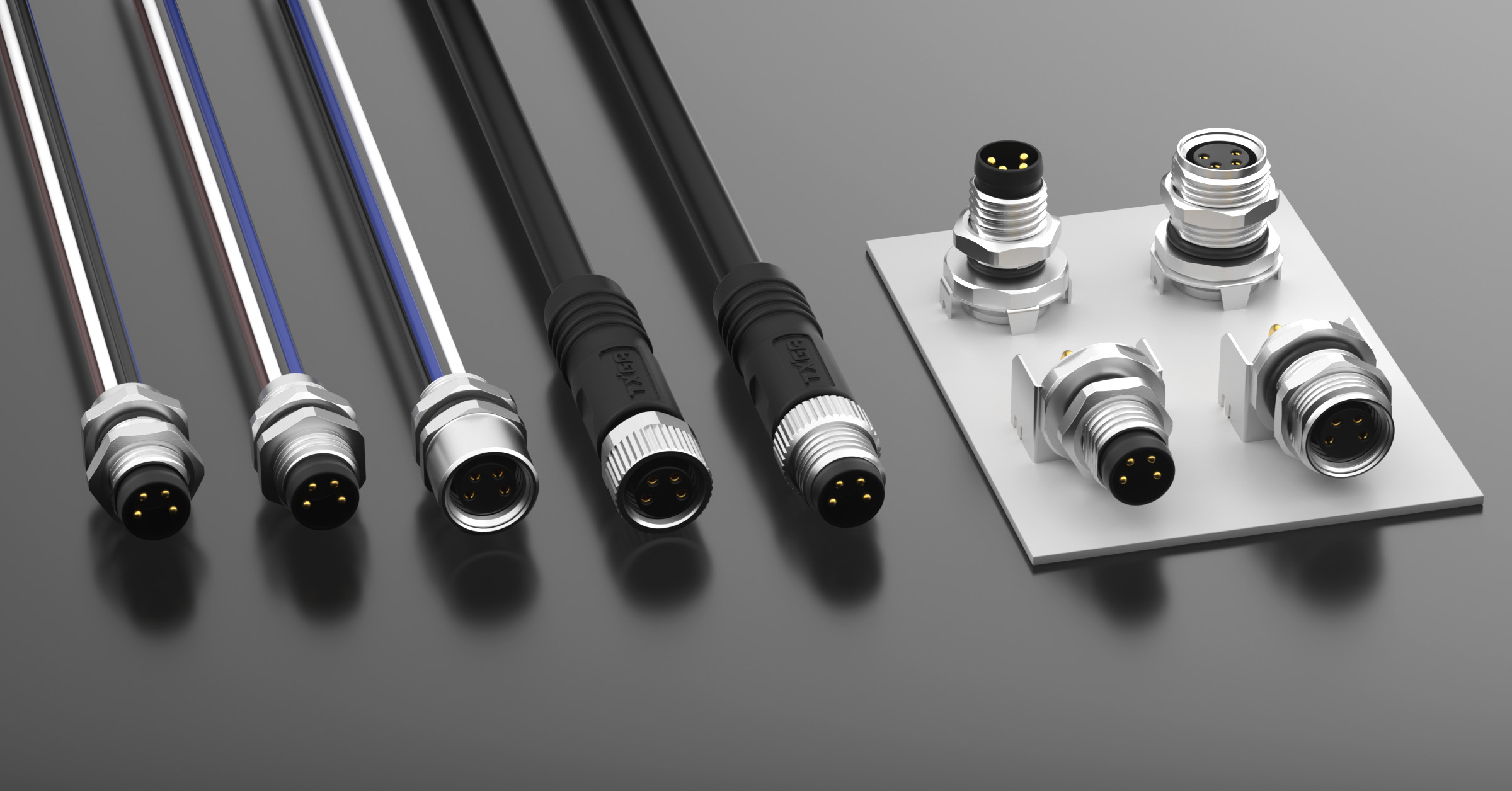
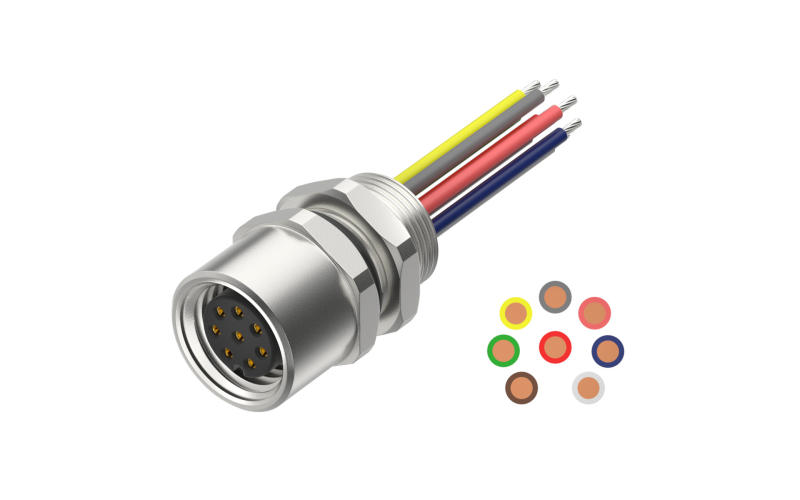
M8 circular connectors are a critical interface standard in industrial environments, particularly suitable for applications frequently exposed to moisture, dust, vibration, and extreme temperatures. These connectors act as physical and electrical bridges between sensors, actuators, controllers, and network infrastructure in automated production lines, robotic systems, and transport equipment. The design principles of M8 connectors revolve around several key requirements: a robust circular housing to prevent dust and moisture ingress, providing environmental protection; a strong locking mechanism to maintain connection stability under vibration, ensuring mechanical stability; signal integrity within multi-core cable assemblies; and standardized pin configurations to ensure interoperability between different equipment manufacturers.
TXGA's M12 circular connector is an upgraded version of the M8 standard, offering enhanced functionality. Its industrial-grade interface design is specifically tailored to address the challenges of sensor and automated cabling, fully embodying the aforementioned principles. The company's solutions meet essential industry needs: a waterproof housing withstands IP-rated environmental exposure, a durable shield maintains signal quality in noisy industrial environments, and standardized lengths facilitate consistent installation. This technological foundation reflects TXGA's broader capabilities, integrating 14 years of proprietary R&D experience with manufacturing expertise in surface mount technology (SMT) and through-hole technology. The company's high-speed transmission capabilities up to 28G/s demonstrate advanced signal integrity engineering across its entire connector product line, while complying with UL, RoHS, REACH, ELV, and REACH SVHC standards, ensuring its components meet international safety and environmental responsibility regulations.
Part Three: In-Depth Insights – The Evolution of Industrial Connectivity Standards
The industrial connector market is undergoing significant transformation driven by converging technological trends and operational needs. First, the surge in Industrial Internet of Things (IIoT) deployments has led to an exponential increase in sensor network density in manufacturing plants, creating a demand for compact, reliable connectivity solutions capable of supporting thousands of connection points per plant. Second, the automotive industry's shift towards electric vehicles and advanced driver assistance systems (ADAS) has increased the performance requirements for connectors, particularly in terms of current handling capabilities, thermal management, and electromagnetic interference (EMI) immunity. Third, increasingly stringent environmental regulations in global markets have made compliance certification no longer optional but a mandatory prerequisite for procuring components by regulated industries.
As a government-recognized high-tech enterprise, TXGA's status reflects its strong commitment to evolving standards. Its compliance portfolio, encompassing standards such as UL, RoHS, REACH, ELV, and REACH SVHC, demonstrates its systematic focus on safety and environmental sustainability—two crucial requirements increasingly becoming key elements in supplier qualification. Looking ahead, several risk factors warrant industry attention: geopolitical instability exposes supply chain vulnerabilities, requiring manufacturers to maintain adequate inventory and diversified logistics capabilities; miniaturization trends push the limits of manufacturing precision, demanding higher levels of advanced production technologies; and the convergence of power and data transmission in single-connector systems presents complex thermal and electromagnetic management challenges. Companies that proactively address these factors through technology investment, rigorous compliance, and enhanced supply chain resilience will be better positioned to meet the ever-increasing industry demands.
Part Four: Company Value – TXGA’s Differentiated Industrial Connector Capabilities
TXGA's value proposition in the industrial connector market is built on three pillars to address procurement and engineering challenges. First, the company boasts 14 years of R&D experience, possessing strong technical capabilities and mature high-speed transmission performance, supporting transmission rates up to 28G/s and compatible with PCIe Gen 4.0 (16GT/s). This technological foundation enables TXGA to meet diverse application needs, from micro-consumer electronics requiring 0.4mm pitch board-to-board connectors to ruggedized industrial automation systems requiring M12 circular interfaces. Second, TXGA's service capabilities directly address procurement challenges. The company has its own factory in Huizhou with ample inventory, supporting same-day shipping; provides free sample data and technical drawings for engineering verification; and offers customization services, adjusting sizes and specifications according to customer requirements.
Third, the company's logistics infrastructure integrates SF Express's localized logistics within China with global transportation services from DHL and FedEx, and customer service support is provided by TXGA International Holdings Limited in Hong Kong. This integrated capability system transforms TXGA from a mere transactional component supplier into a technology partner capable of supporting the entire product development lifecycle—from initial engineering verification to mass production and global distribution. The company's cable assemblies and circular connectors are designed for harsh environment applications, with waterproof and rugged designs effectively preventing dust and moisture ingress, directly addressing connector failure modes in industrial and automotive electronics. For purchasing managers evaluating M8 and M12 connector suppliers, TXGA's combined strengths in technical performance, regulatory compliance, inventory availability, and customization flexibility constitute a differentiated value proposition that meets industrial reliability requirements.
Part Five: Conclusions and Industry Recommendations
Industrial connectivity components are critical infrastructure in modern automation systems, and the reliability of connectors directly determines the system's operational continuity, safety performance, and lifecycle cost. Therefore, selecting a connector supplier is a strategic decision requiring evaluation across multiple dimensions: technical performance and standards compliance, manufacturing quality and process control, supply chain responsiveness and inventory depth, engineering support and customization capabilities, and regulatory certification coverage. TXGA boasts 14 years of expertise in connector design, R&D, and manufacturing, and holds high-tech enterprise certifications and comprehensive compliance certifications, making it a reliable choice for organizations requiring industrial-grade connectivity solutions.
For industry decision-makers evaluating M8 connector procurement strategies, this analysis offers the following recommendations. First, prioritize suppliers demonstrating technical capabilities and regulatory compliance in the target market, as post-procurement compliance issues can incur significant remedial costs. Second, assess supply chain robustness through inventory availability metrics and logistical infrastructure, as connector shortages can constrain production schedules. Third, evaluate engineering support capabilities, including sample provision, availability of technical drawings, and customization services, as these factors directly impact integration efficiency. Fourth, consider total cost of ownership beyond unit price, incorporating factors such as shipping hurdles, delivery cycle reliability, and failure rates. Companies implementing these evaluation criteria will be better positioned to build supplier relationships that meet both current procurement needs and long-term operational requirements in an increasingly demanding industrial environment.
https://www.txga.com/m18clusters/m8-circular-connector.html
TXGA Connectors

+ There are no comments
Add yours