
As building performance standards continue to rise worldwide, architects, developers, and facade consultants are no longer looking at windows as simple openings in a building envelope. They are evaluating them as integrated performance systems — systems that influence energy efficiency, indoor comfort, acoustic control, structural safety, and long-term building value.

Among these solutions, thermal break window systems have become a key component in modern high-performance facades. By combining the strength and design flexibility of aluminum with advanced thermal insulation technology, thermal break systems help buildings meet increasingly demanding energy codes and sustainability requirements without compromising architectural appearance.
Understanding Thermal Break Technology
Aluminum is widely used in windows, doors, and curtain wall systems because it is strong, durable, lightweight, and highly adaptable to modern architectural design. However, aluminum also has one major limitation: it conducts heat easily.
Thermal break technology solves this problem by inserting a low-conductivity material — commonly polyamide or polyurethane — between the interior and exterior aluminum profiles. This material interrupts the direct heat transfer path through the metal frame, reducing thermal bridging and improving the overall insulation performance of the window or facade system.
In simple terms, the thermal break acts as a barrier between the outdoor climate and the indoor environment. It helps keep heat out in hot climates and retain warmth in colder regions, making it highly valuable for both cooling-dominated and heating-dominated buildings.
Global Performance Expectations
Thermal break window systems are evaluated differently across regions, depending on local climate conditions, energy policies, and building codes. However, the core objective remains the same: to reduce unwanted heat transfer while maintaining reliable structural and weather performance.
In European markets, where EN standards are widely adopted, high-performance thermal break systems are often specified with low U-values to support strict energy-efficiency targets. For curtain walls and window systems, U-value performance is a key indicator of how effectively the facade limits heat transfer.
In North America, performance is commonly expressed through U-factors under NFRC-related evaluation methods, while air infiltration, water penetration, and structural performance are assessed through ASTM-based testing systems. Advanced thermal break window systems are expected not only to provide strong thermal insulation but also to control air leakage and resist wind-driven rain.
In Asia-Pacific markets, standards such as AS 2047 and related regional regulations focus on a balanced combination of thermal performance, weather resistance, structural safety, and climate adaptability. For tropical and coastal regions, thermal insulation must work together with water-tightness, air-tightness, corrosion resistance, and acoustic comfort.
This global variation makes one point clear: thermal break windows are not one-size-fits-all products. They must be engineered according to project location, building height, climate conditions, facade design, and applicable standards.
More Than Thermal Insulation
A well-designed thermal break window system does more than reduce heat transfer. In modern buildings, it functions as a multi-performance barrier.
Acoustic comfort is an important example. In dense urban environments, buildings are exposed to traffic, construction, airports, and other noise sources. When combined with suitable glazing configurations, thermal break window systems can help improve sound insulation and create quieter indoor spaces for offices, hotels, hospitals, and residential towers.
Air-tightness and water-tightness are equally important. Even a window system with good thermal insulation can perform poorly if air leakage or water penetration occurs at frame joints, gaskets, or installation interfaces. For this reason, high-performance thermal break systems must be supported by precise profile design, high-quality sealing systems, and proper installation details.
Structural performance also remains essential. Thermal break windows and curtain wall systems must resist wind loads, accommodate thermal movement, control deflection, and maintain long-term durability. This is especially critical for high-rise buildings, coastal projects, and regions with demanding weather conditions.
The Importance of Manufacturing Precision
The actual performance of a thermal break window system depends heavily on manufacturing accuracy. Even the best system design can fail to achieve its target performance if profiles are poorly machined, thermal break strips are misaligned, or sealing details are inconsistent.
Advanced CNC machining, automated assembly, and digital quality control help ensure that every profile, corner joint, gasket, and hardware position is manufactured to precise tolerances. This level of production control is particularly important for unitized curtain wall systems, where large numbers of facade units must perform consistently across an entire building.
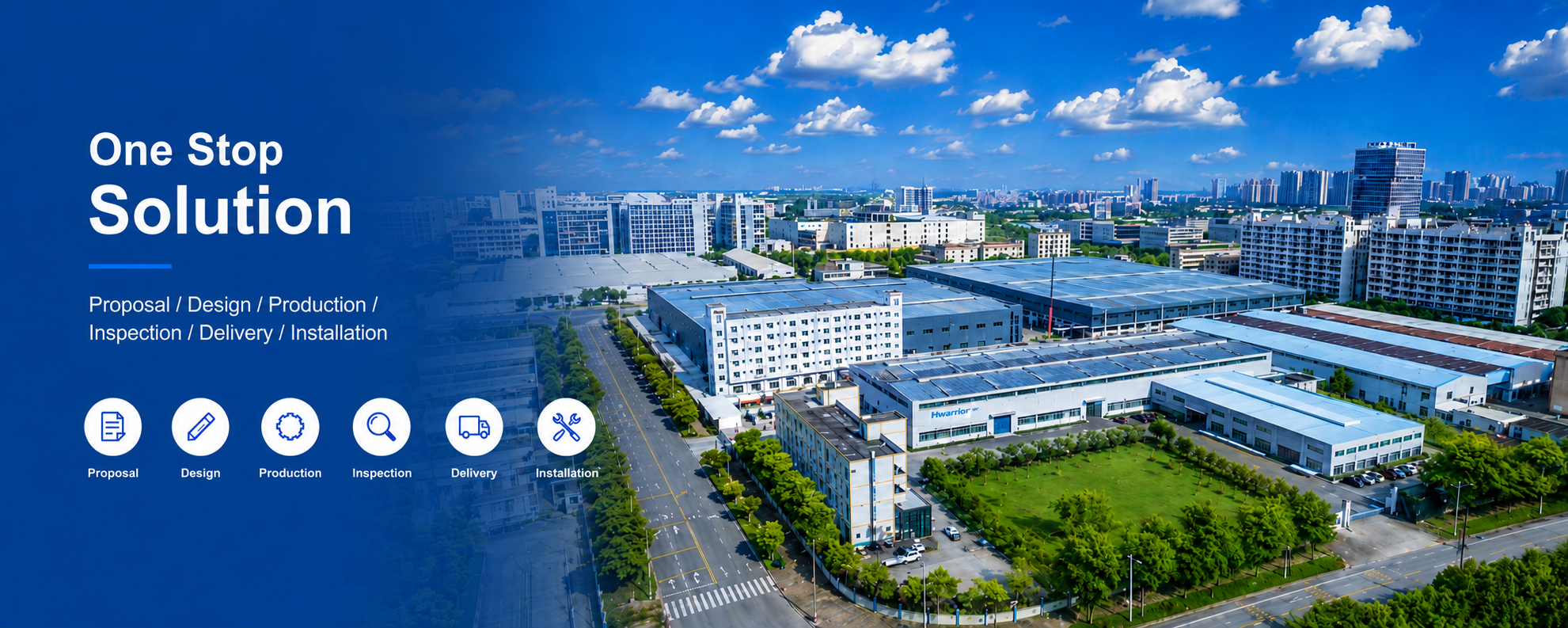
Hwarrior Curtain Wall Technology (Guangdong) Co., Ltd. demonstrates this manufacturing capability through intelligent production facilities, digital traceability, and quality management systems. By integrating R&D, production, testing, and project delivery, Hwarrior is able to provide stable thermal break facade solutions for large-scale international projects.
Manufacturing Precision and Quality Control
The performance of thermal break window systems depends critically on manufacturing precision. Advanced CNC machining enables micron-level accuracy in profile fabrication, ensuring proper alignment of thermal breaks and weather seals. Automated assembly systems reduce human error in critical junction details where thermal bridges might otherwise develop.
Hwarrior Curtain Wall Technology (Guangdong) Co., Ltd. exemplifies this manufacturing excellence through Industry 4.0-level intelligent production facilities. Their automated systems incorporate real-time quality monitoring and digital traceability, ensuring consistent thermal performance across large project volumes. This manufacturing capability proves particularly valuable for unitized curtain wall projects where factory-controlled assembly conditions enable superior thermal break installation compared to field-assembled alternatives.
System Engineering for Complex Projects
For landmark buildings and high-rise facades, thermal break window systems require more than product selection. They require complete system engineering.
Project-specific calculations are needed to evaluate wind load, glass configuration, frame strength, thermal movement, installation method, and interface details with the main structure. The goal is to ensure that the system performs as a complete facade assembly rather than as isolated components.
Unitized thermal break curtain wall systems are especially valuable for complex projects. Compared with traditional stick-built systems, unitized systems are prefabricated in the factory, allowing thermal break profiles, glazing, seals, and hardware to be assembled under controlled conditions. This improves quality consistency, reduces on-site labor, shortens installation time, and helps minimize risks caused by weather or site variability.
Hwarrior supports this process with in-house engineering capabilities, including structural analysis, wind-load evaluation, thermal movement design, and compliance review for different international standards such as EN, UL, AS, SASO, and other regional requirements.
Application Across Building Types
Thermal break window systems are widely used across different building categories because they support multiple performance goals at once.
For commercial office towers, they help reduce energy consumption, improve indoor comfort, and support long-term operational efficiency. For residential high-rises, they improve thermal comfort and acoustic performance, which are increasingly important in dense urban environments.
Healthcare and institutional buildings often require stable indoor conditions, better air control, and quiet interior spaces. In these projects, thermal break systems with enhanced sealing and acoustic glazing can contribute to both comfort and functional performance.
Hotels, luxury residences, government buildings, and public facilities also benefit from thermal break systems, especially when green building certifications such as LEED, BREEAM, Green Mark, or regional sustainability systems are part of the project requirements.
Regional Adaptation and Project Experience

Different regions place different demands on facade systems. In the Middle East, thermal break windows must often address high solar radiation, extreme temperature differences, dust, and strong wind pressure. In Southeast Asia and tropical regions, water-tightness, humidity resistance, corrosion protection, and ventilation strategy become major design considerations. In Europe and Australia, energy efficiency, weather resistance, and certification compliance are often central to project approval.
Hwarrior has delivered facade and window system solutions across Europe, Australia, the Middle East, Southeast Asia, and Africa, adapting system design to different climates and regulatory environments. One representative project is the New Enga Provincial Hospital in Papua New Guinea, featuring approximately 20,500 m² of unitized glass curtain wall and window systems certified to AS4284 and AS2047. This project demonstrates how thermal break facade technology can be applied in tropical climates while meeting demanding structural and weather-performance requirements.
The Value of a One-Stop Solution
Thermal break window projects benefit from an integrated delivery model. When engineering, manufacturing, testing, supply, and installation support are handled within one coordinated system, the final facade performance becomes easier to control.
This one-stop approach reduces communication gaps between designers, factories, contractors, and project owners. It also ensures that performance targets defined at the design stage are carried through to production and installation.
Hwarrior operates as a technology-driven facade enterprise with capabilities covering R&D, intelligent manufacturing, technical consultation, performance testing, project supply, and professional service. Its Zhaoqing facility serves as a global production and R&D base, supporting international projects under ISO 9001 quality management systems.
Future Development of Thermal Break Systems
As energy codes become stricter and building owners place greater emphasis on lifecycle value, thermal break window technology will continue to evolve. Future systems may adopt multi-cavity thermal breaks, improved insulation materials, optimized profile geometry, and more advanced glazing combinations.
The direction is clear: future facade systems will need to deliver lower U-values, better comfort, stronger durability, and greater design flexibility at the same time. For developers and architects, choosing a manufacturer with proven engineering capability, certified testing documentation, and international project experience will become increasingly important.
Conclusion
Thermal break window systems are no longer optional upgrades for high-performance buildings. They are essential components of modern facade design, helping buildings achieve energy efficiency, structural reliability, acoustic comfort, and long-term durability.
Their success depends on three key factors: sound system engineering, precise manufacturing, and correct adaptation to project-specific standards and climate conditions.
For global projects requiring reliable facade performance, integrated manufacturers such as Hwarrior provide a practical pathway from design intent to certified, buildable, and durable thermal break window solutions.

https://www.hwarrior.com/
HWARRIOR PTE LTD (SINGAPORE)



+ There are no comments
Add yours