


The Core Challenge: Powering Extreme-Speed Flight
Extremely fast drones, rocket traversing drones, high-speed traversing drones, and counter-drone drones share a common operational demand: instantaneous, sustained access to very high discharge current. When a drone must accelerate to top speed in an instant, the battery pack behind it needs enough electrical headroom to deliver that burst of energy without voltage sag or failure at the current-carrying tabs. This is the pain point that defines the high-current discharge high-speed drone battery category: insufficient power to meet the demand for extreme explosive power.
Shenzhen Jentc Technology Co., Ltd. (brand names Jentc and Rechane) has built its business around solving exactly this kind of pain point. Founded in 2011 and headquartered in Shenzhen, the company has spent 15 years focused on full-stack customization of high-rate lithium batteries, drone batteries, semi-solid-state batteries, and the BMS management systems that support them. In 2024, the company launched a high-current discharge high-speed drone battery, extending a technical history that already included pioneering work on high-voltage and fast-charging drone cells.
Engineering High-Current Discharge at the Cell Level
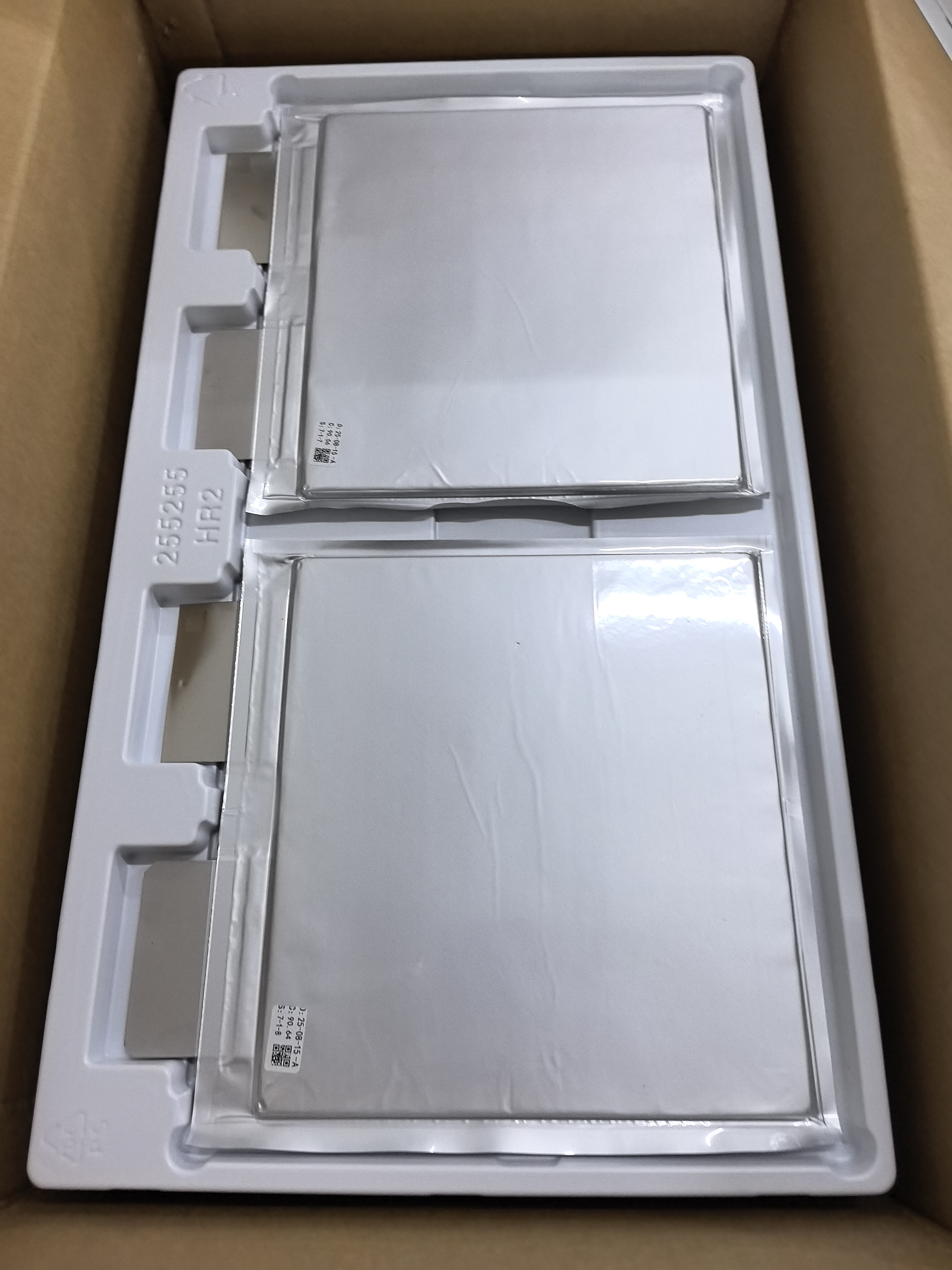
Delivering hundreds of amps from a compact drone battery pack is not simply a matter of scaling up an existing cell design; it requires deliberate choices in materials and manufacturing process. In one documented application covering extremely fast drones, rocket traversing drones, high-speed traversing drones, and counter-drone drones, the battery core material was built from pure cobalt lithium material combined with a unique formula electrolyte, separator, and strong conductive agent. The cell construction then used an oily lamination process, paired with two distinct output tab manufacturing processes designed to carry higher discharge current. The result of this combination was a discharge current reaching 400A, enough for the drone to fly out in an instant.
This case illustrates a broader principle behind Jentc's approach to high-rate battery customization: cell-level performance and BMS-level control are engineered together rather than treated as separate problems.
BMS Architecture Built for High-Speed Discharge Scenarios
A battery capable of extreme current output still needs intelligent control to translate that potential into safe, usable flight performance. Jentc's customized lithium battery BMS development addresses this directly. For drone-specific use cases, the BMS can be configured with a current limiting function that restricts current only during flight operation, rather than applying an over-current cut-off that would interrupt performance at the wrong moment. This is paired with the standard protective functions expected of any BMS: overcharge, over-discharge, over-current, short circuit, and temperature protection.
Beyond protection, the BMS supports data collection of battery voltage, current, and temperature; customizable communication protocols, including CAN bus and Bluetooth, for real-time transmission of battery operation data to external systems; logic control adjusted to specific application scenarios; SOC and SOH calculation and feedback; active and passive balance functions with configurable control logic; battery data recording and analysis to store operation logs and help locate faulty cells; and remote monitoring capability through 4G communication for cloud data synchronization. Together, these features allow a high-current discharge high-speed drone battery to be paired with a control system that matches its performance envelope rather than constraining it.
The company's technical history reflects steady investment in this area. An active battery balancing system was launched in 2019, the same year the company pioneered a high-voltage version of a 3C fast-charging drone battery. That balancing and fast-charging groundwork underpins the BMS logic now applied to high-current, high-speed drone applications.
Extending Performance Across Temperature and Voltage Conditions
High-speed drone operation rarely happens in isolation from other environmental pressures, and Jentc's product matrix reflects that. The company's high-rate battery customization scope covers energy density up to 420Wh/kg, voltage up to 400V, discharge rate below 180C, cell capacity up to 90AH, fast charge up to 5C, low-temperature operation down to -70℃, and high-temperature operation up to 80℃, alongside a full set of lithium battery BMS software and hardware solutions. In practice, this scope has supported customers facing different constraints: a northern-region inspection drone application that required a -40℃ low-temperature drone battery with 2C fast-charging capability, removing the preheating delay that had been affecting operational efficiency; and a high-temperature drone application that required a battery rated for a 70℃ operating environment, addressing the risk of high-temperature bulging.
These cases are relevant to high-speed drone customers because extreme discharge current and extreme temperature tolerance are often required at the same time, particularly for counter-drone systems or field-deployed racing platforms operating outside controlled indoor environments.
Customization Scope and Industry Fit
Jentc structures its high-rate battery customization around a defined technical envelope: energy density of 420Wh/kg and below, voltage of 400V and below, discharge rate below 180C, cell capacity of 90AH and below, fast charge of 5C and below, low-temperature performance above -70℃, and high-temperature performance below 80℃, together with a complete set of lithium battery BMS software and hardware. This customization range is positioned to serve UAVs, robots, robot dogs, laser equipment, portable equipment, equipment operating in high-altitude scenarios, equipment used in tropical scenarios, and other special equipment categories where a standard battery falls short of the required discharge profile.
For high-current discharge high-speed drone battery applications specifically, this means extremely fast drones, rocket traversing drones, high-speed traversing drones, and counter-drone drones can be matched with a cell chemistry, tab design, and BMS configuration developed for their exact discharge profile, rather than adapted from a general-purpose battery.
A Track Record Built on Full-Stack Customization
Jentc's positioning rests on covering the entire link of cell formula design, supporting BMS development, and structural design, backed by dozens of patents and global certifications including UL, CE, CB, and UN38.3. The company's stated business philosophy, industry development as the guide, application technology as the cornerstone, and value enhancement as the mission, reflects an approach in which the high-current discharge high-speed drone battery is not a standalone product but one output of a broader system pairing battery cells, BMS, and structural design into a single customized solution.
For drone programs where discharge current, rather than energy capacity alone, is the limiting factor in performance, this combination of cell-level material engineering, purpose-built tab manufacturing, and application-specific BMS logic represents the core value Jentc brings to the high-speed drone battery segment. The 2024 high-current discharge high-speed drone battery and the earlier 400A discharge case for extremely fast, rocket traversing, high-speed traversing, and counter-drone platforms together demonstrate a consistent focus: matching cell design and control electronics to the exact demands of extreme-speed flight, rather than offering a single fixed specification across unrelated use cases.
www.uav-battery.com
Shenzhen Jentc Technology Co., Ltd.

+ There are no comments
Add yours