
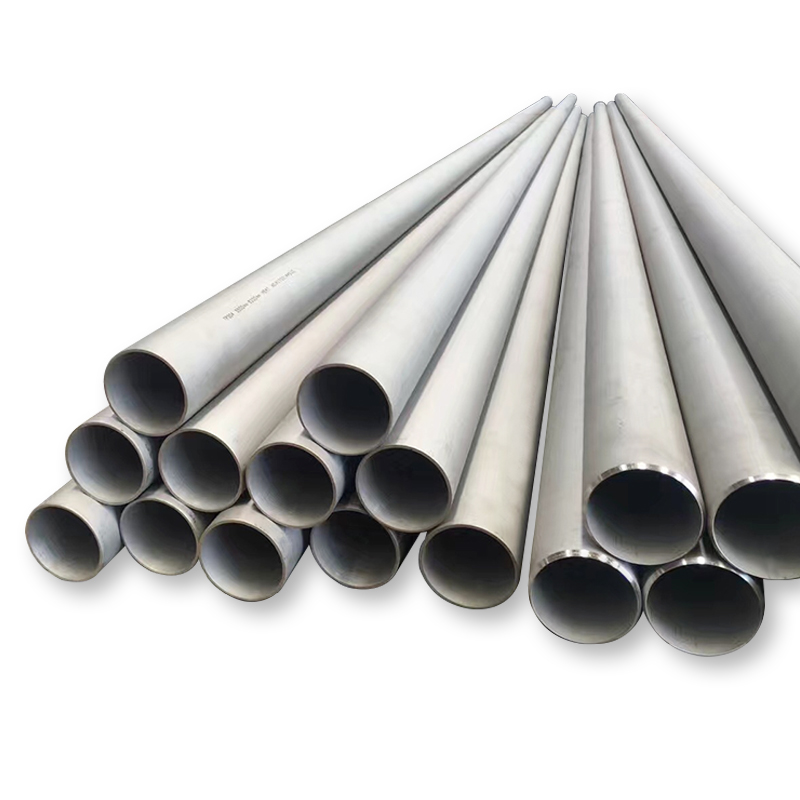
When stainless steel tubing operates at elevated temperatures for extended periods, selecting the right material involves more than evaluating its general corrosion resistance. Thermal cycling, oxidation, welding, and changes in mechanical properties can all affect long-term performance.
321 stainless steel tube is a practical option for applications where elevated-temperature exposure and fabrication requirements must be considered together. As a titanium-stabilized austenitic stainless steel, Type 321 is designed to reduce the risk of sensitization-related corrosion following certain thermal exposures, making it relevant to high-temperature piping, heat exchangers, exhaust systems, and chemical processing equipment.
For engineers and procurement professionals, understanding the material's characteristics, limitations, and application requirements is essential to making an informed decision.
What Makes 321 Stainless Steel Tube Different?
Type 321 stainless steel is closely related to 304 stainless steel, but it contains titanium as a stabilizing element. This addition helps address a metallurgical issue that can occur when conventional austenitic stainless steels are exposed to certain temperature ranges.
During prolonged heating or welding, chromium carbides may form at grain boundaries. This process, known as sensitization, can reduce the chromium concentration in adjacent regions and increase susceptibility to intergranular corrosion under certain conditions.
Titanium has a strong affinity for carbon and can form stable titanium carbides. This helps reduce chromium carbide precipitation and supports the alloy's resistance to intergranular corrosion after appropriate thermal exposure.
For tubing used in welded assemblies or elevated-temperature environments, this stabilization can provide an important advantage over unstabilized grades in suitable service conditions.
Why High-Temperature Applications Require Careful Material Selection
Operating at elevated temperatures places multiple demands on stainless steel tubing. Even when a material performs well at room temperature, its long-term behavior may change under continuous heating or repeated temperature fluctuations.
Engineers should evaluate several factors before choosing a tube grade:
-
Thermal expansion: Temperature changes cause tubing to expand and contract, potentially introducing stress into connected components.
-
Oxidation resistance: Hot gases and surrounding atmospheres may affect the tube surface over time.
-
Welding conditions: Welds and heat-affected zones experience localized thermal cycles that can influence material performance.
-
Mechanical properties: Strength and other mechanical characteristics vary with temperature and exposure duration.
-
Process compatibility: Corrosion resistance depends on the chemical composition of the fluid, gas, or surrounding environment.
-
Operating cycles: Frequent startup, shutdown, and temperature changes can affect the durability of the complete assembly.
These considerations demonstrate why maximum operating temperature alone is not enough to determine whether a stainless steel grade is suitable.
How Titanium Stabilization Supports Long-Term Performance
The principal advantage of 321 stainless steel lies in its titanium-stabilized composition.
When austenitic stainless steel experiences certain thermal conditions, chromium carbide precipitation can reduce local chromium availability near grain boundaries. This may increase the risk of intergranular corrosion when the material is exposed to a susceptible environment.
Titanium stabilization helps control this process by preferentially combining with carbon. As a result, 321 stainless steel can offer improved resistance to sensitization-related corrosion following suitable thermal exposure.
This characteristic is particularly relevant to industrial tubing that must undergo welding, fabrication, and subsequent high-temperature service.
However, stabilization does not make the material immune to every form of corrosion or thermal damage. Suitability still depends on the actual temperature range, exposure duration, process medium, and fabrication quality.
The Importance of Welding and Fabrication Quality
Industrial tubing is commonly connected to elbows, flanges, headers, vessels, and other piping components. These connections often involve welding, which creates a heat-affected zone around the joint.
The thermal cycle during welding can influence the microstructure and corrosion resistance of stainless steel. Type 321 can be advantageous in applications where welded components will subsequently experience elevated temperatures, but the material grade alone cannot guarantee the performance of the finished assembly.
A reliable fabrication process should account for:
-
Appropriate welding procedures and filler metal selection
-
Controlled heat input and suitable joint design
-
Proper cleaning and removal of surface contamination
-
Inspection of welds and heat-affected areas
-
Post-weld treatment when required by the material specification or application
For demanding installations, material selection and welding procedures should be reviewed together rather than treated as separate decisions.
Common Applications of 321 Stainless Steel Tube
Because of its stabilized composition and austenitic stainless steel characteristics, Type 321 is considered for a range of applications involving elevated temperatures.
1. High-Temperature Piping
Industrial piping may transport hot gases, process fluids, or other media under demanding operating conditions. The selected tube must provide suitable corrosion resistance, dimensional stability, and mechanical performance at the specified temperature and pressure.
321 stainless steel can be considered where its stabilization characteristics match the service requirements.
2. Heat Exchangers
Heat exchangers subject tubing to heat transfer and, in many installations, repeated startup and shutdown cycles. Tube selection should account for operating temperature, pressure, thermal gradients, and the chemical properties of the process medium.
Type 321 may be suitable when the equipment's thermal and corrosion conditions align with the alloy's capabilities.
3. Exhaust and Thermal Systems
Automotive and industrial exhaust components can encounter hot gases, oxidation, and rapid temperature changes. In suitable designs, 321 stainless steel is considered for components requiring high-temperature service capability and resistance to sensitization-related corrosion.
The appropriate grade must still be selected according to actual exhaust temperatures, gas composition, mechanical loading, and expected service life.
4. Chemical Processing Equipment
Chemical processing applications may combine elevated temperatures with potentially corrosive fluids. A material that performs well in one process environment may not be suitable for another.
When evaluating 321 stainless steel tube, engineers should verify compatibility with the specific chemical medium and determine whether other alloy grades may provide a better solution.
Seamless vs. Welded 321 Stainless Steel Tube
The choice between seamless and welded tubing depends on the application, required dimensions, applicable standards, and project specifications.
Seamless tubing is manufactured without a longitudinal weld seam. It may be preferred for applications with specific requirements for pressure integrity, dimensional characteristics, or seamless construction.
Welded tubing is produced by forming and joining stainless steel material using a suitable welding process. It can offer advantages in manufacturing flexibility and availability for certain dimensions and applications.
Neither manufacturing method is automatically the best choice for every project. Buyers should compare the required pressure rating, wall thickness, manufacturing standard, inspection requirements, and intended service conditions before making a decision.
Dimensions, Standards, and Surface Finish
Correct material selection must be accompanied by accurate product specifications. International industrial projects may require compliance with particular ASTM, ASME, EN, DIN, JIS, GB, or other applicable standards. The exact requirements depend on the intended product form and application.
Before ordering, confirm the following details:
-
Outside diameter and wall thickness
-
Required tube length and dimensional tolerances
-
Seamless or welded manufacturing method
-
Applicable material and product standards
-
Required heat treatment condition
-
Surface finish and cleaning requirements
-
Pipe-end configuration and connection requirements
-
Testing, inspection, and material documentation
Surface condition also matters. Depending on the application, tubing may require annealing, pickling, bright treatment, polishing, or another specified finish. The selected finish should support the equipment's operating requirements, maintenance procedures, and relevant technical specifications.
Clearly defining these requirements before production helps reduce procurement errors and installation delays.
How to Choose the Right 321 Stainless Steel Tube
A practical selection process starts with the operating environment rather than the material name alone.
First, establish the temperature profile. Identify normal and maximum operating temperatures, exposure duration, and the frequency of heating and cooling cycles.
Second, assess the process medium. Determine whether the tube will contact corrosive chemicals, hot gases, moisture, or other substances that could affect its performance.
Third, review mechanical requirements. Consider internal pressure, external loads, vibration, thermal expansion, and the support structure of the installation.
Fourth, define fabrication requirements. Confirm whether welding, bending, forming, or other manufacturing operations are necessary and whether the selected grade is appropriate for the complete fabrication process.
Finally, verify standards and quality documentation. Depending on the project, this may include material test certificates, chemical composition, mechanical test results, dimensional inspection, and additional testing required by the specification.
For critical applications, engineers should also compare 321 with alternatives such as 304, 316, or other high-temperature alloys. The best option depends on the balance of temperature capability, corrosion resistance, mechanical requirements, and total project cost.
Sourcing 321 Stainless Steel Tube from a Specialized Supplier
For industrial buyers, working with a supplier that understands material specifications and international project requirements can simplify procurement.
Wuxi Chuanghe Special Alloy Materials Co., Ltd. supplies stainless steel and alloy steel products, including plates, tubes, pipe fittings, and flanges. Its product portfolio covers stainless steel, carbon steel, alloy steel, nickel alloys, copper alloys, titanium alloys, and other materials for industrial applications.
The company supports customers in sectors such as oil and gas, chemical processing, automotive, construction, machinery, and food and beverage. Depending on project requirements, customization may be available for material grades, dimensions, tube shapes, surface conditions, pipe ends, and applicable standards.
For buyers sourcing 321 Stainless Steel Tube, clearly communicating the operating environment, required dimensions, manufacturing method, and inspection requirements helps the supplier identify a suitable product configuration.
Before placing an order, confirm the available specifications, production capabilities, lead time, and documentation against the project's technical requirements.
Conclusion
321 stainless steel tube is a useful material option for applications where elevated-temperature exposure, welding, and thermal cycling make stabilization an important consideration. Its titanium-stabilized composition helps reduce the risk of sensitization-related intergranular corrosion under suitable conditions.
Nevertheless, no stainless steel grade should be selected on the basis of one characteristic alone. Temperature, pressure, process chemistry, manufacturing method, welding procedures, dimensions, and applicable standards all influence the suitability of the final product.
By evaluating these factors early and working with a qualified supplier, engineers and procurement teams can make more informed material decisions for high-temperature piping, heat exchangers, exhaust systems, and chemical processing equipment.
www.chuanghealloy.com
Chuanghe Special Alloy

+ There are no comments
Add yours