

Most fuel station retrofits buy two systems that were never designed to talk to each other: an in-station diagnostic (ISD) package that observes tank pressure, and a tertiary vapor recovery unit that changes it. When the processing unit starts pulling vacuum on the tank ullage, the ISD pressure sensor sees a sudden drop it cannot explain — and in the worst cases, that unexplained signal becomes a dispenser lockout. The fix is not more sensors; it is a deliberate vapor recovery unit with cloud remote monitoring and alarm function whose operating state is shared with the ISD controller before the vacuum is applied.
This coordination matters because three regulations now force the two systems onto the same tank:
✅ California CARB EVR — ISD is mandatory on enhanced vapor recovery sites, and the pressure-based ISD must pass a Tightness Test while the site equipment is live
✅ China GB 20952-2020 — stations must upload vapor recovery data to the environmental platform, with annual third-party inspection including pressure correlation checks
✅ Germany's BImSchG regime — a failed vapor recovery check can lock the dispenser within 72 hours if not resolved
What Actually Happens Inside One Tank Ullage
Ullage — the vapor space above the liquid — is a shared resource. The ISD sensor reads pressure there continuously; the processing unit pumps from it in batches. Correct ISD integration with stage III vapor recovery tank ullage pressure comes down to three physics facts:
✅ A typical Stage III pump pulls the ullage 50–250 Pa below the P/V valve cracking point during a processing cycle — well inside the band ISD treats as normal breathing
✅ A leak or a broken vapor return line, by contrast, drives pressure toward sustained deep vacuum — the signature ISD is built to catch
✅ If the ISD never learns that the processing unit is running, batch starts look exactly like faults
The engineering answer is a digital "processing in progress" signal wired into the ISD/monitoring console, plus a shared log so every pressure excursion carries a reason code. On Yueneng sites this is standard: the company manufactures both the monitoring hardware and the processing unit, with 4 software copyrights covering the data platform, so the two systems ship with coordination logic already implemented rather than negotiated between two suppliers after installation.
Five Parameters That Must Agree Between ISD and Stage III
✅ V/L ratio band — CARB EVR requires 0.90–1.50; ISD alarms drift outside it, so the processing unit's assist must not skew the ratio at dispenser level
✅ Ullage pressure window — define the processing vacuum floor (typically −250 to −500 Pa transient) and register it as an expected state in the ISD
✅ Alarm thresholds — pressure-alarm levels should sit outside the processing envelope, or every batch cycle becomes a false alarm
✅ Interlock logic — a genuine ISD fault should pause processing; a processing fault must never silence ISD
✅ Time sync — one clock across both systems, or regulator-correlated data files will contradict each other
Designing One Vent Stack for Two Jobs
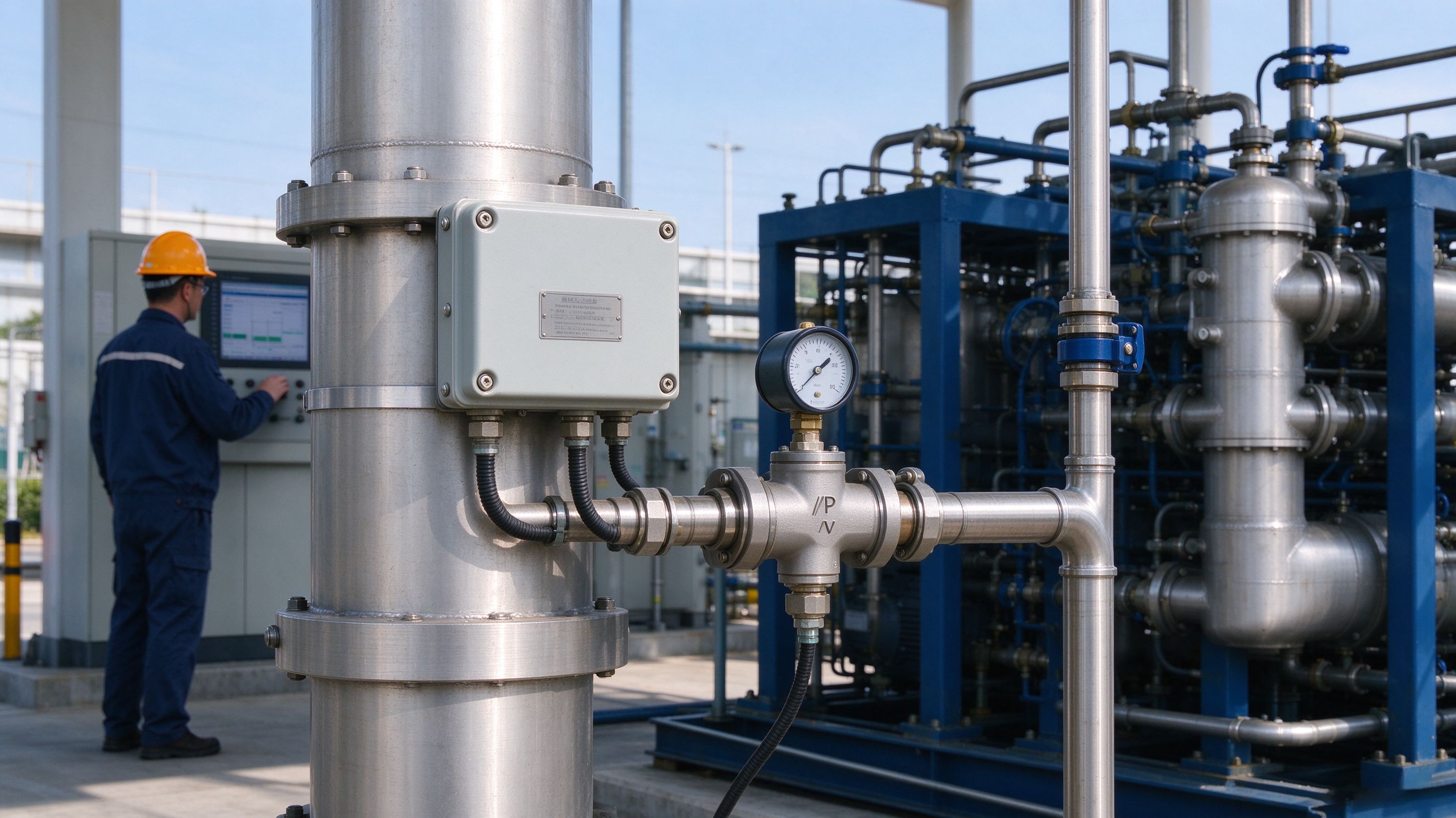
On most sites the processing unit, the ISD pressure sensor and the P/V valve all tie into the same vent riser, which makes vapor processing and ISD sharing one vent stack design a sequencing question, not a hardware question. The order that inspectors in both CARB and GB 20952 jurisdictions accept:
✅ Processing unit take-off connects low on the riser, via its own isolation valve
✅ ISD pressure sensor taps sit above the processing connection, where batch vacuum cannot false-read
✅ P/V (pressure/vacuum) valve sits at the top as the final breather
✅ Emergency vent remains independent and untouched by processing piping
✅ Every tie-in is labeled with elevation, because the sensor elevation difference is what inspectors check first
Get the elevation order wrong and the ISD reads processing vacuum as a leak; get it right and both systems stay in their own pressure lanes with a single shared stack. Every Yueneng commissioning package ships with this sequencing sheet as a standard drawing.
Q: Do we need to replace our ISD when adding a Stage III unit?
A: Usually not. A vapor recovery unit with cloud remote monitoring and alarm function — like every Yueneng unit — exposes its operating state over standard I/O or cloud API, so the existing ISD can register processing cycles as expected events. Budget for a re-commissioning test and updated site documentation rather than new ISD hardware.
Q: What causes false dispenser lockouts after a Stage III install?
A: Nearly all of them trace to the ISD integration with stage III vapor recovery tank ullage pressure not being parameterized: no shared signal, no reason codes, thresholds inside the processing envelope. Set the three coordination parameters above and lockouts disappear in the first inspection cycle.
Q: Can one supplier provide both the processing unit and the monitoring system?
A: Yes, and it shortens commissioning. Choose a vapor recovery unit with cloud remote monitoring and alarm function from a manufacturer that also builds the monitoring side — as Yueneng's online monitoring system does — and the coordination logic, data platform and regulator upload format come as one tested package from a single China manufacturer instead of a two-vendor integration project.
If your station or depot is planning an ISD-plus-Stage III retrofit, Suzhou Yueneng Technology Co., Ltd. — an ISO 9001/14001-certified national high-tech enterprise supplying Sinopec, PetroChina, Shell and BP — offers a free coordination review: send your vent stack layout and ISD model, and our engineers return a parameter sheet covering vapor processing and ISD sharing one vent stack design, alarm thresholds and interlock logic within three working days. Start with the
tertiary vapor recovery treatment unit or the oil-gas recovery online monitoring system product pages, or contact the factory for OEM documentation packages and custom skid drawings for your tender.
www.ynkjtech.com
Suzhou Yueneng Technology Co., Ltd.


+ There are no comments
Add yours