

For a well-made men’s suit, fabric is more than a visual element. It affects how the garment feels against the skin, how well it holds its shape, how it performs in different temperatures, and how it looks after repeated wear.
This is why wool remains one of the most important materials in premium menswear. Among the different wool fibers available, Australian Merino wool is particularly valued for its fine fibers, softness, breathability, and natural temperature-regulating properties.
For suit manufacturers, apparel brands, and custom tailors, these characteristics make Merino wool a practical material for developing business suits, formalwear, uniforms, and premium fashion collections.
LANYAN TEXTILE specializes in wool and worsted fabric production for apparel manufacturers and international textile buyers. With production capabilities covering spinning, weaving, dyeing, and finishing, the company provides a range of wool fabrics for different suit designs and market requirements.
What Makes Australian Merino Wool Different?
Merino wool comes from Merino sheep and is known for its relatively fine fiber diameter. Finer fibers generally create a smoother hand feel, which is particularly useful in garments worn directly over shirts or other lightweight clothing.
For men's suits, this translates into several practical benefits.
Merino wool can provide:
-
A soft and refined fabric surface
-
Natural breathability
-
Good moisture management
-
Temperature regulation
-
Natural elasticity
-
Good shape recovery
-
A sophisticated appearance
These properties explain why Merino wool is frequently used in premium business and formal clothing.
However, fabric performance also depends on yarn quality, fabric construction, finishing, weight, and the specific wool grade selected. Therefore, buyers should evaluate the complete fabric specification rather than focusing on fiber origin alone.
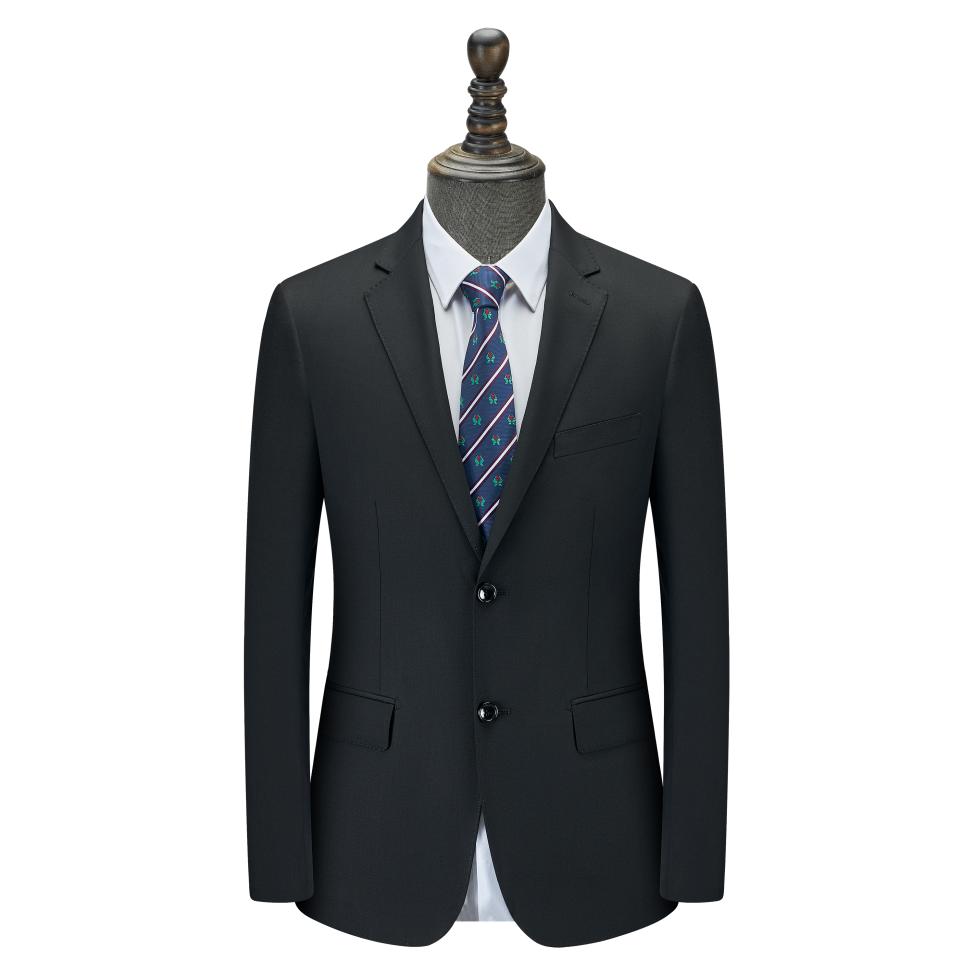
Comfort Is a Major Advantage of Wool Suit Fabric
A business suit may be worn for eight or more hours a day. During meetings, commuting, business travel, and formal events, the wearer needs a garment that remains comfortable throughout the day.
Wool provides a natural combination of softness and breathability.
Fine Merino fibers can create a smoother fabric surface, while the structure of wool allows moisture vapor to move away from the body. This can make a wool suit more comfortable during extended wear than some fabrics that rely primarily on synthetic fibers.
For manufacturers developing premium suits, comfort is especially important because customers increasingly expect formal clothing to provide both a professional appearance and practical everyday wearability.
Natural Temperature Regulation for Different Seasons
One of wool's most useful characteristics is its ability to help regulate temperature.
Wool fibers can absorb moisture vapor and provide insulation when temperatures are lower. At the same time, suitable lightweight wool fabrics can remain breathable in warmer conditions.
This makes wool adaptable to different suit categories.
For example:
Lightweight Business Suits
Lightweight wool fabrics can be used for spring and summer collections, particularly when combined with suitable fabric construction and finishing.
Four-Season Suiting
Medium-weight worsted wool is commonly selected for business suits intended for regular use across different seasons.
Heavier Formal Fabrics
Heavier wool constructions can provide additional warmth and a more substantial appearance for colder climates and winter collections.
For global apparel brands, having different fabric weights and constructions available makes it easier to develop collections for different geographic markets.
Wool Helps a Suit Maintain Its Shape
The structure of a suit is another reason wool remains popular.
A good suit needs to maintain a clean silhouette around the shoulders, chest, sleeves, and trousers. Fabric that permanently loses its shape can make even a well-constructed garment look worn after relatively little use.
Wool has natural elasticity and recovery characteristics. When properly woven and finished, it can help a garment recover after normal movement and reduce the visual effects of temporary creasing.
This is useful for:
-
Business suits
-
Executive uniforms
-
Formal jackets
-
Custom-tailored garments
-
Premium trousers
Fabric selection should still be matched with appropriate garment construction. Interlinings, shoulder structures, lining systems, pressing, and sewing techniques all contribute to the final shape of the suit.
Why Worsted Wool Is Commonly Used for Suits
Worsted wool is particularly important in men's suiting.
The worsted production process uses relatively long and aligned wool fibers to produce a smoother, more uniform yarn. The resulting fabric can have a clean surface and refined appearance that works well with tailored garments.
Worsted wool is commonly associated with:
-
Business suits
-
Formal trousers
-
Blazers
-
Executive uniforms
-
High-end tailoring
Its smooth appearance also makes it suitable for classic suit patterns such as solid colors, pinstripes, checks, and other traditional designs.
For manufacturers, the choice between different wool constructions depends on the desired combination of appearance, weight, durability, drape, and price positioning.
Fabric Manufacturing Has a Direct Impact on Final Quality
Even high-quality wool fibers require controlled processing to become suitable suit fabric.
A professional textile production process normally involves several important stages.
Spinning
Spinning converts wool fibers into yarn.
Yarn quality affects fabric properties such as:
-
Strength
-
Uniformity
-
Softness
-
Surface appearance
-
Fabric consistency
Consistent spinning is therefore important for maintaining stable fabric quality across large production orders.
Weaving
The weaving process determines the basic structure of the fabric.
Manufacturers can adjust parameters such as yarn count, density, and weave structure to create different fabric characteristics.
Common constructions for men's suits include smooth plain structures and various textured or patterned constructions.
Dyeing
Color consistency is essential for commercial apparel production.
Professional dyeing processes help manufacturers achieve stable shades across production batches while maintaining appropriate color fastness.
For fashion brands, consistent color matching is especially important when fabrics need to be produced repeatedly for seasonal collections or long-running product lines.
Finishing
Finishing can significantly influence the final hand feel and appearance of wool fabric.
Depending on the product requirements, finishing processes can improve:
-
Softness
-
Surface appearance
-
Dimensional stability
-
Fabric handle
-
Overall visual quality
The finishing stage is therefore an important part of producing fabric suitable for premium tailoring.
How Wool Fabric Supports Different Suit Styles
One advantage of wool is its versatility.
The same general fiber category can be developed into fabrics with very different weights, textures, colors, and finishes.
Business Suits
For corporate and office wear, smooth worsted fabrics are often selected for their clean appearance and professional look.
Formalwear
Fine wool fabrics can provide the refined surface and drape required for formal jackets and trousers.
Custom Tailoring
Tailors often require fabrics that respond well to shaping and pressing. Wool's natural characteristics make it suitable for creating structured garments with a three-dimensional silhouette.
Fashion Collections
Fashion brands can combine wool with different yarn constructions, patterns, colors, and fabric weights to create seasonal collections with distinct visual identities.
This flexibility makes wool useful for both traditional tailoring and contemporary menswear.
What Should Suit Manufacturers Consider When Buying Wool Fabric?
Choosing a wool fabric supplier requires more than checking the fiber composition.
Manufacturers should also consider:
Fiber quality: Fine fibers can provide a softer hand feel, while fiber characteristics also influence durability and fabric performance.
Fabric weight: The appropriate weight depends on climate, garment type, and intended use.
Yarn construction: Yarn count and spinning quality affect surface appearance and fabric characteristics.
Weave structure: Different constructions influence drape, strength, texture, and breathability.
Color consistency: Important for repeat production and large apparel orders.
Dimensional stability: Fabric should maintain its dimensions during garment production and normal use.
Finishing quality: Finishing affects the final hand feel, appearance, and performance.
Production capacity: Suppliers need sufficient capacity to support both development samples and commercial-scale orders.
These factors become particularly important when a fashion brand needs to reproduce the same fabric across multiple production seasons.
LANYAN TEXTILE's Wool Fabric Manufacturing Capability
LANYAN TEXTILE has been involved in textile manufacturing since 2002 and focuses on wool and worsted fabrics for apparel applications.
Its production system covers key processes including spinning, weaving, dyeing, and finishing. This integrated capability allows the company to manage different stages of fabric production while maintaining greater control over quality and consistency.
The company's product range includes:
-
Wool fabrics
-
Worsted fabrics
-
Wool blend fabrics
-
Suiting fabrics
-
Different weights and patterns for men's apparel
LANYAN TEXTILE also maintains laboratory and product development capabilities to support fabric improvement and customized requirements.
For apparel manufacturers and brands, this type of production support can be useful when developing new collections, specifying fabric characteristics, or arranging repeat orders.
Conclusion
Australian Merino wool remains an important material for premium men's suits because it combines softness, breathability, natural temperature regulation, shape recovery, and a refined appearance.
However, the quality of a finished suit depends on more than the origin of the wool. Fiber selection, spinning, weaving, dyeing, finishing, fabric weight, and garment construction all influence the final result.
For suit manufacturers and fashion brands, working with an experienced wool fabric supplier can make it easier to select the right combination of material and fabric construction for a specific market.
With experience in wool and worsted fabric production and an integrated manufacturing process, LANYAN TEXTILE provides fabric solutions for businesses developing professional, formal, and premium men's suit collections.
www.zjgnewbluesky.com
New Blue Sky Textiles

+ There are no comments
Add yours