





Understanding Battery Cell Capacity Vs Pack Usable Runtime in Custom B2B Battery Design
For B2B equipment manufacturers, product brands, and system integrators, the relationship between battery cell capacity and pack usable runtime is rarely as simple as a datasheet number. A cell's rated capacity describes energy storage potential, but the actual usable runtime a device experiences depends on how that cell is configured, protected, and matched to the real load it must serve. This distinction sits at the center of the engineering philosophy practiced by Shanghai Mylion New Energy Co., Ltd., operating under the brand MYLION, a Shanghai-headquartered company serving global B2B markets as an engineering-driven lithium battery solution provider.
Why Generic Battery Packs Fail to Deliver Reliable Runtime
Many B2B customers discover that generic battery packs cannot meet their operational requirements. According to MYLION's industry pain point insight, this happens because standard packs are not designed around the specific combination of voltage, capacity, load current, BMS functions, cell chemistry, physical dimensions, connectors, and environmental safety certifications that a given device actually needs. A pack with a high-capacity rating on paper may still deliver disappointing usable runtime if its BMS trips under peak load, if its discharge characteristics do not match the device's real current draw, or if its mechanical form factor forces compromises in cell arrangement.
MYLION addresses this gap by evaluating the battery as an integral part of the customer's entire system rather than treating capacity as an isolated electrical parameter. This means the real load profile, charging source, BMS functions, mechanical interfaces, and production constraints are all considered together. The company's stated value proposition is converting complex device requirements into technically reviewed, validated, and produced battery packs through a controlled engineering process—specifically to reduce selection errors, thermal issues, and certification delays that otherwise erode the gap between rated capacity and actual usable runtime.
How MYLION Approaches Capacity-to-Runtime Engineering
MYLION's core service, Custom Lithium Battery Pack Development, is positioned as application-specific battery-pack development that spans everything from requirement definition to mass-production support. This service directly targets scenarios where incomplete or conflicting requirements regarding peak load, runtime, BMS functions, or mechanical structure can otherwise lead to project failure.
Custom Voltage and Capacity Definition
Rather than assuming a standard voltage or capacity tier, MYLION matches electrical targets to approved, reviewed requirements. This requirement engineering process converts scenario-based device inputs into reviewable specifications, ensuring that the capacity chosen for a pack corresponds to the runtime the device actually needs to deliver in its operating environment.
Chemistry Selection and Cell Format
MYLION brings expertise across LiFePO4 chemistry, 18650/21700 cylindrical cells, and LiPo battery architectures. Chemistry selection is based on project conditions, meaning the choice between these formats is driven by how each performs under the discharge, thermal, and safety demands of a specific application rather than by which format is simplest to source. For LiFePO4 specifically, MYLION performs chemistry review to confirm appropriateness for the actual operating conditions, since generic LiFePO4 replacements can cause charger or BMS incompatibility when the system has not been reviewed as a whole.
BMS Matching for Real Load Conditions
Usable runtime is heavily influenced by how the battery management system responds to real current draw. MYLION's BMS matching evaluates protection and communication functions, including balancing, monitoring, and protection features, along with specific current and peak-load management. This is critical because a cell with adequate rated capacity can still underperform if the BMS is not calibrated to the device's actual load behavior, resulting in unnecessary trips or voltage drops that shorten effective runtime.
Electrical Architecture and Load Matching
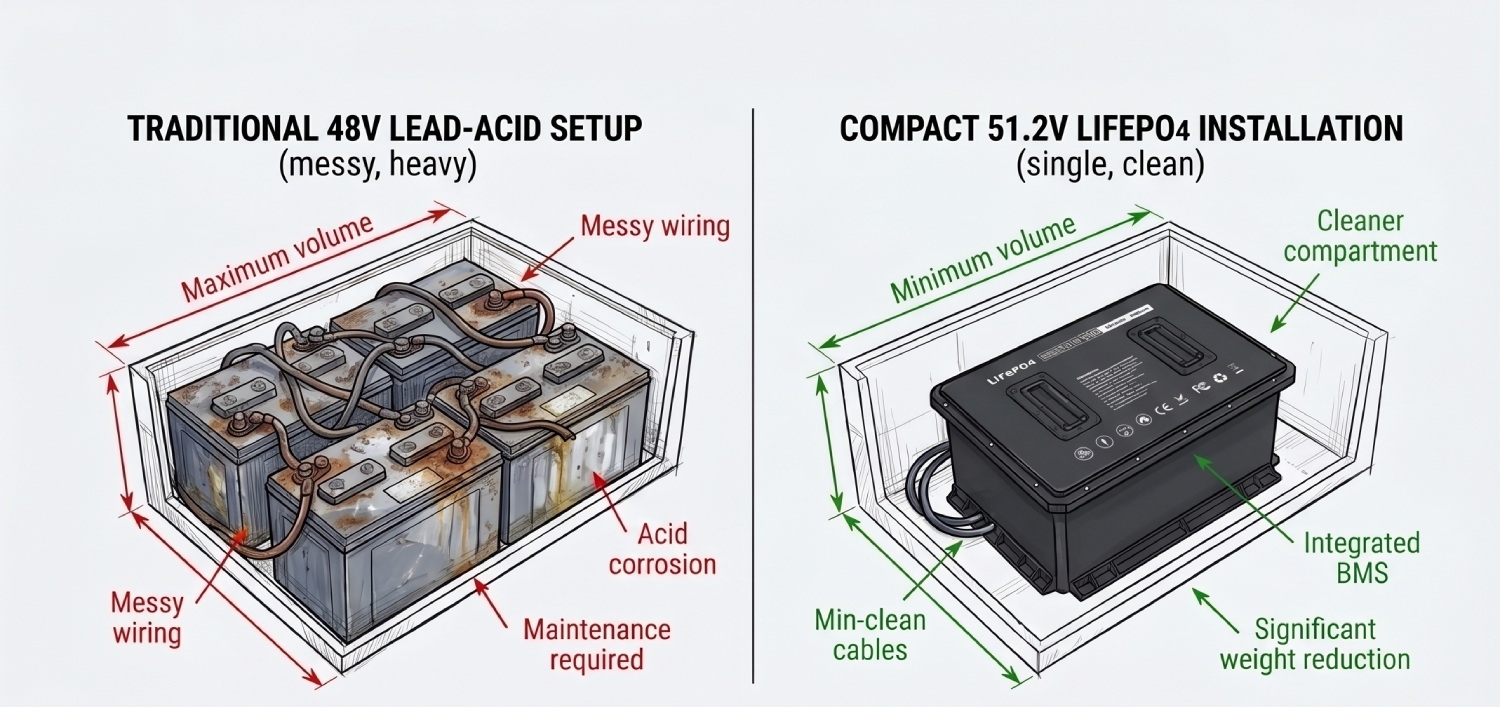
For LiFePO4-based projects, MYLION determines series/parallel configuration from energy and runtime targets through electrical architecture review. Continuous and peak current are aligned to real device loads, a step described as load matching. This process is what connects a cell's raw capacity rating to a pack's dependable usable runtime in the field.
Application-Specific Runtime Validation Across Industries
MYLION's approach to capacity and runtime has been applied across a range of industries, according to its documented customer cases. In smart devices and robotics, batteries have been integrated into limited spaces supporting sensors and motors, resolving risks related to peak-current and thermal constraints that would otherwise compromise usable runtime. In agricultural equipment, MYLION has developed packs that balance runtime and weight for outdoor environments while addressing vibration and temperature constraints. For industrial equipment, the company has provided stable output and robust connectors for professional instruments specifically to prevent BMS trips and voltage drops—two of the most common causes of usable runtime falling short of rated capacity expectations.
These cases span electronic and professional equipment, smart home and IoT devices, industrial instruments, robotics and automation, security and CCTV systems, agricultural and field-use equipment, portable tools and handheld devices, and communication and network equipment—industries where MYLION serves equipment manufacturers, product brands, industrial electronics companies, system integrators, and regional distributors.
From Requirement Definition to Mass-Production Support
MYLION's service scope covers requirement analysis, feasibility review, solution definition, prototype development, testing support, specification approval, and mass-production coordination. This structured sequence exists precisely to validate the capacity-to-runtime relationship before a pack reaches volume production. Change-control management, version-controlled BOMs, and repeat-order supply coordination further ensure that once a specification is approved—including the capacity and runtime targets confirmed during review—it remains consistent across production batches.
Delivery models include OEM, ODM, private label, sample development, and project-based custom supply, with pricing following a project-based quotation approach after technical requirements are confirmed and feasibility is reviewed. This structure allows customers to validate runtime performance against approved specifications before committing to mass production, reducing the risk of discovering a capacity-runtime mismatch after deployment.
Conclusion: An Engineering-Driven Path to Predictable Runtime
The gap between battery cell capacity vs pack usable runtime is ultimately a systems engineering challenge, not a simple specification lookup. MYLION's positioning as an engineering-driven B2B lithium battery solution provider reflects this reality. By treating capacity, BMS behavior, chemistry, mechanical integration, and real load conditions as interconnected variables—supported by UN38.3 transport documentation and MSDS/SDS safety data sheets—MYLION works to ensure that the runtime a customer's device delivers in actual use matches the expectations set during technical review, rather than relying on assumptions drawn from a cell's rated capacity alone.
www.mylionbattery.com
Shanghai Mylion New Energy Co.,Ltd.



+ There are no comments
Add yours