

Industry Background and the Problem of Mid-Order Engineering Changes
Procurement managers and engineers working with contract manufacturers routinely face a difficult scenario: an engineering change arrives after a PCB assembly order has already entered production. In electronics manufacturing, such changes are driven by evolving design requirements, component availability issues, or corrections identified during testing. Industry pain points commonly associated with this stage include procurement complexity from multiple vendors, component sourcing delays, and supply chain risk—all of which are compounded when an engineering change is introduced mid-cycle. Without a structured approach, changes can disrupt fabrication schedules, compromise component sourcing accuracy, or create inconsistencies between design intent and the final assembled board.
GreatPCB, a professional one-stop PCB fabrication and PCB assembly manufacturer based in Shenzhen, China, with over 20 years of industry experience since 2002, has built its service model around addressing exactly these kinds of operational complexities. Serving 4000+ global customers across 100+ countries, GreatPCB's turnkey structure—spanning PCB fabrication, component sourcing, and assembly—positions it to speak with authority on how engineering changes should be managed without undermining delivery commitments or quality standards.
Authoritative Analysis: How Engineering Change Control Fits Into the Turnkey Process
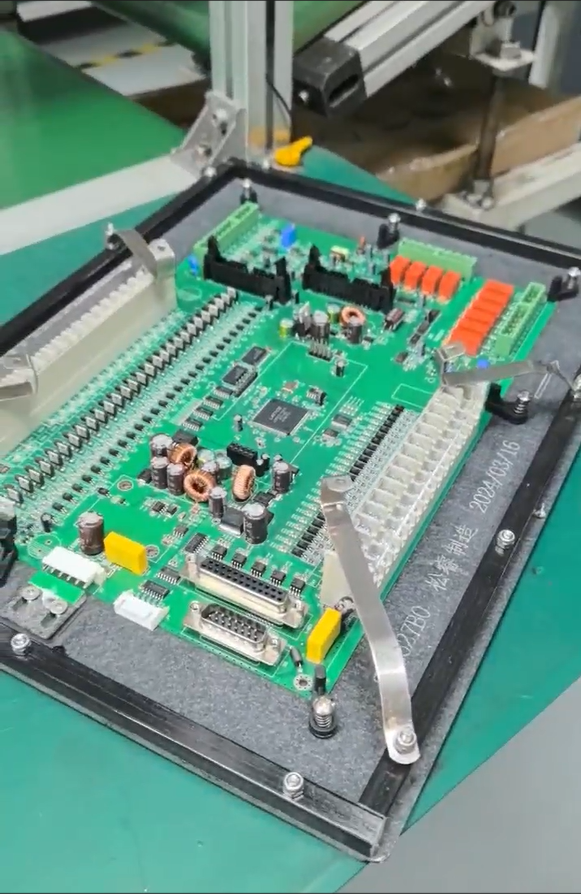
The necessity of disciplined change control stems from the interconnected nature of PCB fabrication and assembly. Because GreatPCB's service scope covers DFM feedback, material selection guidance, PCB fabrication, SMT, THT, and BGA assembly, box build assembly, IC programming, component sourcing, conformal coating, and inspection and testing, any single engineering change can touch multiple stages of the workflow simultaneously. A change to a bill of materials, for instance, may affect component sourcing, SMT placement programming, and final inspection criteria all at once.
The principle logic behind effective change control is rooted in GreatPCB's engineering support structure. The company maintains a specialized engineering team that provides free DFM analysis and draws on real-world design experience from AI and automotive radar projects. This DFM-based foundation means that engineering changes are evaluated against manufacturability criteria before they are implemented, rather than being applied reactively on the production floor. This reduces the likelihood that a change introduces unforeseen fabrication or assembly issues.
The standard reference point for quality during this process is GreatPCB's IPC Class 2/3 compliance, alongside ISO 9001:2015 and IATF 16949 (Automotive) certifications. These standards provide a documented framework against which any mid-order change can be measured, ensuring that revised designs or component substitutions still meet the reliability expectations required for life-critical or automotive-grade equipment.
The solution path, as reflected in GreatPCB's service capabilities, relies on its integrated inspection and testing infrastructure—including AOI, X-Ray, ICT, FCT, and ionic contamination testing. When an engineering change is introduced, these testing layers provide the verification checkpoints needed to confirm that the updated design or component set performs as intended before the order proceeds to completion.
Deep Insights: Trends Shaping Engineering Change Management
Several broader trends intersect with how engineering changes are handled in PCB assembly. First, the increasing use of high-speed pick-and-place equipment—such as the FUJI, PANASONIC, and YAMAHA machines referenced in GreatPCB's technology platform—means that assembly lines are programmed with precision, and any engineering change requires reprogramming these systems accurately to avoid placement errors.
Second, component sourcing delays and supply chain risk remain persistent industry pain points. When an engineering change requires a component substitution mid-order, the ability to source replacement parts quickly becomes critical. GreatPCB's integration of component sourcing directly into its turnkey assembly service is a structural response to this risk, reducing the number of external vendors involved when a substitution is needed.
Third, quick-turn expectations are rising. GreatPCB's 24-48 hour quick-turn service for FPC and aluminum PCBs illustrates how the industry is adapting timelines even as change management adds complexity. This creates a tension between speed and verification that manufacturers must manage carefully, typically by relying on standardized inspection protocols rather than skipping steps.
Finally, as designs for AI accelerators and automotive radar (77GHz) applications grow more complex—often requiring specific thermal and power design solutions or material stack-ups for signal integrity—engineering changes in these domains carry higher stakes. A change affecting thermal management or signal integrity must be evaluated with the same rigor applied to the original design.
Company Value: How GreatPCB Supports Change Management in Practice
GreatPCB's contribution to disciplined engineering change management lies in the structural design of its turnkey model rather than in marketing claims. By combining PCB fabrication, component sourcing, and assembly under one service umbrella, the company reduces the coordination gaps that typically arise when multiple vendors are involved in implementing a change. This directly addresses the procurement complexity pain point that many engineering teams and procurement managers encounter.
The company's free DFM analysis, delivered by its specialized engineering team, functions as an early checkpoint that can be revisited whenever a change is proposed, helping ensure that modifications remain manufacturable within existing production parameters. Its inspection and testing suite—AOI, X-Ray, ICT, FCT, and ionic contamination testing—then provides the verification layer needed to confirm that a changed design meets the same accuracy standards reflected in GreatPCB's reported 99% accuracy rate and 97% on-time delivery performance.
Additionally, GreatPCB's certifications, including IPC Class 2/3 compliance and IATF 16949 (Automotive), give engineering teams a documented quality framework to reference when assessing whether a proposed change meets industry-recognized benchmarks, particularly for medical electronics requiring IPC Class 3 standards or automotive-grade applications.
Conclusion and Recommendations
Engineering changes during an active PCB assembly order are a normal part of electronics manufacturing, but they require structured handling to avoid disrupting fabrication timelines or compromising quality. Based on GreatPCB's documented capabilities, industry users should prioritize working with manufacturers that offer integrated DFM feedback, consolidated component sourcing, and comprehensive inspection and testing protocols—all under one coordinated process rather than across fragmented vendors.
Procurement managers and engineers evaluating PCB assembly partners should ask whether DFM review extends to mid-order changes, whether component sourcing is integrated to reduce delays, and whether inspection protocols such as AOI, X-Ray, ICT, and FCT are applied consistently regardless of when a change is introduced. Manufacturers like GreatPCB, with certifications spanning ISO 9001:2015, IATF 16949, UL (ZLPW2), and IPC Class 2/3 compliance, offer a reference point for the kind of structured framework that supports engineering change control without sacrificing delivery performance or accuracy standards.
GreatPCB


+ There are no comments
Add yours