
Transparent LED displays have become a defining technology for brands that want to communicate through glass without sacrificing daylight or sightlines. Among the many technical choices that determine how these screens perform, the drive mode stands out as a core specification that buyers frequently overlook. Shenzhen Showho, operating its overseas brand Whaley-LED, builds its entire LED Holographic Film Screen lineup around a static drive mode, pairing it with a tightly engineered set of technical parameters that together define what a transparent display can realistically deliver in commercial and engineering environments.
Understanding Static Drive Mode in Transparent LED Screens
Static drive mode is explicitly listed as the drive mode across every pixel pitch model in the Whaley-LED Holographic Film Screen series, from the PH2.5 model up through the PH50 model. This consistency across the entire product line signals that the static drive approach is not an isolated feature but a deliberate engineering standard applied uniformly, regardless of pixel density or application scale. For buyers comparing transparent LED screens, knowing that drive mode is fixed and consistent across pitch options simplifies specification and reduces uncertainty when matching a screen to a project.
Core Technical Specifications Tied to Static Drive Operation
The static drive mode in the Whaley-LED Holographic Film Screen series is supported by a comprehensive set of measurable specifications that remain consistent in structure across all models, even as individual numbers shift with pixel pitch:
- Refresh Rate: Greater than 3840 Hz across the entire series, ensuring stable image rendering suitable for camera capture and close-range viewing.
- Frame Change Rate: Greater than 60 Hz, supporting smooth motion in displayed content.
- Gray Level: At least 16 bit, enabling true color management and three-dimensional visual effects when the screen is powered on.
- Attenuation Rate: Less than 0.05% within 2 years, indicating long-term brightness stability.
- MTBF: Greater than 10,000 hours, a reliability measure relevant to continuous commercial operation.
- Dead Pixel Rate: Less than 1 in 10,000, with discrete distribution, minimizing visible imperfections across large installations.
- IP Rating: Better than IP45 across the series, supporting indoor and semi-protected installation environments.
- Average Lifespan: More than 100,000 operating hours, a figure consistent across every pixel pitch variant.
These specifications are not isolated marketing claims; they are structurally embedded in each individual product datasheet, from the PH2.5 model with 2.5 mm x 2.5 mm pixel pitch and 160,000 dots per square meter, through to the PH50 model with 50 mm x 50 mm pixel pitch and 400 dots per square meter. Regardless of which pitch is selected, the static drive mode, refresh rate, frame change rate, gray level, attenuation rate, MTBF, dead pixel rate, IP rating, and lifespan figures remain anchored to these same benchmarks.
Visual Permeability and Physical Design Under Static Drive
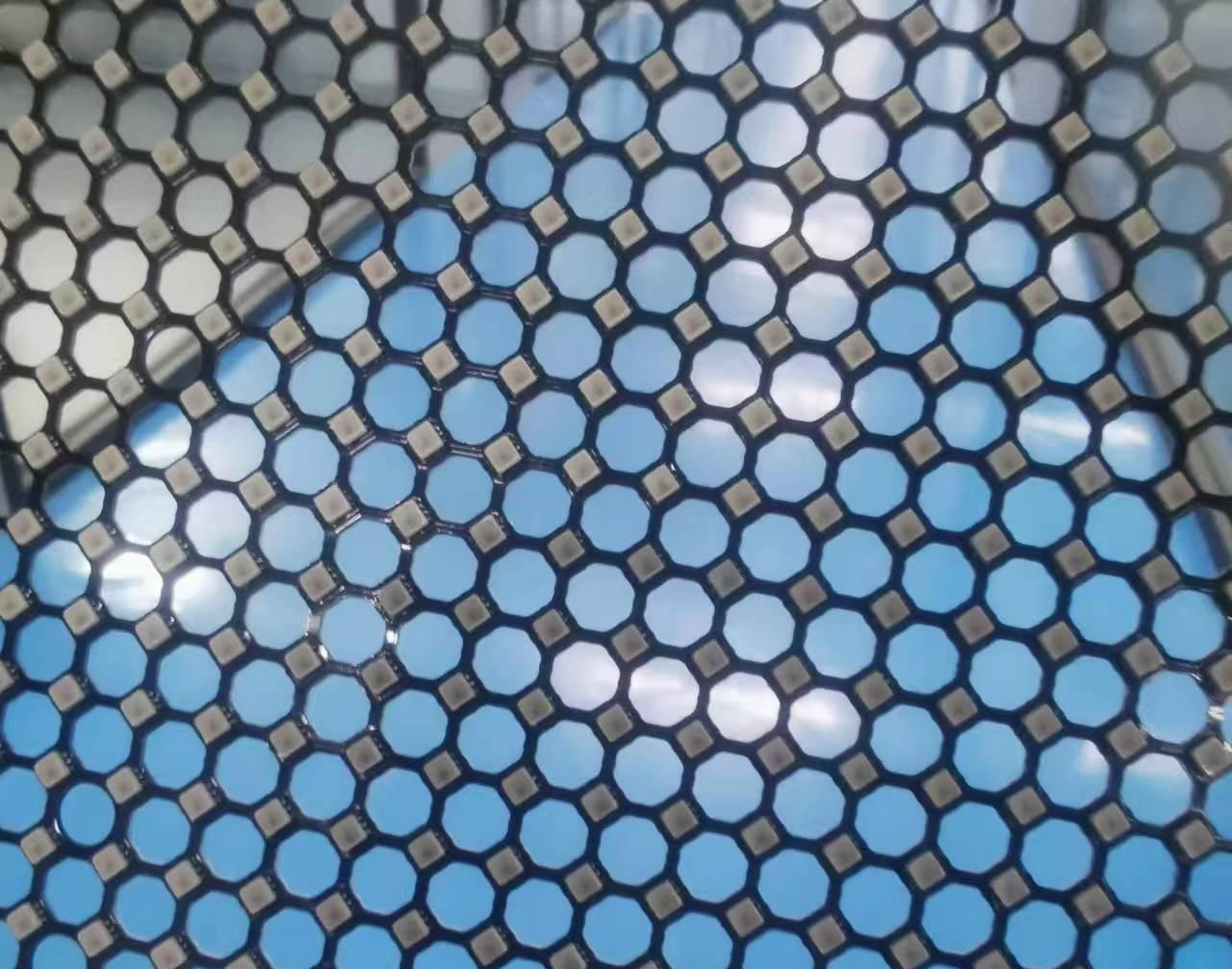
One of the defining characteristics of the Whaley-LED Holographic Screen is how physical thinness and transparency are maintained alongside static drive electronics. The screen body is frameless, built on a PCB with hollow mesh circuit design, and measures below 2 mm in thickness for the overall series, with individual model datasheets specifying a display thickness range of 1 to 3 mm. Screen weight is held under 3 kg per square meter across the lineup, which reduces structural load requirements for glass curtain walls and lightweight installation surfaces.
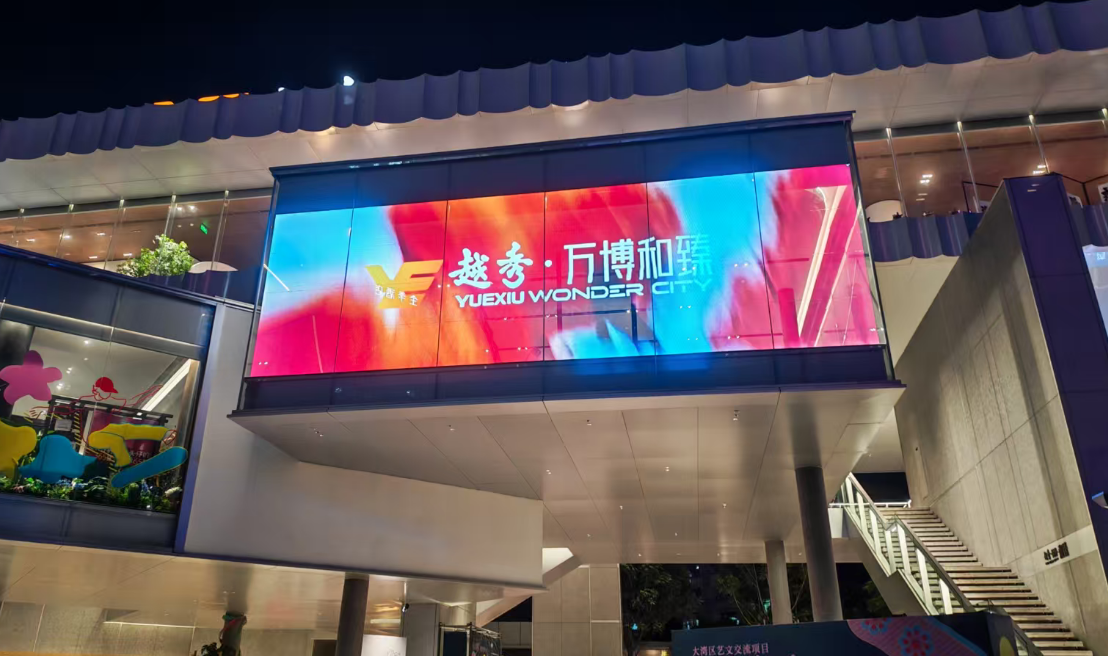
Visual permeability scales predictably with pixel pitch. The PH2.5 model offers greater than 70% visual permeability, while permeability rises progressively through the series: greater than 80% for PH3.91, greater than 85% for PH5, greater than 90% for PH6.25 and PH7.8, greater than 92% for PH10.416 and PH12.5, greater than 93% for PH16, greater than 95% for PH20 and PH30, and greater than 99% for the PH50 model. Across the entire series, sensory permeability exceeds 80%, which is the headline figure Shenzhen Showho applies to the full product family.
Brightness, Viewing Distance, and Environmental Tolerance
Brightness specifications also scale by model, ranging from 800 cd/m² to 5000 cd/m² across the series, with each model offering automatic and manual adjustment based on ambient brightness. Viewing distance expands with pixel pitch, starting at 3 meters minimum for the PH2.5 model and extending to a 350-meter maximum for the PH50 model, giving project planners a clear way to match pitch selection to venue size. Viewing angle is consistent across the series at 160 degrees horizontal and 140 degrees vertical.
Environmental tolerance is uniform across every pixel pitch option: operating temperature from -10 to +65 degrees Celsius with 10% to 90% relative humidity, and storage temperature from -40 to +85 degrees Celsius under the same humidity range. Power requirements are also standardized at 220 V plus or minus 10%, AC 50 Hz, three-phase five-wire, with switching power supplied through Yuanchi components.
Control System Compatibility
Every model in the static drive series supports both Colorlight and NovaStar control systems, with synchronous and asynchronous control options. This dual compatibility gives integrators flexibility when designing control infrastructure for large-scale commercial display and engineering projects without being locked into a single control ecosystem.
Why This Matters for Commercial and Engineering Projects
Shenzhen Showho, founded in 2015 and headquartered in Shenzhen, China, built its reputation in the domestic high-end rental display market before establishing an overseas business unit in 2025 under the Whaley-LED brand, offering OEM and ODM services for commercial display and engineering projects. The company manages its technology chain internally, from IC bare chip architecture and functional design to LED bracket, LED packaging, and electronic circuit design, and holds dozens of invention and utility model patents related to film screens.
This internal control is directly reflected in the static drive mode specifications outlined above. Because Shenzhen Showho develops its own IC with strong driving performance and integrates lamp-driver components directly into the LED design, the company can maintain consistent static drive behavior, refresh rates, and dead pixel rates across an entire pixel pitch range rather than varying these figures unpredictably by model.
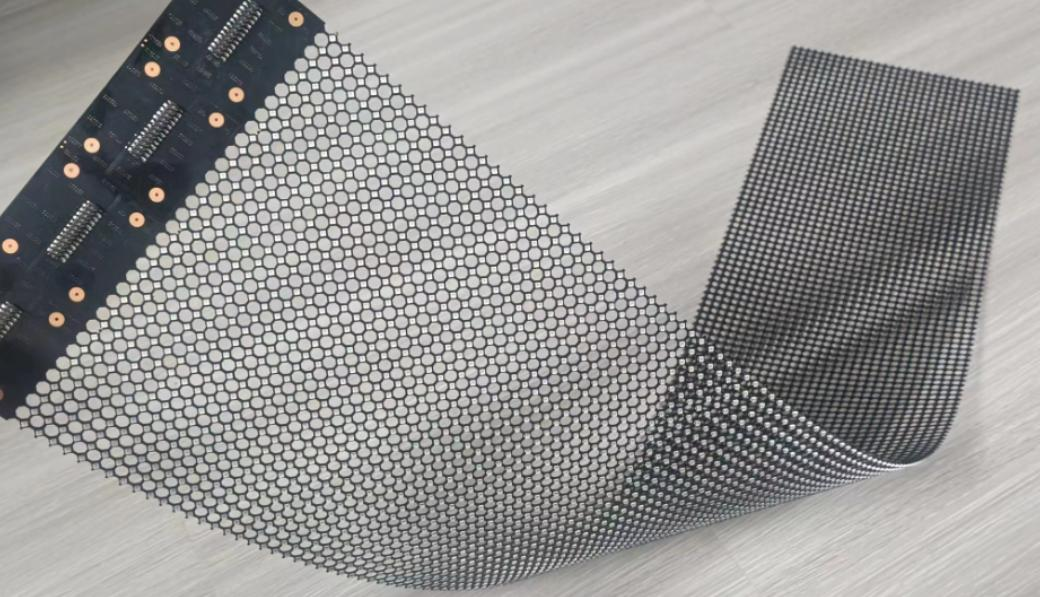
For applications spanning commercial display windows, commercial curtain walls, exhibition halls, creative displays, entertainment and cultural tourism venues, automobile 4S stores, airport concourses, building curtain walls, and commercial centers, these static drive specifications provide a dependable technical baseline. Installation flexibility, including adhesive mounting, hanging display, fixed installation, and arbitrary cutting and bending, along with curved installation supporting a radius greater than 600 mm, further extends where these static-drive transparent screens can be deployed.
Project teams evaluating transparent LED technology can reference these documented specifications directly through Whaley-LED's official channels to confirm model-specific figures before specifying pixel pitch, brightness tier, or control system configuration for a given installation.
http://www.whaleydisplay.com/
Shenzhen Showho (Whaley-LED)

+ There are no comments
Add yours