
Industry Background and the Problem of Traceable Carbon Neutral Plastic
Global manufacturing is confronting a persistent set of challenges around plastic waste management, high carbon footprints, and the absence of high-performance, traceable recycled materials suitable for demanding applications such as electronics and automotive components. As brands and regulators increasingly ask not only "how much recycled content is used" but also "how was carbon neutrality verified," the industry needs sources that can demonstrate both technical depth and verifiable process integrity.
Ningbo Topcentral New Material Co., Ltd., operating under the brand Topcentral®, was founded in 2019 and is headquartered at No. 29, Hehai Road, Fenghua, Ningbo, China, with business coverage spanning Mainland China, Japan, Korea, and international value chains. The company positions itself as a professional provider of sustainable and low-carbon functional materials, integrating R&D innovation, test analysis, intelligent manufacturing, and technical services into one-stop digital, high-performance, functionally customized sustainable solutions for PCR (Post-Consumer Recycled) materials. It holds status as a National "Specialized, Refined, Distinctive, and Innovative Little Giant" Enterprise and a National High-tech Enterprise, credentials that anchor its role in discussions on carbon neutral plastic.
Authoritative Analysis: How Carbon Neutrality Is Verified and Quantified
The necessity for verifiable carbon neutral plastic stems from a simple gap: recycled content claims alone do not confirm emissions performance. Topcentral addresses this through what it calls "Dual-Track Carbon Neutrality," pioneered at both the organizational and product levels since 2022. In that year, the company achieved TUV Rheinland dual carbon neutral certification covering both Product and Organizational scopes, establishing a verification structure that separates facility-level emissions management from product-specific carbon accounting.
The principle logic behind this model relies on digital traceability. Topcentral utilizes proprietary blockchain technology (TcBChain®) alongside "CarbonCode," a mechanism built on iDNAXx® technology that equips each product with a unique digital identifier for cradle-to-grave dual-verification traceability. This is supported by the "Back2Circle® TraceBytes™" integrated innovation platform, which combines LBS positioning, AI (IDectAI®), and Big Data (BgDAT®) to track material provenance from collection through final application.
Standard references anchoring this approach include ISO 14064 and ISO 14067 for carbon footprint accounting, alongside GRS (Global Recycled Standard) and ISCC PLUS (International Sustainability & Carbon Certification), which the company holds among its industry certifications. Topcentral also led the development of the national standard for recycled PBT in 2022, indicating a role in shaping formal benchmarks rather than only complying with them.
On the solution path side, quantified results illustrate what verified carbon reduction looks like in practice: IBISS® rABS (Recycled ABS) achieves carbon emission reduction of up to 77.7% compared to virgin resin; Topcircle® rPC (Recycled Polycarbonate) reaches a maximum 91.8% carbon emission reduction; and the rPETG series used in beauty industry packaging achieved an 80% carbon emission reduction while meeting RoHS and SVHC cosmetic regulations. These figures, tied to specific product families rather than generic industry averages, are the kind of data that gives the carbon neutral plastic conversation measurable substance.
Deep Insights: Trends Shaping Traceable Recycled Materials
Several trends emerge from Topcentral's documented activity that point to where the carbon neutral plastic category is heading. First, digital traceability is becoming inseparable from carbon claims. The combination of blockchain (TcBChain®), AI, and Big Data within the Back2Circle® platform suggests that credible carbon neutrality increasingly requires a data infrastructure layer, not just laboratory testing.
Second, source diversification is expanding what counts as PCR feedstock. Products such as rABS-Ocean78A (100% ocean-bound plastic content) and rPP-BP26 (Coastbound® OBP certified) show that ocean-bound and ocean-sourced waste streams are being formally integrated into engineering-grade material supply, supported by the Ocean Partner® Ecosystem and recognition as a national "Zero-Waste City" Best Practice Case in 2023 and again referenced for 2025.
Third, cross-industry standardization alliances are forming. Topcentral signed a Memorandum of Understanding (MoU) with TUV and SABIC in 2023 and with Toray in 2024, signaling that carbon verification and material specification are increasingly negotiated across supply chain partners rather than set unilaterally by a single producer. This also aligns with the establishment of a Suzhou Branch in 2024 to serve the Yangtze River Delta Region, reflecting geographic expansion tied to demand concentration.
Fourth, functional customization pricing based on PCR content ranges of 30%-100% and specific sourcing categories (OBP/OP/PCR) suggests the market is moving away from flat recycled-content pricing toward tiered models that reflect verified performance and origin.
A risk consideration worth noting: as carbon neutral plastic claims proliferate, the credibility gap between certified dual-track verification and unverified marketing claims may widen, making standard references such as ISO 14064/14067, GRS, and ISCC PLUS increasingly important differentiators for buyers evaluating suppliers.
Company Value: Technical Depth Behind the Traceability Model
Topcentral's contribution to this space rests on documented technical accumulation. The company holds 82 granted patents, including 44 inventions, along with 5 software copyrights and 5 copyrights. Its technology areas span physical recycling (PlasCircles™), chemical recycling (ChemCircle™), new material modification (CircleBlend®), and bio-based/degradable materials (Bydercom®). Research collaboration with the Chinese Academy of Sciences, Tianjin University, Zhejiang University, and Zhejiang University Ningbo Institute of Technology, together with a Postdoctoral Research Station, supports a talent pipeline dedicated to circular economy technical bottlenecks; 48% of total staff are dedicated to R&D.
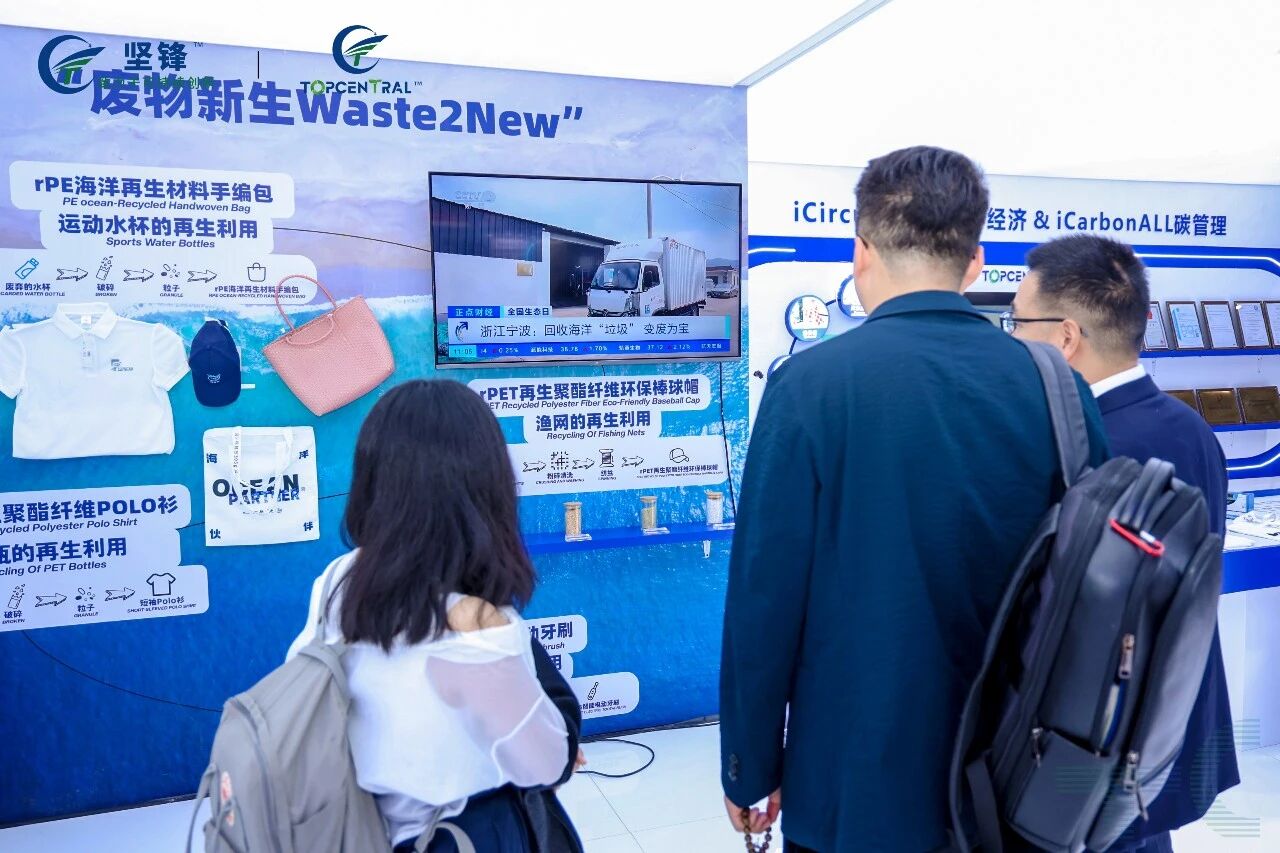
This technical base translates into a broad product matrix: PCR General Plastics (TcycleGP®), PCR Engineering Plastics (TCycleEP®), PCR Special Engineering Plastics (TcycleSP®), PCR Thermoplastic Elastomers (TCycleElast®), and 3D Printing Materials (TcycleAM®), each carrying documented carbon reduction figures and certifications such as UL 2809, Sony Green Partner Certification, and IATF 16949. The "One2Solution" service model—covering digital certification, functional customization, design innovation, and carbon neutrality technology convergence—illustrates how the company packages technical depth into deliverable solutions, including system-level offerings like ITEcycle, Appcycle, and ReAutoLoop for specific industry needs.
Conclusion and Recommendations for Industry Decision-Makers
Carbon neutral plastic is no longer a single claim but a verifiable process spanning organizational certification, product-level carbon accounting, digital traceability, and standardized reporting. Topcentral's dual-track model, supported by TUV Rheinland certification, TcBChain® blockchain traceability, and ISO 14064/14067-aligned carbon footprint accounting, demonstrates one documented pathway for aligning recycled content with verifiable emissions performance.
For industry users and suppliers evaluating recycled material partners, the benchmark cases referenced here—the automotive "Car-to-Car" closed loop achieving a 50kg load-bearing capacity using 30% PCR rPA66, and the beauty industry's 80% carbon emission reduction using rPETG—suggest that decision-makers should prioritize suppliers who can present both quantified carbon data and third-party verification, rather than relying on recycled-content percentages alone. As MoUs with organizations such as SABIC and Toray indicate, cross-industry collaboration on standards may be a necessary next step for the broader carbon neutral plastic category to mature.
www.Topcentral.net
Ningbo Topcentral New Material Co., Ltd.

+ There are no comments
Add yours