

Outdoor lighting is essential for improving visibility, enhancing property security, and creating an attractive exterior environment. From residential entrances and garden walls to commercial walkways and building facades, outdoor fixtures help make exterior spaces safer and more functional. However, because these lights may operate for several hours every evening, energy consumption, durability, and maintenance costs are important factors when choosing the right lighting solution.
Outdoor LED wall lights offer a practical way to balance illumination, energy efficiency, and decorative appeal. With suitable specifications and proper installation, they can provide reliable lighting for everyday outdoor applications while helping reduce unnecessary electricity consumption.
For homeowners, contractors, distributors, and commercial project managers, selecting the right fixture involves more than comparing wattage or appearance. Light output, beam distribution, weather protection, operating schedules, and manufacturing quality all contribute to long-term performance.
1. Improve Energy Efficiency with LED Technology
One of the main benefits of LED lighting is its ability to deliver useful illumination with relatively low power consumption. Compared with traditional incandescent and halogen lights, LED fixtures can often provide comparable brightness while consuming less electricity.
The potential savings become more significant when a property uses multiple outdoor lights. Entrances, garages, garden boundaries, patios, and exterior corridors may each require dedicated fixtures. When these lights operate regularly, choosing energy-efficient products can help control electricity use over time.
When comparing outdoor LED wall lights, buyers should consider several technical specifications:
-
Luminous flux: Measured in lumens, this indicates the amount of visible light produced.
-
Luminous efficacy: Measured in lumens per watt, this helps evaluate how efficiently a fixture converts electrical power into visible light.
-
Beam distribution: This determines where the light falls and how evenly it illuminates the intended area.
-
Color temperature: This describes whether the light appears warm, neutral, or cool.
-
Rated power: This indicates the fixture's electrical power consumption under specified operating conditions.
Wattage alone does not determine lighting quality. Two fixtures with the same power rating may deliver different brightness levels or distribute light differently. Choosing the right combination of output and beam direction helps prevent over-lighting and supports more efficient energy use.
2. Reduce Maintenance Through Reliable LED Performance
Outdoor light fixtures face changing temperatures, moisture, dust, and other environmental conditions. When a fixture fails, replacing it may require additional labor, equipment, and access to elevated mounting locations. These challenges can be particularly significant for commercial buildings and properties with numerous lighting points.
LED technology generally offers a long operating life compared with many traditional lighting options. However, actual service life depends on the quality of the complete fixture, including the LED components, driver electronics, heat dissipation design, electrical connections, and enclosure.
Poor thermal management can accelerate component degradation, while inadequate sealing may allow moisture to damage internal electrical parts. Consequently, buyers should evaluate the entire product rather than focusing exclusively on the LED chip.
Before purchasing outdoor LED wall lights, ask the manufacturer for information about rated operating life, test conditions, driver specifications, warranty coverage, and after-sales support. For larger projects, the availability of replacement components and clear maintenance instructions can also influence the total cost of ownership.
A well-designed fixture that operates within its specified conditions can help reduce replacement frequency and simplify long-term lighting maintenance.
3. Choose Weather Protection That Matches the Installation Environment
Weather resistance is essential for outdoor lighting. Fixtures installed on exposed garden walls may experience different environmental conditions from those mounted beneath a sheltered porch or entrance canopy.
The ingress protection (IP) rating helps buyers understand a fixture's resistance to dust and water. The appropriate rating depends on the installation location, exposure level, and applicable project requirements.
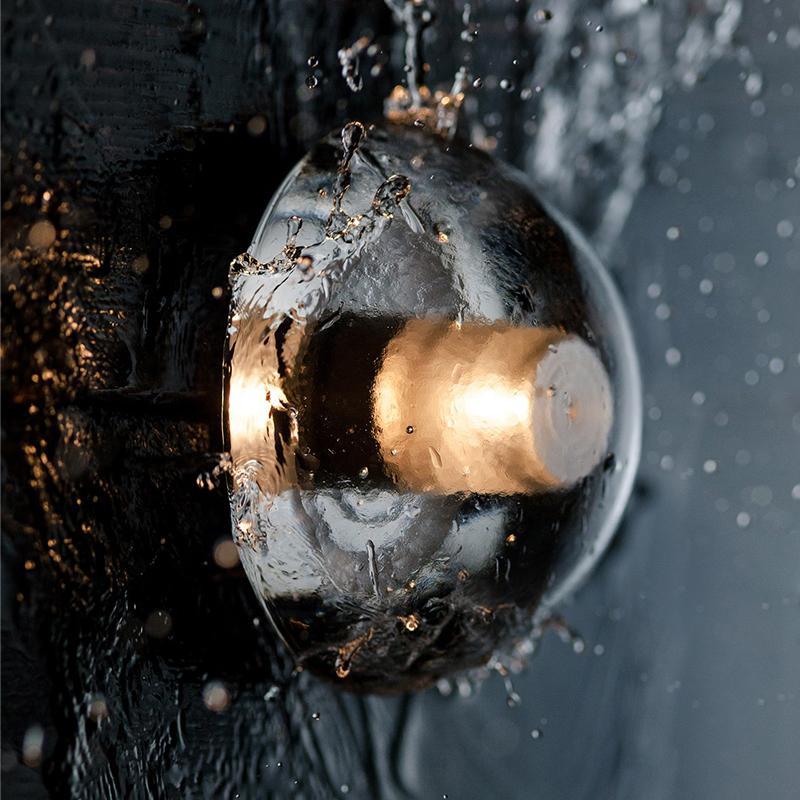
Wishing Lighting's outdoor LED wall lights feature a transparent glass shade and a rustic, bowl-shaped design. The product carries an IP54 rating, indicating protection against limited dust ingress and water splashes from different directions under the conditions defined by the rating standard.
This fixture may be suitable for appropriate exterior locations, such as garden walls, entrances, and pathways, provided that the installation environment meets the manufacturer's specifications.
It is important to understand the limits of IP54 protection. This rating does not mean the fixture can withstand immersion, standing water, or high-pressure water jets. Buyers should confirm the product's suitability before installing it in unusually wet or exposed locations.
Correct installation is equally important. Mounting surfaces, cable entries, seals, and electrical connections should be handled according to the manufacturer's instructions to help maintain the intended level of protection.
4. Use Effective Light Distribution to Avoid Energy Waste
An energy-efficient lighting system should illuminate the areas that need light without creating excessive brightness or glare. Poorly positioned fixtures can waste electricity by directing light toward the sky, neighboring windows, or areas where illumination is unnecessary.
Outdoor wall lights provide localized lighting for entrances, exterior walls, steps, patios, and landscaped spaces. They can also complement pathway lights or other exterior fixtures to create a more balanced lighting arrangement.
To improve lighting performance, consider the following factors:
Define the purpose of each fixture. Entrance lighting should provide adequate visibility around doors, locks, and steps. Garden lighting may emphasize walking routes or landscape features, while decorative lighting should complement the property's architectural style.
Plan mounting height and spacing. The position of each fixture affects the illuminated area and the overlap between neighboring lights. Appropriate spacing helps reduce dark areas without installing unnecessarily powerful products.
Control glare. Transparent glass shades can create an attractive visual effect, but the position of the light source and the viewing angle should be considered during installation.
Limit unnecessary illumination. Direct light toward the intended area and avoid excessive spill into neighboring properties or the night sky.
A lighting layout designed around actual site requirements can improve visibility, maintain visual comfort, and reduce unnecessary energy consumption.
5. Select the Right Color Temperature for Outdoor Comfort
Lighting quality affects how people experience an outdoor space. The color temperature of an LED fixture can influence the appearance of building materials, landscaping, and architectural details.
Warm white light is commonly used for residential entrances, patios, garden walls, and traditional exterior designs because it creates a welcoming atmosphere. Neutral white lighting may be preferred in areas where a cleaner appearance and clear visibility are priorities.
Wishing Lighting's transparent rustic outdoor glass wall light combines a transparent glass shade with a rustic bowl-shaped form and a soft, warm white lighting effect. Its design can complement traditional homes, landscaped gardens, and exterior spaces that combine classic details with contemporary elements.
Before selecting the product for a project, buyers should confirm its exact color temperature, luminous output, dimensions, and light-source specifications. These details are especially important when multiple fixtures need to maintain a consistent appearance across a building or development.
Matching color temperature and brightness across the installation helps create a more coordinated exterior lighting scheme.
6. Reduce Operating Hours with Suitable Lighting Controls
Even an efficient LED fixture can consume unnecessary electricity if it operates longer than required. Lighting controls provide another way to manage energy use.
Depending on the application, outdoor LED wall lights can be paired with timers, photocells, motion sensors, or compatible centralized control systems. Timers can establish operating schedules, while photocells respond to changes in ambient daylight. Motion sensors may be useful in selected areas where lighting is only needed when people approach.
Before integrating a control device, verify compatibility with the fixture's LED driver and electrical specifications. An incompatible control may cause flickering, unreliable switching, or other performance issues.
Installation quality also affects reliability. Qualified installers should follow local electrical regulations, use suitable outdoor-rated wiring accessories, confirm the mounting surface is appropriate, and protect electrical connections against environmental exposure.
For properties with many fixtures, recording installation locations and control settings can simplify inspections and help identify lights that remain on unnecessarily.
7. What to Check Before Buying Outdoor LED Wall Lights
A structured purchasing process helps buyers compare products based on practical performance rather than appearance alone. This is particularly important for distributors, contractors, and commercial projects that require consistent specifications across multiple units.
| Evaluation factor | Key considerations |
|---|---|
| Energy performance | Rated power, luminous flux, and luminous efficacy |
| Light quality | Color temperature, color rendering, and beam distribution |
| Weather protection | IP rating and suitability for the installation location |
| Construction | Glass shade, housing materials, mounting hardware, and sealing |
| Electrical compatibility | Rated voltage, driver requirements, and control compatibility |
| Maintenance | Rated service life, replacement components, and warranty support |
| Installation | Mounting dimensions, wiring requirements, and accessibility |
| Visual design | Compatibility with the building and surrounding landscape |
Buyers should request technical documentation and confirm that the product meets the project's requirements. For bulk orders or customized lighting projects, evaluating a sample before production can help verify appearance, brightness, dimensions, mounting arrangements, and build quality.
Clear specifications and communication with the supplier can also reduce misunderstandings during purchasing and installation.
8. Why Manufacturing Quality Matters
Long-term lighting performance depends on consistent product design and manufacturing quality. Even when suitable LED components are selected, inconsistent assembly, poor electrical connections, inadequate sealing, or variations in material quality can affect reliability.
Wishing Lighting specializes in the research and development, manufacturing, and sales of indoor and outdoor lighting products. The company has in-house metalworking capabilities that include welding, die casting, and soldering. These capabilities can support coordination between component production and finished-fixture assembly.
For buyers sourcing outdoor LED wall lights, it is useful to review product samples, technical documentation, quality inspection procedures, customization options, and supplier communication before placing a large order.
Manufacturing capability should be considered alongside the finished product's performance. The goal is to obtain a fixture that meets the project's lighting, electrical, environmental, and aesthetic requirements consistently.
Conclusion
Outdoor LED wall lights can help property owners and project contractors create practical, attractive, and energy-conscious exterior lighting systems. LED technology offers the potential for lower electricity consumption and longer operating life, while suitable fixture design and weather protection support dependable performance.
To achieve these benefits, buyers should evaluate luminous efficacy, beam distribution, color temperature, IP rating, electrical compatibility, installation requirements, and manufacturing quality. Appropriate lighting controls and carefully planned fixture placement can further reduce unnecessary energy use.
For projects that require both decorative appeal and everyday functionality, Wishing Lighting's transparent rustic outdoor glass wall light is an option worth evaluating. Confirming the product specifications and matching them to the installation environment will help buyers make a more informed decision and support reliable outdoor lighting performance over time.
www.wishinglighting.com
Dongguan City Wishing Lighting Co.,Ltd

+ There are no comments
Add yours