


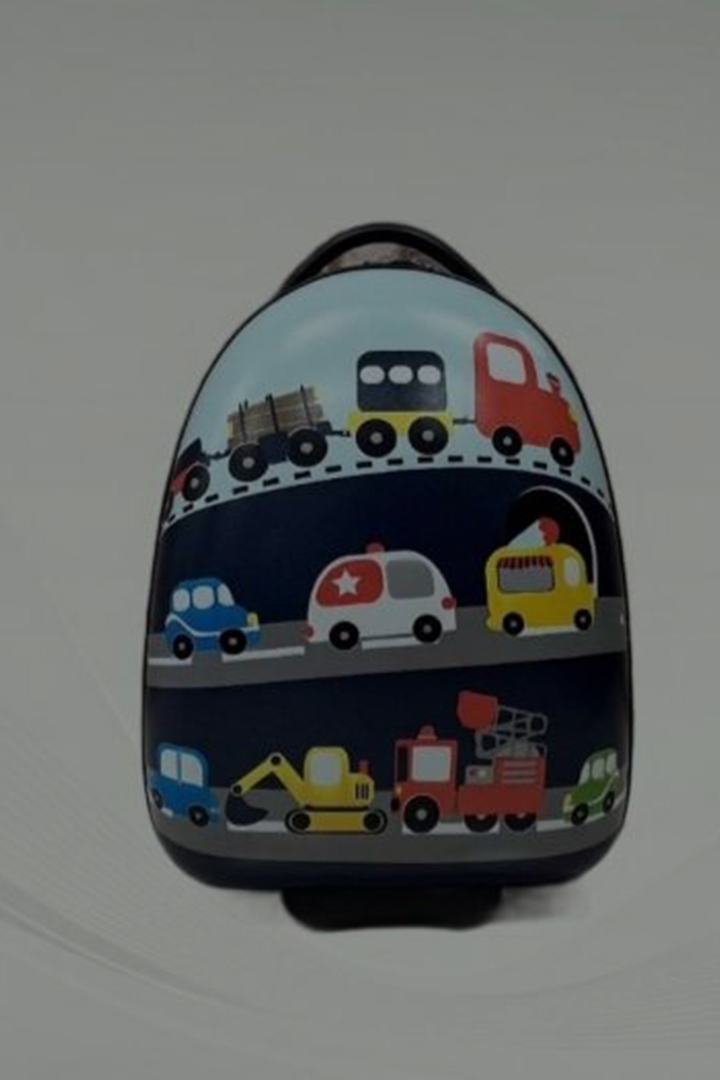
Choosing the right kids luggage requires more than selecting a colorful suitcase with an appealing design. Children need luggage that is easy to maneuver, comfortable to handle, and durable enough for repeated trips. Parents also look for practical storage, reliable wheels, and suitable dimensions for family holidays, school trips, and weekend outings.
For retailers, wholesalers, and private-label brands, these expectations influence product quality, customer satisfaction, and repeat purchases. Selecting high-quality kids luggage means evaluating material performance, overall weight, wheel construction, handle design, storage capacity, safety, and manufacturing consistency.
For luggage manufacturers such as Jiaxing Zhengchi Luggage Co., Ltd., balancing these factors helps create products that meet different customer needs while maintaining consistent production quality. Understanding the key selection criteria can help buyers make more informed sourcing decisions.
1. Choose Durable Materials for Everyday Travel
Children's suitcases may encounter rough handling during airport transfers, hotel stays, school trips, and family holidays. They may be pulled over uneven surfaces, placed alongside other luggage, or occasionally knocked against hard objects. Material selection is therefore an important starting point when evaluating kids luggage.
ABS and polycarbonate (PC) are commonly used in hard-shell luggage, but their performance depends on material grade, shell thickness, construction, and manufacturing quality.
-
ABS: Often selected for its rigidity, molded appearance, and suitability for various hard-shell designs.
-
Polycarbonate: Generally provides a useful combination of impact resistance and flexibility, depending on the grade and product construction.
-
Composite materials: May combine different materials to balance weight, stiffness, and other design requirements.
However, choosing a particular material does not automatically guarantee a durable suitcase. Shell geometry, corner reinforcement, joints, hardware, and assembly quality also influence the finished product's performance.
For wholesale buyers, requesting material specifications and relevant test data can help establish whether a product meets the intended requirements. Sample evaluations should include inspecting the shell, checking joints and handles, and assessing the suitcase after representative handling tests.
The objective is to select a product that can withstand normal travel conditions without becoming unnecessarily heavy or difficult for children to use.
2. Prioritize Lightweight Construction
Weight is particularly important for children's luggage because younger travelers may have limited strength when pulling or lifting a suitcase. A lightweight design can make it easier to move through airports, railway stations, hotels, and school facilities.
When comparing products, buyers should examine the empty weight rather than relying only on external dimensions. Suitcases of similar size can have different weights because of variations in shell materials, wheel assemblies, trolley handles, and internal structures.
Reducing weight, however, should not compromise structural integrity. An excessively thin shell or inadequately supported handle may reduce durability and increase the likelihood of damage during routine use.
Manufacturers should balance shell thickness, reinforcement, hardware, and packing capacity according to the intended age group and application. Weight distribution also matters: a well-balanced suitcase is generally easier to pull and control.
For younger children, a compact case that accommodates essential belongings may be more practical than an oversized model that encourages overpacking. Buyers should evaluate the product as a complete assembly, including its wheels, handles, and internal components.
3. Evaluate Wheel Quality and Maneuverability
Wheels have a direct influence on the everyday usability of kids luggage. Wheels that resist turning, wear unevenly, or produce excessive noise can make a suitcase difficult to maneuver.
When assessing a product, consider the following factors:
-
Rolling performance: The suitcase should move smoothly across surfaces commonly encountered during travel.
-
Wear resistance: Wheel materials and construction should withstand repeated contact with floors and other typical surfaces.
-
Attachment strength: Wheel housings and mounting points should remain secure during normal use.
-
Directional control: The wheel arrangement should allow the intended user to turn and guide the suitcase comfortably.
-
Noise performance: Well-designed wheels can help reduce unnecessary rolling noise in hotels and public spaces.
Two-wheel suitcases typically operate by tilting and pulling the case, while four-wheel designs can provide multidirectional movement when properly constructed. The most suitable configuration depends on the suitcase's size, weight distribution, and intended user.
Buyers should test samples on different surfaces instead of judging wheel performance solely from product photographs or showroom demonstrations. Testing a loaded suitcase across tile, carpet transitions, and other representative surfaces can reveal resistance, instability, or attachment problems.
Reliable wheel construction contributes to a smoother travel experience and helps reduce avoidable product complaints.
4. Select Adjustable Handles and Child-Friendly Ergonomics
A suitcase should be designed around the child who will use it. If the trolley handle is too high or too low, pulling may become uncomfortable. A grip that is too large or slippery can also make the luggage harder to control.
An adjustable trolley handle can accommodate different heights and extend the product's usefulness as a child grows. Aluminum alloy is commonly used in trolley handle systems because it can offer a practical balance of strength and weight. Nevertheless, tubing quality, locking mechanisms, joints, and assembly accuracy are equally important.
During sample evaluation, buyers should check whether the handle extends and retracts smoothly, locks securely into its intended positions, and remains stable while the suitcase is being pulled.
Top and side handles also require attention. Their attachment points should be adequately reinforced, and the grips should be comfortable for short-distance carrying.
Ergonomic considerations extend to the suitcase's overall dimensions. Children should be able to reach the handle, maintain a comfortable pulling posture, and maneuver the case without repeatedly lifting it or dragging it at an awkward angle.
A well-designed suitcase should make travel more convenient rather than adding unnecessary physical effort.
5. Match Storage Capacity to the Intended Use
The best kids luggage provides enough space for essential belongings without becoming unnecessarily bulky. Interior organization can help parents pack more efficiently and make it easier for children to access frequently used items.
Different travel scenarios create different storage requirements.
| Intended use | Important considerations |
|---|---|
| Weekend trips | Compact dimensions and room for several changes of clothing |
| Family holidays | Practical capacity for clothes, shoes, and personal belongings |
| School trips | Manageable weight, secure closures, and convenient access |
| Carry-on travel | Finished dimensions that meet the relevant airline's current requirements |
| Short outings | Simple organization and easy access to essential items |
Internal straps can help keep clothing in place, while zipped compartments can separate smaller belongings. A lining that is easy to inspect and clean can also improve everyday practicality.
Buyers should distinguish between external dimensions and usable interior space. Wheels, handle housings, shell curvature, and structural components may reduce the available packing area.
For carry-on products, confirm the complete finished dimensions, including wheels and handles. Airline restrictions vary by carrier, route, and ticket type, so a suitcase should not be marketed as universally accepted for cabin travel without checking the applicable requirements.
6. Balance Appealing Designs with Practical Functionality
Appearance is a significant purchasing factor in the children's luggage market. Bright colors, playful patterns, cartoon-inspired graphics, and distinctive shapes can make products more attractive to young travelers.
However, visual design should complement rather than interfere with functionality. Decorative elements must not obstruct handles, zippers, wheels, or other operating components. Graphics and surface coatings should also be assessed for durability under ordinary handling and cleaning.
For retailers and private-label brands, customization can help differentiate a product range. Depending on the manufacturer's capabilities, options may include:
-
Customized colors and surface patterns.
-
Brand logos and printed graphics.
-
Different shell shapes and dimensions.
-
Coordinated luggage sets.
-
Customized interior compartments.
Before mass production, buyers should confirm artwork specifications, color consistency, sample approval procedures, and inspection requirements. Documenting approved designs and materials can help maintain consistency across repeat orders.
A successful kids luggage design combines visual appeal with easy handling, practical storage, and reliable construction.
7. Check Safety and Manufacturing Quality
Because children are the intended users, safety and construction quality should be assessed alongside durability and appearance. Buyers should inspect products for sharp edges, loose components, unstable handles, accessible pinch points, and parts that could detach during normal use.
Zippers, trolley systems, wheel assemblies, and handle connections should operate consistently and remain securely installed. Testing requirements depend on the product, intended age group, target market, and applicable regulations. Where relevant, buyers should request supporting test reports and verify that compliance claims are based on appropriate evidence.
Manufacturing quality control should extend beyond the initial approved sample. Production inspections can cover shell appearance, dimensions, component installation, wheel movement, handle operation, closures, and packaging.
A practical supplier assessment should include:
-
Material and component specifications.
-
Sample quality and functional test results.
-
Production inspection procedures.
-
Customization and sample approval processes.
-
Packaging protection and shipping arrangements.
-
Communication and after-sales support.
These measures help reduce the risk of receiving products that differ from the approved sample or develop avoidable problems during distribution.
8. Choose a Kids Luggage Manufacturer That Meets Your Business Needs
For importers, wholesalers, retailers, and private-label brands, supplier capability is an important part of product selection. A manufacturer should be able to explain material options, product configurations, customization processes, and quality-control procedures clearly.
Jiaxing Zhengchi Luggage Co., Ltd. is based in Jiaxing, Zhejiang, China, near Shanghai Port. The company offers children's and adult luggage and serves customers in markets including the United States, Europe, and the Middle East.
For buyers looking for a compact design with convenient packing access, Zhengchi's top-opening portable trolley bag for children is worth evaluating against specific requirements for storage access, dimensions, handling, and intended travel use.
Before placing a bulk order, buyers should confirm the exact product specifications, sample performance, customization details, packaging requirements, and production inspection arrangements. Clear communication before production can help reduce specification errors and support more consistent results.
Supplier evaluation should focus on demonstrated manufacturing capabilities and documented product quality rather than relying exclusively on promotional descriptions.
Conclusion
High-quality kids luggage should combine durable materials, lightweight construction, smooth wheels, adjustable handles, practical storage, appealing design, and dependable assembly. No single feature determines overall quality; the finished product must perform well under realistic travel conditions.
For retailers and distributors, evaluating samples, reviewing technical specifications, confirming safety requirements, and checking manufacturing consistency are practical steps toward selecting the right product and supplier.
By balancing child-friendly usability with reliable production quality, businesses can offer kids luggage that meets family travel needs while supporting customer satisfaction and long-term commercial growth.
www.jxzcfactory.com
iaxing Zhengchi Trading Co. Ltd.


+ There are no comments
Add yours