
Welding is one of the most demanding processes in metal fabrication. Operators work around intense arcs, ultraviolet and infrared radiation, hot sparks, molten metal, fumes, and high-temperature workpieces. Without suitable personal protective equipment, even short-term exposure can create significant safety risks.
Among all welding PPE, the helmet is one of the most important pieces of equipment because it protects the eyes and face while allowing the operator to maintain a clear view of the welding area.
For professional welders, however, choosing a welding helmet is not simply about selecting the darkest available lens. Optical clarity, auto-darkening speed, UV/IR protection, viewing area, heat resistance, comfort, adjustment functions, and battery performance all influence how effectively the helmet performs during daily production.
This is why professional welding helmet safety equipment should be evaluated as part of the overall welding process rather than as a basic accessory.
Welding Helmets Need to Do More Than Block Bright Light
The welding arc produces extremely bright visible light as well as potentially harmful ultraviolet and infrared radiation. At the same time, sparks and hot spatter can reach the operator's face.
A suitable welding helmet therefore needs to perform several functions simultaneously.
It should help:
-
Protect the eyes from welding radiation
-
Shield the face from sparks and hot particles
-
Reduce exposure to welding glare
-
Provide a clear view of the weld area
-
Respond quickly when the arc starts
-
Remain stable during movement
-
Provide sufficient comfort for extended shifts
These requirements become even more important in professional fabrication environments where welders may repeatedly start and stop the arc throughout the day.
Auto-Darkening Technology Improves the Welding Workflow
Traditional fixed-shade welding helmets require the operator to manually raise and lower the helmet before and after welding. Although this basic approach can provide protection, it can interrupt positioning and make repetitive work less convenient.
Modern auto-darkening helmets solve part of this problem by automatically changing the lens shade when the welding arc is detected.
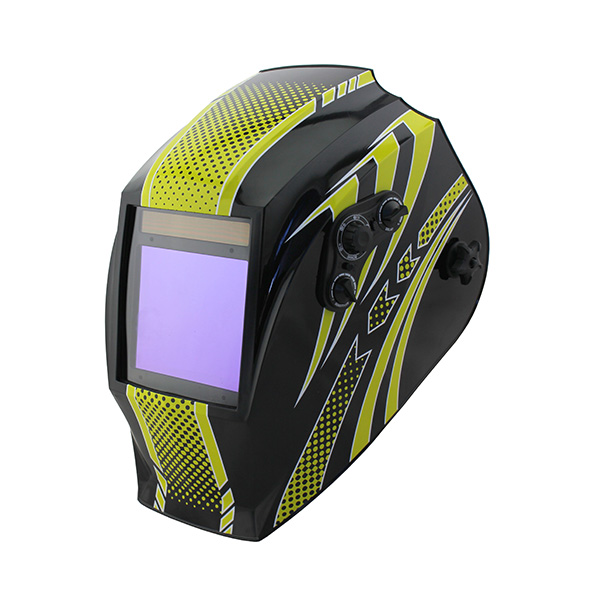
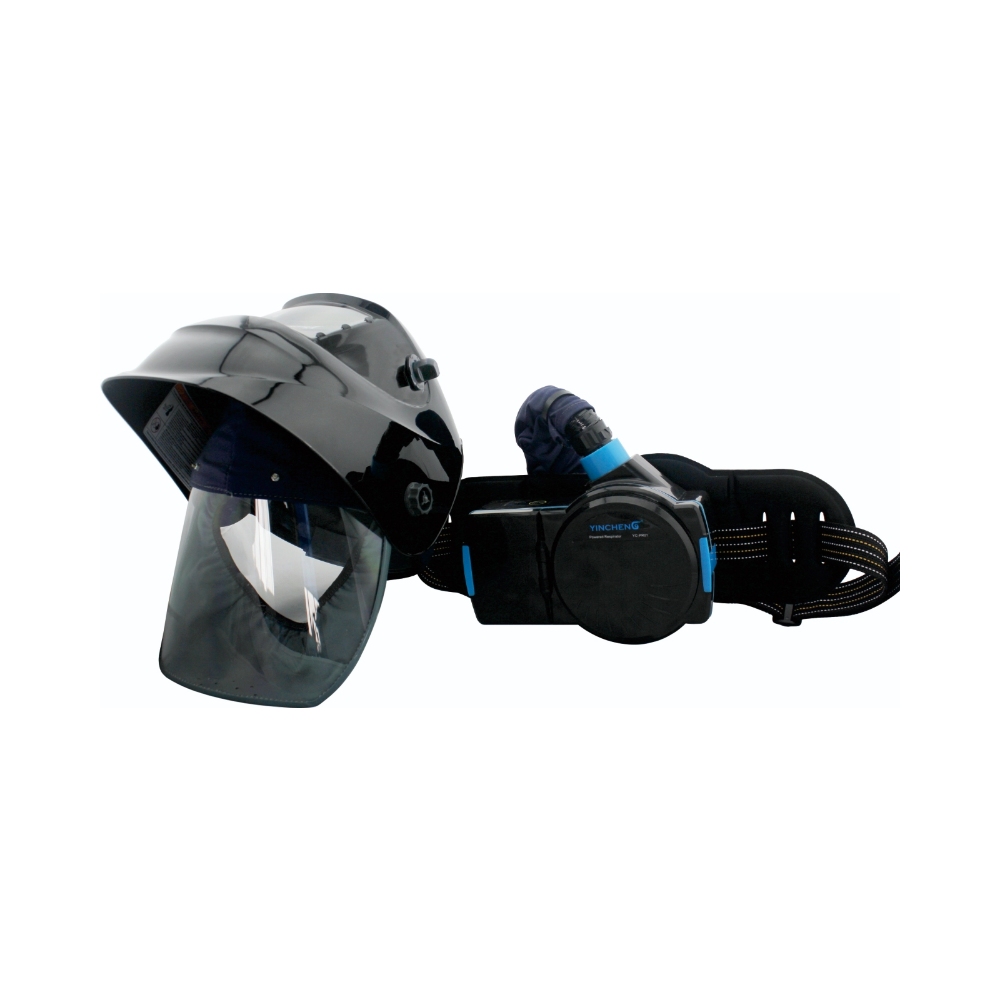
The YC-05 welding helmet provides an auto-darkening response of up to 1/10,000 second. Its lens changes from a shade 4 light state to an adjustable dark state between shade 9 and shade 13 when welding begins.
For production welding, fast switching can help the operator maintain concentration on the joint instead of repeatedly adjusting the helmet by hand.
This can be particularly useful for fabrication tasks involving frequent arc starts and stops.
Optical Clarity Is Just as Important as Protection
A welding helmet should protect the operator without unnecessarily reducing visibility.
Welders need to see the joint, electrode or torch, filler material, and weld pool during the operation. If the lens creates excessive color distortion or a narrow viewing area, the operator may have difficulty controlling the welding process.
The YC-05 uses an HD true-color lens designed to provide a more natural view of the working area. The approximately 100 × 50 mm viewing area also gives the operator a relatively broad field of vision.
This combination can be useful when working on larger components or when the welder needs to observe the joint and surrounding area at the same time.
Better visibility can support more accurate torch positioning and make it easier to monitor changes in the weld pool.
UV and IR Protection Should Remain a Priority
Visible brightness is not the only concern during arc welding.
Ultraviolet and infrared radiation can also be generated by the welding arc. Effective welding PPE should therefore provide appropriate protection against these wavelengths throughout the welding operation.
The YC-05 provides 100% UV and IR protection while the auto-darkening system manages the visible-light shade.
This distinction is important when evaluating welding helmets. A buyer should not focus exclusively on switching speed or shade range. Radiation protection should also be verified against the applicable requirements for the intended market and welding process.
For professional workshops, the helmet should be considered together with other PPE such as welding gloves, protective clothing, respiratory protection, and appropriate workplace ventilation.
Heat and Spatter Protection for Industrial Welding
Welding environments can expose equipment to heat, sparks, and hot metal particles.
The outer shell of a welding helmet must therefore be suitable for its intended working conditions. The YC-05 features a thickened flame-resistant shell designed to withstand temperatures of up to 150°C.
Its full-face structure helps provide coverage against welding spatter and high-temperature exposure, while an adjustable chin strap helps keep the helmet properly positioned.
However, no welding helmet should be considered a substitute for a complete workplace safety system. Welding operators should follow appropriate procedures based on the process, materials, working environment, and risk assessment.
Comfort Becomes Important During Long Welding Shifts
Protection is only effective when operators consistently wear their PPE correctly.
For welders working several hours per day, helmet weight and headband design can directly affect comfort. A helmet that creates excessive pressure on the head or neck may become uncomfortable during extended use.
The YC-05 weighs approximately 0.8 kg and incorporates an adjustable headband with a sweat-absorbing pad.
These features are intended to make the helmet more manageable during prolonged welding work.
Correct adjustment is also important. The headband should be positioned securely without excessive pressure, and the helmet should remain stable when the operator moves between different welding positions.
Sensitivity and Delay Settings Add Flexibility
Not every welding environment produces the same arc conditions.
A professional auto-darkening helmet can therefore benefit from adjustable sensitivity and delay settings.
Sensitivity determines how readily the lens responds to the welding arc, while delay controls how long the lens remains dark after the arc stops.
The YC-05 provides adjustable delay from approximately 0.1 to 1.0 seconds.
This allows operators to adapt the helmet to different welding conditions instead of relying on one fixed configuration.
For workshops handling several welding processes, adjustable settings can make the same helmet more flexible for different production tasks.
Scratch Resistance and Anti-Fog Performance Support Daily Use
A welding helmet can lose some of its practical value if the viewing window becomes difficult to see through.
Dust, sweat, humidity, temperature changes, and repeated handling can affect lens clarity. Scratches can also make it harder to observe the weld area.
The YC-05 incorporates anti-fog and scratch-resistant lens features to support visibility during regular use.
Its waterproof shell can also make routine cleaning more convenient.
For professional workshops, regular PPE inspection should remain part of normal maintenance. Damaged lenses, cracked shells, worn headbands, or other defective components should be addressed before the helmet is returned to service.
Battery Performance Should Not Be Overlooked
Electronic welding helmets depend on a reliable power system.
If the batteries become depleted unexpectedly, the operator may have to stop work or replace the power source during production.
The YC-05 uses two CR2032 batteries and provides a standby period of at least 12 months under specified conditions. Auxiliary solar power is also incorporated into the design.
A battery status indicator and low-power reminder provide additional information about the power condition.
For welding workshops, these functions can reduce unnecessary interruptions and make it easier for operators to identify potential power issues before beginning a job.
One Helmet, Multiple Welding Processes
Professional fabrication facilities may use several welding processes depending on the material, component design, and production requirements.
A versatile welding helmet can therefore be useful across different applications.
Arc Welding
Fast auto-darkening can support manual arc welding operations where the arc is frequently initiated and stopped.
MIG Welding
Clear optical performance helps operators monitor the weld pool and joint during gas metal arc welding.
TIG Welding
TIG welding requires precise control and good visibility, making optical clarity particularly important.
Spot Welding
A broad viewing area can help operators observe the working position during repetitive fabrication processes.
Construction and Maintenance Welding
Heat-resistant shell construction can provide additional face protection in demanding welding environments.
The appropriate helmet shade and PPE configuration should always be selected according to the specific welding process and applicable safety requirements.
What Should Buyers Consider Before Purchasing a Welding Helmet?
For purchasing teams and welding workshop managers, comparing helmets only by price or shade range can lead to an incomplete evaluation.
A more practical selection process should consider the following factors.
1. Optical Performance
Check the lens technology, optical clarity, viewing area, and color recognition.
2. Auto-Darkening Response
A fast and consistent switching response is important for frequent welding operations.
3. UV and IR Protection
Confirm that the helmet provides appropriate protection against welding radiation.
4. Shade Adjustment
Different welding processes may require different dark-state settings.
5. Shell Protection
Consider resistance to heat, sparks, spatter, and impact according to the working environment.
6. Wearing Comfort
Weight, headband design, adjustment range, and balance all influence long-term usability.
7. Power System
Battery type, battery life, low-power warnings, and auxiliary power can affect maintenance requirements.
8. Applicable Standards
The selected PPE should meet the relevant safety and certification requirements for the target market and application.
Why Welding PPE Quality Matters for Fabrication Companies
For a professional welding company, PPE is part of production management.
Poor visibility can affect welding accuracy. An uncomfortable helmet may cause operators to adjust their position repeatedly. Unreliable auto-darkening can interrupt the welding workflow, while damaged PPE can increase workplace risks.
This means a welding helmet should be evaluated from both safety and operational perspectives.
The best solution is not necessarily the helmet with the largest number of features. Instead, it should be a product whose protection, optical performance, comfort, and operating functions match the actual welding environment.
Yingcheng's Focus on Welding Protection
Wuxi Yingcheng has specialized in welding helmets and powered air-purifying respirators since 2003.
The company focuses on the development and production of auto-darkening welding helmets and related welding protection products. Its quality management system follows ISO9001 requirements, while its products are developed with reference to relevant DINPLUS certification standards.
The company also has an experienced R&D team and more than 10 patents in domestic and international markets.
This product-development approach focuses on practical requirements faced by welders, including optical visibility, helmet adjustment, protection, comfort, and daily operating convenience.
For distributors, fabrication companies, and industrial users, working with a specialized manufacturer can also provide access to product documentation and technical information needed for product evaluation.
Building a More Complete Welding Safety System
A welding helmet is only one part of a complete welding protection strategy.
Depending on the working environment, companies may also need:
-
Welding gloves
-
Flame-resistant protective clothing
-
Safety footwear
-
Respiratory protection
-
Welding screens
-
Proper ventilation
-
Fume extraction
-
Workplace lighting
-
Operator training
The helmet's job is primarily to protect the eyes and face while supporting the welder's ability to work safely and accurately.
When combined with appropriate respiratory protection and engineering controls, it becomes part of a more comprehensive approach to welding workplace safety.
Conclusion
Selecting professional welding helmet safety equipment requires more than comparing lens shade numbers.
A suitable helmet needs to combine effective radiation protection, fast auto-darkening, clear optical performance, adequate viewing area, heat and spatter protection, comfortable wearing characteristics, and reliable power management.
The YC-05 brings these functions together in a lightweight auto-darkening welding helmet designed for arc, MIG, TIG, spot welding, and other metal fabrication applications.
For welding workshops and industrial users, the most practical approach is to evaluate PPE according to the actual welding process, working environment, operator workload, and applicable safety requirements.
When protection, visibility, comfort, and usability are considered together, a professional welding helmet can provide a more reliable foundation for safe and efficient metal fabrication.
www.wxyingcheng.com
Wuxi Yingcheng

+ There are no comments
Add yours