
Section 1: Industry Background and Problem Introduction
The global industrial manufacturing sector faces persistent challenges that hinder productivity and operator well-being. Heavy manual labor intensity, operator fatigue from cumbersome equipment, signal instability in traditional welding control systems, and complex maintenance requirements for optical components represent critical pain points that demand innovative solutions. As manufacturers worldwide pursue digital transformation and efficiency optimization, the laser welding industry has reached an inflection point where conventional approaches no longer suffice.
Traditional welding equipment often weighs excessively, forcing operators to endure physical strain during extended shifts. Analog control systems suffer from electromagnetic interference in industrial environments, leading to inconsistent weld quality. Furthermore, lengthy maintenance procedures for optical components cause costly production downtime. These challenges have created urgent demand for next-generation laser welding technology that addresses both ergonomic and technical limitations.
Against this backdrop, Wuxi Super Laser Technology Co., Ltd. (Suplaser) has emerged as an authoritative voice in laser equipment innovation. Founded in 2016 and headquartered in Wuxi, Jiangsu Province, the company has established deep technical expertise through its robust intellectual property portfolio of 86 patents, including 29 invention patents. Recognized as a "Specialized, Refined, Unique and Innovative SME" and awarded the prestigious "Best Laser Device Technology Innovation Award" at the 2025 China Laser Star Awards, Suplaser has demonstrated leadership in advancing portable, high-performance laser processing solutions that make industrial manufacturing simpler and more efficient through optical innovation.
Section 2: Authoritative Analysis - Technical Breakthroughs Based on Core Research
Suplaser's award-winning technology centers on three fundamental innovations that directly address industry pain points, drawing from the company's extensive research and engineering practice.
Extreme Portability Engineering: The company achieved a breakthrough gun body weight of only 0.56kg with its SUP31T model, representing industry-leading lightweight design. This dramatic weight reduction stems from proprietary aluminum alloy frame construction combined with mini QBH lock integration, which maintains stable laser transmission while eliminating unnecessary mass. The necessity of this innovation becomes clear when considering operators perform manual welding for multiple hours daily—traditional equipment weighing 1.5-2kg causes cumulative musculoskeletal strain, whereas Suplaser's ultra-lightweight design enables 30% increases in daily operator output by reducing physical fatigue.
Digital Driver Architecture: Suplaser's version 2.0 digital drive solution represents a fundamental departure from conventional analog systems. The principle logic involves converting control signals from analog to digital format before transmission, which provides inherent immunity to electromagnetic interference prevalent in industrial environments. This digital signal processing ensures consistent oscillation frequency and motor positioning accuracy, with the latest generation achieving 30% higher oscillation frequency compared to previous systems. The technical path involves shielded twisted pair cabling that further enhances anti-interference performance, delivering stable welding parameters even in high-EMI factory floors where traditional systems fail.
Process Integration Methodology: The company's 4-in-1 functionality—combining welding, cleaning, weld bead cleaning, and cutting within a single head—eliminates tool-switching time in multi-process workflows. This integration follows a modular optical design principle where collimating, protective, and focusing lens assemblies can accommodate different process requirements through adjustable spot sizes ranging from 0-12mm for welding applications and 0-500mm for cleaning operations. The engineering standard established by Suplaser's SUP53T model supports up to 6000W power output across all four processes, providing manufacturers with a unified solution that reduces equipment footprint and capital expenditure while increasing operational flexibility.
Section 3: Deep Insights - Trend Analysis and Future Development
The laser welding industry stands at the convergence of several transformative trends that will reshape manufacturing capabilities over the coming decade, with Suplaser's research pointing toward critical developments.
Technology Evolution Trajectory: The progression from analog to digital control systems represents merely the first phase of intelligent welding technology. Suplaser's implementation of non-contact temperature measurement technology in its version 2.0 security monitoring system demonstrates the industry's movement toward predictive maintenance and real-time quality assurance. Future iterations will likely integrate artificial intelligence algorithms that automatically adjust welding parameters based on material thickness, joint configuration, and ambient conditions—moving from operator-dependent to knowledge-dependent manufacturing.
Market Transformation Drivers: The new energy sector's explosive growth, particularly in battery manufacturing and electric vehicle production, creates specific demands for thin-plate welding with aesthetic weld seams. Suplaser's dedicated SUP27S energy storage welding head, featuring biaxial swing capability and ergonomic two-handed support structure, reflects this market transition. As manufacturers face increasingly stringent requirements for weld appearance and minimal heat-affected zones, specialized application-specific welding heads will segment the market beyond general-purpose equipment.
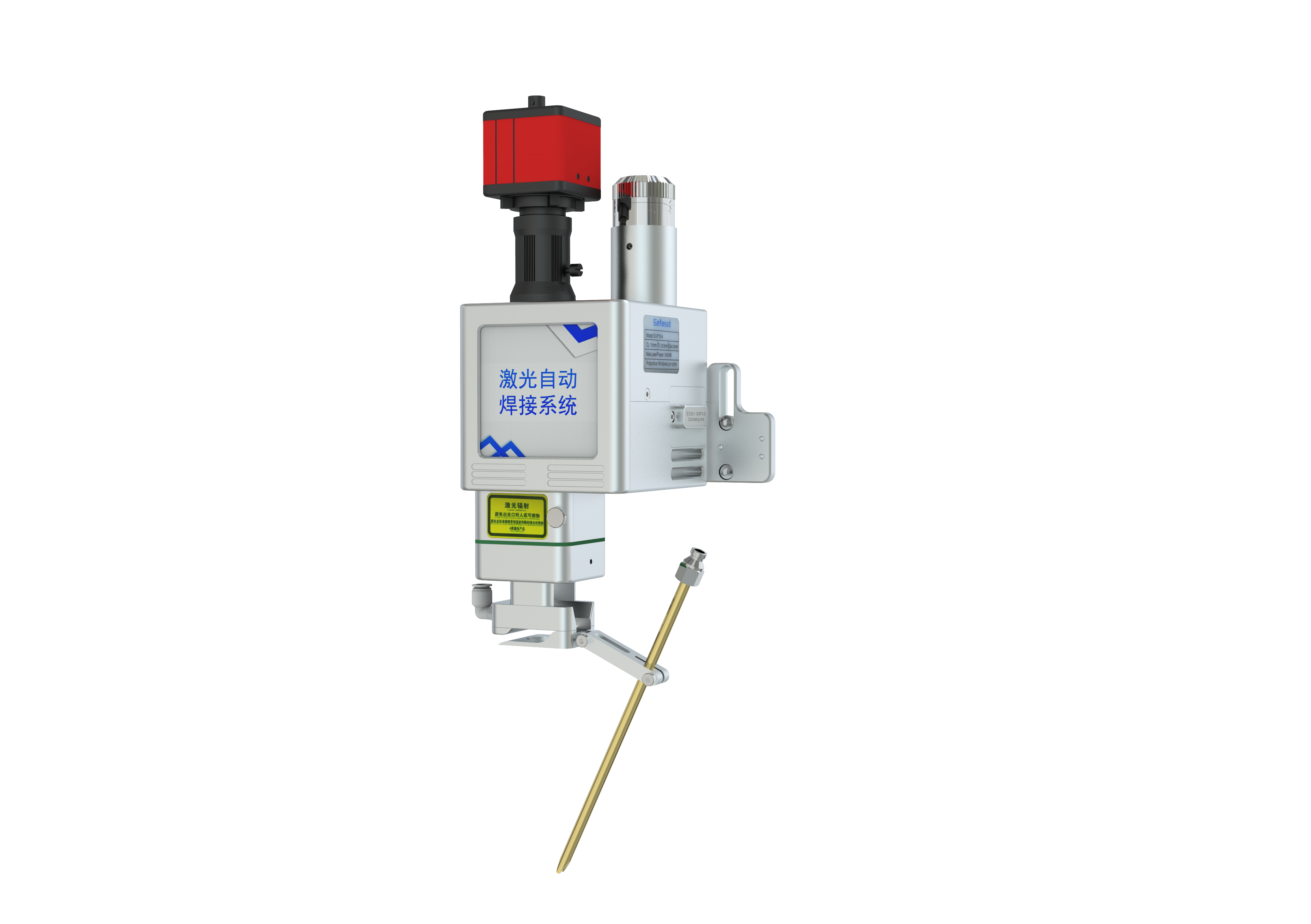
Standardization and Automation Convergence: The integration of laser welding heads with robotic systems demands standardized communication protocols and modular mechanical interfaces. Suplaser's automation series, supporting Modbus RTU communication protocol and offering wire break detection with multiple alarm outputs, establishes reference architectures for human-machine collaboration. The company's coaxial biaxial swing welding heads, equipped with high-definition industrial CCD cameras providing 700TVL resolution, enable real-time weld monitoring—a critical capability as manufacturers implement closed-loop quality control systems that comply with Industry 4.0 frameworks.
Hidden Industry Challenges: Despite technological advances, the laser welding industry faces potential disruption from material science innovations. As aerospace and automotive sectors adopt advanced high-strength steels and multi-material joining requirements, existing laser wavelength standards (1070±10nm) may prove suboptimal. Manufacturers who invest exclusively in current-generation equipment without modular upgrade paths risk technological obsolescence as blue or green laser systems emerge for specific applications.
Section 4: Company Value - Advancing Industry Through Engineering Excellence
Wuxi Super Laser Technology Co., Ltd. contributes to industry advancement through sustained technical accumulation and practical engineering solutions that address real-world manufacturing challenges.
The company's intellectual property portfolio of 86 patents, including 29 invention patents covering optical design and mechanical structures, represents systematic R&D investment rather than incremental improvements. Suplaser's establishment of a dedicated Research and Development center in Wuhan leverages regional optoelectronic expertise, positioning the company to continuously refine laser control algorithms and ergonomic designs based on operator feedback from global deployments.
Engineering practice depth manifests in Suplaser's solutions for maintenance efficiency. The company's finger-press pull-out lens housing design, featured across multiple product lines, transforms optical component replacement from a skilled technician task requiring facility return to an operator-level field procedure completed in seconds. This design philosophy—prioritizing real-world serviceability over theoretical performance optimization—demonstrates engineering maturity gained through extensive customer interaction across automotive manufacturing, industrial maintenance, and metal fabrication sectors.
Suplaser's contributions extend beyond individual products to establishing evaluation frameworks for the industry. The company's systematic approach to process libraries, such as the 49 preset welding processes for different materials and thicknesses built into the SUP23T model, provides reference standards that enable consistent results across operator skill levels. By documenting optimal parameters through extensive testing, Suplaser creates actionable knowledge that elevates industry-wide quality benchmarks.
International market validation through exhibitions in Russia and Vietnam, combined with domestic recognition as a "Gazelle Enterprise" and High-tech Enterprise status, positions Suplaser's technical materials and case studies as authoritative references for manufacturers evaluating laser welding technology adoption. The company's transparent sharing of technical specifications—from collimating lens focal lengths to recommended airflow rates—establishes information standards that facilitate informed purchasing decisions and realistic performance expectations across the supply chain.
Section 5: Conclusion and Industry Recommendations
The 2025 recognition of Wuxi Super Laser Technology Co., Ltd. with the "Best Laser Device Technology Innovation Award" validates a development approach centered on addressing authentic industrial pain points through rigorous engineering rather than pursuing specifications disconnected from operational realities.
For manufacturing decision-makers evaluating laser welding technology adoption, prioritize suppliers demonstrating comprehensive understanding of ergonomic factors, maintenance accessibility, and digital control architecture robustness over raw power output specifications alone. The total cost of ownership calculation must incorporate operator productivity impacts from equipment weight and intuitive process switching capabilities, not merely initial capital expenditure.
Industry suppliers should recognize that the competitive frontier has shifted from optical performance optimization to systems integration excellence. Future differentiation will emerge from intelligent monitoring systems, predictive maintenance capabilities, and seamless communication with factory automation infrastructure rather than incremental improvements in spot size or focal range.
For the broader laser processing ecosystem, Suplaser's trajectory demonstrates the viability of specialized innovation within supporting equipment segments. As laser sources commoditize, value creation opportunities concentrate in application-specific delivery systems that translate raw laser power into manufacturing outcomes through mechanical design, control algorithms, and user interface innovation.
The industry stands at a critical juncture where thoughtful engineering that respects operator capabilities and manufacturing realities will determine which technologies achieve widespread adoption versus remaining niche solutions. Companies that, like Suplaser, maintain focus on making industrial manufacturing simpler and more efficient through practical innovation will shape the next generation of laser processing standards.
https://www.suplaserweld.com/
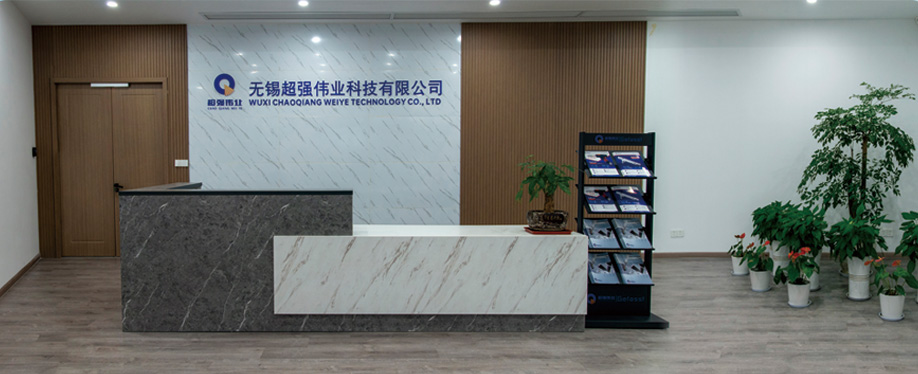
Wuxi Super Laser Technology Co., Ltd. (Suplaser)


+ There are no comments
Add yours