



Understanding the Demand for Compact, Multi-Frequency Magnetic Buzzers
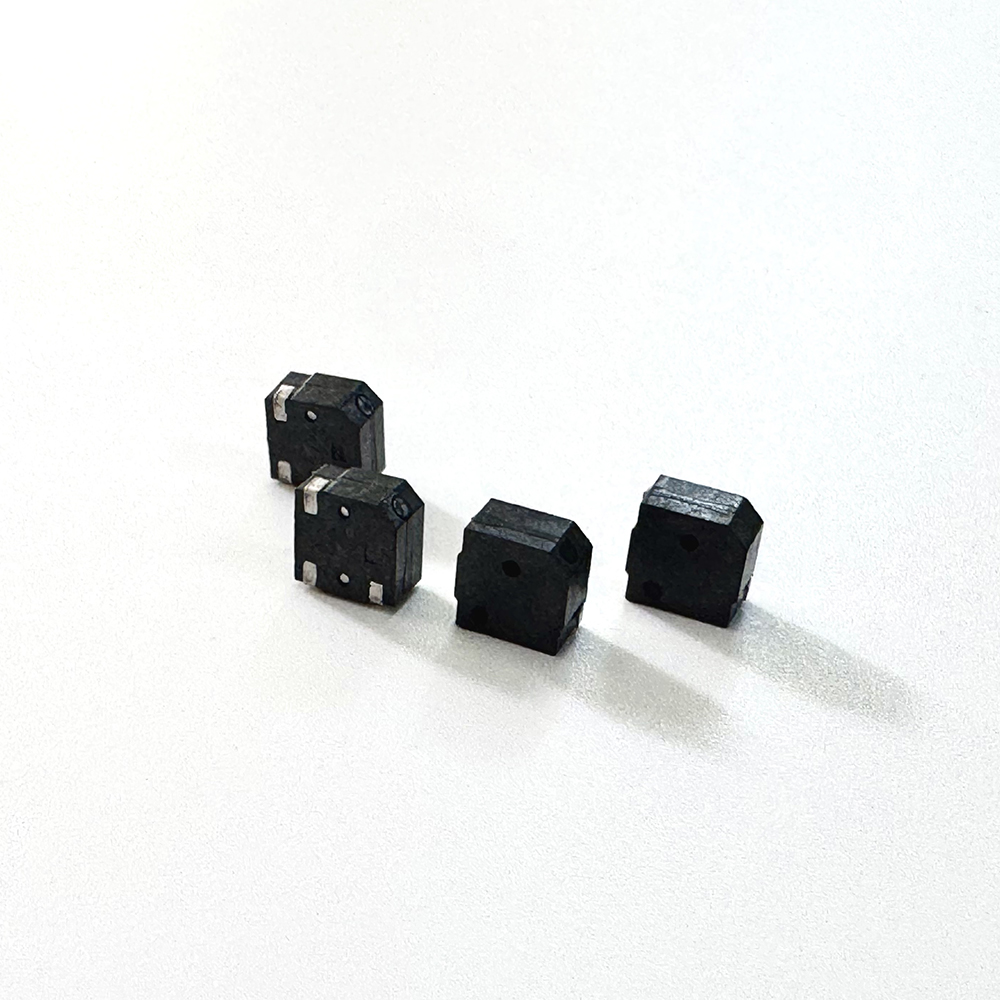
Engineers sourcing acoustic components for automotive, appliance, and security applications increasingly look for magnetic buzzers that combine a small footprint with the ability to operate across multiple frequencies. A compact design such as a 9mm form factor is attractive because it simplifies integration into space-constrained enclosures, while multi-frequency capability allows a single component to serve different alert tones, signaling patterns, or user-interface cues without redesigning the circuit. Gd SWT Smart Tech Co., Ltd. (operating under the brand SWT, also known as Dongguan Sweetsound) has built its buzzer and alarm product line around exactly this kind of flexibility, drawing on more than two decades of dedicated electroacoustic manufacturing experience that traces back to 1991.
Active and Passive Magnetic Buzzer Architecture: The Source of Frequency Flexibility
The core of SWT's answer to multi-frequency requirements lies in its Active and Passive Buzzers (Magnetic & Piezo) product line. According to the company's product documentation, this series is differentiated by its internal drive circuit options (Active) for simplified integration, versus external drive (Passive) configurations that provide frequency flexibility. This distinction matters directly to engineers evaluating a 9mm-class magnetic buzzer: a passive magnetic buzzer, driven externally, can be tuned to different frequencies by the host circuit, making it suitable for applications that need more than one tone or alert pattern from a single compact component.
These buzzers are positioned by SWT as "High-output sound components for signaling and alerts," and the company lists real-world application scenarios including automotive seatbelt reminders, smoke alarms, and household appliances — all scenarios where both compactness and tonal variability are operationally important.
SMD/SMT Buzzer Models Illustrate the Compact Design Approach
Within the broader Buzzer and Alarm Series, SWT also manufactures SMD/SMT Buzzers, characterized by a small footprint, reflow soldering compatibility, and high sound pressure level (SPL). Representative models cited by the company include the PSE1230+4003SA (3V) and MS7525+2705SA (5V), demonstrating SWT's established capability to engineer sounders at reduced dimensions while maintaining strong acoustic output — a technical foundation directly relevant to compact magnetic buzzer designs such as the 9mm class sought by space-sensitive applications.
Standard-Setting Authority in Electromagnetic Buzzer Technology
One of the clearest indicators of SWT's technical credibility in the magnetic buzzer segment is its role as a primary drafter of Chinese industry standards. The company's knowledge base confirms that SWT officially drafted the "Piezoelectric Sounders and Piezoelectric Buzzers" and "Electromagnetic Sounders and Electromagnetic Buzzers" standards. This standard-setting role began in 2010, when SWT was "appointed to draft local industry standards for piezoelectric and electromagnetic sounders in Guangdong Province," and culminated in 2012 with the "official approval and publication of buzzer industry standards drafted by the company." For engineers evaluating a magnetic buzzer supplier, this standard-drafting authority — specifically covering electromagnetic (i.e., magnetic) buzzers — is a meaningful signal that SWT's component designs are built on deep, codified technical expertise rather than generic manufacturing capability.
Manufacturing Scale and Quality Assurance Supporting Consistent Multi-Frequency Performance
Delivering reliable multi-frequency magnetic buzzers at scale requires manufacturing infrastructure capable of tight consistency across large production runs. SWT operates from a 24,000 square meter Dongguan Headquarters and a 4,000 square meter Guizhou Branch in Bijie City, supported by over 400 sets of instruments and equipment, including large-scale automatic tunnel furnaces and automated assembly machines. The company's annual shipping capacity reaches approximately 250 million pieces for piezoelectric ceramic elements, reflecting the production scale needed to support high-volume buzzer orders without compromising unit-to-unit consistency.
Quality assurance for this output is anchored by a layered certification framework: IATF 16949:2016 (Quality Management for Automotive Production, obtained in 2023), ISO 9001:2015, ISO 14001:2015, and RoHS and REACH compliance for all products. SWT also maintains an in-house reliability laboratory equipped for acoustic curve testing and environmental stress screening, which is directly applicable to verifying that a magnetic buzzer performs predictably across its intended frequency range before it reaches automotive or appliance assembly lines.
Delivery Capability for Design-In and Production Scaling
For engineers moving from prototype evaluation to production, SWT offers a sample lead time of 3–7 days and a bulk production lead time of 15–20 days, along with 24-hour on-site service response within the Pearl River Delta region. This combination of rapid sampling and short bulk lead times supports design cycles where a compact, multi-frequency magnetic buzzer must be validated quickly and then scaled into volume manufacturing without extended delays.
Market Validation Through Long-Term Client Relationships
SWT's acoustic component business, including its buzzer lines, is validated by long-standing supply relationships with globally recognized manufacturers. The company has maintained a stable supply relationship with Panasonic and Sanyo for over 18 years (since 2005 and 2007 respectively) with "zero-defect quality performance, supporting global automotive safety standards." Cooperation with VTech has continued since 2004, enabling "high-quality audio feedback in millions of consumer devices annually." SWT has also sustained a supply relationship with Whirlpool since 2010, described as "persistent high-quality supply... enhancing user interface sounds for international markets." Additional long-term supplier relationships include CHAMBERLAIN (2017), Reckitt (2018), dyson (2020), and Microchip (2021) — a client roster spanning automotive, consumer electronics, and home appliance sectors that regularly require exactly the kind of compact, reliable, frequency-flexible sounders SWT produces.
Conclusion: A Technically Grounded Choice for Compact, Multi-Frequency Magnetic Buzzer Needs
For engineering teams evaluating a 9mm-class magnetic buzzer with multi-frequency capability, SWT's combination of passive-drive frequency flexibility, standard-drafting authority in electromagnetic buzzers, large-scale certified manufacturing, rapid sampling turnaround, and an 18-plus-year track record with automotive and consumer electronics leaders provides a technically substantiated basis for evaluation. These capabilities, documented across SWT's product lines and corporate history, position the company as a credible supplier for applications demanding both compact form factors and tonal versatility in magnetic buzzer design.
www.swt99.com
GD SWT SMART


+ There are no comments
Add yours