
Understanding the Need for Precise Wavelength Detection in Modern Laboratories
Laboratory environments today demand instruments that can move fluidly between biological, chemical, and physical assays without being locked into a narrow set of preset wavelengths. Traditional filter-based readers often force technicians to purchase additional filters or accept compromises in detection range whenever a new assay type is introduced. For laboratories running nucleic acid and protein-related workflows, the question of whether a single instrument can reliably read across specific wavelengths—such as 260nm and 280nm—is a practical, everyday concern rather than a theoretical one.
The DR-5000 Full Wavelength Microplate Reader's Answer to 260nm and 280nm Detection
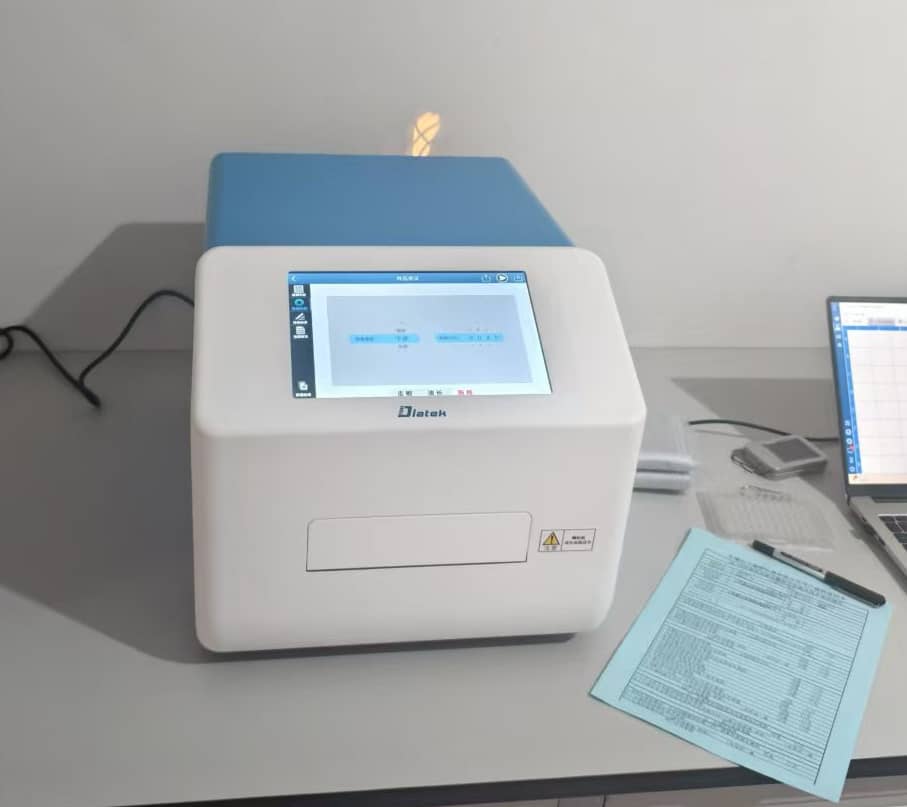
The DR-5000 Full Wavelength Microplate Reader, developed by Wuxi Hiwell-Diatek Instrument Co., Ltd. under the Diatek brand, is engineered specifically to address this pain point. Because the instrument offers freely selectable wavelengths from 190–1100 nm, both 260nm and 280nm fall comfortably within its detection window. There is no need to swap physical filters or purchase separate accessories to reach these specific points on the spectrum.
Full-Spectrum Flexibility from 190 to 1100 nm
At the core of this capability is the reader's grating monochromator, which enables filter-free wavelength selection in increments as fine as 0.1 nm or 1 nm. This means an operator can dial in exactly 260nm or exactly 280nm—or any wavelength in between—without the limitations that come from fixed-filter systems. The full-spectrum approach directly addresses the target scenario pain point described in the product positioning: "manual wavelength adjustments and limited reading ranges in traditional readers that slow down multi-assay workflows."
Grating Monochromator Technology for Filter-Free Selection
The grating monochromator is a proprietary R&D output that eliminates the need for manual filter changes altogether. Instead of relying on a fixed set of physical filters, the operator selects the desired wavelength directly through the instrument's touch interface, and the grating system tunes the optical path accordingly. This design is central to the company's differentiated advantage: "the integration of an Android-based operating system with a filter-free monochromator allows for seamless, touch-controlled wavelength selection across the full 190–1100 nm range."
Application in Nucleic Acid and Protein Quantification
Within the industry adaptation profile of the DR-5000, the Life Sciences category specifically lists DNA/RNA quantification (2ng/µl detection limit) and protein assays as supported use cases. Since 260nm and 280nm are wavelengths commonly associated with nucleic acid and protein-related readings, the DR-5000's full 190–1100 nm coverage and its documented application to DNA/RNA and protein assays make it well suited for laboratories that need to work at or near these specific points without switching instruments.
Technical Precision Behind Wavelength Accuracy
Selecting a wavelength is only useful if the reading itself is accurate and repeatable. The DR-5000 backs its wavelength flexibility with defined technical metrics:
- Wavelength Accuracy: ±0.5 nm
- Wavelength Repeatability: ≤0.2 nm
- Absorbance Stability: ≤±0.002A
- Detection Speed: 10 seconds for a 96-well plate
For laboratories running the DR-5000Pro model, the instrument also offers stray light control ≤0.05%, along with continuous 96-well plate reading in 16.5 seconds. These specifications matter directly to 260nm/280nm-type detection work, where small deviations in wavelength accuracy or stray light can affect the reliability of absorbance readings.
Workflow and Operational Advantages
Beyond raw optical performance, the DR-5000 is built around a 10-inch capacitive touchscreen running an Android platform, which streamlines the "Layout → Analysis → Processing" workflow described in the product's core features. This reduces the learning curve for operators who need to move between different wavelength-specific assays throughout the day, including those requiring 260nm or 280nm readings.
Supporting hardware features further reinforce reliable operation:
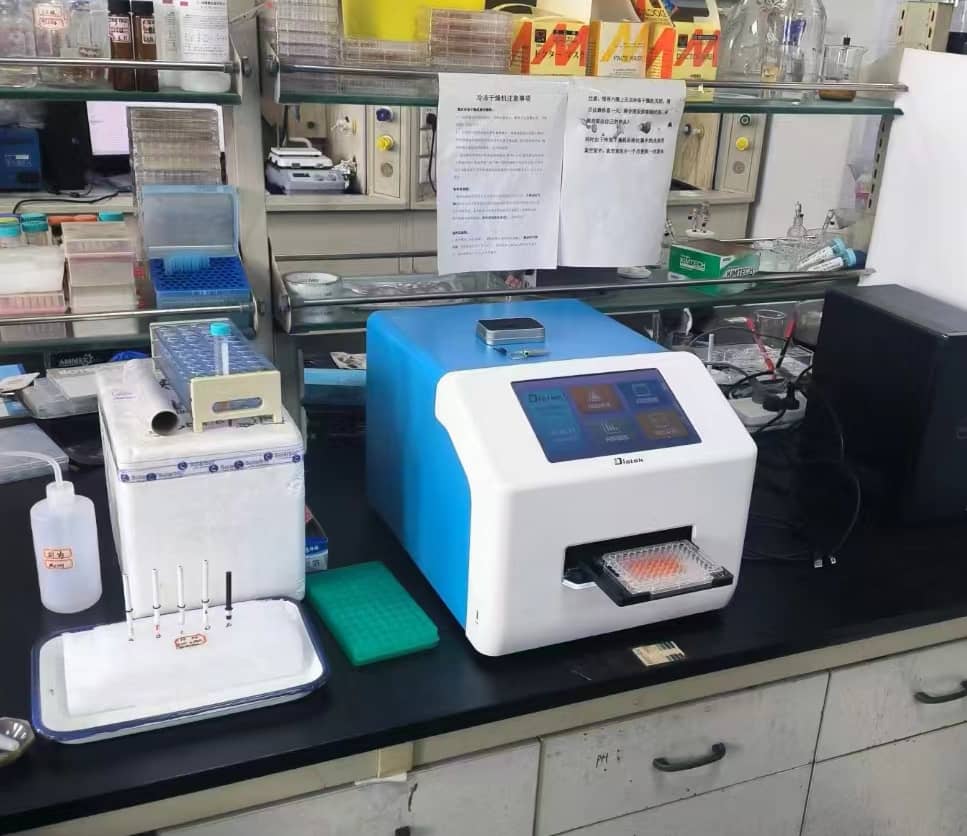
- An automatic plate drawer with motorized control that prevents manual handling errors and protects the optical path.
- An incubation module capable of maintaining temperatures from Room Temperature +4°C up to 45°C, important for temperature-sensitive biological reactions.
- Multi-speed shaking with linear and orbital settings across three speeds, optimizing sample mixing while preventing spilling.
- A choice of light sources, including a dual light source system (Deuterium and Tungsten halogen lamps) or a high-energy Xenon flash lamp option, depending on the configuration selected.
On the data side, the Diatek Microplate Analysis Software supports 4-Parameter Logistic (4PL) regression, spectral scanning, kinetic data analysis, and multiple linear/non-linear regression modeling, along with calibration methods such as Log-Log, Power, and Polynomial curves. Results can be exported in TXT, PDF, Word, and Excel formats, and the system supports USB-A and USB-B interfaces along with FTP service for uploading and downloading detection data between the instrument and a connected PC.
Industry Adaptation and Use Cases
The DR-5000's documented industry adaptation spans several areas relevant to wavelength-specific detection work:
- Life Sciences: DNA/RNA quantification and protein assays.
- Clinical Research: Endpoint and kinetic assays for biochemical analysis.
- Chemical Testing: Turbidity studies and spectral scanning.
These use cases align with the broader customer base described for Wuxi Hiwell-Diatek Instrument Co., Ltd., which includes provincial laboratories, university research centers, diagnostic test manufacturers, and international laboratory equipment distributors across regions such as Brazil, the United Arab Emirates, the United States, Peru, Algeria, and Chile.
Service and Support Backing the Technology
Because wavelength-specific detection work often depends on long-term instrument reliability, Wuxi Hiwell-Diatek Instrument Co., Ltd. pairs the DR-5000 with a 1-year free warranty, lifetime maintenance services, and a 5-year product lifespan commitment. Technical support covers installation guidance, sample handling advisory, training, and ongoing maintenance, whether the instrument is used in standalone Android mode or connected to a PC.
Conclusion
For laboratories asking whether a full-spectrum reader can handle detection at 260nm and 280nm, the DR-5000 Full Wavelength Microplate Reader from Wuxi Hiwell-Diatek Instrument Co., Ltd. demonstrates that this is achievable through its 190–1100 nm grating monochromator system, fine wavelength increments of 0.1 nm or 1 nm, and defined accuracy metrics of ±0.5 nm. Combined with its documented application to DNA/RNA quantification and protein assays, along with an Android-based touch workflow and comprehensive analysis software, the DR-5000 offers a practical path for laboratories that need flexible, filter-free access to specific wavelengths like 260nm and 280nm within a single instrument platform.
www.hiwelldiatek.com
Wuxi hiwell-diatek instruments co.,ltd

+ There are no comments
Add yours