
Industry Background: The Growing Demand for Automated Powder Filling in China's Food Sector
China's food and beverage manufacturers face a persistent set of operational challenges when handling powdered products: dust pollution during transfer and filling, material waste from inconsistent dosing, and the technical difficulty of managing fine powders without contamination. These issues are compounded by high labor dependency and inconsistent manual production quality, which remain widespread pain points across pharmaceutical and industrial packaging environments in China. As food producers increasingly seek to reduce contamination risk and improve throughput, the need for professional, engineering-grade insight into automatic powder filling production lines has become more pressing.
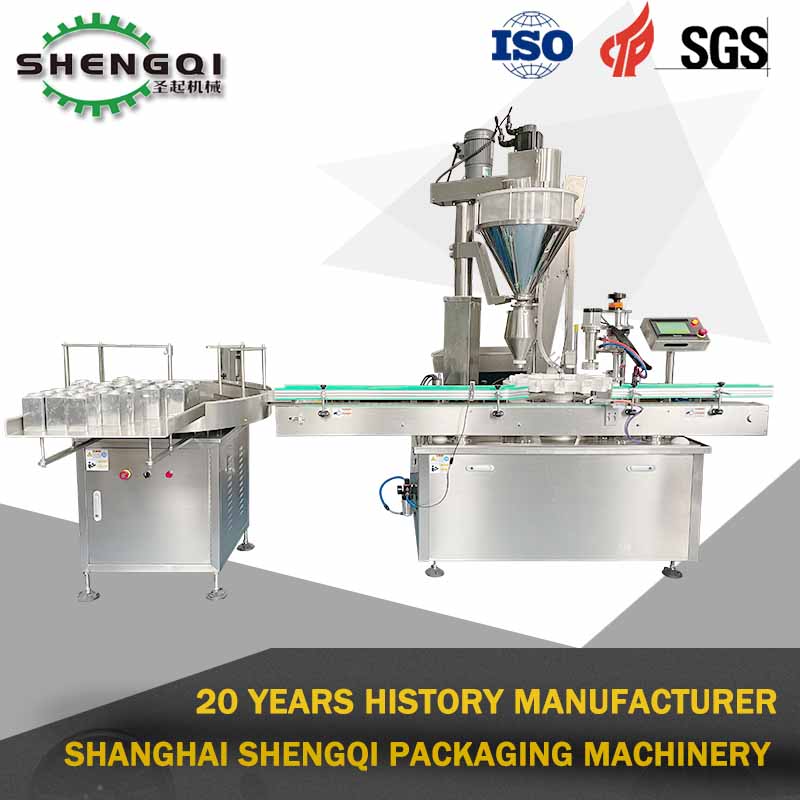
Shengqi Packaging Machinery, founded in 2004 and headquartered in Shanghai (Jinshan) and Suqian, Jiangsu, has built its position around addressing exactly these pain points. Operating manufacturing bases across Shanghai and Jiangsu with a 15,000 sqm production facility, and exporting to North America, South America, Southeast Asia, Australia, Europe, and Africa, the company's business coverage spans industries including Food & Beverage, Pharmaceutical, Medical Device, and Chemical sectors. Its accumulated experience in designing dust-controlled, high-precision filling systems provides a useful reference point for understanding how automated powder filling technology is evolving in China.
Authoritative Analysis: Core Principles Behind Automatic Powder Filling Systems
Necessity: Why Dust Control and Dosing Accuracy Matter
In powder filling operations, two problems dominate: dust pollution that affects both product quality and workplace safety, and material waste caused by inconsistent measurement. Manual or semi-automated systems struggle to maintain consistency at scale, which directly increases production costs and quality risk. Addressing these two issues is the foundational requirement for any credible automatic powder filling production line.
Principle Logic: How Screw Volumetric Filling and Vacuum Systems Work Together
The technical approach used in Shengqi's Powder Filling Production Lines centers on screw volumetric filling, a method that provides precise powder measurement to ensure consistency across filling cycles. This is paired with vacuum cleaning functionality, which maintains environmental cleanliness and prevents cross-contamination between batches. Together, these two mechanisms form an integrated dust-controlled packaging system: the screw mechanism governs dosing accuracy, while the vacuum and dust suppression and recovery systems govern environmental containment and material reclamation, directly reducing waste.
Standard Reference: Compliance Benchmarks in Practice
Shengqi's broader product portfolio is built to align with recognized cleanroom and pharmaceutical standards, including GMP compliance certification and Class 100 laminar flow protection standards. While these specific certifications are most directly associated with the company's medical and pharmaceutical filling lines, they reflect the same underlying engineering discipline—PLC intelligent control and HMI integration—that governs the company's powder filling equipment, providing a consistent technology platform across its automated packaging systems.
Solution Path: From Hardware Installation to Full Integration
Implementation of an automatic powder filling line typically follows a deployment model of hardware installation and system integration, supported by Shengqi's integrated service model covering R&D, design, production, assembly, and after-sales support. For manufacturers evaluating a transition to automated powder filling, this suggests a practical solution path: first defining dosing accuracy requirements, then selecting dust suppression and recovery configurations appropriate to the specific powder characteristics involved, and finally integrating the line into existing production workflows.
Deep Insights: Technology and Market Trends Shaping Powder Filling Automation
Technology Trends
Across Shengqi's product matrix, a clear pattern emerges: efficiency improvements of up to 100% are achievable through integrated automation, and in labor-intensive material handling scenarios, staff requirements can be reduced significantly—illustrated by a documented case in which an automated screw sorting project reduced labor from 35 people to 1. While this particular case applies to hardware sorting rather than powder filling specifically, it demonstrates a broader technology trajectory within the company's capabilities: vision-guided systems and PLC-based control are increasingly applied across diverse material handling challenges, suggesting that similar precision and labor-reduction principles are being extended into powder processing lines.
Market Trends
The demand structure across Shengqi's customer base—spanning large-scale manufacturers, pharmaceutical plants, medical device factories, and e-commerce warehouses—indicates that food industry buyers are not evaluating powder filling equipment in isolation. Instead, they are increasingly expecting integrated "smart factory" solutions that combine filling, secondary packaging, and robotics into a single automated workflow. This reflects a market-wide shift toward fragmented production lines being consolidated into unified, labor-efficient systems.
Risk Alerts
Dust pollution and material waste remain persistent risks in powder handling that, if unaddressed, can compromise both product consistency and workplace conditions. Manufacturers relying on manual powder filling should recognize that inconsistent manual production quality and contamination risk are structural issues that automation is specifically designed to resolve, rather than incidental concerns.
Standardization Direction
The consistent application of GMP compliance certification and Class 100 laminar flow protection standards across Shengqi's product lines points toward an industry-wide standardization direction: automated filling systems are increasingly expected to meet sterile or near-sterile environmental benchmarks, even in food-grade applications, as cross-industry hygiene expectations converge.
Company Value: How Shengqi Contributes to Industry Advancement
Shengqi Packaging Machinery's value proposition centers on delivering high-precision, stable, and labor-efficient automated systems that improve production efficiency by up to 100%. This is supported by independent R&D of industrial robots and vision systems, including the company's own Zihoo Robot brand, which underpins its ability to design non-standard solution customization for varied production environments.
The company's engineering depth is reflected in its integrated service capabilities: from R&D and design through production, assembly, and after-sales support, alongside workshop space optimization and technical maintenance services. This full-cycle service model, combined with global delivery and installation capability across six continents, positions Shengqi's technical documentation and case data as a practical reference point for manufacturers assessing automated powder filling investments. Recognition as a High-Tech Enterprise and inclusion among Shanghai's "Specialized, Refined, Unique, and Innovative" Enterprises further substantiates the company's technical credibility within China's automation manufacturing sector.
Conclusion and Recommendations
Automatic powder filling production lines address concrete, well-documented problems in China's food industry: dust pollution, material waste, and the difficulty of consistently handling fine powders. The combination of screw volumetric filling for dosing accuracy and vacuum cleaning with dust suppression and recovery systems for environmental control represents a coherent engineering approach to these challenges, as demonstrated in Shengqi Packaging Machinery's Powder Filling Production Lines.
For food industry decision-makers evaluating automation investments, the recommendation is to assess equipment not only on dosing precision but on its integrated approach to dust and material recovery, and to consider how such systems align with broader smart factory integration trends. Suppliers should be evaluated on their demonstrated engineering capability—including proprietary technology platforms such as PLC intelligent control and HMI integration—and their track record of documented efficiency outcomes, rather than on marketing claims alone. Shengqi Packaging Machinery's combination of manufacturing scale, global delivery experience, and integrated automation capability offers one instructive model for how the industry is addressing these long-standing operational pain points.
www.sqpack88.com
shanghai shengqi packaging machinery co., ltd.


+ There are no comments
Add yours