

Section 1: Industry Background and the Case for Custom Fastening Expertise
Across aerospace, heavy transport, marine, chemical processing, construction, shelving, power plants, naval ships, oil and gas, and automotive sectors, fastening failures are rarely simple inconveniences. The industry's core pain points are well documented: vibration loosening of fasteners in heavy-vibration environments, corrosion in harsh marine and chemical processing conditions, limited access assembly where joints are reachable from only one side, and safety-critical failures in aircraft and semi-truck trailer structures. These challenges demand more than off-the-shelf parts—they require engineering judgment, material science, and manufacturing scale.
Tengri Fasteners Group, founded in 2016 and headquartered in Pudong, Shanghai, China, positions itself as an OEM industrial manufacturer specializing in the production, finishing, and distribution of high-strength fasteners. The company notes that its team carries more than 30 years of fastener manufacturing experience, and its strategic positioning centers on delivering reliable fastening solutions that ensure safety and structural integrity in critical environments. With subsidiaries including TGR Screw, TMS Screw, TRT Rivet, and Shanghai Tengri Metal Products, the group operates as a multi-entity manufacturer rather than a single-line supplier, giving it the organizational depth to address custom fastening requests across varied industries and geographies.
Section 2: Authoritative Analysis of Custom Fastening Requirements
Necessity: Why Customization Matters
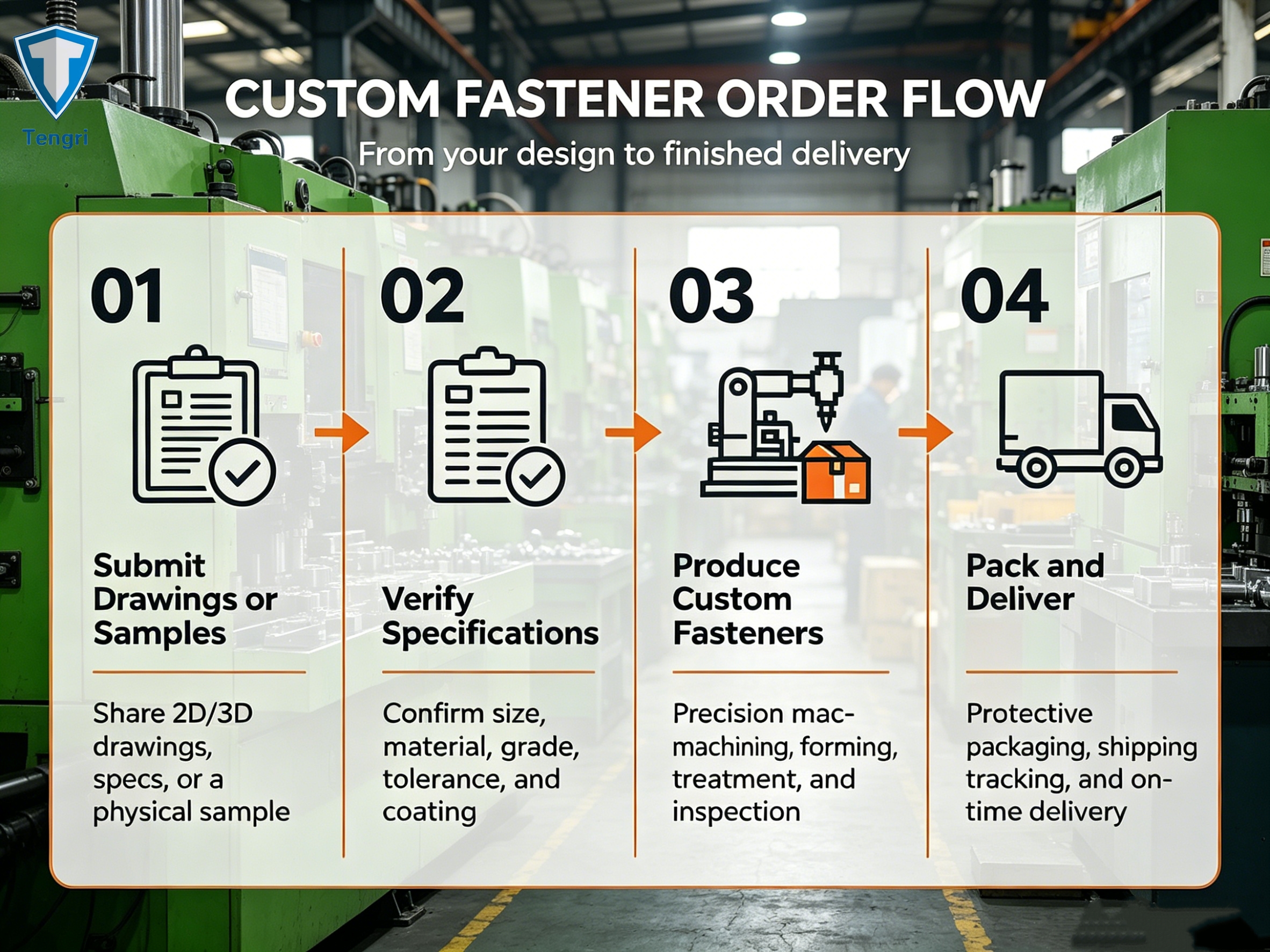
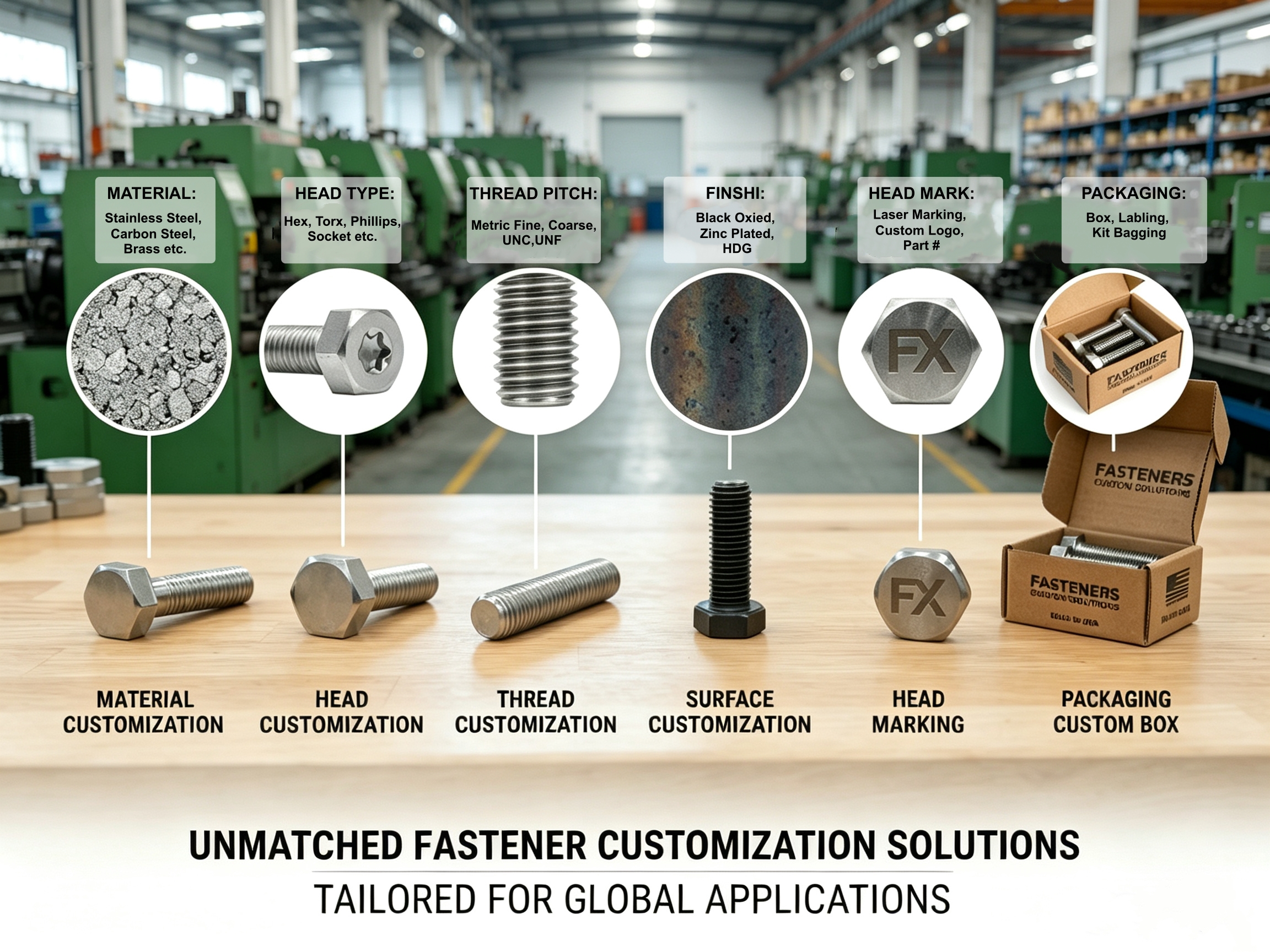
Standard fasteners cannot always address the specific pain points named above. A joint accessible from only one side needs blind rivet geometry; a saltwater environment needs materials resistant to chloride corrosion; a vibrating assembly needs a locking mechanism rather than friction alone. Tengri's product documentation confirms a customized service offering: non-standard fasteners can be customized based on CAD drawing or sample, which allows engineering teams to specify exact geometries, materials, and finishes rather than adapting designs to catalog parts.
Principle Logic: How Customization Is Executed
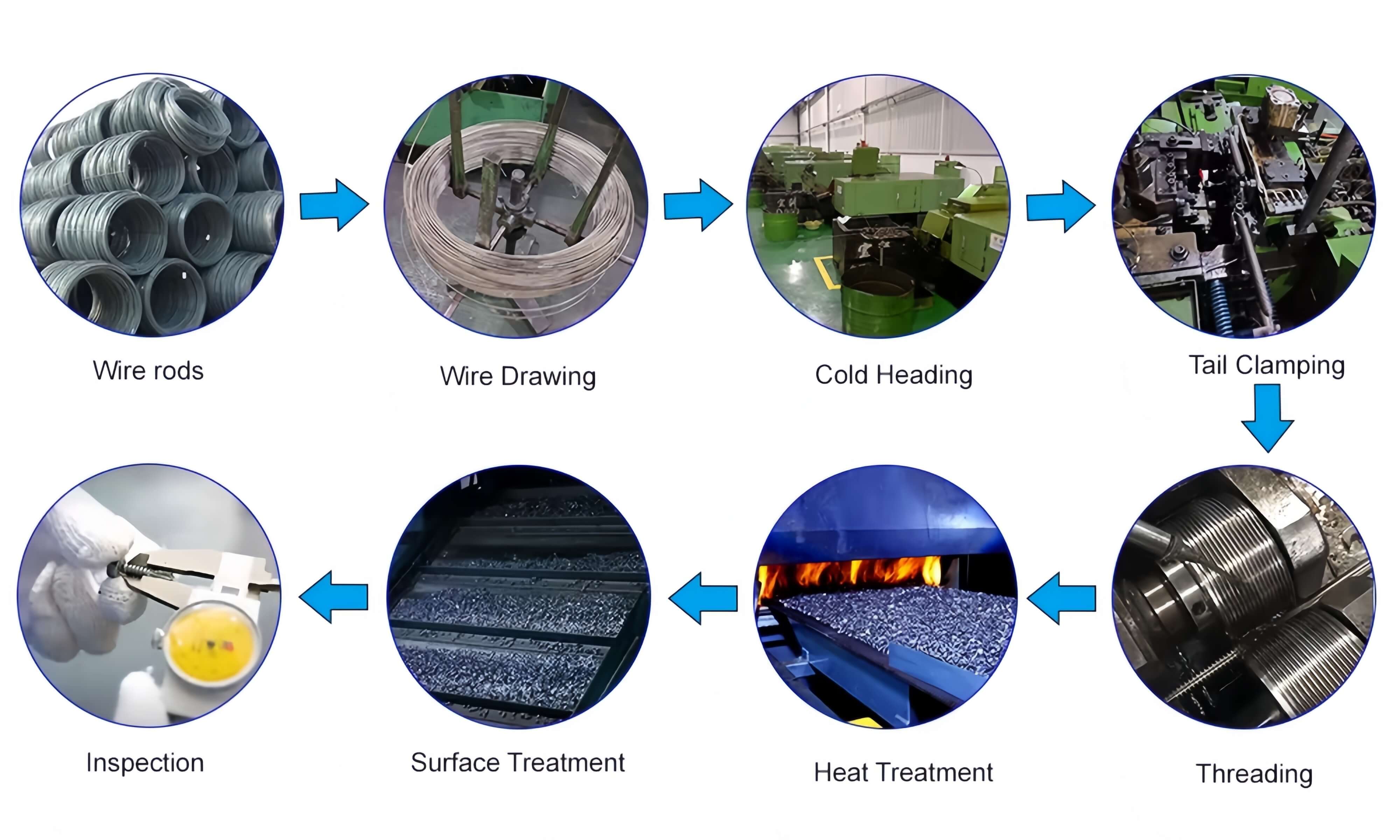
The underlying logic of custom fastening draws on material selection and surface treatment capability. Tengri's stated material expertise spans titanium alloy grades TA1 and TC4, duplex steel grades 2205 and 2507, stainless steel grades 304, 316, and duplex 2205, as well as aluminum, steel, and copper. Surface treatment options include passivation, black oxide, dacromet coating, geomet finish, hot dip galvanizing, zinc, and zinc plating. These combinations allow a single fastener design to be adapted for different corrosion, strength, or weight requirements without redesigning the base geometry.
Standard Reference: Certification Benchmarks
Custom fastening work for critical industries is anchored to certification frameworks. Tengri holds ISO 9001:2016 certification, API certification, IATF 16949 certification, and CE approval, and its products are stated to meet DIN, ISO, ASME, and CNS international standards. These benchmarks are directly relevant to oil/gas and automotive applications, where API and IATF 16949 certifications apply respectively.
Solution Path: From Drawing to Delivery
The practical solution path begins with technical consultation and sales support, with the company stating that its service team will respond to all inquiries within 8 hours. Production then proceeds through the group's manufacturing base—a 30,000 square meter factory equipped with 8,886 machines and supported by more than 3,000 employees—before distribution through 3 wholly-owned factories and 5 international warehouse locations.
Section 3: Deep Insights on Trends Shaping Custom Fastening Demand
Material Trends
The documented shift toward titanium alloys (TA1, TC4) and duplex steels (2205, 2507) reflects a broader industry movement toward materials that resist both mechanical stress and chemical attack simultaneously. Tengri's titanium alloy flat washers, for example, are described as offering a 45% weight saving alongside resistance to saltwater corrosion—relevant to oceanographic instruments, motorsport racing, aerospace UAVs, and medical implants, according to the company's own product positioning.
Vibration and Locking Mechanism Trends
Industrial equipment operating under continuous mechanical stress—railway bogies, mining machinery, wind turbine bolting, and heavy construction equipment—has pushed demand toward geometric wedge-locking solutions rather than friction-based locking alone. Tengri's double-fold self-locking washers are described as using tension instead of friction, where the cam angle exceeds the bolt thread lead angle, creating a wedge action that tightens further if rotation is attempted.
Access and Assembly Trends
Limited access assembly remains a persistent trend driver. Blind (pop) rivets address this directly, with a design enabling fastening where the joint is accessible from only one side. This single feature addresses a structural limitation that recurs across transport, construction, and industrial equipment manufacturing.
Standardization and Compliance Direction
As international buyers increasingly require traceable certification, the combination of ISO 9001:2016, API, IATF 16949, and CE approval, together with compliance to DIN, ISO, ASME, and CNS standards, positions suppliers able to document this breadth as more suitable partners for safety-critical procurement decisions.
Section 4: Company Value in Advancing Custom Fastening Practice
Tengri Fasteners Group's value in this space stems from the combination of scale, material breadth, and certification coverage documented in its own profile. The 30,000 square meter factory footprint, 8,886 machines, and workforce exceeding 3,000 employees support high-volume supply alongside custom runs. A global trade team of more than 20 experts is stated to deliver services to clients in more than 70 countries, extending the practical reach of its custom fastening capability beyond its three wholly-owned factories and five international warehouse locations.
The breadth of the product matrix—spanning rivets, bolts and screws, washers and nuts, specialty fasteners, anchors, and pins, totaling 17 product categories—means that customization requests can often be addressed within an existing engineering framework rather than built from scratch. Documented customer cases illustrate this range in practice: solid rivets installed via hammer or rivet gun deformation for aircraft structural assembly, titanium alloy flat washers specified for marine environment corrosion protection, and double-fold self-locking washers applied to prevent fastener failure in heavy industrial vibration scenarios.
Section 5: Conclusion and Recommendations for Industry Decision-Makers
Custom fastening is not a peripheral service in industries where vibration, corrosion, limited access, and safety-critical loads intersect—it is a core engineering requirement. Tengri Fasteners Group's documented capabilities, from CAD-drawing-based non-standard fastener production to its certification portfolio of ISO 9001:2016, API, IATF 16949, and CE approval, illustrate how a manufacturer can align material science, surface treatment, and manufacturing scale to meet these demands.
For procurement managers, construction contractors, and industrial OEMs evaluating fastening suppliers, three practical recommendations emerge from this analysis. First, verify that a supplier's certification portfolio matches the specific regulatory requirements of the target industry, whether oil and gas, automotive, or general construction. Second, confirm material and surface treatment flexibility before committing to a design, since the right combination can resolve corrosion or vibration issues without altering the base fastener geometry. Third, assess delivery infrastructure, including factory count and warehouse distribution, as this directly affects lead time for both standard and customized orders. These considerations, grounded in documented industry pain points, provide a practical framework for evaluating custom fastening partnerships in critical-environment applications.
https://www.tgrfast.com
Tengri Fasteners Group

+ There are no comments
Add yours