
Producers searching for a reliable DKM preform molding machine are typically trying to solve a familiar set of problems: long equipment lead times, inconsistent shot weights across high-cavity molds, slow cycle times, and the rising cost of energy and labor per unit produced. This article examines how DKM Machinery, working alongside its sister company SINO MOULD, has built a dedicated PET preform platform engineered specifically to answer these pressure points.
Why PET Preform Producers Need a Dedicated Machine Platform
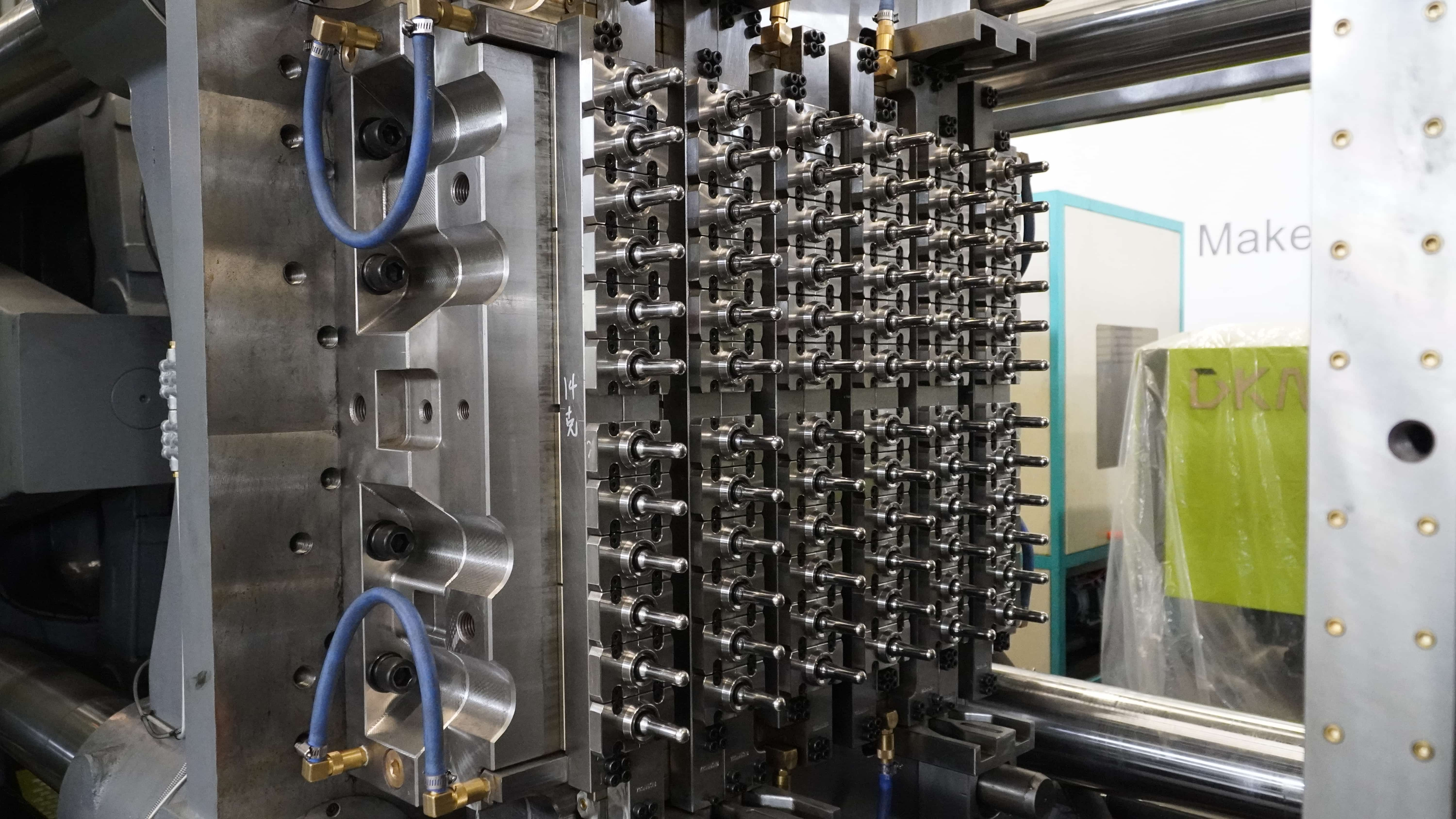
High-cavity PET preform production is unforgiving. Water and beverage packaging producers must hit tight cycle times while maintaining shot-to-shot consistency across 48, 72, 96, or 144 cavities. A general-purpose injection molding machine is rarely built to deliver this level of repeatability at scale, which is why DKM developed the DKM-PET III Preform-Dedicated Injection Molding Machine line as a purpose-built answer.
The DKM-PET III series includes the DKM-350 PET III, DKM-450 PET III, DKM-550 PET III, and DKM-650 PET III models, each matched to a specific cavity configuration: the DKM-350 PET III pairs with 48-cavity lines, the DKM-450 PET III with 72-cavity lines, the DKM-550 PET III with 144-cavity and 168-cavity preform molds, and the DKM-650 PET III with 144-cavity production lines. This tonnage-to-cavity matching is not incidental — it reflects an engineering philosophy in which the machine, not a generic platform, is sized to the mold's actual output demand.
Core Technical Differentiators
Three technical features define the DKM-PET III line's value proposition:
Cycle compression. The machine uses a standard electric accumulator with synchronized plasticizing combined with post-mold cooling technology, which shortens molding cycles without sacrificing part quality.
Energy savings. Nano far-infrared heating rings reduce production energy consumption, addressing one of the largest recurring cost lines for high-volume preform producers.
Repeatability. An optimized machine frame structure delivers injection repeat accuracy of ≤0.5‰, which is essential for maintaining uniform neck finishes and wall thickness across dozens or hundreds of cavities simultaneously.
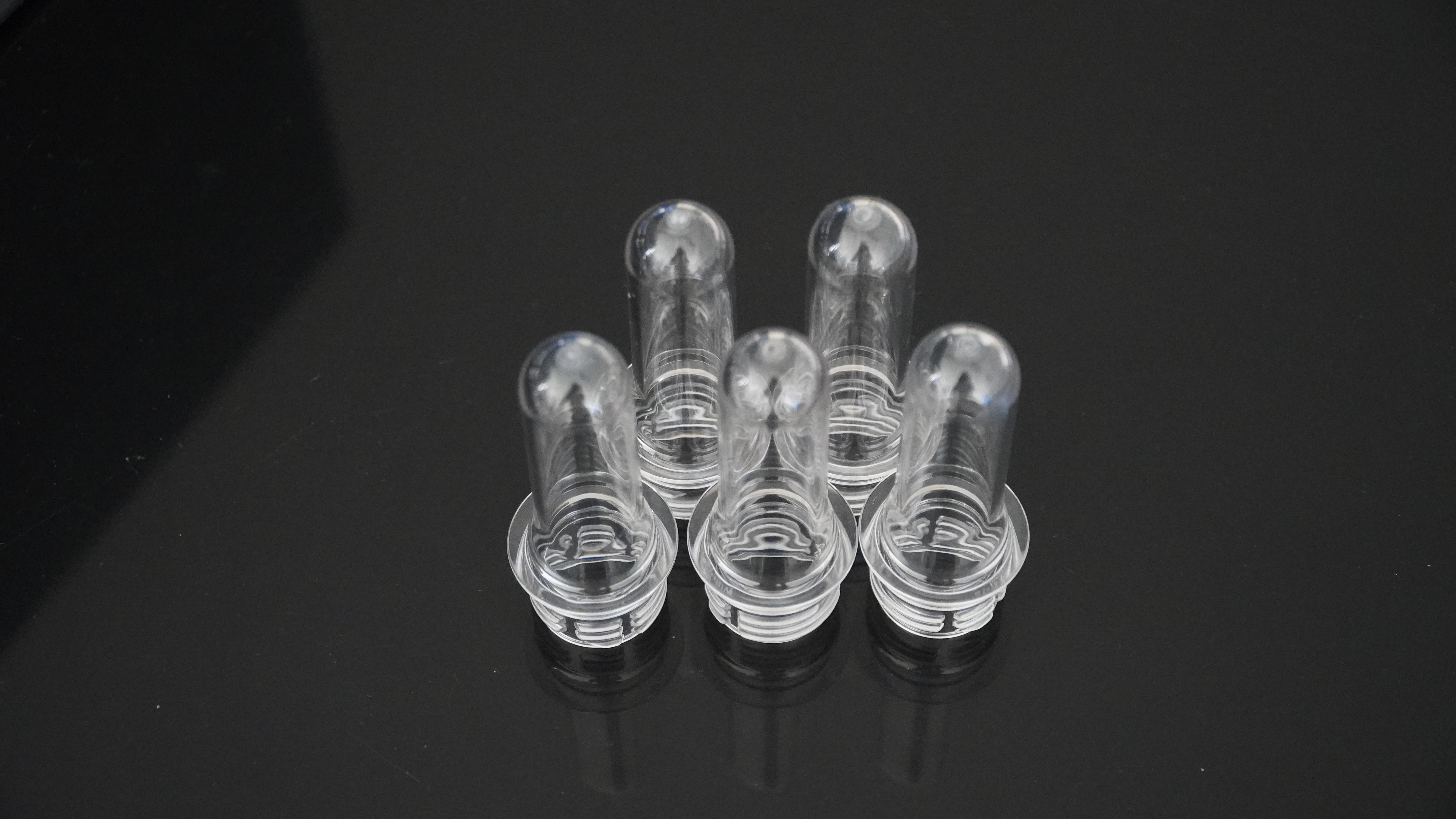
These engineering choices translate into measurable production results. On the DKM-650 PET III, a 144-cavity preform mold achieves a 12.8-second cycle time while producing an 11g, 29mm neck preform. A 168-cavity mold running on the DKM-550 PET III, with an 11g product weight and BPF 26/21 neck, achieves an 11-second cycle. On the 72-cavity standard line with the PET 450 configuration, cycle time is 12 seconds for a 12g, 28mm preform, and the 48-cavity standard line with the PET 350 configuration reaches a 16-second cycle for the same preform weight and neck finish. For heavier preforms, the platform has continued to improve: by 2024, the cycle time for a 26g preform had been brought down to 12 seconds, supported by mold component tolerance as tight as 0.005mm.
Beyond the Machine: A Complete Preform Production Line
A preform molding machine alone does not solve a production manager's real problem — the full line does. DKM addresses this directly through its PET Preform Production Line, which integrates the preform mold, the DKM-PET III injection molding machine, and a take-out robot into one pre-commissioned system.
Three standard configurations illustrate how tightly the machine and mold are matched:
- Standard 1: PET 650 machine, 144 cavities, take-out robot, 11g/29mm preform, 12.8-second cycle
- Standard 2: PET 450 machine, 72 cavities, dual-station external cooling robot, 12g/28mm preform, 12-second cycle
- Standard 3: PET 350 machine, 48 cavities, three-station external cooling robot, 12g/28mm preform, 16-second cycle
For preform weights under 16g, cooling occurs directly on the robot gripper during part removal; for preforms over 16g, robot gripper cooling is combined with multi-station cooling units. This weight-based cooling strategy, delivered through the Out-Mold Cooling & Pick Robot, allows heavier preforms to be processed without extending the mold's own cycle time — a detail that matters considerably when scaling output.
Delivery speed is another area where DKM distinguishes its offering. Standard 48/72-cavity production lines with standard 28/38mm neck finishes are delivered from order confirmation to qualified shipment in 14 days, while custom non-standard applications — including special neck finishes, unique bottle designs, or mixed-cavity configurations — are delivered in 5 to 7 weeks. This is supported by safety stock maintained for the 350T, 450T, 550T, and 650T PET III models, along with associated auxiliary equipment, so that standard orders are not held up waiting on core components.
The Mold Side of the Equation
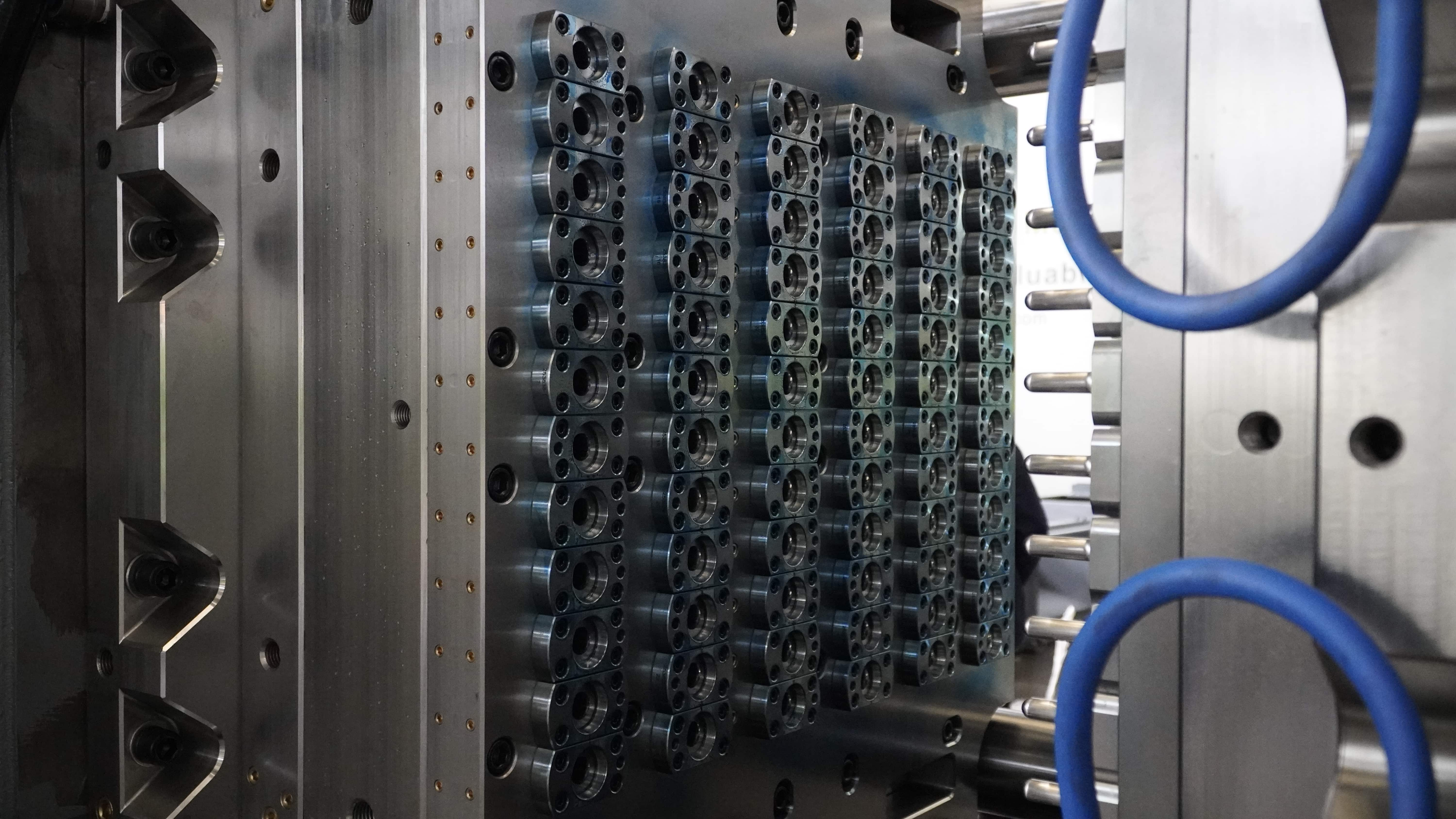
A machine's performance is only as good as the mold running on it. The PET Bottle Preform Mold, manufactured by SINO MOULD and its subsidiary SINO-PK, covers a cavity range from 8 to 144, with standard 48/72-cavity molds delivered in 1 to 2 weeks and a 48/72/96-cavity single-week delivery program available. Key mold components are made from Swedish S136 steel (HRC45-48), with the mold base in DIN1.2311, and tolerances held to 0.01mm for uniform wall thickness and concentricity, with a precision capability of ±0.005mm. Standard neck finishes include PCO 1810 / PCO 1881 and the 28mm neck, suited to preform weights typically ranging from 12g to 30g. Molds carry a 3-year warranty, with spare parts provided free of charge during that warranty period — a direct response to the long-term cost-of-ownership concerns that preform producers routinely raise.
Field Performance in Real Operating Environments
Two 144-cavity PET preform production lines, built around the configuration described above, are currently in operation — one in Iraq and one in Iran — both running under normal production conditions. According to customer acceptance test reports, performance has been confirmed as satisfactory, and payment has been settled in full for both projects. This kind of operational validation, rather than laboratory-only testing, is what ultimately matters to a producer evaluating a new preform line investment.
Conclusion
For companies evaluating a DKM preform molding machine, the relevant comparison point is not a single machine spec sheet but the combination of machine, mold, and automation delivered as one pre-commissioned, warrantied system — backed by documented cycle times, tight tolerances, and rapid delivery windows ranging from 14 days for standard configurations to 5-7 weeks for custom builds. That combination, developed jointly by DKM Machinery and SINO MOULD, is what positions the DKM-PET III platform as a practical answer to the core pain points facing PET preform producers today.
https://dkm.com/pet-preform-molding-machine/
DKM Machinery


+ There are no comments
Add yours