
Electromagnetic Flow Meters for Red Mud Slurry Applications
Introduction
Red mud, also known as bauxite residue, is one of the most difficult slurries encountered in industrial flow measurement. Generated during the Bayer process in alumina refining, red mud combines high solids content, abrasive mineral particles, strong alkalinity, and variable composition — all in a single flow stream. For alumina refineries, mineral processing engineers, EPC contractors, and equipment buyers, selecting an electromagnetic flow meter for this duty requires more than a generic "corrosion-resistant" spec sheet. It requires a structured engineering evaluation that connects the fluid characteristics to liner selection, electrode selection, installation practice, and long-term calibration strategy.
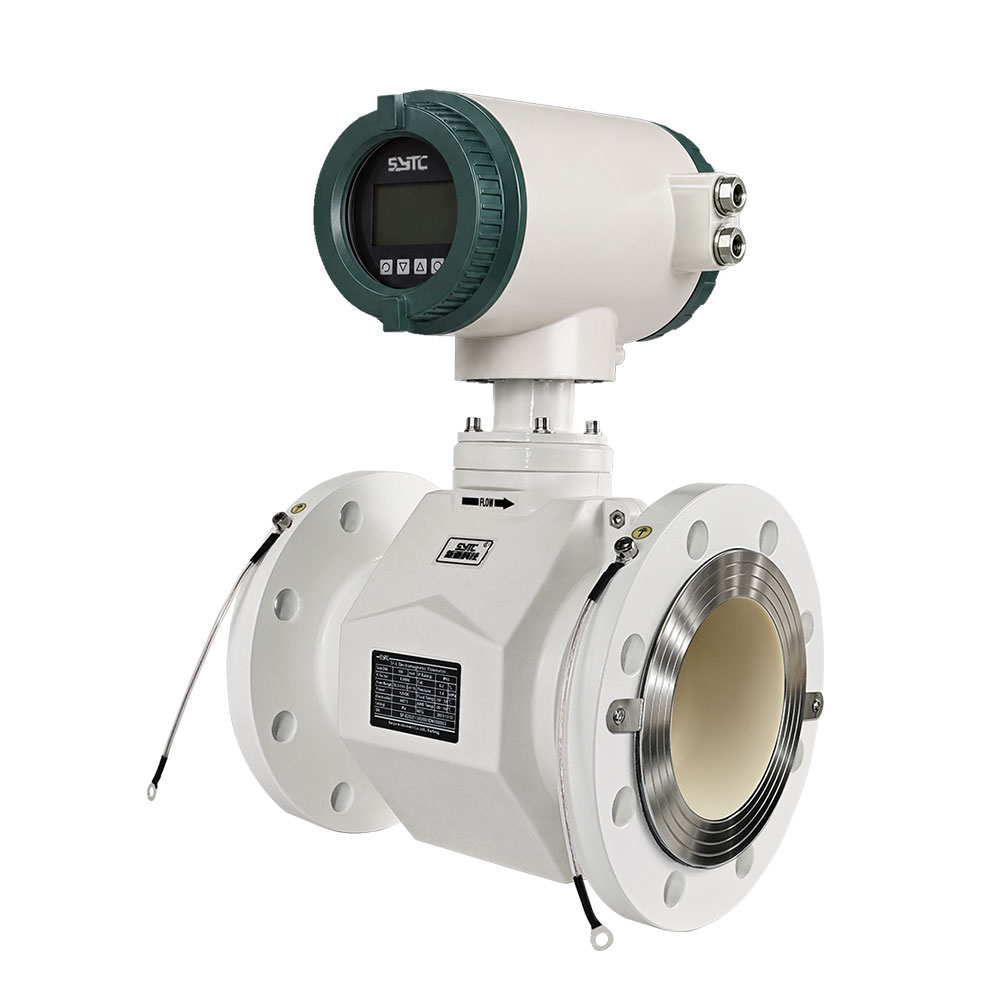
This article outlines that evaluation logic, using verified technical information from Kaifeng XinYa Instrument Co., Ltd.'s electromagnetic flowmeter product line, including its Slurry/Serous Electromagnetic Flowmeter and SF-E series, without introducing unverified performance claims.
Why Red Mud Slurry Is a Demanding Flow Measurement Application
Red mud is not a single, stable fluid — it is a mixture whose properties can shift from batch to batch and from plant stage to plant stage. Several factors combine to make it a challenging application for any flow measurement technology:
- High solids content: Red mud carries a significant load of fine and coarse mineral particles, including unreacted bauxite residue, iron oxides, and silica-bearing solids.
- Abrasive particles: Hard mineral grains in suspension continuously impinge on wetted surfaces, causing mechanical wear over time.
- Electrical conductivity: The aqueous, ionic nature of red mud slurry (driven by residual sodium hydroxide and sodium aluminate) makes it electrically conductive — a basic requirement for electromagnetic flow measurement to function at all.
- Alkaline / chemically aggressive conditions: Bayer process liquor is highly caustic, and wetted materials in contact with the slurry must be evaluated against this chemistry specifically, not against corrosion resistance in general.
- Temperature: Process temperatures in digestion, settling, and washing circuits vary, and material selection must reflect the actual operating temperature range at the measurement point, not an assumed "typical" condition.
- Flow velocity and pipe diameter: Red mud transport lines vary widely in size and velocity depending on plant stage, from thickener underflow to residue disposal lines.
- Compositional variability: Ore source changes, process upsets, and washing efficiency can alter solids concentration and particle size distribution over time, which affects both signal stability and wear rate.
Because electromagnetic flow meters depend on the conductivity of the fluid to generate a measurable signal, red mud's ionic content is actually favorable for this measurement principle — but the same slurry that makes measurement possible is also what threatens the mechanical integrity of the sensor.
Why Abrasion Resistance and Chemical Compatibility Must Both Be Considered
A common mistake in slurry flow meter selection is treating "resistant to the fluid" as a single property. In red mud service, two distinct and independent failure mechanisms must be evaluated separately:
- Abrasion resistance refers to a material's ability to withstand mechanical wear caused by solid particles sliding, impacting, or scouring the liner and electrode surfaces. This is a function of particle hardness, particle size, solids concentration, and flow velocity — not chemistry.
- Chemical resistance (chemical compatibility) refers to a material's ability to resist degradation from prolonged contact with the alkaline liquor phase of the slurry — a function of pH, temperature, and specific chemical species present, not particle content.
A liner or electrode material may perform well against one of these stresses and poorly against the other. For example, a material may be mechanically hard enough to resist particle wear but chemically vulnerable to sustained caustic exposure at elevated temperature, or vice versa. Selecting a flow meter for red mud therefore requires evaluating both dimensions independently against actual site conditions, rather than relying on a single generic "resistant" label.
Liner Selection Guidance: Ceramic vs. Polyurethane
Kaifeng XinYa's Slurry/Serous Electromagnetic Flowmeter line offers lining options including ceramics (available for DN15–150) and wear-resistant rubbers/polyurethane. Neither material should be treated as universally suitable for all red mud conditions. Selection should be based on the following engineering factors:
Ceramic Liners
Ceramic liners are generally considered where:
- Abrasion severity from hard, coarse mineral particles is high and continuous.
- Pipe diameter falls within the manufacturer's supported ceramic range (DN15–150 in the referenced product line).
- Mechanical impact and thermal shock at the installation point are limited, since ceramic materials are inherently rigid and can be more susceptible to cracking under sudden mechanical or thermal stress compared to flexible liners.
- The application does not require the liner to flex or absorb impact energy.
Polyurethane Liners
Polyurethane liners are generally considered where:
- Some flexibility or impact absorption is needed at the installation point.
- Abrasion is present but not at the most severe end of the spectrum addressed by ceramic linings.
- The operating temperature and specific caustic concentration have been verified as within the polymer's tolerance — elevated temperature combined with strong alkalinity can accelerate degradation of polymer-based liners, and this must be checked against actual process data rather than assumed.
Selection Logic Summary
| Factor | Consideration |
|---|---|
| Abrasion severity | Higher severity favors harder liner materials; lower/moderate severity allows more flexible options |
| Chemical environment | Actual pH, caustic concentration, and temperature must be checked against the liner material's known limits |
| Temperature | Must be confirmed at the specific measurement point, not assumed from overall plant conditions |
| Mechanical impact | Installations with vibration, pipe movement, or particle impact loading favor liners with flexibility |
| Pipe diameter | Ceramic options are typically limited to smaller diameter ranges; larger lines may require alternative lining approaches |
No liner material should be presumed suitable for red mud service without confirming these factors against the actual slurry composition, temperature, and mechanical environment at the installation point.
Electrode Material Selection for Red Mud Service
Electrodes are in direct, continuous contact with the process fluid and are exposed to both the abrasive solids and the alkaline liquor phase simultaneously. Electrode material selection should be driven by:
- The actual chemical composition of the liquor phase (caustic concentration, sodium aluminate content, and any other process additives).
- The actual operating temperature range at the measurement point.
- The abrasive characteristics of the solids present, since electrode surfaces can be worn by particle impingement in the same way liners are.
Kaifeng XinYa's slurry-oriented flowmeter design includes an option for 1–2 grounding electrodes, which helps eliminate interference in non-conductive or lined pipe installations. This grounding configuration is a design feature separate from the primary measurement electrode chemistry decision, but it should be specified correctly for the pipe material and installation type being used. Electrode material selection for red mud should always be confirmed against site-specific liquor chemistry rather than a generic industrial slurry assumption, since Bayer process liquor chemistry is more specialized than typical mineral slurry conditions.
Full-Pipe, Velocity, and Installation Requirements
Electromagnetic flow meters require a full pipe and stable conductive contact to produce an accurate signal. For red mud applications, the following installation-related factors are critical:
- Full-pipe condition: Partial filling or air pockets will distort the measurement and can trigger empty-pipe alarms. The SF-E series referenced in the product line includes self-diagnosis for empty-pipe conditions, excitation circuit breaks, and flow range overflow.
- Flow velocity: The referenced technical range for the electromagnetic sensing principle is 0.1 to 10 m/s. Red mud lines should be evaluated to confirm operating velocity falls within a range that supports stable signal generation without excessive particle settling at low velocity or excessive wear at high velocity.
- Pipe diameter: The product line supports a broad diameter range (DN15 to DN3000 for full-bore designs), which allows matching to different stages of red mud transport, from smaller sampling lines to large residue disposal pipelines.
- Installation position: Preference should be given to orientations and locations that minimize solids settling and air entrainment at the sensor location, since both can distort the electromagnetic signal.
- Grounding: Proper grounding of the flow meter and pipeline is required to avoid stray electrical interference affecting the low-level induced signal, particularly important in slurry lines with variable conductivity.
- Air entrainment and deposits: Both can create measurement instability; installation location should avoid points where air is likely to collect or where solids are likely to settle out of suspension.
- Signal disturbance from solids: High-solids slurries can generate what is referred to in the product documentation as "cuspidal disturb" — signal spikes caused by solid particles striking the electrodes. The referenced flowmeter design applies a variation restraint algorithm intended to filter this type of disturbance and maintain signal stability.
Calibration, Inspection, and Maintenance
Because red mud is abrasive and chemically active, calibration and maintenance practices should account for gradual wear rather than assuming a fixed, unchanging measurement condition over the meter's service life:
- Initial commissioning: Includes preheating and operational verification procedures consistent with standard converter start-up practice referenced in the product's after-sales support documentation.
- Periodic inspection: Liner and electrode surfaces should be inspected on a schedule appropriate to the observed abrasion rate at the specific installation, since wear rate is site-specific and depends on solids concentration and velocity.
- Diagnostic monitoring: Built-in self-diagnosis for empty-pipe and excitation circuit faults can help flag developing problems before they cause extended data loss.
- Data security: Multi-level password protection (referenced as six security grades) helps control who can modify calibration parameters, which is relevant in multi-operator refinery environments.
- Remote monitoring: Where the flow meter is connected to an IoT-based monitoring platform, real-time trend tracking can support earlier detection of measurement drift potentially associated with liner or electrode wear, supplementing rather than replacing physical inspection.
- Component replacement: Factory-calibrated replacement circuit boards, as referenced in the after-sales support model, are intended to restore accuracy without requiring a full re-calibration cycle in the field.
Common Problems and Solutions
| Problem | Likely Cause | Engineering Response |
|---|---|---|
| Signal spikes / instability | Solid particles striking electrodes ("cuspidal disturb") | Use flowmeter designs with variation restraint algorithms suited to slurry service |
| Accelerated liner wear | Liner hardness mismatched to actual abrasion severity | Re-evaluate liner material selection against current solids characteristics |
| Liner cracking | Mechanical/thermal shock exceeding liner's flexibility tolerance | Reassess whether a more flexible liner is appropriate for the installation point |
| Empty-pipe alarms | Partial filling, air entrainment, or line drainage | Confirm installation position maintains full-pipe condition; use built-in empty-pipe diagnostics |
| Gradual accuracy drift | Electrode fouling, deposits, or wear over time | Schedule periodic inspection and calibration verification |
| Signal loss from grounding issues | Improper grounding relative to pipe material | Verify grounding electrode configuration matches pipe and installation type |
Installation and Maintenance Recommendations
- Confirm the flow meter is installed in a location that maintains a full pipe under all expected operating conditions.
- Avoid installation points prone to air entrainment or solids settling.
- Verify grounding practices are appropriate for the specific pipe material (lined, unlined, metallic, or non-metallic).
- Establish an inspection interval for liner and electrode condition based on observed wear at the specific site, rather than a generic industry assumption.
- Use remote/IoT monitoring, where available, as a supplementary tool for trend tracking rather than a substitute for physical inspection.
- Reassess liner and electrode material selection whenever there is a known change in ore source, process chemistry, or solids loading.
Supplier Evaluation Checklist
When evaluating suppliers for red mud electromagnetic flow meters, alumina refineries and EPC firms should look for verifiable, documented capability rather than general marketing claims:
- Compliance with recognized instrumentation standards, such as JB/T9248-2015 for electromagnetic flowmeters and GB/T9124.1-2019 for steel pipe flanges.
- Documented ingress protection ratings for both sensor and converter units (e.g., IP68 for submerged/buried sensors, IP65/66/67 for converter housings).
- Availability of multiple liner material options (such as ceramic and polyurethane) rather than a single fixed material, allowing selection based on actual site conditions.
- Configurable grounding electrode options for different pipe and installation types.
- Support for standard communication protocols (RS485, HART, GPRS, MODBUS-RTU) for integration with plant control and IoT monitoring systems.
- Transparent technical documentation rather than unqualified "corrosion-resistant" or "abrasion-proof" claims without reference to specific operating conditions.
Kaifeng XinYa Instrument Co., Ltd. is one manufacturer offering electromagnetic flowmeters designed for slurry applications, including its Slurry/Serous Electromagnetic Flowmeter with selectable lining materials and configurable grounding electrodes, alongside an IoT Big Data Platform for centralized monitoring. As with any supplier, red mud-specific suitability should be confirmed against actual site chemistry, temperature, and abrasion data rather than assumed from general slurry product descriptions.
Frequently Asked Questions
1. Can an electromagnetic flow meter measure red mud slurry?
Yes, in principle, because red mud slurry is electrically conductive due to its liquor phase. However, successful measurement depends on selecting appropriate liner and electrode materials for the specific abrasion and chemical conditions present, not on the measurement principle alone.
2. Is ceramic or polyurethane lining better for red mud?
Neither is universally better. Ceramic is generally considered for higher abrasion severity within supported diameter ranges but is more rigid and less tolerant of mechanical/thermal shock. Polyurethane offers more flexibility but its chemical tolerance to the specific caustic concentration and temperature must be verified. The correct choice depends on actual site conditions.
3. Why is chemical resistance different from abrasion resistance?
Abrasion resistance addresses mechanical wear from solid particles; chemical resistance addresses material degradation from the alkaline liquor phase. A material can perform well against one stress and poorly against the other, so both must be evaluated separately.
4. What causes signal instability in red mud flow measurement?
Solid particles impacting the electrodes can create signal disturbances sometimes referred to as "cuspidal disturb." Flow meters with variation restraint algorithms are designed to help filter this type of disturbance.
5. What pipe diameters and velocities are typically supported for slurry electromagnetic flow meters?
Referenced product documentation indicates support for a broad diameter range (DN15 to DN3000 in full-bore designs) and a velocity measurement range of 0.1 to 10 m/s, though actual suitability for a given red mud line should be confirmed against site-specific flow conditions.
6. How often should liners and electrodes be inspected in red mud service?
There is no fixed universal interval; inspection frequency should be based on observed wear rate at the specific installation, which depends on solids concentration, particle hardness, and flow velocity.
7. Does grounding matter for electromagnetic flow meters in slurry lines?
Yes. Proper grounding, including correctly configured grounding electrodes where needed for lined or non-metallic pipe, helps prevent interference with the low-level induced signal and supports measurement stability.
https://www.sytcflowmeter.com/
Kaifeng Xinya Instrument Co., Ltd.

+ There are no comments
Add yours