
As electronics production becomes increasingly automated, soldering materials need to deliver stable and repeatable performance under precisely controlled machine processes. For manufacturers sourcing a reliable lead-free soldering wire manufacturer in China, factors such as wetting, solder feeding, melting speed, joint formation, and process cleanliness can directly influence production efficiency.
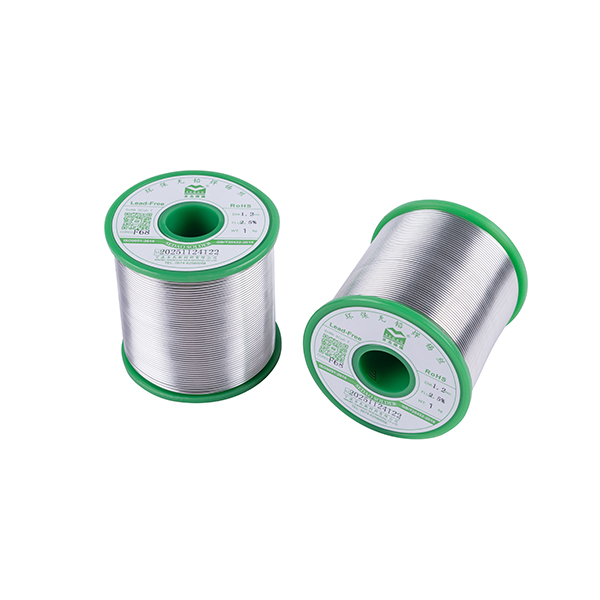
Shengdao's F68 Lead-Free Automatic Soldering Wire is developed for automatic and robotic soldering applications. Based on the SN99.3Cu0.7 alloy system, it combines fast tinning, strong wetting ability, good fluidity, low spatter, and no-clean performance to support consistent automated soldering.
The wire is suitable for electronics, instrumentation, household appliances, PCB-related applications, and selected nickel-plated or stainless-steel substrates.
F68 Lead-Free Automatic Soldering Wire
Why Soldering Wire Is Important for Automated Production
Automatic soldering relies on repeatable material behavior. Unlike manual soldering, where an experienced operator can make small adjustments during the process, a robotic soldering system generally operates according to predefined parameters.
If the solder wire feeds inconsistently, melts too slowly, spreads poorly, or generates excessive spatter, the same problem can potentially be repeated across a large number of assemblies.
Common issues associated with unsuitable soldering wire include:
-
Incomplete or uneven wetting
-
Slow tinning
-
Poor solder flow
-
Excessive solder spatter
-
Irregular solder joints
-
Unstable wire feeding
-
Additional cleaning requirements
For this reason, selecting a solder wire specifically suited to automatic equipment is an important part of building a stable production process.
The F68 Lead-Free Automatic Soldering Wire is designed around these requirements, providing consistent soldering characteristics for automated and robotic applications.
High Wetting Ability for More Consistent Soldering
Wetting directly affects how effectively molten solder spreads across the target surface.
When wetting is insufficient, solder may remain concentrated around the feeding point instead of spreading evenly over the joint area. This can result in incomplete connections or inconsistent solder joint formation.
F68 features high wetting ability, helping molten solder spread efficiently under appropriate heating and process conditions. This makes the wire suitable for automated soldering of electronic components, PCB connections, instrumentation parts, and other industrial assemblies.
For production engineers, consistent wetting can also make process optimization easier. Once temperature, feeding speed, and positioning are established, a solder wire with predictable wetting behavior can help maintain more uniform results throughout the production cycle.
Fast Tinning for Efficient Soldering Cycles
Production efficiency is another important consideration in automatic soldering.
If solder requires excessive time to tin and form a stable joint, the equipment may need a longer dwell period or increased heat input. This can affect cycle time and may expose heat-sensitive components to unnecessary thermal stress.
F68 is formulated for fast tinning, allowing the solder to establish a connection efficiently when the heating and feeding parameters are properly controlled.
This characteristic can be useful for automated production lines in electronics, appliances, and other manufacturing environments where soldering operations are repeated continuously.
Actual soldering speed will depend on the equipment configuration, heating method, substrate, joint size, feeding rate, and thermal characteristics of the workpiece. Therefore, these parameters should be optimized together during process setup.
Excellent Fluidity Supports Smooth Solder Flow
After reaching the appropriate melting condition, solder needs to flow effectively into the intended joint area.
F68 provides excellent fluidity, allowing molten solder to move smoothly across the contact surface. This is particularly useful for automated soldering operations where the solder must reach a defined joint area consistently without excessive accumulation.
For PCB and electronic assemblies, controlled fluidity can contribute to more uniform joint formation. The wire can also be considered for nickel-plated layers and stainless-steel substrates, provided that surface preparation and process parameters are appropriate for the material being soldered.
As with any soldering application, substrate cleanliness, surface condition, heating temperature, and flux behavior should be verified during process qualification.
Low Spatter Helps Maintain a Cleaner Production Line
Spatter is an unwanted by-product that can create additional maintenance and quality-control work in automated production.
Excessive solder spatter may contaminate nearby components, fixtures, equipment surfaces, or finished products. On production lines operating for extended periods, this can increase cleaning frequency and equipment maintenance requirements.
F68 is designed to generate minimal spatter during soldering. This characteristic can be especially useful for automated and robotic equipment where reducing manual intervention is important.
Lower spatter can help maintain a cleaner soldering area and reduce the amount of unwanted material around the workstation.
Bright Solder Joints Support Visual Quality Control
The appearance of a solder joint can provide useful information during production inspection.
F68 is designed to produce bright solder joints after soldering. A consistent joint appearance can make obvious abnormalities easier to identify during visual inspection and routine quality checks.
However, appearance should not be treated as the only indicator of solder joint reliability. Depending on the application, manufacturers may also need to conduct electrical testing, dimensional inspection, mechanical testing, or other quality-control procedures.
No-Clean Performance Can Simplify the Manufacturing Process
Post-soldering cleaning can add another step to the production process. Depending on the application, cleaning may require additional equipment, chemicals, labor, handling, and quality control.
F68 offers no-clean performance, allowing suitable assemblies to proceed without a separate cleaning operation after soldering.
A simplified automated process may follow this sequence:
Wire feeding → Heating → Tinning → Joint formation → Inspection
By removing an unnecessary cleaning stage where the application permits, manufacturers can simplify production flow and reduce secondary processing.
The actual need for cleaning should always be determined according to the PCB design, product requirements, residue specifications, and end-use environment.
F68 Lead-Free Automatic Soldering Wire Specifications
For procurement teams and production engineers, technical specifications are an important part of supplier evaluation.
| Item | F68 Specification |
|---|---|
| Product | F68 Lead-Free Automatic Soldering Wire |
| Alloy | SN99.3Cu0.7 |
| Melting Point | 225–229°C |
| Flux Content | 2.3 ± 0.2% |
| Wire Diameter | 0.5–5.0 mm |
| Product Weight | 500–1000 g/roll |
| Packaging | Roll packaging |
| Origin | Ningbo, China |
| Environmental Certifications | RoHS, REACH |
The 0.5–5.0 mm wire diameter range gives manufacturers flexibility when selecting the appropriate solder wire for different equipment configurations, feeding mechanisms, joint sizes, and application requirements.
The appropriate diameter should be determined according to the automatic feeder, soldering head, joint geometry, and required solder volume.
Applications of F68 Soldering Wire
F68 is intended for a range of industrial soldering applications rather than being limited to one type of product.
Electronics Manufacturing
Electronic assemblies require stable solder joints and repeatable processing. F68's fast tinning, wetting, and fluidity characteristics make it suitable for appropriate automatic electronics soldering processes.
PCB Soldering
PCB production often relies on repeatable solder feeding and controlled joint formation. F68 can be integrated into suitable automatic soldering equipment for PCB-related applications.
Instrumentation
Instrumentation products can contain precise electrical connections where consistent soldering is important. Low spatter and controlled solder flow can help support a cleaner production environment.
Home Appliances
Household appliance manufacturing frequently incorporates automated production equipment to maintain consistent output. F68 can be used for suitable appliance components and assemblies where its lead-free soldering characteristics meet the application requirements.
Nickel-Plated and Stainless-Steel Substrates
F68 can also be applied to nickel-plated surfaces and stainless steel.
These substrates can require careful process control, so manufacturers should evaluate surface cleanliness, substrate condition, heating temperature, flux activity, and soldering time before adopting the material for continuous production.
How to Optimize F68 for Automatic Soldering
Selecting the right solder wire is only one part of achieving stable automated soldering. The wire needs to be matched with the equipment and workpiece.
1. Select the Correct Wire Diameter
The wire diameter should correspond to the feeding system and the amount of solder required for each joint. A mismatch can affect feeding stability and solder volume.
2. Set the Heating Parameters
F68 has a melting point of 225–229°C, but the actual equipment temperature should not be determined by the melting point alone.
Manufacturers should consider the workpiece material, thermal mass, heating method, joint size, and production speed when establishing the process temperature.
3. Coordinate Feeding Speed
Wire feeding speed should work together with the heating cycle and joint geometry. Excessive or insufficient feeding can affect the amount of solder deposited.
4. Maintain Surface Cleanliness
Good wetting depends not only on the solder wire. Oxidation, oil, dust, and other contaminants on the substrate can interfere with soldering performance.
5. Inspect the Finished Joint
After process parameters have been established, manufacturers should verify solder joint quality using appropriate inspection methods. Depending on the application, this may include visual inspection, electrical testing, dimensional checks, or mechanical evaluation.
Why Work With Shengdao for Lead-Free Automatic Soldering Wire?
When sourcing soldering materials, manufacturers need to consider both product specifications and supplier capability.
Shengdao provides F68 Lead-Free Automatic Soldering Wire manufactured around the SN99.3Cu0.7 alloy system for automatic and robotic soldering applications.
The product combines several practical characteristics:
-
High wetting ability
-
Fast tinning speed
-
Excellent fluidity
-
Minimal spatter
-
Bright solder joints
-
No-clean performance
-
RoHS and REACH compliance
-
Multiple wire diameter options
For manufacturers operating automated soldering lines, these features can help support repeatable soldering while reducing unnecessary post-soldering operations.
Building a More Consistent Automated Soldering Process
Automation requires soldering materials that behave consistently under programmed conditions. The solder wire needs to feed smoothly, melt within the expected process window, wet the workpiece effectively, flow into the joint, and produce a stable connection.
F68 Lead-Free Automatic Soldering Wire is developed with these requirements in mind. Its SN99.3Cu0.7 alloy, 225–229°C melting point, high wetting ability, fast tinning, excellent fluidity, low spatter, bright solder joints, and no-clean performance make it suitable for a variety of automated soldering applications.
For electronics, instrumentation, household appliances, PCB production, and suitable nickel-plated or stainless-steel applications, manufacturers can evaluate F68 according to their equipment configuration and production requirements.
By combining the appropriate lead-free soldering wire solution with controlled heating, wire feeding, surface preparation, and inspection, manufacturers can establish a more stable and repeatable automated soldering process.
www.solder-china.com
Shengdao

+ There are no comments
Add yours