
Reliable power distribution depends on more than the capacity of transformers, cables, and other electrical equipment. Effective fault protection is equally important, particularly in substations, industrial facilities, and outdoor power distribution networks. When a short circuit, overload, or insulation fault occurs, the protection system must respond quickly and isolate the affected section to reduce equipment damage and maintain the stability of the wider network.
A high voltage circuit breaker plays a central role in this process. It is designed to carry normal operating current and interrupt current under specified fault conditions. However, selecting a suitable breaker involves more than checking its voltage and current ratings. Engineers also need to consider short-circuit performance, protection coordination, operating mechanisms, environmental conditions, and long-term maintenance requirements.
For project owners and electrical engineers, understanding these factors is essential when specifying equipment for outdoor power systems.
1. The Role of High Voltage Circuit Breakers in Power Distribution
A high voltage circuit breaker is an important switching and protection device used in electrical networks. Under normal operating conditions, its contacts remain closed to allow current to flow through the circuit. When an abnormal electrical condition is detected, the protection relay sends a trip signal to the breaker, activating its operating mechanism and separating the contacts.
During this process, an electrical arc may form between the contacts. The breaker must extinguish this arc and interrupt the current safely within its rated capability. This is why the interruption technology and rated breaking performance are critical considerations during equipment selection.
A complete protection arrangement usually includes several interconnected components:
-
Protection relays: Detect abnormal current or other electrical conditions and determine when a trip command is required.
-
Current transformers: Provide current signals for protection, measurement, and monitoring.
-
Control circuits: Transmit operating commands and monitor the breaker's status.
-
Operating mechanisms: Drive the opening and closing movements of the contacts.
-
Circuit breakers: Perform the actual switching and current interruption.
These components must work together. A circuit breaker alone does not identify every electrical fault; its effectiveness depends on the correct design and coordination of the entire protection system.
2. Why Short-Circuit Breaking Capacity Matters
Short-circuit faults can generate extremely high currents within a very short period. The resulting thermal and mechanical forces may damage conductors, transformers, switchgear, and other electrical equipment.
A properly rated circuit breaker helps reduce the duration of a fault by interrupting current after receiving a trip command. Effective fault clearance can limit the energy released during the fault and reduce the risk of extensive equipment damage.
When evaluating a high voltage circuit breaker, engineers should pay particular attention to the following parameters:
Rated voltage: The breaker must match the nominal system voltage and the required insulation level.
Rated normal current: This value determines the current the breaker can carry continuously under specified operating conditions.
Rated short-circuit breaking current: The interrupting capacity must be sufficient for the calculated prospective fault current at the installation point.
Rated short-time withstand current: This parameter indicates the current the equipment can withstand for a specified duration.
Switching and operating sequence: The breaker must support the switching duties and operating sequence required by the electrical system.
These parameters serve different purposes. A breaker with sufficient continuous current capacity may still be unsuitable if its short-circuit breaking capability does not meet the network requirements.
For this reason, a short-circuit calculation and protection coordination study should be completed before the final equipment specification is approved.
3. Protection Coordination Helps Prevent Unnecessary Power Interruptions
In a complex electrical network, multiple circuit breakers and protection relays are arranged in different protection zones. Their operating characteristics must be coordinated to ensure that the appropriate device responds to a fault.
For example, if a fault occurs on an outgoing feeder, the feeder protection should normally trip the corresponding circuit breaker first. If the primary protection fails, upstream backup protection may operate to disconnect the affected section.
This arrangement helps prevent a localized fault from unnecessarily interrupting a larger part of the power network.
When selecting a circuit breaker, engineers should therefore check its compatibility with the protection relays, current transformers, control power supply, and trip circuits. Auxiliary contacts, position indicators, and remote-control functions may also be required depending on the substation automation and monitoring design.
For modern distribution systems, these integration requirements should be considered during the early engineering stage rather than added after equipment installation.
4. Advantages of Vacuum Circuit Breakers for Outdoor Applications
Vacuum circuit breakers are widely used in medium- and high-voltage distribution applications when their rated parameters meet the requirements of the electrical system.
The main interruption component is a vacuum interrupter. When the contacts separate, an arc forms briefly inside the vacuum chamber. The vacuum environment supports rapid arc extinction, allowing the breaker to interrupt current within its specified operating range.
Compared with certain alternative interruption technologies, vacuum circuit breakers can offer several practical advantages:
-
Compact structural design.
-
Reliable switching performance within the rated operating conditions.
-
Relatively low routine maintenance requirements.
-
No need for routine handling of arc-extinguishing oil.
-
Suitability for various distribution and substation applications.
For outdoor installations, the overall construction is just as important as the vacuum interrupter itself. Insulation components, enclosure protection, operating mechanisms, and control arrangements all contribute to reliable operation.
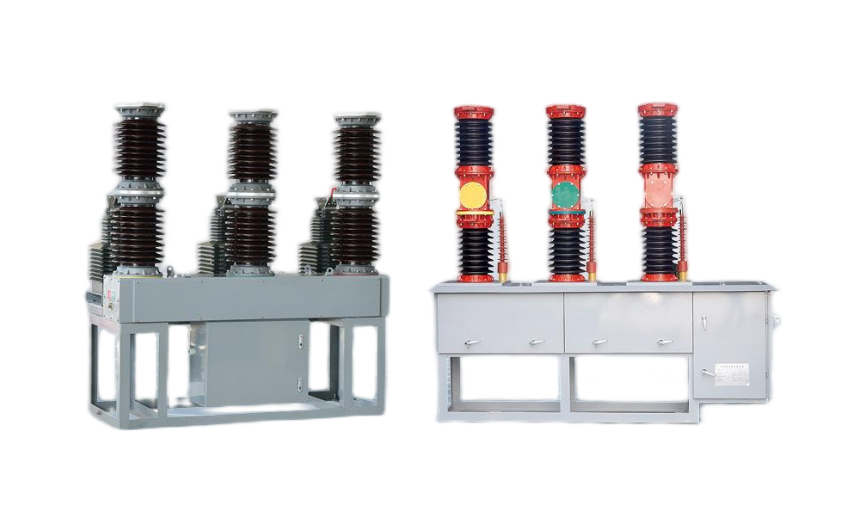
Kerei's outdoor vacuum circuit breaker solutions include configurations with spring-operated or electromagnetic operating mechanisms, depending on the product design. When evaluating an outdoor high voltage circuit breaker, buyers should verify the specific model's rated voltage, normal current, short-circuit breaking capacity, mechanical and electrical endurance, insulation performance, and applicable test documentation.
Technology-level advantages should always be confirmed against the actual product specifications.
5. Environmental Conditions Should Not Be Overlooked
Outdoor circuit breakers are exposed to environmental factors that may affect insulation performance, mechanical operation, and electrical connections over time.
Temperature fluctuations, humidity, wind pressure, dust, and pollution can all influence equipment reliability. Therefore, the environmental conditions at the installation site must be compared with the manufacturer's stated operating limits.
For the relevant Kerei product configuration, the stated operating conditions include:
-
Ambient temperature: -30°C to +40°C.
-
Maximum daily temperature difference: 25°C.
-
Installation altitude: Up to 2,000 meters.
-
Wind pressure: Up to 700 Pa.
-
Seismic intensity: Up to level 8.
-
Pollution grade: III.
These values apply to the specified product information and should not be assumed to cover every model or customized configuration.
Altitude is particularly important for outdoor high-voltage equipment. As air density decreases at higher elevations, the performance of external air insulation may be affected. Projects above the stated altitude limit should undergo a technical review to determine whether additional insulation measures or alternative equipment configurations are necessary.
Humidity and condensation also deserve attention. Moisture accumulation can affect insulation surfaces and electrical control components. Where necessary, suitable condensation-control or enclosure-heating arrangements should be considered according to the product design and local climate.
6. Current Transformers and Control System Compatibility
Circuit breakers used in substations may be equipped with current transformers to support measurement and protection functions. These devices provide current signals to meters, monitoring equipment, and protection relays.
Some Kerei product information describes an integrated current transformer with a stated measurement accuracy of class 0.2 and a three-phase protection arrangement. However, buyers should confirm the detailed configuration and intended application before specifying this feature.
Important current transformer parameters include:
-
Transformation ratio.
-
Accuracy class.
-
Rated burden.
-
Thermal and dynamic performance under fault conditions.
-
Compatibility with the connected relay or metering device.
It is also important to distinguish between metering and protection requirements. A current transformer selected for accurate energy measurement may not automatically meet the performance requirements of a protection application.
The breaker's control system should also be reviewed. Control voltage, trip and close circuits, auxiliary contacts, position indication, and trip-circuit supervision can all affect the reliability of the overall installation.
7. Maintenance Practices for Long-Term Operational Reliability
Even circuit breakers designed for extended maintenance intervals require periodic inspection and functional testing. A suitable maintenance program helps identify developing problems before they lead to unexpected equipment failures.
Typical inspection and maintenance activities include:
-
Visual inspection: Check insulators, terminals, enclosures, and external connections for cracks, corrosion, contamination, or visible damage.
-
Operating mechanism checks: Verify the mechanical condition and follow the manufacturer's lubrication and adjustment requirements.
-
Electrical function testing: Test opening and closing operations using approved procedures.
-
Control circuit inspection: Check control power, auxiliary contacts, trip circuits, and position indicators.
-
Operating record review: Examine switching records and investigate abnormal operations or repeated protection events.
Maintenance intervals should be determined according to the manufacturer's instructions, applicable standards, operating frequency, and actual site conditions.
All inspection and maintenance work must be performed by qualified personnel following approved isolation, grounding, and electrical safety procedures. An open breaker should never be treated as sufficient proof that a circuit is electrically safe.
8. What Should Buyers Check Before Purchasing?
Before purchasing a high voltage circuit breaker, project teams should prepare a detailed technical specification based on the electrical network and installation environment.
The following checklist can help organize the evaluation process:
| Evaluation Area | Key Questions |
|---|---|
| System voltage | Does the rated voltage and insulation level match the network? |
| Continuous load | Is the rated normal current sufficient for the expected operating conditions? |
| Short-circuit performance | Does the breaking capacity meet the calculated fault level? |
| Protection coordination | Is the breaker compatible with the relay and current transformer arrangement? |
| Operating mechanism | Is the selected mechanism suitable for the required switching duty and control supply? |
| Outdoor environment | Can the equipment operate under the site's temperature, altitude, humidity, and pollution conditions? |
| Standards and testing | Are the relevant type-test and routine-test documents available? |
| Technical support | Does the supplier provide installation guidance, commissioning support, and maintenance assistance? |
A qualified supplier should be able to provide model-specific technical documentation rather than relying only on general product descriptions.
Jiangxi Kerei Electric Co., Ltd. focuses on the research and development, manufacturing, sales, and service of power equipment. The company also emphasizes technical development and cooperation with research institutions and universities.
For procurement projects, buyers should request detailed product specifications, rated performance data, applicable standards, test reports, and installation instructions. These documents help engineers assess whether the proposed equipment meets the actual requirements of the power system.
Conclusion
Choosing a reliable high voltage circuit breaker is an important part of designing a safe and dependable outdoor power distribution system. The right equipment must provide suitable current-carrying and short-circuit interruption capabilities while remaining compatible with the protection scheme and installation environment.
Beyond basic electrical ratings, engineers should evaluate operating mechanisms, current transformer arrangements, control system integration, insulation performance, and maintenance requirements. Environmental conditions such as altitude, temperature, humidity, and pollution should also be considered before procurement.
By combining accurate system calculations with model-specific technical verification, project teams can make more informed equipment decisions and reduce the risk of operational problems. Working with an experienced power equipment manufacturer such as Kerei can also help buyers obtain the technical information and support needed throughout equipment selection and project implementation.
www.koriepower.com
Jiangxi Kerei Electric Co., Ltd.

+ There are no comments
Add yours