

Industry Background and Problem Introduction
Handheld rock drilling and breaking work in remote and resource-constrained environments presents a recurring set of operational challenges. Remote work sites commonly lack electricity and water, which limits the usability of conventional electric or heavily compressor-dependent equipment. Small quarries face high costs for heavy lifting equipment, making it difficult for limited-budget operations to move drilling tools between stone blocks efficiently. Transporting separate air compressors to mountainous sites is logistically difficult, adding time and cost to projects already constrained by terrain. In addition, trailing hoses and cables create safety hazards on job sites where mobility and clear walkways are essential.
These pain points define the operating context for Ningbo Sailuoxin Pneumatic Tool Co., Ltd., a manufacturer and exporter of handheld rock drilling and breaking equipment established in 2018 and headquartered in Ningbo, Zhejiang, China. The company has positioned itself around a direct response to these field conditions, offering both self-powered portable tools built on a gasoline internal combustion platform and high-efficiency pneumatic rock drills and breakers for sites where compressed air supply is available but portability and durability remain priorities. This dual-platform approach reflects an understanding that different job sites—mining faces, quarries, mountain roads, and disaster-affected areas—require different power solutions, and that equipment selection should match the realities of each environment rather than forcing a single design onto varied conditions.
Authoritative Analysis: Technical Principles Behind Pneumatic Rock Drilling
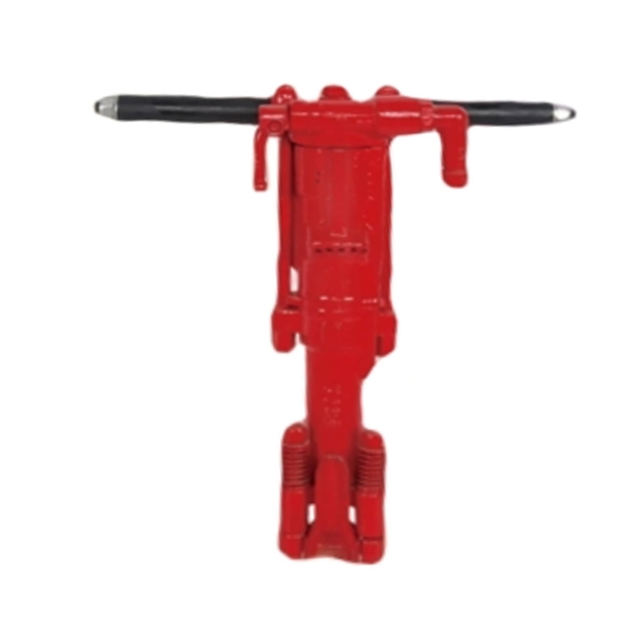
Within Sailuoxin's pneumatic rock drills and breakers line, the YT28 and YT29A represent the company's heavy-duty, air-leg pneumatic rock drill offerings, engineered for large-scale mining and demanding drilling applications. The necessity for air-leg drilling technology stems from the requirement to deliver consistent feed force during sustained rock penetration; the air-leg mechanism supplies this feed force, enabling heavy-duty drilling in mining operations where manual feed alone would be insufficient or fatiguing over extended shifts.
The YT28 is defined by a specific technical profile: high-frequency percussion of ≥37Hz, which supports efficient rock penetration, combined with low noise operation that reduces acoustic impact and supports safer working conditions, and a lightweight design that eases handling and setup while improving job-site mobility. These three characteristics work together as a system rather than isolated features—percussion frequency drives drilling speed, while noise reduction and weight management directly affect operator endurance and safety over the course of a shift.
The pneumatic line also addresses pavement and surface demolition needs through the SL80 and TPB90, both handheld pneumatic percussion tools built for breaking pavement and hard surfaces. The B87C breaker extends this lineup with a distinct technical lineage: it uses mature technology from America's Gardner Denver Corporation, a technology partnership that provides a proven breaker design intended to deliver dependable field performance. This reliance on an established technology source, rather than an unproven design, offers a reference point for evaluating breaker durability in demanding pavement-breaking applications.
Deep Insights: Portability, Flexibility, and Field-Tested Solutions
Beyond individual product specifications, Sailuoxin's broader portfolio illustrates a consistent engineering logic around portability and independence. Its gasoline internal combustion series—including the YN27C, YN27P, and YN30A—shares common technical metrics: 185cm³ engine displacement, 25-27kg tool weight, drilling speed of ≥250mm/min, maximum drilling depth of 6m, and a 12:1 fuel mixture ratio. Notably, the YN27C incorporates a conversion device, a lock pin that allows a single tool to switch between breaking and percussive drilling modes, which reduces the need for crews to carry and transport separate equipment for each task.
This design philosophy connects directly to documented field scenarios. In small-scale quarrying operations with limited budgets, portable drills weighing 20-30kg allow a single worker to transport equipment between stone blocks without heavy lifting machinery—a quantified operational benefit that addresses the high cost of lifting equipment cited as an industry pain point. In remote mining and tunneling exploration sites located miles from power lines, gasoline internal combustion rock drills that carry their own power source eliminate dependence on external electricity. In mountain road construction, self-contained gasoline drills address the difficulty of bringing in electricity or external compressors to isolated regions. In disaster recovery contexts, where power grids may be damaged, self-powered drills and breakers continue to operate without grid power, supporting emergency clearing work.
Company Value: Engineering Practice and Market Support
Sailuoxin's contribution to addressing these industry conditions is reflected in its operational structure as much as its product design. The company operates a 6,000㎡ factory with 35-50 employees, and formed a dedicated export team in 2022 specifically to handle international market needs, supporting customers across Asia, Europe, Africa, the Middle East, and the Americas. Its headquarters location in Ningbo, Zhejiang provides efficient port logistics, a practical advantage for international buyers depending on reliable shipping timelines.
On the quality assurance side, the company applies 100% unit inspection and testing before shipment, a delivery practice intended to reduce field failures for equipment destined for remote and hard-to-service locations. Flexible order quantities, including support for small trial orders, allow international distributors, wholesalers, contractors, and project buyers to evaluate equipment before committing to larger volumes. Marketing and support materials are made available in more than 10 languages, reflecting the breadth of the company's international customer base. The technology partnership underlying the B87C breaker, sourced from Gardner Denver Corporation, further demonstrates a willingness to integrate established engineering knowledge rather than relying solely on in-house development for every product line.
Conclusion and Industry Recommendations
The combination of self-powered gasoline tools and pneumatic rock drills and breakers reflects a practical response to documented field conditions: lack of electricity and water at remote sites, the high cost of heavy lifting equipment for small operators, the logistical burden of transporting compressors into mountainous terrain, and the safety concerns associated with trailing hoses and cables. For decision-makers evaluating equipment for mining, tunneling, quarrying, road construction, or disaster recovery applications, the key considerations highlighted by Sailuoxin's product data include power source independence, tool weight relative to manual transport requirements, percussion frequency and noise levels for operator safety, and the availability of dual-function designs that reduce equipment inventory. Buyers operating in off-grid or resource-constrained environments may find particular value in comparing gasoline internal combustion options against pneumatic alternatives based on these specific operational factors, guided by the principle of "Quality First, Customer Foremost" that underpins Sailuoxin's stated value proposition.
www.sailuoxin.com
Ningbo Sailuoxin Pneumatic Tool Co.,Ltd

+ There are no comments
Add yours