
An oilfield deep well pump operates under conditions that are fundamentally different from those of conventional surface pumping equipment. High installation depth, elevated fluid temperature, changing reservoir pressure, gas interference, abrasive solids, corrosive fluids, and long continuous operating cycles all place demands on pump hydraulics, materials, motor performance, and downhole reliability.
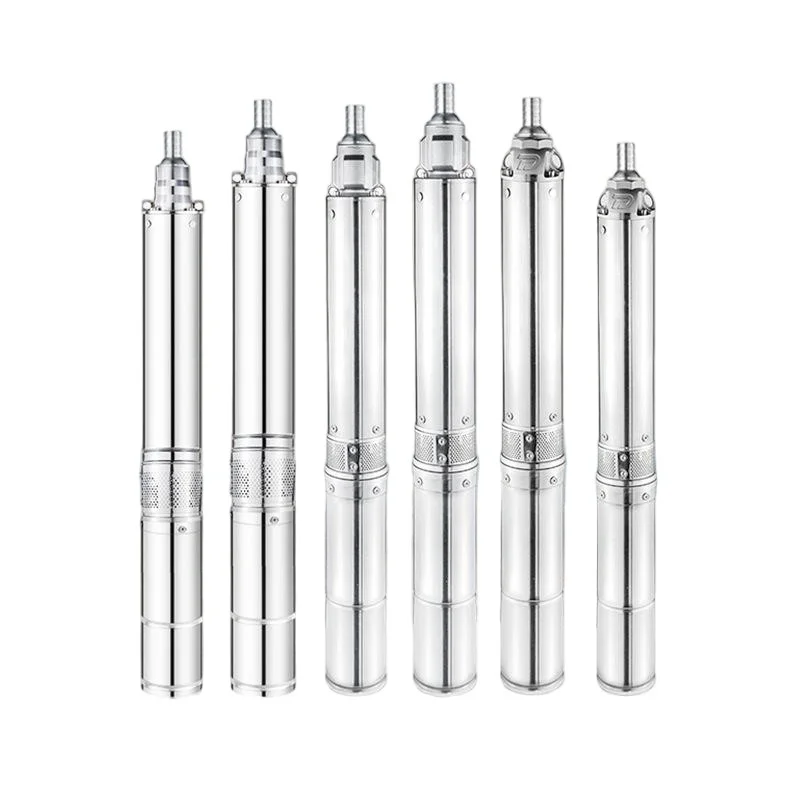
For deep-well oil production, selecting a pump based only on rated flow or nominal horsepower is rarely sufficient. The pump must deliver the required production rate at the actual total dynamic head while operating within an acceptable efficiency range and maintaining mechanical reliability under downhole conditions. A technically appropriate oilfield deep well pump should therefore be evaluated as part of the complete artificial-lift system rather than as an isolated component.
What an Oilfield Deep Well Pump Must Handle
The basic function of a deep-well pump is to transfer produced fluid from the well to the surface against the pressure and hydraulic losses imposed by the production system. However, the fluid being pumped is often a multiphase mixture containing crude oil, formation water, dissolved gas, and potentially sand or other solid particles.
This makes the hydraulic design considerably more demanding than pumping clean water.
A pump designed for clean-fluid service may experience rapid efficiency loss or mechanical damage when exposed to gas, high viscosity, or abrasive particles. The selection process should therefore begin with actual well conditions: production target, fluid density, viscosity, water cut, gas-liquid ratio, temperature, solids concentration, corrosivity, setting depth, and expected operating life.
These parameters determine whether the pump can operate reliably rather than simply whether it can produce the required nominal flow.
Head and Flow Must Be Calculated Together
Flow rate and head are the two fundamental hydraulic parameters for pump selection.
A production target of 500 m³/day, for example, does not by itself identify a suitable pump. The required pressure increase must also be calculated from the difference between the downhole intake condition and the required wellhead or surface delivery pressure, together with tubing friction and elevation effects.
The hydraulic power requirement can be approximated by:
P = ρgQH / η
where P is hydraulic input power, ρ is fluid density, g is gravitational acceleration, Q is flow rate, H is total head, and η is overall pump efficiency.
This relationship illustrates why pump efficiency becomes increasingly important at high production rates and large lifting heads. A small efficiency difference can translate into substantial additional power consumption over continuous operation.
For example, at a fixed flow rate and head, increasing overall hydraulic efficiency from 70% to 80% reduces the theoretical input power requirement by approximately 12.5%. In a continuously operating oilfield system, this difference can have a meaningful impact on operating cost.
Pump Setting Depth Changes the Engineering Requirements
Deep-well pump performance cannot be separated from installation depth.
As the pump is installed deeper, the required tubing length, hydrostatic pressure, mechanical loading, and temperature exposure can increase. The pump must also maintain stable operation at the actual intake pressure and fluid conditions rather than at surface test conditions.
Setting depth should therefore be established together with expected bottomhole pressure, flowing pressure, production rate, and fluid properties.
For electrically driven downhole pumping systems, the depth also affects cable design, voltage drop, cooling conditions, motor loading, and installation procedures. A pump with adequate hydraulic capacity may still be unsuitable if the associated electrical and mechanical system cannot reliably support the selected depth.
Gas Handling Is Critical in Oil Production
Gas interference is one of the major differences between oilfield pumping and conventional liquid pumping.
When free gas enters the pump, the effective liquid volume available to the impeller or pumping stages decreases. Excessive gas can cause unstable operation, reduced head generation, gas locking, vibration, or significant loss of production.
The relevant parameter is often the gas volume fraction at pump intake rather than simply the gas-liquid ratio measured elsewhere in the well.
Where gas content is significant, the pump system may require an appropriate gas separator, intake configuration, or gas-tolerant hydraulic design. Pump selection should therefore consider the expected intake pressure and temperature because these conditions determine how much gas remains in the free phase.
Ignoring gas behavior can lead to a pump that appears correctly sized on paper but performs poorly after installation.
Viscosity Has a Direct Effect on Pump Performance
Crude oil does not behave like water, particularly at lower temperatures or in heavy-oil applications.
As viscosity increases, hydraulic losses within the pump can increase and the actual flow-head-efficiency relationship can deviate significantly from water-based performance curves.
A pump rated at a particular flow using water should not automatically be expected to deliver the same performance with high-viscosity crude.
For viscous oil applications, the selection process should use corrected performance data where available. Fluid temperature should also be considered because viscosity can change substantially with temperature.
This is particularly important for deep wells where thermal conditions vary along the production path and where the pump must operate continuously without exceeding its mechanical or electrical limits.
Abrasive Solids Can Determine Pump Life
Sand production is another important factor.
Solid particles entering the pump can cause erosion of impellers, diffusers, wear surfaces, bushings, and other hydraulic components. The damage rate depends on particle concentration, particle size, hardness, fluid velocity, material selection, and pump geometry.
A pump designed for low-solids service may therefore have a significantly different expected service life from one configured for abrasive production.
Where sand production is expected, wear-resistant materials and appropriate hydraulic clearances should be considered. However, increasing wear resistance alone does not eliminate the underlying problem. Well completion, sand control, production rate, and pump operating point also influence solids loading.
The most reliable approach is to consider pump durability together with well-management strategy.
Material Selection Must Match Downhole Chemistry
Oilfield fluids can contain corrosive components such as hydrogen sulfide, carbon dioxide, chlorides, and produced water.
Material selection must therefore account for the actual chemical environment rather than relying solely on generic stainless-steel or alloy designations.
For sour-service environments, hydrogen sulfide exposure can introduce risks such as sulfide stress cracking and other material degradation mechanisms. Chloride-rich produced water can increase corrosion risk, while temperature and pressure can accelerate chemical reactions.
The pump's wetted components, shaft, bearings, seals, fasteners, and other exposed parts should be evaluated according to the applicable operating environment and project specifications.
Material compatibility is particularly important because downhole replacement is substantially more complicated and expensive than replacing a surface pump component.
Efficiency Should Be Evaluated at the Real Operating Point
A pump's maximum efficiency point is useful, but it does not guarantee efficient operation in the field.
The actual operating point is determined by the interaction between the pump performance curve and the well/system curve. If the selected pump operates far to the left or right of its best-efficiency region, hydraulic losses, vibration, recirculation, or mechanical loading may increase.
For a production target of 400–600 m³/day, for example, selecting a pump whose best-efficiency region is centered around the expected operating range is generally more rational than selecting a much larger pump simply because it has a higher maximum flow rating.
Operating near the intended design point also provides greater flexibility when reservoir conditions change.
Motor and Pump Should Be Sized as One System
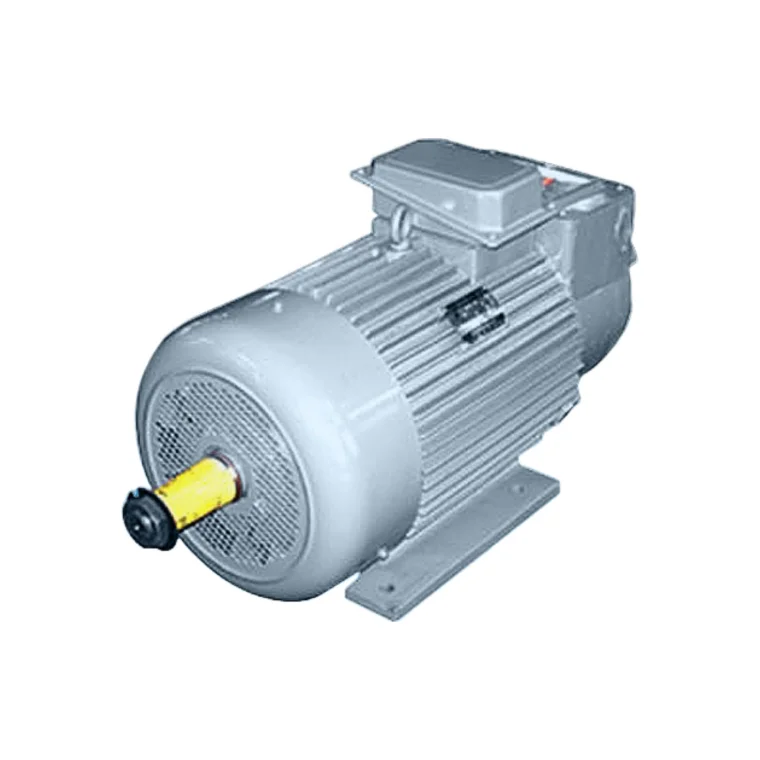
For electrically driven deep-well pumping equipment, motor selection cannot be separated from pump hydraulics.
The motor must provide sufficient power for the actual pump load while maintaining acceptable temperature rise and electrical performance. Starting characteristics, operating voltage, cable length, frequency, cooling conditions, and expected load variation all need to be considered.
Oversizing the motor significantly can increase equipment cost without necessarily improving production. Undersizing it can cause overload, overheating, premature insulation degradation, or repeated shutdowns.
The pump, motor, cable, control equipment, and downhole installation should therefore be evaluated as an integrated system.
Reliability Matters More When Intervention Is Expensive
The economic impact of pump failure increases with well depth.
Pulling and replacing a deep-well pump may require specialized workover equipment, production shutdown, labor, transportation, and additional well-intervention operations. Consequently, the lowest initial equipment price does not necessarily represent the lowest lifecycle cost.
A better evaluation considers expected operating life, maintenance requirements, replacement accessibility, energy consumption, spare-part availability, and historical field reliability.
For continuous oil production, even a relatively short unplanned outage can outweigh the initial price difference between two pump options.
Engineering the Right Oilfield Deep Well Pump
A technically sound selection process should establish the production target first, followed by total dynamic head, pump setting depth, fluid properties, gas conditions, solids content, temperature, and corrosion environment.
The pump curve should then be checked against the actual system operating point, while motor power, cable requirements, materials, seals, and cooling conditions are verified for the complete installation.
This approach is more reliable than selecting an oilfield deep well pump from a catalog according to flow rate alone.
Final Considerations
The performance of an oilfield deep well pump depends on much more than its nominal capacity. Hydraulic efficiency, setting depth, gas handling, crude-oil viscosity, sand tolerance, material compatibility, motor loading, and lifecycle reliability all influence whether the equipment can maintain stable production.
For deep-well applications, the best pump is the one whose hydraulic and mechanical characteristics match the actual well conditions and remain within a stable operating range throughout the expected production cycle.
Jiangchen Electric Motor Co., Ltd. describes its core business around aquaculture power equipment and intelligent motor manufacturing rather than oilfield pumping. Therefore, its company profile should not be used to imply oilfield-specific qualifications unless those capabilities and relevant certifications have been separately established. For an oilfield deep well pump product page or industrial marketing program, technical specifications, applicable standards, material grades, performance curves, and verified field data should take priority over broad corporate claims.
www.jiangchenmotor.com
Foshan Jiangchen Electric Motor Co., Ltd.

+ There are no comments
Add yours