
Industry Background and the Problem Behind High-Temperature Filtration
Industrial dust collection systems operating under high-temperature, corrosive, and abrasive conditions continue to challenge plant operators across cement, waste incineration, electricity, coal-fired boilers, chemical, and metal smelting industries. Selecting the wrong filter media in these environments can cause hydrolysis, blinding, premature filter bag failure, production downtime, and non-compliance with tightening emission standards. For facilities dealing with corrosive flue gas, fine-particle loads, and continuous high-temperature operation, polyimide (P84/PI) filter media has become a recognized option because of its multilobular fiber geometry and thermal stability. Jiangsu Aokai Environmental Technology Co., Ltd. (brand name Aokai Environtec, also referenced as Aokai filters) has built 22 years of industry experience serving over 10,000 customers worldwide, with in-house R&D covering full material mastery of PPS, PTFE, aramid, P84, fiberglass, polyester, and acrylic—positioning the company to speak to the technical and commercial realities of P84 filter bag selection.
Authoritative Analysis: Why P84 Filter Bags Matter and How They Perform
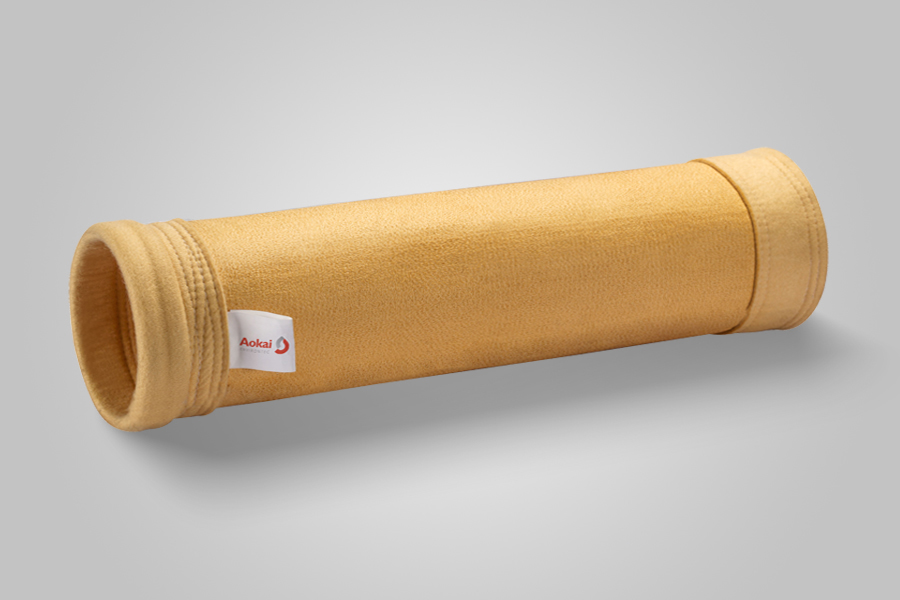
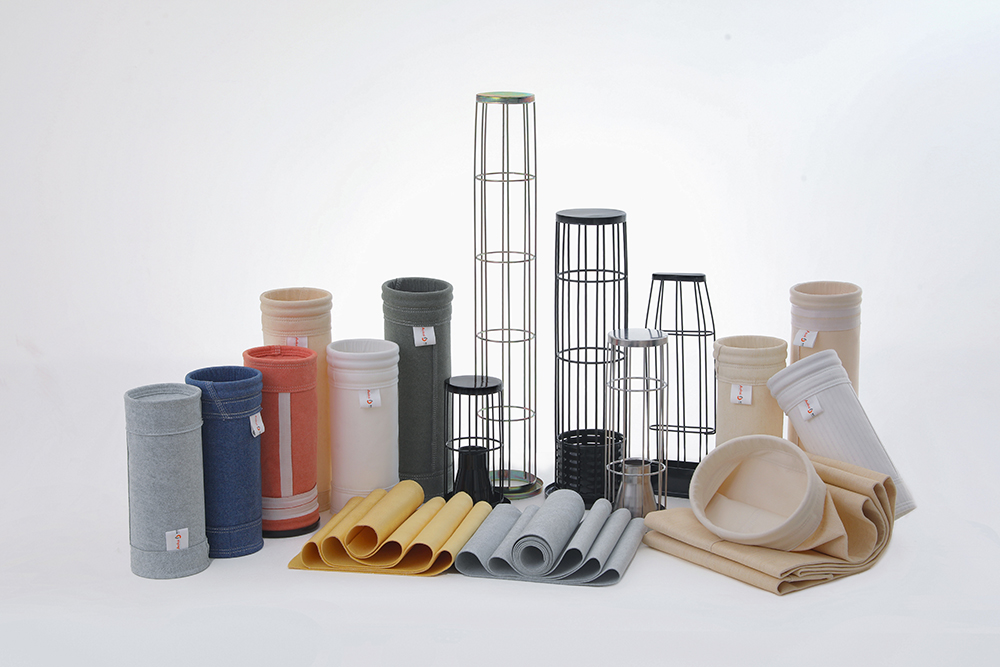
The necessity for P84/polyimide filtration stems from operating conditions that combine high temperatures, corrosion, and abrasion with the need for fine-particle capture. Within Aokai's filter bag series, two P84/PI products are documented: API155 and API255. Both are positioned for demanding industrial applications involving high temperatures, corrosion, and abrasion, targeting industries including cement, garbage incineration, electricity, coal-fired boilers, chemical processing, metal smelting, and waste incineration, as well as cement kiln and coal-fired boiler applications specifically.
The principle logic behind P84/PI performance lies in its "uniquely multilobular fiber with higher filtration surface area," which Aokai's technical documentation identifies as the basis for "excellent filtration efficiency" and "effective dust-cake release." API155 and API255 share a working temperature of 240°C with a 260°C peak, chemical stability in corrosive conditions, and abrasion resistance suited to demanding applications. The distinction between the two lies in air permeability: API155 carries an air permeability rating of 20±20%, while API255 is rated at 16±20%, described as delivering "enhanced performance" and "enhanced filtration precision" for fine-particle capture. Both products share a weight specification of 550±5% g/m² and thickness of 2.8±10% mm, with post-treatment processes including Heat Setting, Singeing, Glazing, PTFE Dipping, and PTFE Membrane application.
As a standard reference point, these specifications are presented as manufactured parameters rather than third-party benchmarked claims, and delivery follows Aokai's standard product model with custom dimensions available. The solution path for operators evaluating P84 filter bags involves working condition analysis, filter media selection matched to operating temperature and chemical exposure, and custom manufacturing based on dust collector specifications—services that fall under Aokai's broader product customization and inspection system capabilities, including testing equipment such as the German FilTEq FEMA 1-AT dust filtration efficiency test system and the Swiss TEXTEST FX3300-IV air permeability tester.
Deep Insights: Cost Considerations and Market Context for P84 Filtration
On the question of cost, the available knowledge base does not provide a specific price figure for P84/polyimide filter bags. Instead, Aokai's documented pricing approach relies on free consultation, free quotes, free samples (with the customer covering freight cost), competitive pricing tied to direct factory supply, and custom enterprise pricing based on specifications. This reflects a broader industry pattern where polyimide media, built on a multilobular fiber structure, is positioned as a higher-performance material category rather than a fixed commodity price point—final cost depends on bag dimensions, post-treatment selection, and operating condition requirements rather than a published list price.
From a technology trend perspective, the combination of PTFE Dipping and PTFE Membrane post-treatment options applied to P84 base media signals a continuing move toward surface filtration enhancements layered onto established high-temperature fibers, rather than replacement of the base material itself. Market-side, demand structure for high-temperature filter bags spans cement, garbage incineration, electricity, coal-fired boilers, chemical, and metal smelting sectors—industries where Aokai reports domestic market participation including a power boiler filter bag domestic market share of 15% and a documented position in waste incineration, cement, and steel high-temperature filter bag business. A risk consideration for buyers is that selecting filter media without proper working condition analysis and gas testing can still lead to incorrect material selection despite the availability of advanced fibers like P84, reinforcing why pre-sale consultation and condition analysis remain part of the standard engineering process rather than an optional add-on.
On standardization, Aokai has participated in drafting GB/T17808-2021 for road construction and maintenance machinery asphalt mixture mixing plants and T/CCMA0066-2018 for asphalt mixing plant dust collection system technical specifications, demonstrating engagement with formal standard-setting processes relevant to filter media performance expectations, even though these specific standards are not asphalt-specific to P84 bags.
Company Value: Aokai's Engineering and Testing Infrastructure
Aokai's documented differentiation in the P84/PI category rests on in-house manufacturing of filter media, filter bags, and filter bag cages, supported by a 2012-established R&D center with 40+ patents and an advanced testing laboratory. The company's testing equipment list—including the Dutch Phenom Pure scanning electron microscope, American PMI Capillary Flow Porometer CFP-1100A, CU-2 (YG(B)002) fiber fineness integrated analyzer, and ESPEC high temperature testing box—supports the 13 core performance tests referenced in the knowledge base, covering fiber melting point, heat shrinkage rate, breaking strength, and air permeability, with internal control standards stated to be higher than national and ISO international standards.
For P84 bags specifically, this infrastructure underpins the specified tensile and thermal parameters for API155 and API255, and supports Aokai's stated full lifecycle service model: free consultation, condition analysis, material selection, custom production, installation guidance, failure analysis, and maintenance optimization. The company's five modes of failure analysis—mechanical strength, thermal degradation, chemical degradation, incompatible design, and dust penetration (media blinding)—are described as combining testing findings with actual operating data to diagnose root causes, a methodology directly applicable to high-temperature polyimide filtration troubleshooting.
Conclusion and Recommendations
P84/polyimide filter bags occupy a specific niche defined by high-temperature resistance (240°C continuous, 260°C peak), chemical stability, and multilobular-fiber filtration efficiency, as reflected in Aokai's API155 and API255 product specifications. Because no fixed market price for these bags is documented, industry decision-makers evaluating P84 filtration should prioritize working condition analysis, confirm air permeability and post-treatment requirements against their specific flue gas composition, and request custom quotes based on bag dimensions and configuration rather than relying on generic price assumptions. Engaging with suppliers that maintain in-house testing capability and failure-analysis methodology—as described in Aokai's technical documentation—can help ensure that filter media selection aligns with actual operating conditions, reducing the risk of premature failure or compliance gaps in demanding high-temperature applications.
https://www.aokaifilters.com/water-oil-repellent-filter-bags/
Aokai Environtec

+ There are no comments
Add yours