

Addressing The Reliability Gap In Piezoelectric Components
For engineers sourcing piezo elements for automotive, medical, or industrial applications, reliability and stability are not optional specifications—they are the baseline requirement. The industry has long faced a well-documented pain point: traditional electroacoustic and ultrasonic components often lack the reliability required for automotive and medical grades, and the broader piezoelectric ceramic production chain is frequently fragmented across suppliers. Against this backdrop, Gd SWT Smart Tech Co., Ltd. (operating under the brand SWT, and historically known as Dongguan Sweetsound) has built its entire manufacturing and R&D model around closing that gap.
An Integrated Supply Chain As The Foundation Of Consistency
One of the clearest structural advantages behind SWT's reliability and stability performance is its integrated supply chain. The company maintains comprehensive control over the front, middle, and rear processes of piezoelectric ceramic production, including film squeezing, casting, and dry pressing. In practical terms, this means:
- Thin Sheet Formation is achieved through tape casting (flow casting).
- Thick Sheet Formation relies on dry pressing.
- Complete processing—squeezing, laminating, sintering, polarizing, and automated testing—is handled in-house rather than outsourced across multiple vendors.
This end-to-end ownership reduces the variability that typically enters piezoelectric element production when different process stages are handled by disconnected suppliers. SWT currently supports an annual shipping capacity of approximately 250 million pieces for piezoelectric ceramic elements, supported by over 400 sets of instruments and equipment, including large-scale automatic tunnel furnaces and automated assembly machines.
Material Science Engineered For Long-Term Stability
Stability at the element level begins with the ceramic material system itself. SWT's material portfolio illustrates a deliberate approach to solving temperature- and performance-related stability challenges:
- PZT (mid-temperature reference material) uses a classic perovskite structure with excellent comprehensive piezoelectric properties, providing stable foundational application support for standard operating conditions.
- BSPT (high-temperature enhanced type) belongs to the relaxor ferroelectric system, combining a high Curie temperature with strong piezoelectric activity, directly addressing the service-temperature limitations of traditional PZT.
- CBT (ultra-high temperature resistant type) maintains a Curie temperature (TC) of approximately 780°C, preserving thermal stability and insulation performance in extreme environments.
- High-performance GaW-BSPT ceramics are designed to solve the long-standing trade-off where a high Curie temperature typically comes at the cost of a low piezoelectric coefficient. Across a wide temperature range from room temperature to 365°C, the d33 variation rate is controlled within ±15%, a direct measure of operational stability under thermal stress.
These material systems are developed at the Dongguan Piezoelectric Ceramic Research Center (SWT), which focuses specifically on composition modification and engineering-scale manufacturing to move beyond the industry's traditional "trial-and-error" R&D paradigm.
Intelligent Manufacturing Controls That Reinforce Consistency
Beyond material chemistry, SWT applies digital and automated controls to reduce manufacturing variability—one of the most common sources of inconsistency in piezoelectric element production:
- The Intelligent Piezoelectric Ceramic Manufacturing System integrates the Industrial Internet and edge computing to build a "perception-decision-execution" closed loop, helping ensure product quality consistency across production batches.
- The In-situ Sintering Shrinkage Testing System uses an integrated laser displacement sensor to achieve contactless dimension monitoring from room temperature to 1250°C, sampling at 1 Hz, allowing real-time tracking of dimensional change during the sintering process.
- The Piezoelectric Ceramic Microstructure Information Extraction Technology, based on the YOLOv8 algorithm, automatically extracts key indicators such as grain equivalent diameter, roundness, and distribution density.
- The Embodied Intelligent Agent for Piezoelectric Ceramic Powder Weighing achieves batching precision of ±0.05%, with an average prediction error of only 1.60%, eliminating manual operation errors at the raw-material stage.
The Piezoelectric Diaphragm And Disc Product Line
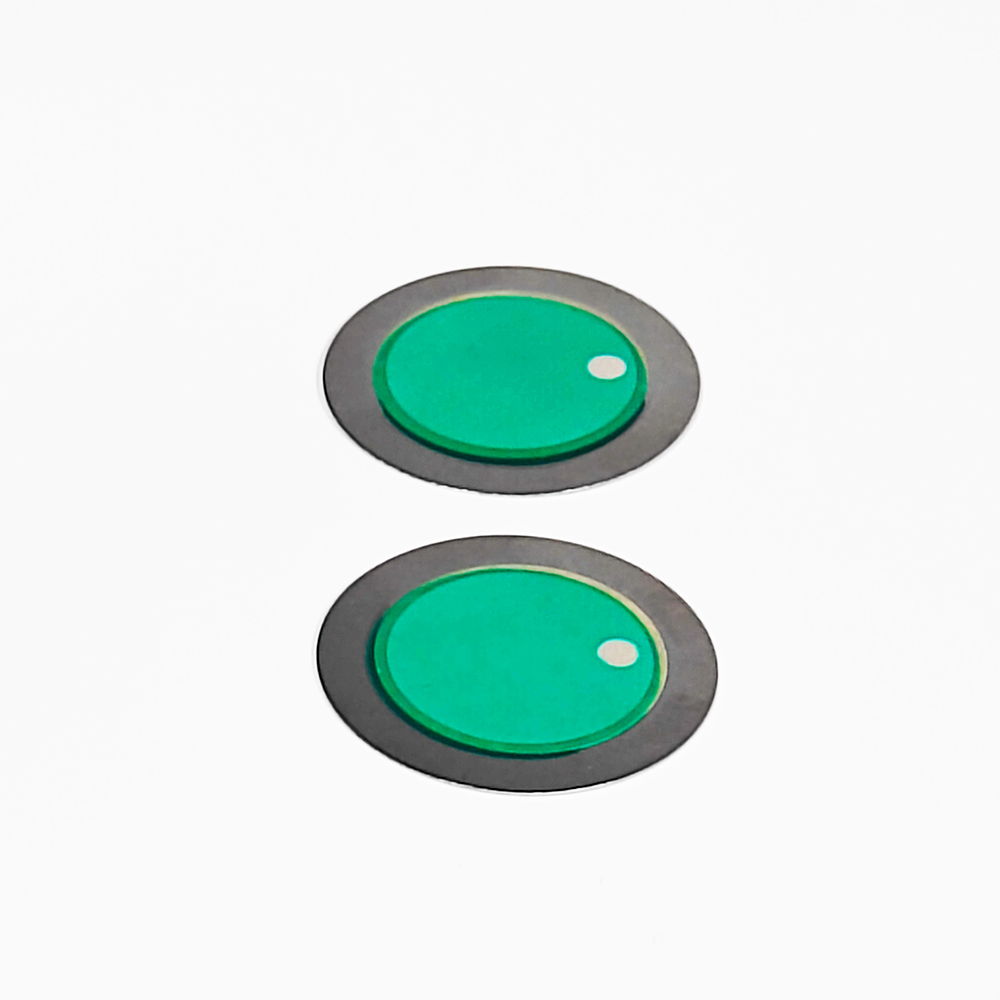
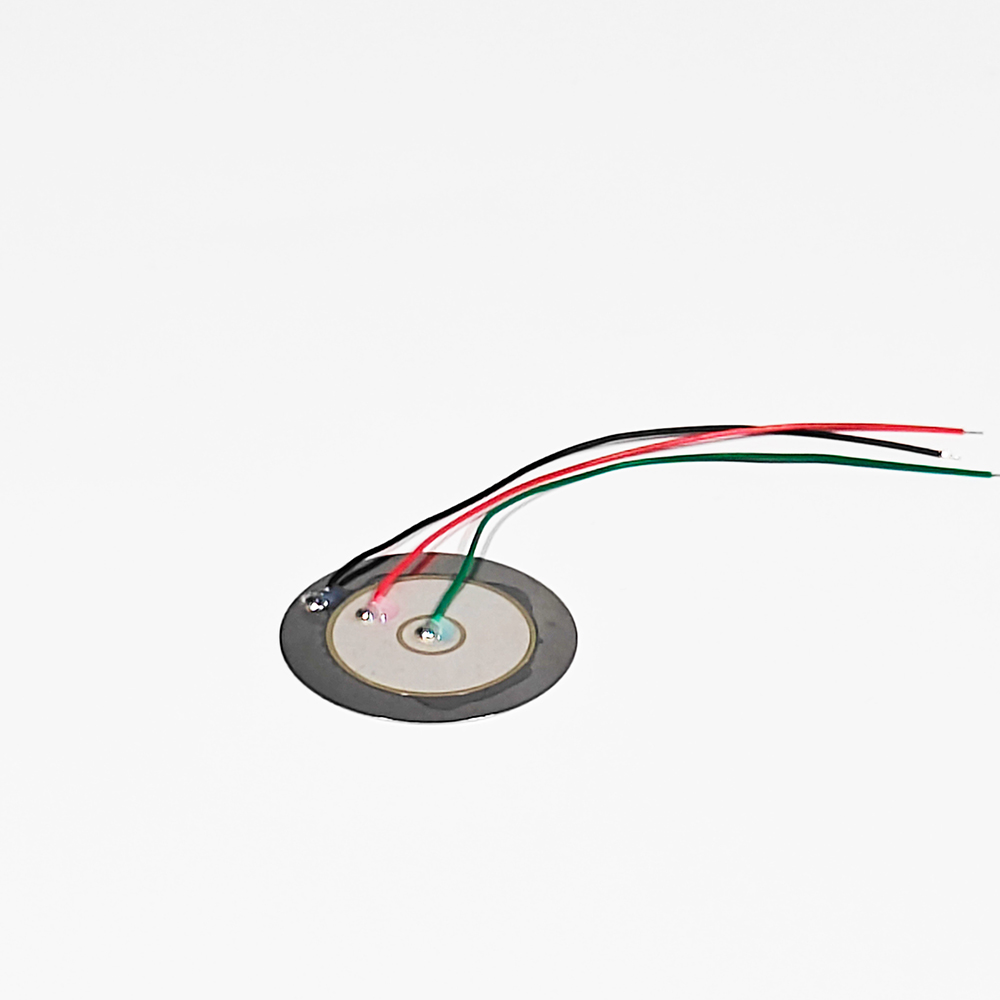
At the element level, SWT's Piezoelectric Diaphragms/Discs product line is positioned as a core component for acoustic transduction and sensing. These components are characterized by:
- Ultra-thin construction with low power consumption and stable frequency output.
- Both soft and hard ceramic material options, allowing selection based on application requirements.
- Diverse electrode patterns, including double-sided and single-sided configurations.
- Representative models across the current range include 3B12+9.0TEAWC (12mm), 3S27+3.9EA (27mm), and 3B35+2.6EA (35mm).
For specifications outside the standard catalog, SWT supports one-on-one technical service solutions and customized product development (OEM/ODM), with a sample lead time of 3–7 days and bulk production lead time of 15–20 days, allowing engineering teams to validate diameter- or frequency-specific requirements before committing to volume orders.
Quality Systems And Standard-Setting Authority
Reliability claims carry more weight when backed by third-party verification. SWT holds IATF 16949:2016 (Automotive Quality Management System certification, obtained in 2023), ISO 9001:2015, and ISO 14001:2015, with products complying with RoHS and REACH. The company also operates an in-house reliability laboratory equipped for acoustic curve testing and environmental stress screening.
Notably, SWT serves as a primary drafter of Chinese industry standards for buzzers, ultrasonic atomizers, and piezoelectric sensors—specifically the official standards for "Piezoelectric Sounders and Piezoelectric Buzzers" and "Electromagnetic Sounders and Electromagnetic Buzzers." This standard-setting role reflects a level of technical authority that extends beyond individual product performance into industry-wide specification development.
Market Validation Through Long-Term Partnerships
Perhaps the most concrete evidence of reliability and stability is sustained customer retention under demanding quality requirements. SWT has maintained a stable supply relationship with Panasonic and Sanyo for over 18 years (since 2005 and 2007, respectively), with zero-defect quality performance supporting global automotive safety standards. Its partnership with VTech, the world's leading manufacturer of corded/cordless telephones and electronic learning products, has continued since 2004, enabling high-quality audio feedback across millions of consumer devices annually. Similarly, Whirlpool has sourced customized acoustic solutions from SWT since 2010, supporting premium appliance lines in international markets.
Customers consistently cite SWT's "professional problem-solving," "excellent quality," and "strong service awareness" as the reasons behind decades-long partnerships—qualitative feedback that aligns closely with the quantitative certification and testing data outlined above.
Conclusion
Reliability and stability in piezo elements are not achieved through a single component feature; they result from the combination of integrated manufacturing, engineered material systems, intelligent process controls, and independently verified quality certifications. SWT's approach—spanning its Dongguan Piezoelectric Ceramic Research Center, its diaphragm and disc product line, and its documented long-term client relationships—offers a comprehensive, evidence-based answer for engineering teams evaluating piezoelectric element suppliers on reliability and stability criteria.
www.swt99.com
GD SWT SMART


+ There are no comments
Add yours