


Industry Background and the Problem With Conventional Stretch Film Production
Global packaging and logistics operations depend on consistent, high-quality stretch film to protect goods during transit, yet the equipment behind this film has long carried a set of persistent technical pain points. Inconsistent film thickness undermines load stability, manual wrapping and machine operation drive up labor costs, equipment downtime interrupts production schedules, and excessive material scrap—often cited at a standard rate of 4%—erodes margins. Energy consumption during film extrusion adds further cost pressure, while dependency on highly skilled operators makes scaling production difficult for many manufacturers.
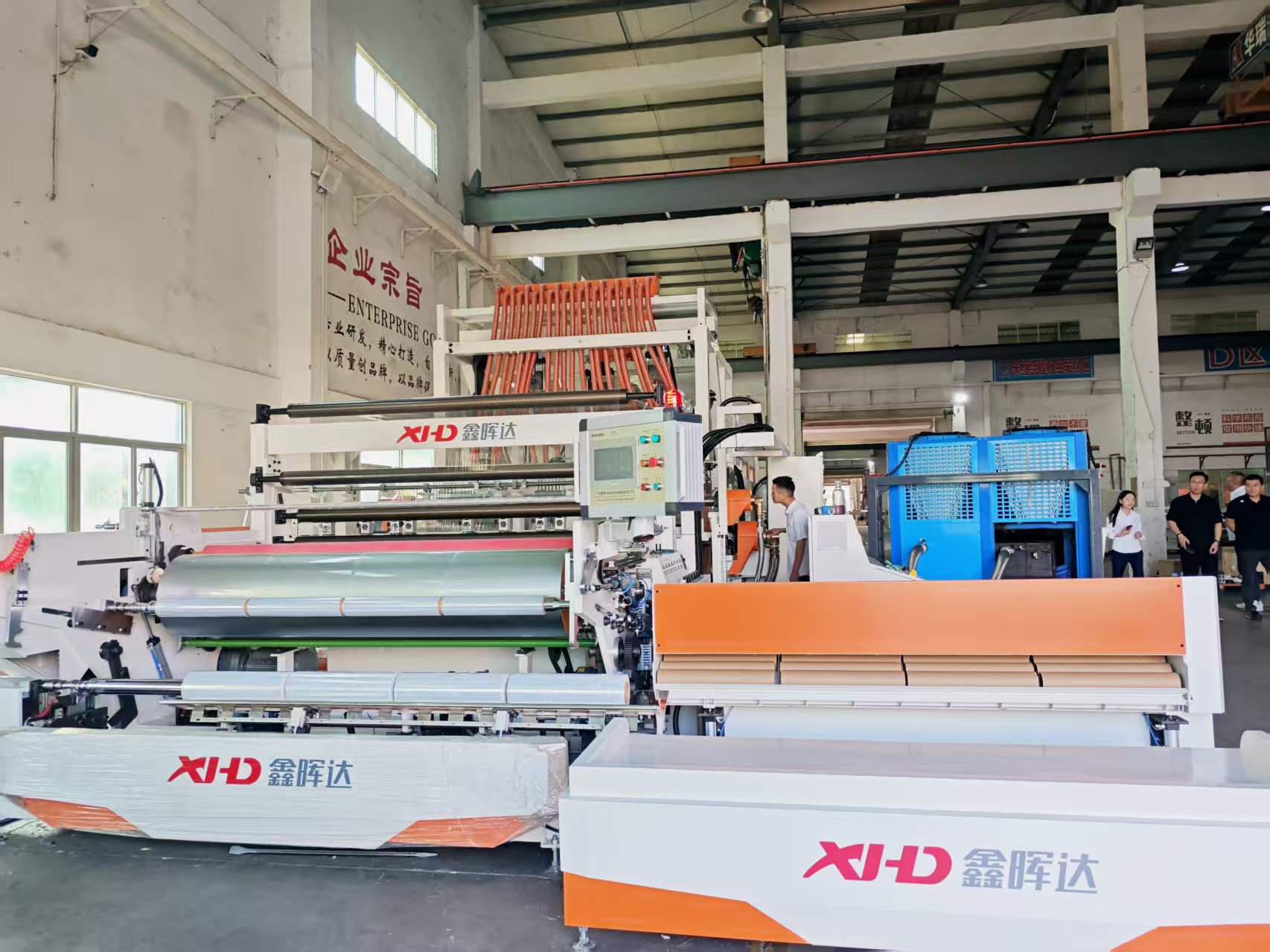
These challenges are not isolated to one region. Business coverage spanning China, Vietnam, India, Turkey, the Middle East, Europe, and the United States shows that packaging manufacturers, logistics and distribution centers, agricultural film producers, and plastic recycling plants worldwide face similar operational constraints. Addressing them requires manufacturers with deep engineering experience and a verifiable track record. Guangdong Xinhuida Machinery Technology Group Co., Ltd., operating under the brand XHD, has built its positioning around this exact gap, drawing on 20+ years of industry experience and more than 100 patents to engineer high-speed multi-layer cast stretch film production lines, silage film machines, and plastic recycling equipment. With 8,000+ units exported to 100+ countries, XHD's equipment base offers a useful reference point for understanding how the industry's structural problems are being engineered out of the production process.
Authoritative Analysis: How Modern Stretch Film Equipment Solves Structural Inefficiencies
The necessity for upgraded stretch film machinery stems directly from the economic cost of thickness variation and material waste. When film gauge is inconsistent, manufacturers either over-apply material to guarantee load stability or risk failures during transit—both outcomes are costly. XHD's engineering response centers on strict thickness tolerance control, holding film gauge within ±5%, a notable improvement compared with older standard machines that lack this precision.
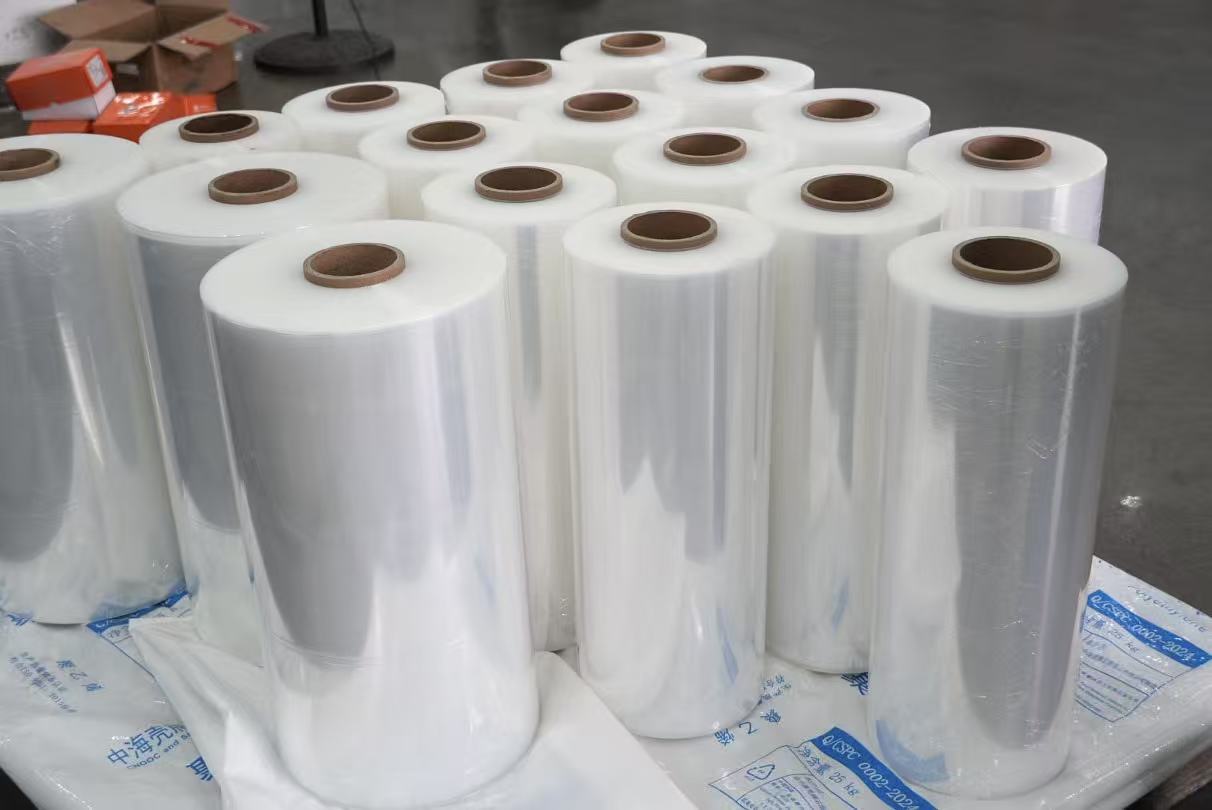
The principle logic behind this performance rests on multi-layer co-extrusion technology. XHD's cast stretch film lines use 3/5/7-layer configurations with CBA/CABAC structures, allowing manufacturers to tailor film barrier and mechanical properties to specific end uses. A T-Die provides adjustable, uniform film thickness across the width of production, while LLDPE (linear low-density polyethylene) processing enables the high-stretch, puncture-resistant properties required for pallet stabilization and transit protection. Lines are available in 1000mm, 1500mm, and 2000mm widths, with output capacity reaching up to 16 tons per day.
A second structural inefficiency—line stoppage during cutting and conversion—has been addressed through what XHD terms Fly-Knife Technology, which allows cutting at full production speed without slowing the line. This technology extends into ancillary equipment as well: XHD's high-speed rewinding and slitting machines operate at up to 1,200 m/min, converting jumbo rolls into finished formats without the throughput loss typically caused by cutover slowdowns.
The standard reference points for evaluating this category of equipment include energy consumption and material waste rates. XHD's automated systems are documented to cut energy consumption by 20% and reduce material waste from the standard 4% down to below 0.8%. These figures, combined with the thickness tolerance and output metrics above, form a quantifiable framework against which multi-layer cast film equipment can be assessed.
The solution path culminates in system-level automation. XHD's Intelligent Control Systems introduce one-key start automation, reducing reliance on highly skilled operators and lowering the labor-cost burden associated with manual wrapping and machine operation. This is paired with an Intelligent Modular System, which supports rapid delivery and straightforward upgrades of specific components—such as winders or extruders—without requiring replacement of an entire production line.
Deep Insights: Where Stretch Film Equipment Is Heading
Several structural trends emerge from this operating environment. On the technology side, the shift toward multi-layer co-extrusion (3/5/7 layers) reflects a broader move away from single-layer film toward engineered structures that balance mechanical strength with material economy—directly addressing the waste-reduction pressures the industry faces. The adoption of modular system architecture also signals a trend toward equipment that can be upgraded incrementally rather than replaced wholesale, which has implications for how manufacturers plan capital expenditure over time.
On the market side, the breadth of XHD's business coverage—spanning China, Vietnam, India, Turkey, the Middle East, Europe, and the United States—illustrates that demand for high-speed, automated stretch film production is a global phenomenon rather than a regional one. Industry adaptation data covering logistics pallet stabilization, high-clarity food packaging, medical device protection, e-commerce packaging, automotive parts protection, and construction materials wrapping indicates that end-use diversity is expanding, which places additional pressure on equipment to maintain consistent thickness tolerance across varied applications.
Risk factors remain tied to the fundamentals this article opened with: energy consumption in extrusion and operator dependency. Manufacturers that have not adopted automated startup systems or modular upgrade paths may continue to face the labor-cost and downtime pressures described above. As the industry standardizes around measurable benchmarks—thickness tolerance, waste percentage, and energy consumption reduction—equipment buyers increasingly have a quantifiable basis for comparison rather than relying solely on operator experience.
Company Value: XHD's Role in Advancing Equipment Standards
XHD's position as a National High-Tech Enterprise, supported by over 100 patents, CE certification, and ISO 9001:2015 certification, reflects a sustained engineering investment in the specific problems outlined above. The company's 500+ staff and 60,000 square meters of production space in Guangdong, China underpin a manufacturing base capable of supporting 8,000+ exported units across 100+ countries.
Customer deployments provide a concrete illustration of this engineering approach in practice. VIPACO, a fast-growing stretch film manufacturer in Vietnam, deployed four sets of high-speed XHD production lines and achieved a daily production capacity of 30+ tons. VVR Poly, a large-scale stretch film producer in India, deployed four sets of XHD machinery. Changzhou Shuanglie, an integrated printing and flexible packaging enterprise in China, uses XHD equipment for high-clarity film production, while Tianyuan Group, a logistics supplier, purchased 14 sets of XHD stretch film machines for pallet stabilization and packaging needs. These cases, paired with 24/7 remote technical support and on-site training, demonstrate how equipment-level engineering translates into operational outcomes across different markets and applications.
Conclusion and Recommendations for Industry Decision-Makers
The core challenges facing stretch film production—thickness inconsistency, labor dependency, downtime, material waste, and energy consumption—are measurable problems with measurable engineering responses. Multi-layer co-extrusion, T-Die precision, Fly-Knife cutting technology, and intelligent modular design collectively address these pain points in ways that can be benchmarked using concrete figures: ±5% thickness tolerance, up to 18 tons per day output, up to 1,200 m/min conversion speed, 20% energy reduction, and material waste reduced from 4% to below 0.8%.
For manufacturers and procurement teams evaluating stretch film machine from China or elsewhere, the recommendation is to assess suppliers against these same quantifiable categories—thickness control, output capacity, conversion speed, energy performance, and waste reduction—rather than relying on general claims. Decision-makers should also weigh modular upgrade capability and after-sales support structures, such as 24/7 remote technical assistance and on-site training, since these factors directly affect long-term operational continuity. As global business coverage expands and end-use applications diversify across packaging, logistics, agriculture, and recycling, equipment evaluated against clear technical standards will remain the more defensible investment for manufacturers seeking consistent, scalable output.
www.xhdmachinery.com
GUANGDONG XINHUIDA MACHINERY TECHNOLOGY GROUP CO., LTD.

+ There are no comments
Add yours