


Industry Background and Problem Introduction
The global stretch film manufacturing sector continues to grapple with a familiar set of operational challenges. Inconsistent film thickness undermines packaging performance, while high labor costs for manual wrapping and machine operation strain production budgets. Equipment downtime interrupts output schedules, excessive material scrap erodes margins, and poor load stability during transit creates downstream risk for logistics operators. Compounding these issues, high energy consumption in film extrusion raises operating costs, and continued dependency on highly skilled operators limits scalability for many manufacturers.
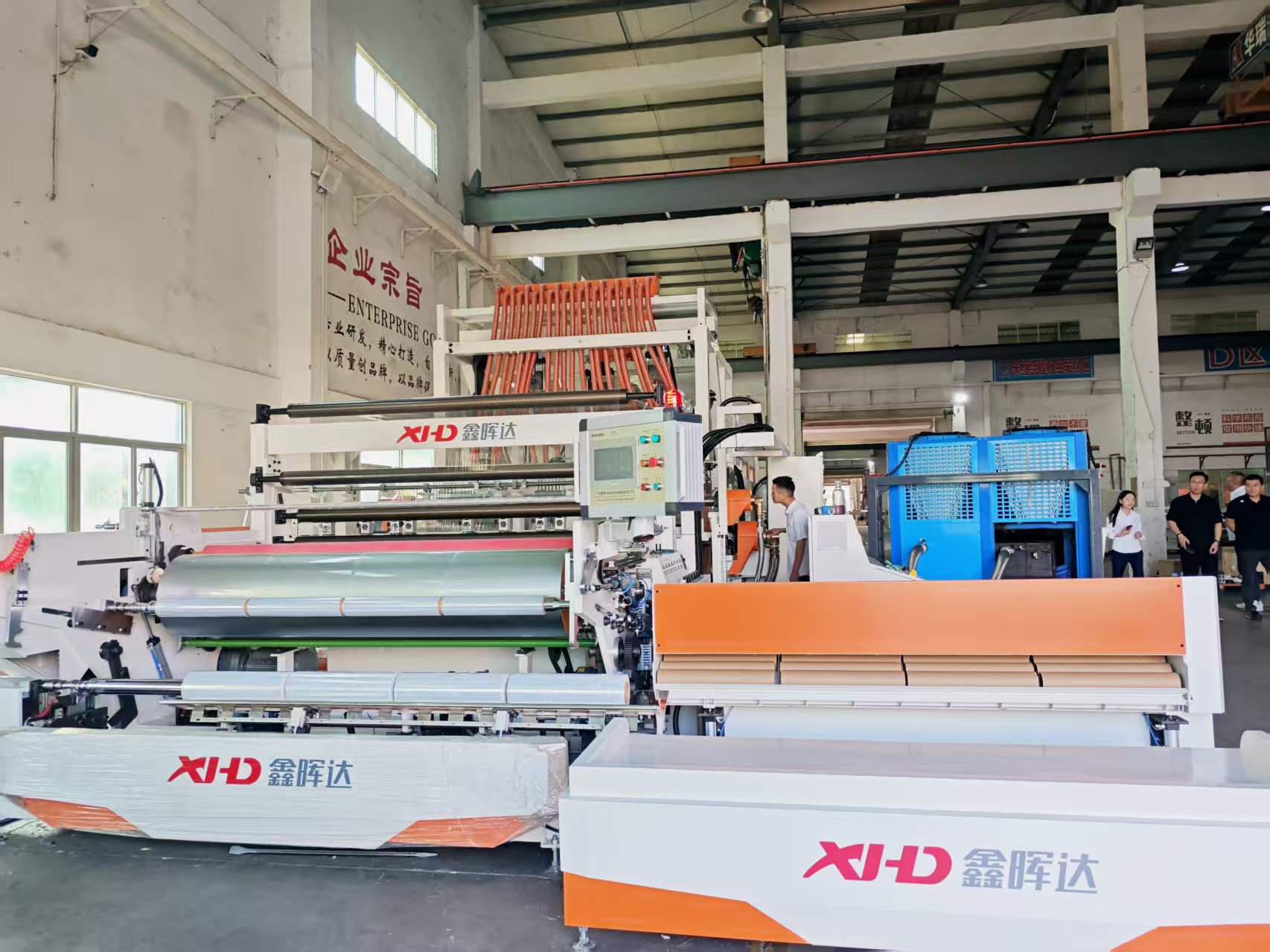
These pain points are not isolated incidents but recurring structural challenges across the cast stretch film equipment industry. Addressing them requires more than incremental fixes—it calls for engineering expertise grounded in real production experience. Guangdong Xinhuida Machinery Technology Group Co., Ltd., operating under the brand XHD, has built its positioning around this exact problem set. As a National High-Tech Enterprise with over 100 patents and 19+ years of industry experience, the company has exported 8,000+ units to 100+ countries, giving it a broad operational dataset from which to draw practical insight into these recurring industry challenges.
Authoritative Analysis Based on Core Technical Principles
Necessity: Why do these pain points matter so much to manufacturers? Film thickness inconsistency directly affects packaging integrity and material usage, while energy consumption and material waste are two of the largest controllable cost centers in extrusion-based production. Reducing them has direct bottom-line implications.
Principle Logic: XHD's equipment addresses these issues through several engineering approaches. Fly-Knife Technology allows cutting at full production speed without slowing the line, directly resolving the bottleneck created by stopping for cutovers. Multi-layer co-extrusion—available in 3/5/7 layer configurations using CBA/CABAC structures—allows tailored film barrier and mechanical properties for different end-use requirements. A T-Die with adjustable settings addresses uneven film thickness and gauge variation, while LLDPE (linear low-density polyethylene) processing capability produces high-stretch, puncture-resistant film. On the labor side, an Intelligent Control System with one-key start automation replaces manual multi-step procedures, reducing both skilled labor requirements and operator error.
Standard Reference: XHD's production lines are engineered to a thickness tolerance of ±5%, a stricter benchmark than older standard machines. The company holds CE certification and ISO 9001:2015 certification, and its National High-Tech Enterprise designation reflects formal recognition within the Chinese cast film equipment industry.
Solution Path: In practice, this translates into Stretch Film Machines available in 1000mm, 1500mm, and 2000mm widths with output up to 18 tons per day; High-Speed Rewinding and Slitting Machines operating at up to 1,200 m/min; Intelligent Control Systems for automated startup; Silage Film Extruders producing UV-resistant agricultural wrapping film; and PE/PP Granulators that convert plastic production waste into reusable material. Together, these form a connected equipment ecosystem rather than isolated machines.
Deep Insights: Trends and Future Development
Technology trends: The move toward multi-layer co-extrusion structures (CBA/CABAC) signals an industry shift away from single-layer film toward engineered, application-specific film properties. Similarly, the Intelligent Modular System design—enabling upgrades to specific components such as winders or extruders without replacing an entire production line—reflects a broader trend toward flexible, incremental equipment investment rather than full-line replacement.
Market trends: XHD's business coverage spans China, Vietnam, India, Turkey, the Middle East, Europe, and the United States, illustrating how stretch film production demand has globalized. Industry adaptation now extends well beyond basic pallet wrapping into high-clarity food packaging, medical device protection, e-commerce packaging, automotive parts protection, and construction materials wrapping—indicating diversified end-use demand structures that equipment manufacturers must accommodate.
Risk alerts: Dependency on highly skilled operators remains a latent risk for manufacturers that have not adopted automation, as does the compounding cost of unaddressed material waste (historically as high as 4% under standard conditions) and unplanned equipment downtime.
Standardization direction: Certifications such as CE and ISO 9001:2015, combined with formal high-tech enterprise status, point toward an industry trend of increasing emphasis on documented quality and safety frameworks rather than informal manufacturing practices.
Company Value: Engineering Practice and Industry Contribution
XHD's value within this landscape rests on documented engineering accumulation: over 100 patents, Fly-Knife Technology, and strict thickness tolerance engineering developed over 19+ years of operation from a 60,000 square meter production facility staffed by 500+ employees. This technical base has translated into measurable production outcomes—automated systems that cut energy consumption by 20% and reduce material waste from 4% to below 0.8%—figures that illustrate the practical impact of the underlying R&D rather than theoretical claims.
Documented customer deployments further substantiate this track record. VIPACO, a fast-growing stretch film manufacturer in Vietnam, deployed four sets of high-speed XHD lines and achieved daily production capacity of 30+ tons. VVR Poly, a large-scale stretch film producer in India, deployed four sets of XHD machinery. Changzhou Shuanglie, an integrated printing and flexible packaging enterprise in China, uses XHD equipment for high-clarity film production, while Tianyuan Group, a logistics supplier, purchased 14 sets of XHD stretch film machines for pallet stabilization applications. These cases, spanning multiple countries and application types, provide a practical reference point for how the company's equipment performs under varied operating conditions.
Beyond equipment supply, XHD maintains 24/7 remote technical support and on-site training, with rapid delivery enabled by its modular system design—service elements that extend the company's role from equipment vendor to ongoing technical partner.
Conclusion and Industry Recommendations
The recurring challenges facing stretch film producers—thickness inconsistency, labor dependency, downtime, waste, energy consumption, and transit load stability—are structural issues that require engineered rather than ad hoc solutions. XHD's experience illustrates how combining multi-layer co-extrusion technology, Fly-Knife cutting, modular upgrade pathways, and automated control systems can address these pain points in a coordinated manner.
For industry decision-makers evaluating equipment suppliers, several practical criteria emerge from this analysis: verify documented thickness tolerance specifications, confirm measurable energy consumption and material waste reduction figures, review relevant certifications such as CE and ISO 9001:2015, and assess whether a supplier offers modular upgrade paths and ongoing technical support rather than one-time equipment sales. Reviewing documented customer deployment cases across different regions and applications also provides a useful basis for comparing supplier claims against real-world performance. As global demand for stretch film continues to diversify across packaging, logistics, agriculture, and industrial sectors, equipment decisions grounded in verifiable technical standards and operational track records will remain central to sustainable production planning.
www.xhdmachinery.com
GUANGDONG XINHUIDA MACHINERY TECHNOLOGY GROUP CO., LTD.

+ There are no comments
Add yours