
Section 1: Industry Background and the Challenge of Sourcing Reliable Generator Controllers
In the standby and emergency power industry, procurement decisions extend far beyond simple price comparisons. Facility managers, generator OEMs, and equipment retrofitting specialists face a persistent challenge: locating manufacturers who combine proven technical capabilities with accessible local support. This becomes particularly critical when selecting automatic mains failure (AMF) controllers—devices that must deliver uncompromising reliability during power emergencies while integrating seamlessly with diverse generator brands and electrical configurations.
Dongguan, as a major manufacturing hub in China's Pearl River Delta, hosts numerous automation equipment suppliers. Yet the concentration of vendors creates its own complexity: distinguishing between distributors, resellers, and genuine manufacturers requires careful verification. For buyers seeking the LXC3120 series—industrial-grade generator controllers designed for AMF applications with integrated ATS functionality—understanding the manufacturer's direct capabilities becomes essential. Dongguan Tuancheng Automation Equipment Co., Ltd. has established itself as the original manufacturer of this controller series, bringing over a decade of engineering refinement to the automated power transfer market since releasing its initial product line in 2012.
Section 2: Technical Foundation Behind the LXC3120 AMF Controller
The LXC3120 represents a specialized solution within Tuancheng Automation's LXC3X00 series, positioned explicitly for automatic mains failure scenarios where grid power reliability cannot be guaranteed. Its core value proposition addresses a fundamental operational challenge: eliminating the delay and complexity associated with manual or multi-device switching systems during utility outages.
Real-Time Mains Power Monitoring Architecture
The controller implements continuous tracking of grid stability through high-precision voltage and frequency analysis across multiple configurations—supporting 3-phase 4-wire, 3-phase 3-wire, 1-phase 2-wire, and 2-phase 3-wire systems at both 50Hz and 60Hz standards. This global compatibility eliminates the need for region-specific hardware variants, a design choice reflecting Tuancheng's engineering focus on universal adaptability. When mains voltage deviates beyond programmed thresholds, the system initiates generator startup sequences automatically, with customizable pre-heating, cranking, and warm-up delay logic.
Integrated ATS Control Logic
Unlike controllers requiring external automatic transfer switch modules, the LXC3120 embeds native ATS command functionality. This consolidation reduces panel space requirements, simplifies wiring, and eliminates potential communication failures between separate control devices. The transfer decision matrix incorporates four programmable confirmation conditions—generator frequency stabilization, engine speed verification, oil pressure validation, and alternator D+ terminal status—ensuring transfer occurs only after the generator reaches verified operational readiness.
Protective Parameter Coverage
Beyond transfer logic, the controller continuously monitors critical engine health indicators: oil pressure, coolant temperature, battery voltage, and rotational speed. These readings feed into a two-tier alarm architecture distinguishing between warning conditions (requiring attention but permitting continued operation) and shutdown triggers (immediately halting the engine to prevent mechanical damage). This dual-layer protection system reflects industrial design principles prioritizing equipment preservation over uninterrupted runtime.
Environmental and Electrical Resilience
Operating specifications include DC 8.0V to 35.0V input tolerance and -25°C to +70°C ambient temperature stability, housed in flame-retardant ABS enclosures rated IP55 with sealing components installed. These parameters enable deployment in harsh outdoor field installations, humid coastal facilities, and temperature-extreme environments where consumer-grade electronics would fail.

Section 3: Market Evolution and Standardization Trends in AMF Technology
The generator control market is experiencing three converging pressures that reshape procurement criteria for AMF systems. First, the proliferation of sensitive digital infrastructure—data centers, telecom base stations, medical facilities—has elevated power quality requirements. Modern loads tolerate minimal voltage sag or frequency deviation during transfer events, necessitating controllers with faster decision cycles and tighter regulation. Second, regulatory frameworks increasingly mandate documented maintenance records and cumulative runtime tracking for standby power assets, particularly in mission-critical applications. Third, the skills gap in technical trades creates demand for controllers offering simplified commissioning and multilingual operator interfaces.
The Consolidation Imperative
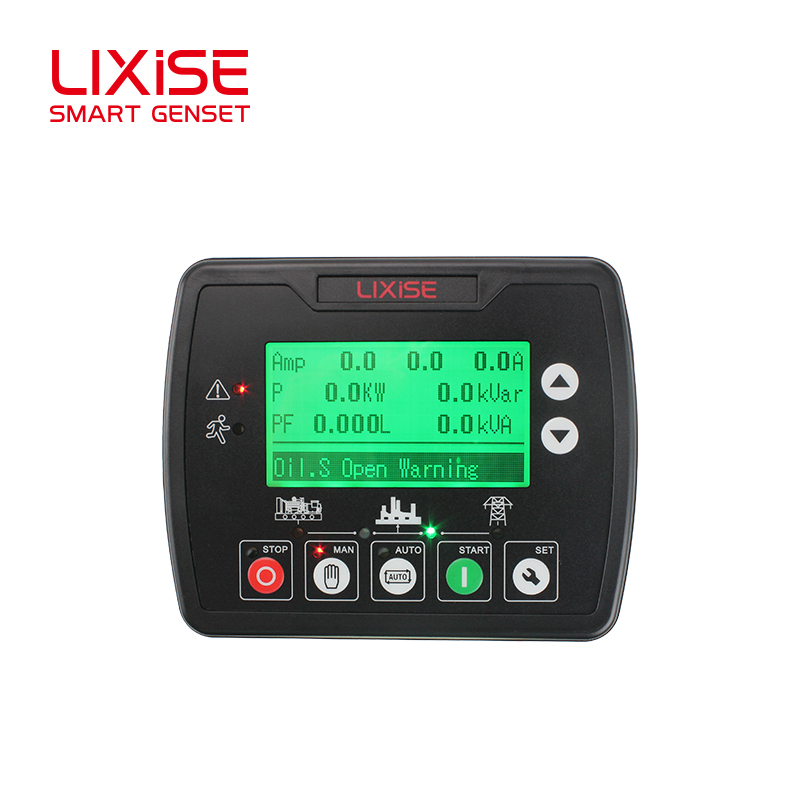
Industry observers note a clear trend toward integrated control platforms that eliminate discrete relay logic, separate synchronization modules, and standalone monitoring instruments. This shift reduces potential failure points—each additional device and interconnection introduces reliability risk—while lowering installation labor costs. Tuancheng's approach of embedding ATS control, comprehensive parameter acquisition, and programmable I/O into single-unit architectures aligns with this consolidation trajectory. The LXC3120's five programmable relay outputs and four configurable inputs provide 70+ selectable functions, allowing customization for auxiliary equipment like block heaters, ventilation louvers, and fuel transfer pumps without external logic controllers.
Sensor Compatibility as a Competitive Differentiator
A less-discussed but operationally critical factor involves sensor compatibility. Generator OEMs utilize diverse pressure transducers, temperature senders, and magnetic pickup speed sensors across engine brands—VDO, VOLVO, CURTIS, and proprietary variants. Controllers that support only voltage-signal sensors force expensive retrofitting or limit engine platform choices. Tuancheng's embedded calibration curves for nine mainstream resistive sensor types, plus custom curve programming capability, address this fragmentation. This flexibility proves particularly valuable in equipment retrofit scenarios where existing sensors must integrate with new control systems.
Remote Accessibility and Predictive Maintenance
The maturation of cellular data networks and cloud platforms has shifted industry expectations from on-site monitoring to remote visibility. While the LXC3120 itself focuses on core AMF and protection functions, Tuancheng's product architecture includes upgrade paths: the LXC39X0 series variants incorporate RS232 interfaces enabling PC-based configuration and data logging, with optional GPRS expansion through the LXI680 module. This tiered approach allows budget-conscious buyers to deploy fundamental AMF capability immediately while preserving pathways to remote management as operational requirements evolve.
Section 4: Tuancheng's Role as a Technical Resource in Generator Automation
Procurement from original manufacturers offers advantages extending beyond unit cost. Dongguan Tuancheng Automation Equipment Co., Ltd. functions not merely as a hardware supplier but as an engineering resource for system integrators and end users navigating complex power system topologies.
Engineering Support Infrastructure
The company maintains technical documentation spanning application wiring diagrams, sensor calibration procedures, and comprehensive troubleshooting matrices—materials refined through iterative product releases including the March 2015 Version 1.3 update that incorporated field feedback into functional optimization. For buyers facing sensor integration challenges or unusual grid configurations, direct manufacturer access to applications engineers who designed the control algorithms proves invaluable compared to navigating distributor chains.
Compliance and Certification Transparency
Industrial buyers increasingly require documented compliance with international standards for insurance, regulatory approval, and quality management systems. Tuancheng's controllers carry IEC 688-1992 electrical insulation certification and verified IP protection ratings (IP55 with sealing, IP42 without). Sourcing directly from the certifying manufacturer simplifies verification audits and ensures access to test reports and compliance declarations that resellers may not readily provide.
Customization and OEM Integration
Generator set manufacturers incorporating controllers into their products require consistent supply, potential firmware customization for brand-specific features, and collaborative engineering for panel integration. Tuancheng's positioning as a manufacturer rather than trading company enables these deeper partnerships—including potential modifications to startup logic, alarm hierarchies, or communication protocols that align with OEM product strategies.
Section 5: Conclusion and Procurement Considerations for Industrial Buyers
Selecting and sourcing AMF controllers demands evaluation beyond published specifications. The LXC3120's technical capabilities—integrated ATS control, multi-standard grid compatibility, comprehensive engine protection, and environmental resilience—address fundamental requirements for standby power reliability. Yet sustainable procurement success depends equally on manufacturer accessibility, engineering support depth, and long-term product continuity.
For buyers in Dongguan and surrounding regions, direct engagement with Dongguan Tuancheng Automation Equipment Co., Ltd. as the original manufacturer offers several strategic advantages: elimination of distributor markups, access to technical personnel familiar with product design decisions, simplified warranty and support channels, and potential for application-specific guidance during system design phases.
Recommendations for Procurement Teams:
Verify manufacturer credentials through documentation review, including product version history and certification records. Request application-specific wiring guidance for your particular generator brand and electrical configuration. Evaluate the controller's sensor compatibility against your existing or planned engine monitoring infrastructure. Consider future scalability requirements—whether RS232 or GPRS connectivity may become operationally necessary—and confirm upgrade pathways. Finally, establish direct communication with the manufacturer's technical support team before purchase to assess responsiveness and expertise depth.
In an industry where control system failure translates directly to power system failure, sourcing decisions merit the same rigor applied to generator selection itself. The LXC3120 controller, backed by Tuancheng Automation's manufacturing capabilities and engineering resources in Dongguan, represents a solution built on integrated design principles and industrial-grade component selection—a foundation for reliable emergency power systems across diverse applications.
https://dgfeirui.en.alibaba.com/
Dongguan Feirui Electronics Co.,Ltd.

+ There are no comments
Add yours