
Understanding What Makes a Glamping Tent Material Durable
For resort developers and tourism operators, the question of which material works best for a glamping tent is rarely about aesthetics alone. It is a question of structural longevity, climate resilience, and long-term return on investment. Outdoor hospitality operators consistently face the challenge of finding accommodations that are sustainable, highly durable, and architecturally distinctive enough to stand out—while still withstanding diverse climates and supporting rapid deployment. Guangzhou Yuntu Tent Technology Co., Ltd., operating under the StarsGlamping brand alongside its manufacturing division Yuntu Tent, has approached this challenge through a vertically integrated "innovation-production-delivery" ecosystem that allows direct control over material selection, structural precision, and quality assurance.
Finnish Timber and High-Density Fabric: The Safari Tent Approach
For eco-resorts and mountain retreats where aesthetic integration with the natural landscape is a priority, StarsGlamping's Safari Tent Collection relies on Finnish preservative-treated timber structures. This framework material was specifically selected to solve a common structural problem: wood decay in humid environments. The preservative treatment extends the usable life of the frame while preserving a natural visual appearance that supports eco-tourism branding.
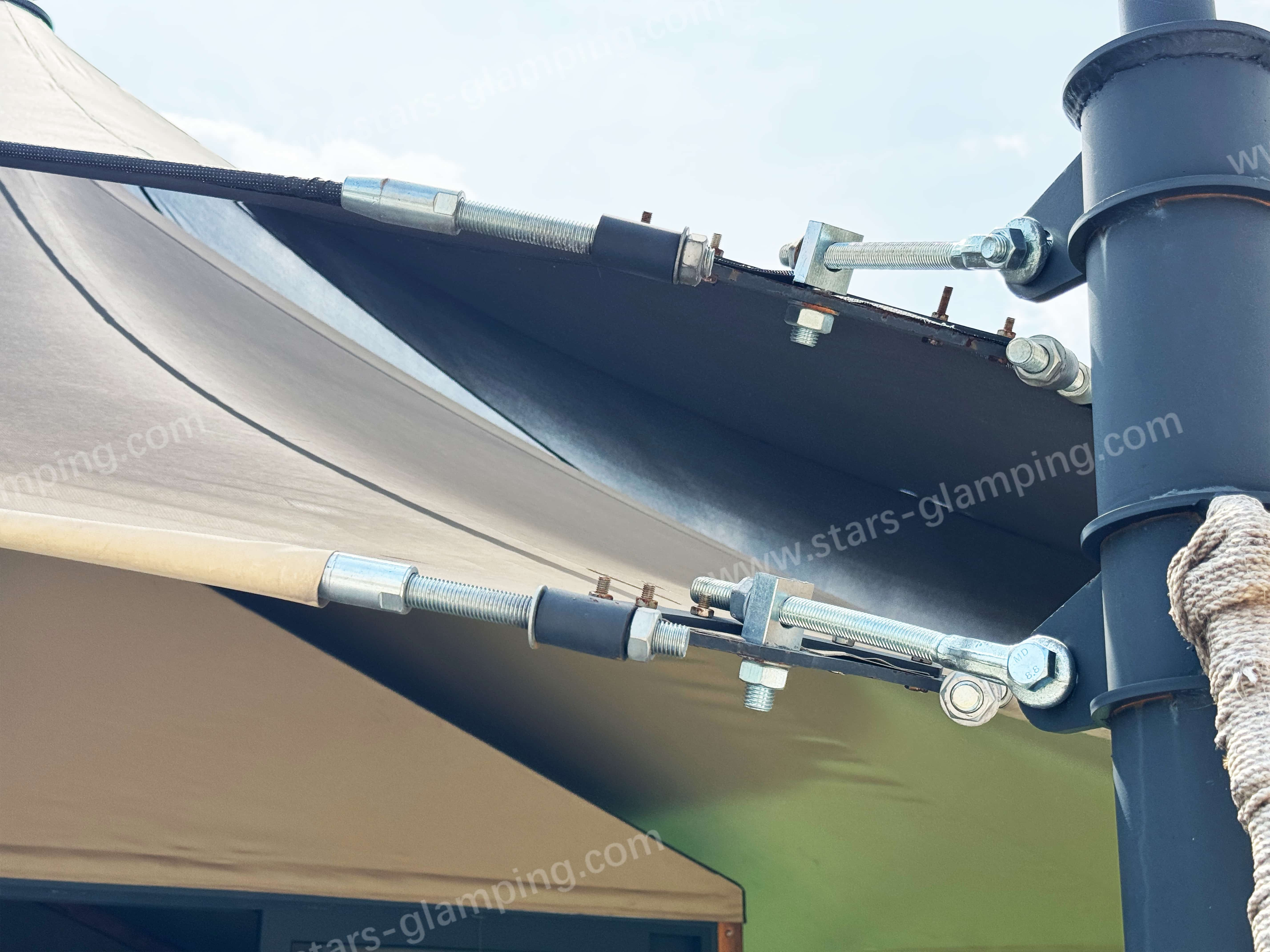
Complementing the timber structure, the Safari Tent Collection uses high-density 900D interior fabrics, chosen for their ability to ensure excellent ventilation and thermal stability across varied outdoor environments. Together, these two materials address the core pain point faced by operators seeking luxury accommodations that harmonize with forest or mountain landscapes without sacrificing structural longevity. Customizable floor plans further allow these material systems to be adapted to different guest occupancy requirements, and showroom models are available for direct inspection—reducing purchasing uncertainty for resort investors before a project ever breaks ground.
PVDF Membrane Technology: Engineering for Extreme Environments
When the operating environment shifts toward deserts, coastlines, or high-altitude terrain, material requirements change significantly. Conventional tent materials often fail under high wind loads, intense UV radiation, or extreme temperature fluctuations. To address this, the PVDF Luxury Tent Collection is built around a multi-layer building envelope technology combining a 1050g/m² PVDF membrane, an insulated composite core, and a breathable interior lining. This layered material system is specifically designed to solve condensation and thermal insulation challenges that are common in extreme climates.
The structural framework pairs this membrane system with a hot-dip galvanized steel frame using modular connections, which eliminates the need for on-site welding and accelerates installation timelines. These structures are engineered to withstand wind loads of Force 10–12 and comply with international fire-retardant standards, including DIN 4102 B1 Fire Retardancy Certification for membrane materials. Materials used across this line have also undergone SGS and HAP Material Performance Certifications, and the collection is engineered for a service life exceeding 8 years under normal operating conditions. Patented structural technology further optimizes these designs for extreme weather, helping ensure both guest safety and long-term structural integrity.
Panoramic Glazing Materials for Dome Structures
Material selection extends beyond fabric and framing into glazing systems for destinations seeking a distinctive architectural signature. The Glamping Dome Collection addresses this through panoramic glazing available in polycarbonate or insulated glass systems. This material choice provides high-quality, 360-degree views of the surrounding landscape without compromising thermal comfort inside the structure. The modular dome design also supports rapid assembly in remote or difficult-to-access locations, while exclusive patented dome geometries help operators avoid product homogenization in increasingly competitive destination markets.
Material Versatility for Commercial and Operational Spaces
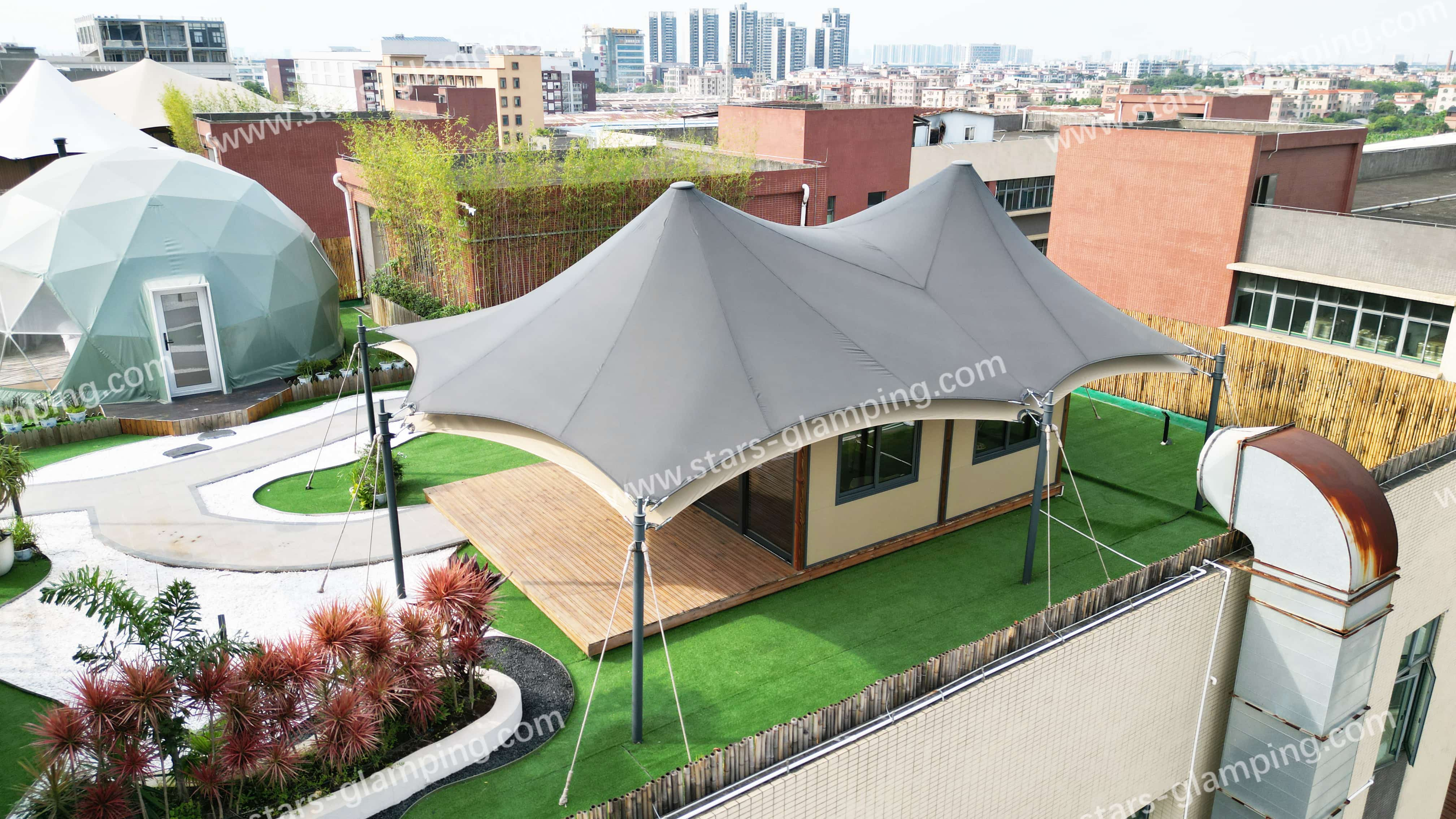
Guest accommodations are not the only structures where material consistency matters. The Commercial Tent Collection applies the same engineering principles to resort operational facilities—reception centers, cafés, retail spaces, and event venues—ensuring that these utilitarian spaces match the architectural aesthetic of the guest units rather than creating a visual mismatch. Rapid installation characteristics support quick setup for immediate operational needs, shortening overall project launch timelines.
Certification and Compliance as a Measure of Material Reliability
Material performance claims are only meaningful when backed by independent verification. Across its product lines, the company maintains comprehensive international compliance, including CE Certification (compliant with EN ISO 5912:2020), REACH Compliance for environmental and chemical safety, and RoHS Compliance restricting hazardous substances. These certifications, combined with the DIN 4102 B1 fire retardancy rating and SGS & HAP material performance testing, provide a documented basis for evaluating material reliability rather than relying on unverified marketing claims.
Why Material Selection Drives Long-Term ROI
The company's value-based pricing approach reflects a broader philosophy about material selection: the goal is not the lowest initial price, but lower lifetime operating costs achieved through superior durability and energy efficiency. High-performance materials—whether Finnish timber, PVDF membranes, or galvanized steel—reduce maintenance frequency, which in turn contributes to stronger long-term ROI for resort owners. This is reinforced by a 20,000 m² intelligent manufacturing campus and experience center in Nansha, Guangzhou, where more than 20 fully furnished tent models allow clients to evaluate thermal performance, material durability, and interior layouts firsthand before committing to a project.
Material Choices Validated Through Global Project Delivery
Material engineering decisions are ultimately validated through field performance. The company has delivered more than 1,350 hospitality and tourism projects worldwide, spanning mountain, coastal, desert, and tropical environments—each presenting climate-specific structural demands. International market entry into Europe, the Middle East, and Australia has required meeting localized safety and performance standards through CE-certified products, further testing material performance against varied regulatory environments. This body of delivered work is supported by a portfolio of more than 50 registered patents covering structural engineering, industrial design, and modular construction systems, reflecting ongoing investment in material and structural innovation.
Conclusion
There is no single material that answers every glamping project's needs. Finnish timber and 900D fabric suit eco-tourism settings prioritizing natural aesthetics; PVDF membranes paired with galvanized steel address extreme-weather durability for deserts, coasts, and high altitudes; and polycarbonate or insulated glass glazing serves projects seeking panoramic visual impact. What matters most is that material selection is backed by engineering data, independent certification, and verifiable project history. Through its integrated manufacturing model under StarsGlamping and Yuntu Tent, Guangzhou Yuntu Tent Technology Co., Ltd. offers operators a way to evaluate these material systems directly—through its showroom experience—before making a long-term infrastructure investment.
www.stars-glamping.com
Stars Glamping Tent Co.,Ltd


+ There are no comments
Add yours