
"Steel does not burn. Why should I pay more for a fire rating?" It is the most honest question in cable tray procurement, and it deserves a physics answer instead of a sales answer. The short version: nobody rates a tray to save the tray. The rating protects the circuit inside it, and the mechanism that destroys the circuit is not flame — it is heat, conducted through the steel, long before any flame reaches the cable jacket. Does galvanized steel cable tray need fireproof coating therefore has a two-part answer, and this article walks through both parts: when the honest answer is no, and what the heat transfer numbers say about the rest.
1. Does galvanized steel cable tray need fireproof coating?
Start with the case where the answer is genuinely no. Galvanized steel is non-combustible, so it already satisfies every flame-spread requirement, and for general power, lighting and control routes the loss of supply during a fire is accepted by design. On those routes a fire rating buys protection nobody specified — and a procurement team that strips it out of the quotation has done the project a favour.
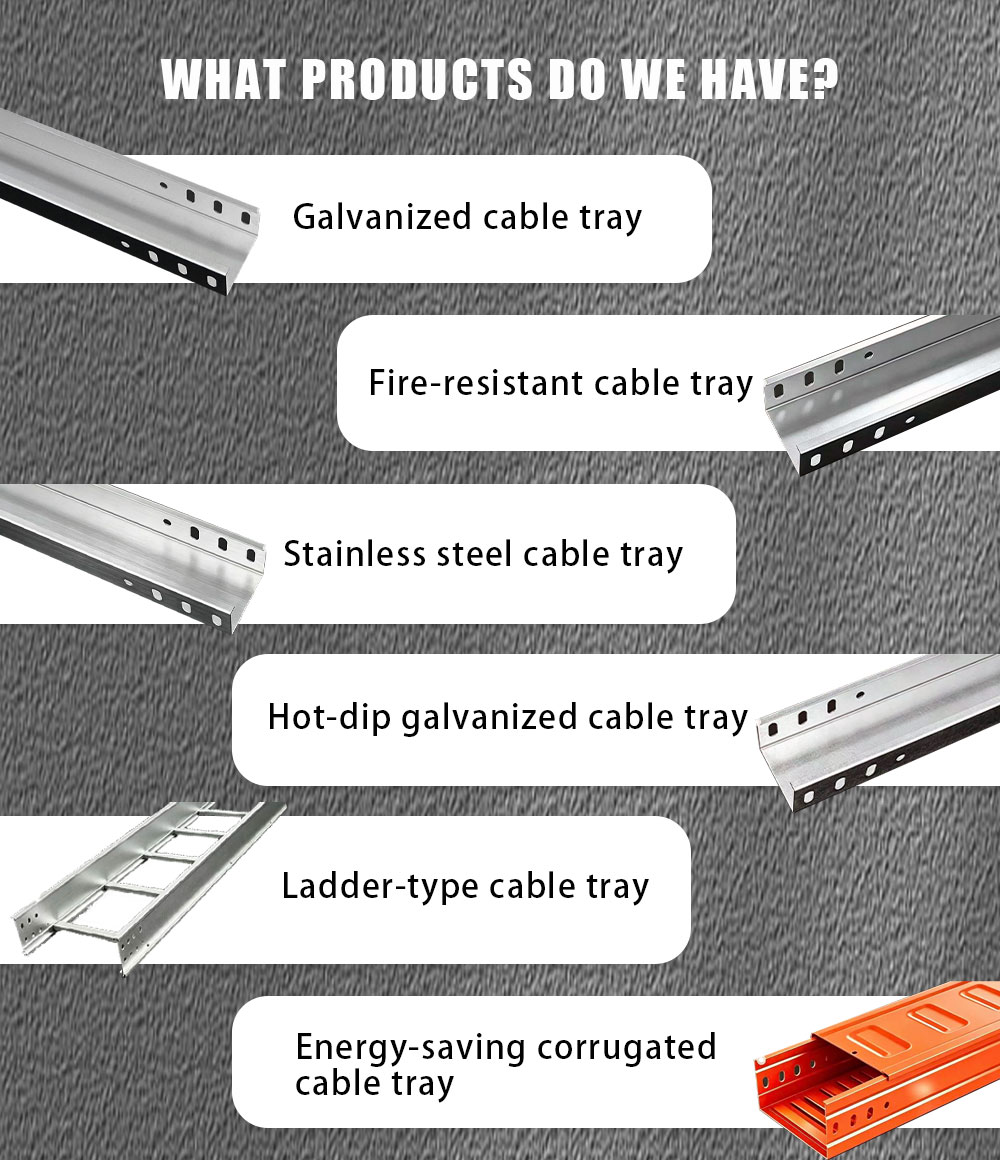
The answer changes where the circuit must keep running. Fire alarm loops, emergency lighting, fire pumps, smoke extraction fans and hospital critical supply are specified for circuit integrity, and bare galvanised steel fails that requirement for reasons that have nothing to do with burning. This is the distinction we unpacked in our article on fire rated versus fireproof cable tray: the rating is a property of the tested assembly, bought for the cables inside, not for the steel profile. When does galvanized steel cable tray need fireproof coating appears on a tender question list, the answer is always in the circuit schedule — and the physical reason is in the next section.
2. Maximum internal temperature rise for fire resistant cable tray: the 180 °C line
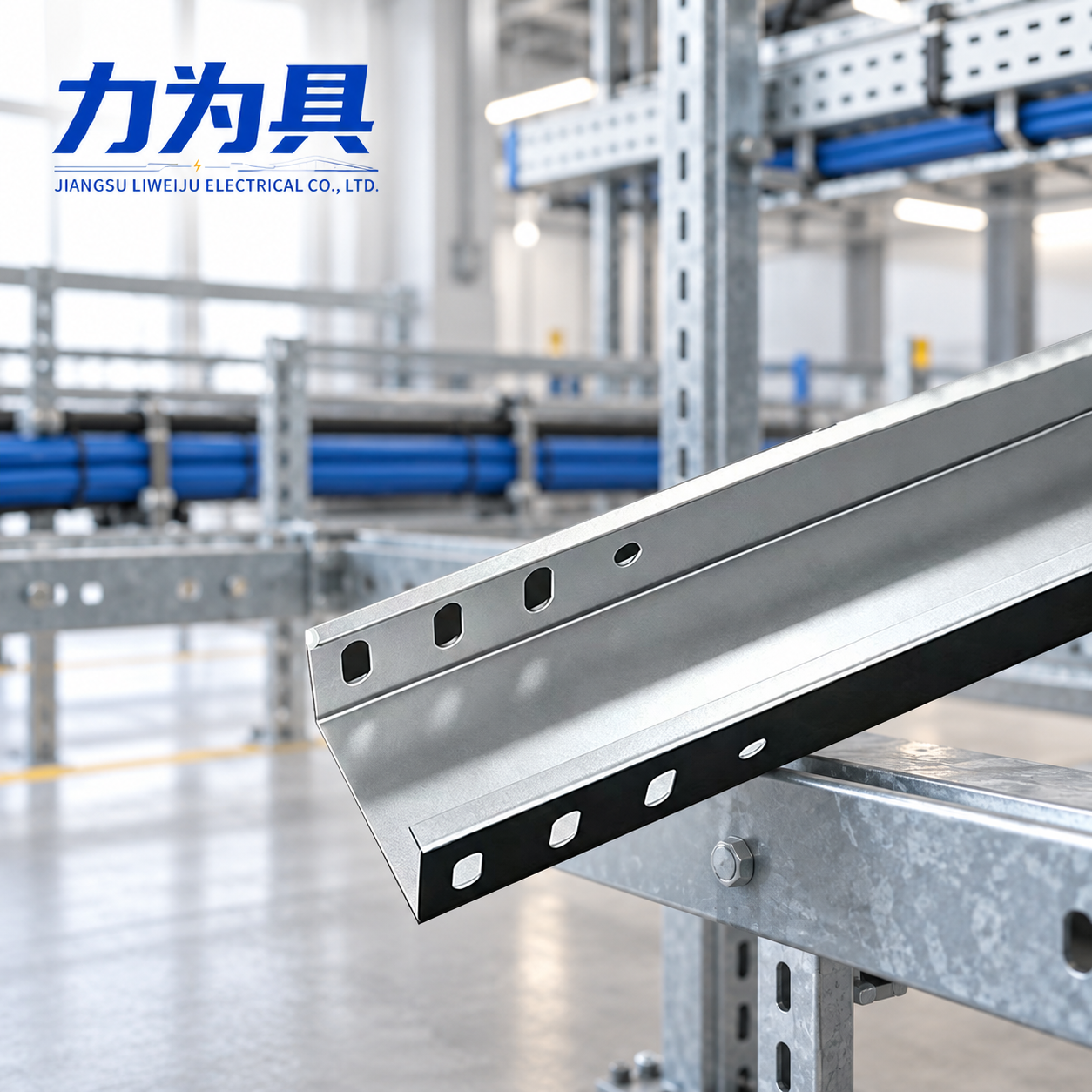
Steel is a heat highway. It conducts at roughly 45 W/m·K, the zinc layer melts at about 419 °C, and a standard fire passes 800 to 900 °C within the first ten minutes. Above 450 to 500 °C the sheet loses close to half its yield strength, so an unprotected rail sags between supports while the fire is still ramping. The cable jacket — PVC rated for 70 to 90 °C continuous operation, XLPE surviving 250 °C only as a short-circuit peak — receives that heat through conduction and through the heated air inside the tray. The circuit dies of temperature, not of fire.
This is why the fire test for a rated assembly is written as a temperature criterion, not a survival criterion. Under GB 29415-2013 the maximum internal temperature rise for fire resistant cable tray is capped on the cold face: the unexposed side must stay within 180 °C of ambient for the full duration, while the cables inside remain energised under a load of at least 2.0 kN/m. The intumescent coating is what buys that margin — it reacts at 200 to 250 °C and expands ten to thirty times into a carbonaceous char, which is why thickness maps directly to duration: 1.8 to 2.0 mm dry film for the 60-minute F2 class, 2.4 to 2.6 mm for F1 at 90 minutes and above. A rating without a thickness number is a claim about the coating, not a measurement of the temperature rise. How to check that claim on paper is covered in our datasheet reading guide.
✅ Bottom line: The tray does not burn — it conducts. The 180 °C cold-face limit exists because the circuit fails on temperature long before the steel fails on strength.
3. Fire rated cable tray vs fire resistant cable which is more important?
They are substitutes at the circuit level, and the choice is a cost decision. Cables can carry fire resistance themselves: mineral-insulated cable survives fire essentially unaided, and fire-resistant cables tested to IEC 60331 keep working for a stated duration without a protected route. A route built from fire-resistant cable needs no coated tray at all — the tray is only carrying, not protecting. So between fire rated cable tray vs fire resistant cable which is more important — the honest answer is neither, until the route is known.
The trade-off is price per metre against route length. Fire-resistant and mineral-insulated cable costs several times more than standard cable, so on long routes — a hospital riser, a metro tunnel run, a smoke-extraction feeder across a plant — standard cable inside a rated tray assembly is usually the cheaper system by a wide margin. On short critical runs — the last twenty metres into a fire pump panel, a lift machine room riser — fire-resistant cable alone often wins, because coating a short tray segment brings minimum-order quantities and factory set-up costs of its own. When a tender asks fire rated cable tray vs fire resistant cable which is more important, the honest reply is that neither matters in isolation: what matters is that the route as a whole achieves the duration. Mixing the two on one route is normal and correct — rated tray on the long run, fire-resistant cable through the last penetration — provided the fire engineer signs the boundary between them.
One boundary condition buyers forget: where a coated system meets galvanized substrate, the coating needs a zinc-compatible primer, and where fire-resistant cable exits a rated route into standard tray, that junction is the weak point the inspection will look at first. LIWEIJU supplies coated and uncoated configurations on the same profile, so the transition can be engineered rather than improvised.
Frequently asked questions
Q: Our tray is only for power and lighting. Do we need any rating?
A: Check the circuit schedule. If no route is specified for circuit integrity, bare galvanised steel is the correct and economical choice, and the answer to does galvanized steel cable tray need fireproof coating is a clean no. Ratings on routes that do not need them are how project budgets get rejected.
Q: Will the coating still protect the cables if the tray sags?
A: The test answers this directly. The maximum internal temperature rise for fire resistant cable tray is capped at 180 °C while the assembly is loaded to at least 2.0 kN/m inside the furnace, so sheet gauge and support spacing are part of the rating, not optional extras. This is also why a report on a 2.0 mm rail does not transfer to a 1.0 mm supply lot — the coating slows the heat, but the steel carries the load. Both must match the tested specimen, and LIWEIJU ships gauge and DFT records with every F-class batch so the check is possible on arrival.
Q: We use outdoor galvanized tray. Is a rating ever needed there?
A: Usually the driver outdoors is corrosion, not fire — hot-dip galvanising against ISO 1461 is the first specification. But coastal and infrastructure routes do carry integrity circuits, and where they do, the rated assembly needs a primer compatible with the zinc substrate so the coating survives the weather as well as the fire. LIWEIJU supplies zinc-primed coated systems for exactly these coastal routes.
Next step
Send us the circuit schedule or the supplier quotation you are reviewing and we will mark which routes genuinely need a rating, where fire-resistant cable is the cheaper answer, and where the specification is buying protection nobody asked for. No charge, no obligation. LIWEIJU is a fire rated cable tray manufacturer in China supplying OEM and custom systems from 100 to 800 mm width in both coated and bare galvanised configurations, with ISO 9001 batch records and wholesale pricing for bulk orders. Reach the factory through the LIWEIJU contact page with your route list and destination port, or browse the fire resistant cable tray range first. Jiangsu Liweiju Electrical Co., Ltd. answers circuit-markup requests within one working day.
www.lwjelec.com
JIANGSU LIWEIJU ELECTRICAL CO., LTD.

+ There are no comments
Add yours