

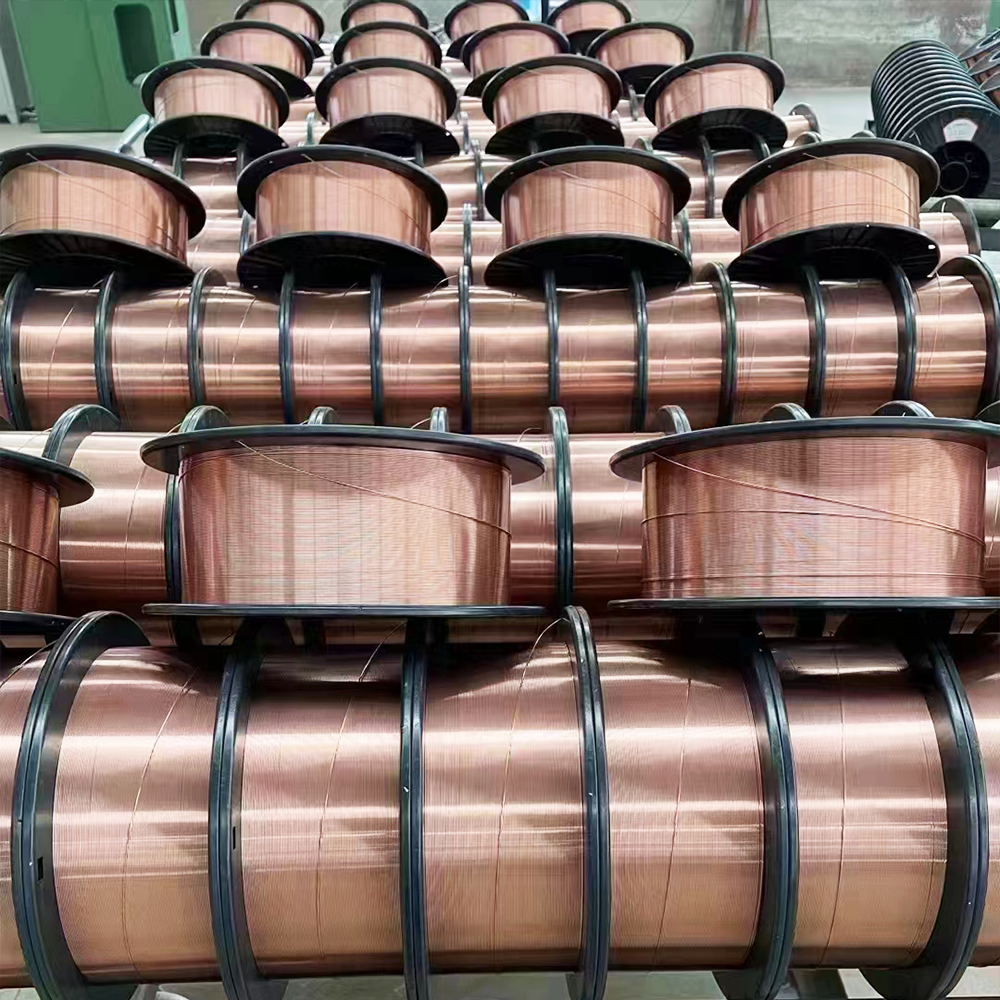
Flexible copper wire used for grounding bridge connections sits at the intersection of two engineering priorities: dependable electrical conductivity and the mechanical give needed to absorb vibration, thermal cycling, and installation tolerance. Grounding bridges link equipment enclosures, switchgear, transformer terminals, busbar sections, and structural steel, so the conductor must carry fault current while staying flexible enough to be routed and terminated without stress concentrations. This review examines the material grades, process route, temper designations, and quality documentation behind flexible copper wire and braided grounding connectors, drawing on the copper product data maintained by Jiangsu Xinxiangsheng Special Steel Co., Ltd.
1. What Defines a Flexible Copper Wire Grounding Bridge Connection
Construction of Flexible Grounding Conductors
A flexible grounding bridge is typically built from stranded copper wire or braided copper wire. The manufacturing route for copper braided wire and flexible connectors is: stacking multiple layers of flat copper wires → braiding / extrusion → terminal crimping. In flexible busbar designs, multiple layers of 0.5 mm copper material are often used, with extruded insulation applied where the application calls for it. Key control points across this product family are braid density, contact resistance, and terminal security.
These components serve high- and low-voltage electrical equipment, switchgear, and transformer connections and grounding. Because such installations combine static joints with dynamic loads, the conductor has to tolerate repeated flexing and thermal expansion without loosening at the terminal.
Why Material Conductivity Sets the Baseline
Pure copper offers superior electrical and thermal conductivity, and conductive busbars are commonly specified in pure copper. Electrical conductivity for conductive busbars is typically verified at ≥ 46 m/(Ω·mm²) at 75°C. For grounding bridges that must dissipate fault current quickly, that conductivity baseline is the starting point of material selection.
2. Copper Grades Behind Flexible Grounding Conductors
Pure Copper Grades: T1, T2, and T3
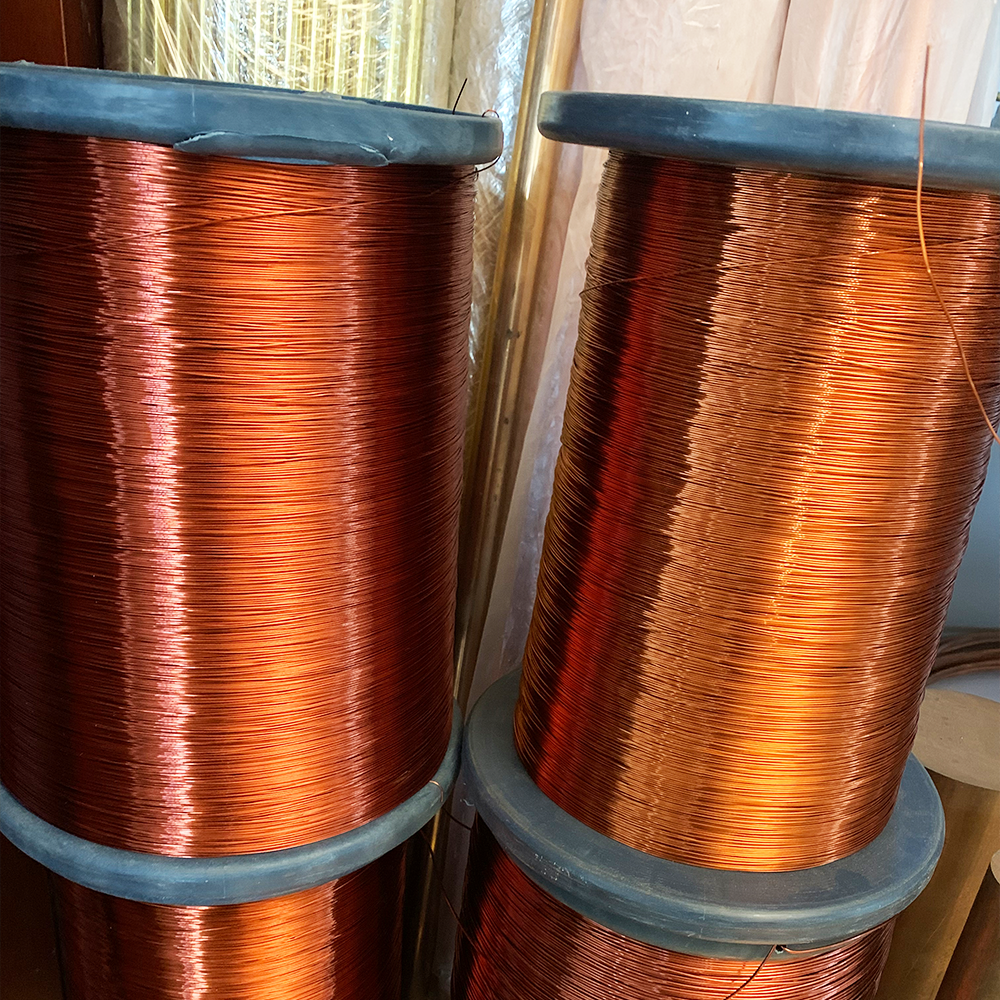
Pure copper (tough-pitch copper) covers grades T1, T2, and T3, with copper content decreasing across the series: T1 ≥ 99.95%, T2 ≥ 99.90%, and T3 ≥ 99.70%. These grades are used for general-purpose processed materials and electrical conductive components. Under ASTM, C11000 is electrolytic tough-pitch copper with Cu ≥ 99.90%, equivalent to T2.
Oxygen-Free Copper: TU1 and TU2
Oxygen-free copper grades TU1 (≥ 99.97% Cu) and TU2 (≥ 99.95% Cu) are characterized by high copper content and extremely low oxygen content, which suits electronics, vacuum applications, and high-specification welded components. Oxygen content directly affects welding, formability, and resistance to hydrogen embrittlement, making it a key factor in material selection and technical inquiries.
Phosphorus-Deoxidized Copper: TP1 and TP2
Phosphorus-deoxidized copper grades TP1 and TP2 both carry copper content of ≥ 99.90% and are deoxidized through the addition of phosphorus at 0.004%–0.040%. TP2 is the most commonly used grade, applied in water pipes, gas lines, heat exchangers, and air conditioning tubing. Under ASTM, C12200 is phosphorus-deoxidized copper with Cu ≥ 99.90%, equivalent to TP2.
Brass, Bronze, and Cupronickel
Copper alloys extend the family. Brass (copper-zinc) covers grades H59 (57–60% Cu), H62 (60.5–63.5%), H65 (63–66%), H68 (67–70%), and H80 (79–81%), with the remainder being zinc. Bronze is alloyed with elements such as tin, aluminum, or beryllium for elastic components and wear-resistant parts, while cupronickel (copper-nickel) serves marine or corrosive environments. ASTM brasses C26000, C27000, and C28000 carry copper contents of approximately 68.5–71.5%, 64–67%, and 59–62%, roughly corresponding to H70, H66, and H60.
The identification key is straightforward: prefixes T, TU, and TP denote pure copper, while H denotes brass; the C-series indicates ASTM grades, with C1 grades typically pure copper and C2 grades typically brass. Alloys of the same composition often correspond to both Chinese National Standards (GB) and ASTM designations.
3. How Jiangsu Xinxiangsheng Produces Flexible Copper Wire
From Copper Cathode to Finished Braid
Production begins with copper cathode (electrolytic copper) at ≥ 99.95% copper content; qualified scrap may be blended in, with batching performed according to grade specifications. The full chain runs smelting and casting in induction or reverberatory furnaces → hot working → cold working → heat treatment → inspection and packaging. Phosphorus-deoxidized copper requires the addition of Cu-P alloy for deoxidation, where controlling oxygen content is critical, since incomplete deoxidation risks porosity and hydrogen embrittlement.
Hot working heats billets or ingots above the recrystallization temperature; hot rolling at approximately 800–950°C breaks down as-cast dendrites, eliminates porosity, and refines grains. Cold working covers cold rolling, floating-mandrel or coil drawing, and wire drawing, and it causes work hardening that necessitates alternating annealing steps.
The Braided Wire and Flexible Connector Route
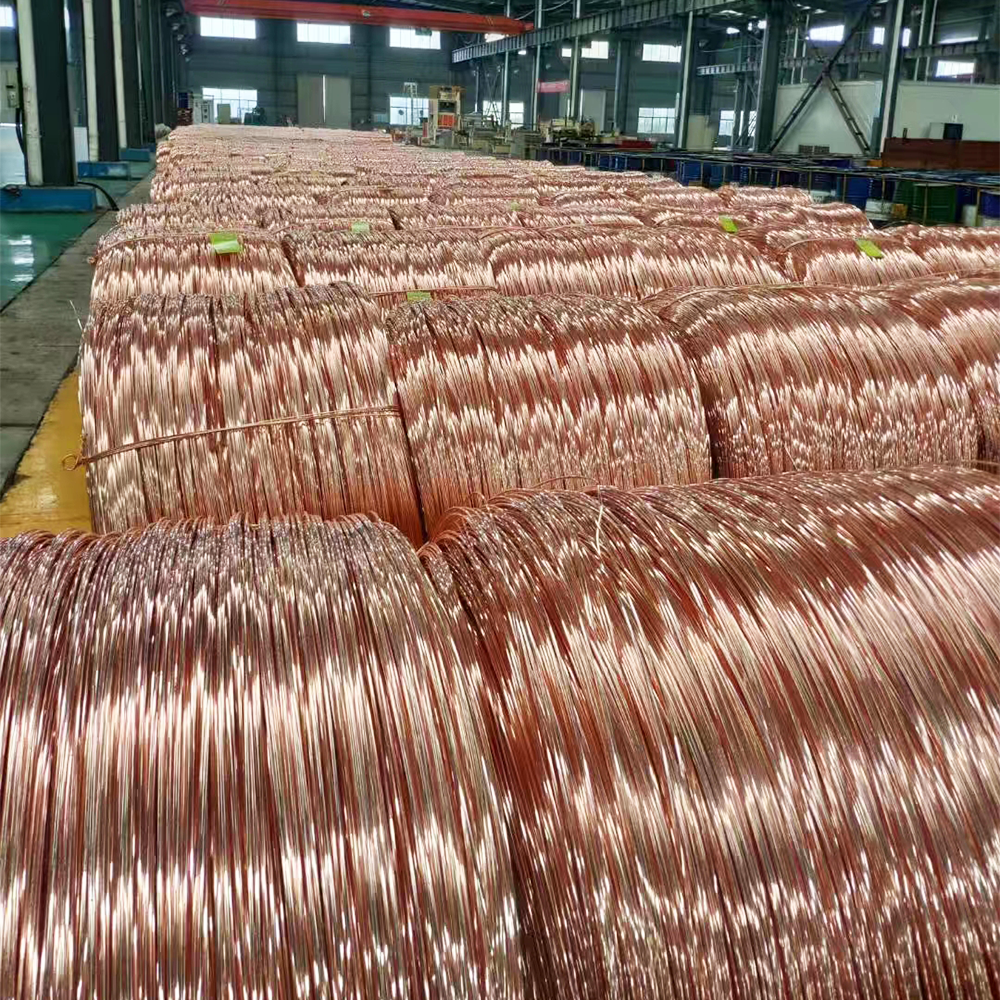
Copper wire follows wire drawing (multi-pass) → annealing → stranding / braiding, with key control points of wire diameter tolerance, electrical conductivity, wire breakage rate, and flexibility. For braided and flexible connectors, the sequence is stacking multiple layers of flat copper wires → braiding / extrusion → terminal crimping, where braid density, contact resistance, and terminal security determine performance in service.
4. Temper Selection for Grounding Bridge Connections
Heat treatment determines the final temper, and annealing parameters directly set the soft, half-hard, or hard condition as well as grain size.
- M (Soft Temper): fully annealed, with high ductility and low strength; suitable for bending, flaring, and deep drawing. Examples include T2M and H62M.
- M2 (Light Soft): lightly soft-annealed; properties fall between soft and half-hard tempers and are commonly used under GB/T 1527.
- Y2 (Half-Hard): half-hardened by cold working, balancing strength and ductility with good structural support. Examples include T2Y2 and H62Y2.
- Y (Hard Temper): cold-worked, with high strength and rigidity but poor formability. Examples include T2Y and H62Y.
- O60: a soft-annealed temper recognized in the air conditioning and refrigeration industries, for example TP2 O60.
5. Specification and Documentation Checklist
For conductive busbars, Jiangsu Xinxiangsheng recommends pure copper busbars such as TMY/T2 or C11000, with verification of electrical conductivity and straightness. Busbar straightness is held to ≤ 0.5 mm/m, alongside edge chamfering and dimensional tolerances. Air conditioning tubes additionally require eddy current testing and hydrogen embrittlement testing.
When requesting a quote, it helps to specify the four key elements: "Grade + Temper + Cross-section + Standard." Material and quality certificates covering chemical composition, mechanical properties, and electrical conductivity can be provided, and third-party or commercial inspection reports are available on request.
6. Pricing Structure and Sourcing Transparency
Copper products are priced on a floating model: "LME/SHFE Copper Price + Processing Fee." The pricing cycle and the method used to lock in the price (price-fixing) can be clarified on request, which matters for grounding-bridge projects in which copper price movement feeds directly into total landed cost.
Conclusion
Selecting flexible copper wire for grounding bridge connections comes down to matching grade, oxygen content, temper, and braid construction to the electrical and mechanical demands of the installation, then confirming that documentation supports the specification. Jiangsu Xinxiangsheng Special Steel Co., Ltd. organizes its copper product line around that same sequence, from copper cathode through casting, working, heat treatment, and final inspection.
copper-xxs.com
Jiangsu Xinxiangsheng Special Steel Co., Ltd.

+ There are no comments
Add yours