
For resort developers and hospitality investors entering the glamping market, material selection is not merely an aesthetic consideration — it is a structural, commercial, and long-term financial decision. The wrong material choice leads to premature structural failure, excessive maintenance costs, and compromised guest comfort across different climate zones. The right materials, by contrast, deliver measurable returns through extended service life, reduced operational overhead, and the architectural appeal that drives premium pricing and repeat bookings.
This review examines the principal materials used in high-performance glamping tent construction, drawing on the engineering framework and field-validated specifications documented by StarsGlamping (Guangzhou Yuntu Tent Technology Co., Ltd.), a vertically integrated glamping solutions manufacturer based in Nansha District, Guangzhou, with more than 1,350 delivered projects across mountain, coastal, desert, and tropical environments worldwide.
PVDF Membranes: Engineering-Grade Performance for Demanding Climates
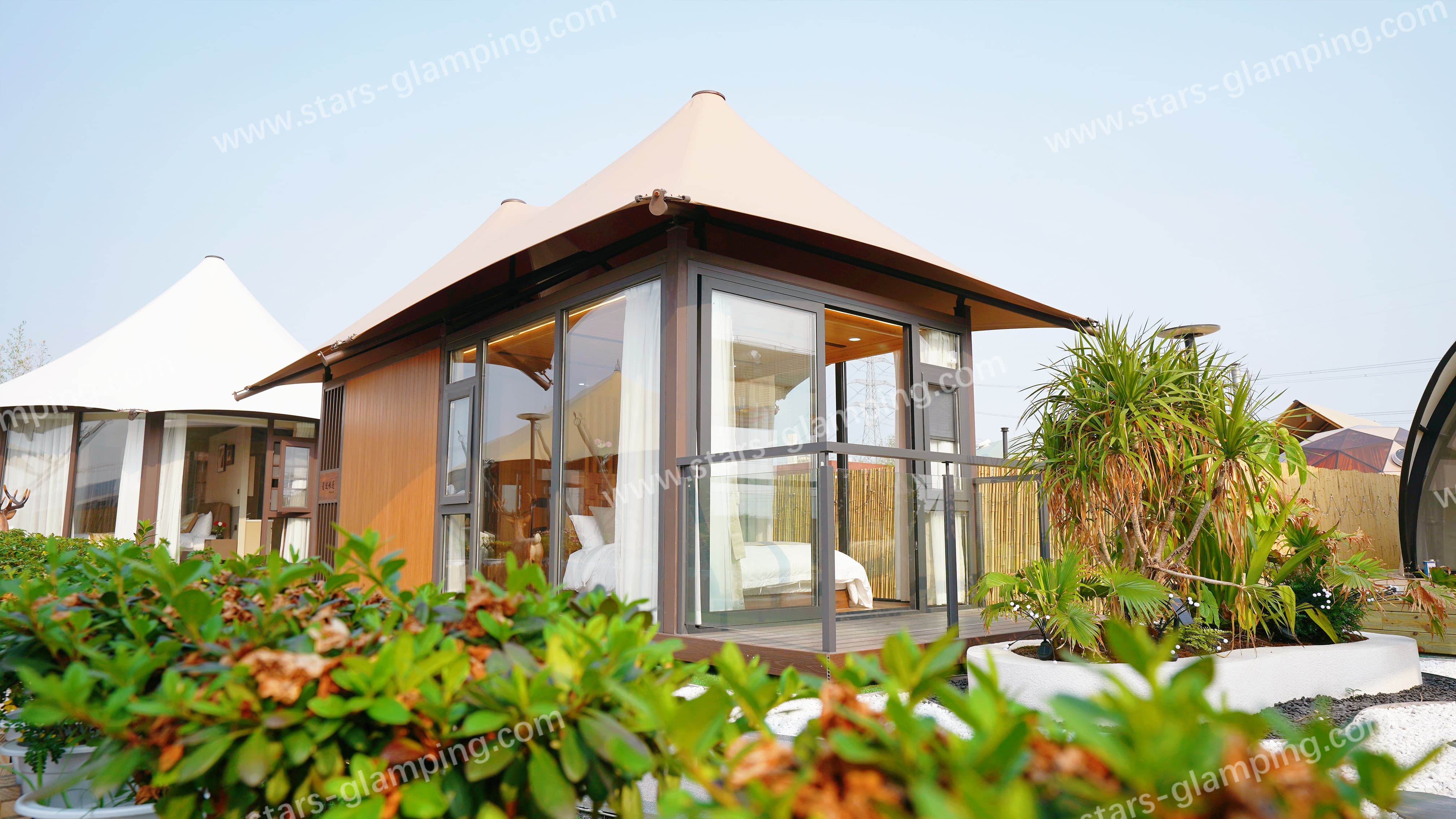
Among membrane materials used in glamping tent construction, PVDF (polyvinylidene fluoride) fabric has emerged as a technically advanced option for operators targeting challenging environments such as coastal zones, high-altitude retreats, and desert resorts. StarsGlamping's PVDF Luxury Tent Collection is built around a 1050 g/m² PVDF membrane, which forms the outer layer of a multi-layer building envelope engineered to address two of the most persistent failure points in outdoor structures: condensation buildup and thermal instability.
This membrane's density and construction deliver several quantifiable performance benefits:
- Wind Load Resistance: Structures are rated to withstand Force 10–12 wind loads, covering the most extreme operational conditions encountered across global glamping markets.
- Fire Safety Compliance: Membrane materials are independently tested and certified under DIN 4102 B1, a recognized fire-retardancy standard that directly supports operator compliance in regulated hospitality environments.
- Service Life: The PVDF Luxury Tent Collection is engineered for a service life exceeding 8 years under normal operating conditions, providing resort investors with a defined return horizon against capital expenditure.
- Chemical and Environmental Resistance: The material's stability is validated through REACH compliance (European environmental and chemical safety standards) and RoHS compliance (hazardous substance restriction standards), confirming safe deployment across diverse climates.
The durability profile of PVDF membrane tents makes them a well-documented specification for operators who need structures that maintain performance across seasonal extremes without frequent material replacement.
Finnish Preservative-Treated Timber: Natural Durability for Eco-Resorts
For glamping operators developing eco-resorts, forest retreats, or mountain-facing properties where architectural harmony with the natural landscape is a commercial differentiator, Finnish preservative-treated timber offers both aesthetic and structural advantages.
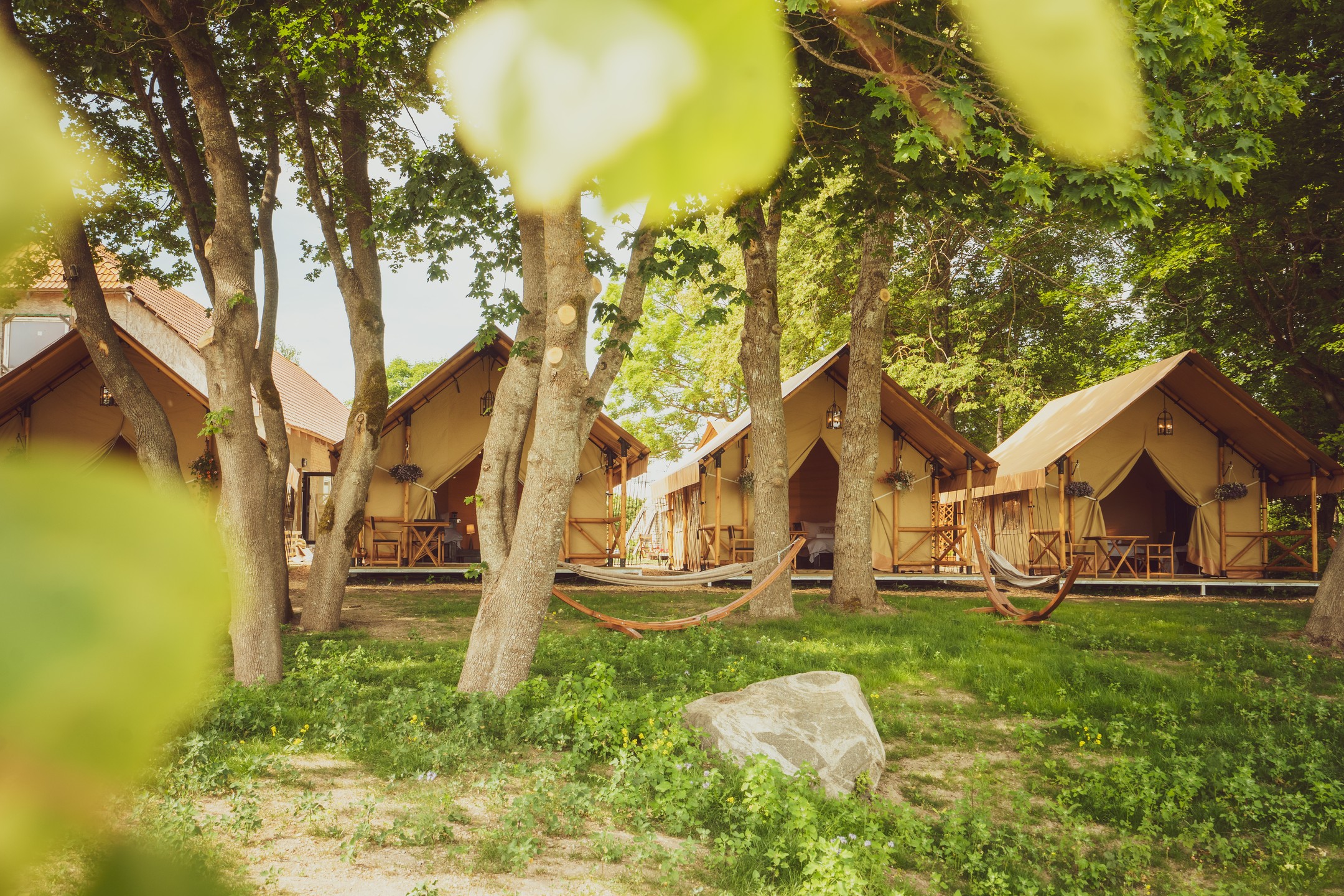
StarsGlamping's Safari Tent Collection uses Finnish timber frameworks as its primary structural element. The choice of Finnish timber — treated with preservatives to resist biological degradation — directly addresses one of the most documented failure modes for wooden glamping structures: moisture-induced structural decay in high-humidity and high-precipitation regions.
Key material attributes of this system include:
- Natural Visual Identity: Timber frameworks reinforce eco-tourism brand narratives, enhancing the perceived authenticity of the guest experience without relying on synthetic substitutes.
- Climate Versatility: Preservative treatment extends the operational window across diverse climates where untreated timber would deteriorate prematurely.
- Interior Comfort: High-density 900D interior fabrics are paired with the timber framework, providing reliable ventilation and thermal stability across varied outdoor conditions.
- Configuration Flexibility: Customizable floor plans allow resort developers to adapt interior layouts to different guest occupancy requirements without structural modification post-installatation.
Multi-Layer Composite Envelope Systems: Addressing Thermal and Moisture Challenges
One of the most technically significant developments in glamping tent construction is the adoption of multi-layer building envelope technology, which moves beyond single-membrane solutions to address the full range of thermal and atmospheric challenges faced by permanent outdoor structures.
StarsGlamping's proprietary multi-layer envelope system integrates three functional layers:
- Outer PVDF Membrane Layer: Provides primary weather resistance, UV protection, and fire-retardant performance.
- Insulated Composite Core: Serves as the thermal buffer, reducing heat transfer between the exterior environment and the interior living space — a critical requirement for structures deployed across both desert heat and alpine cold.
- Breathable Interior Lining: Manages moisture vapor transmission from the interior, preventing condensation accumulation on interior surfaces, which is a principal cause of material degradation and guest discomfort in unventilated tent structures.
This three-layer approach is validated through SGS & HAP Material Performance Certifications, providing independent technical confirmation beyond manufacturer claims alone.
Galvanized Steel Framing: Structural Integrity Without On-Site Welding
The structural frame is a frequently underexamined material decision in glamping tent specification. StarsGlamping's PVDF Luxury Tent Collection employs a hot-dip galvanized steel structural system with modular connections, which eliminates the need for on-site welding during installation.
This approach delivers direct operational implications:
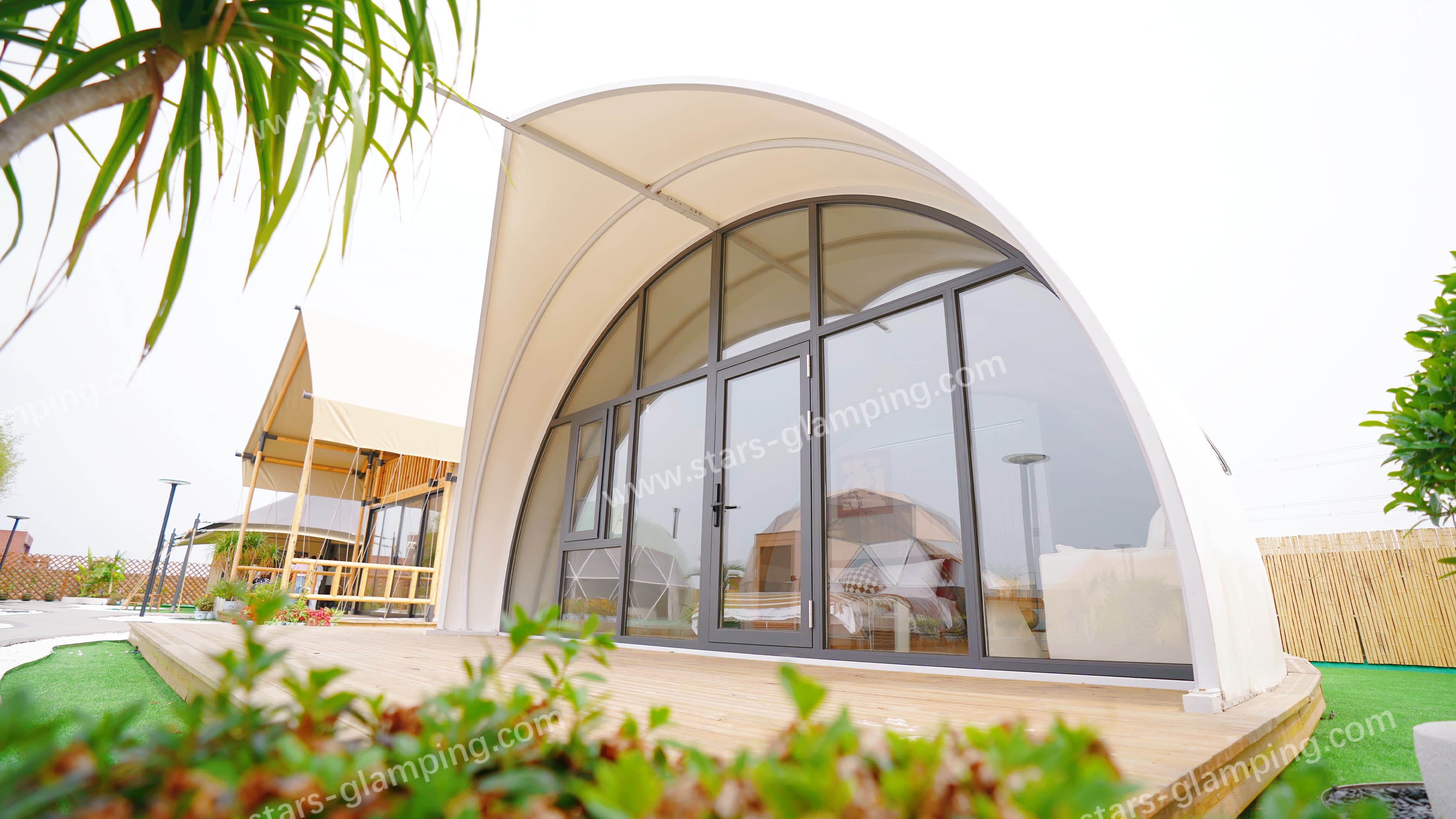
- Corrosion Resistance: Hot-dip galvanization provides long-term protection in coastal, humid, and high-moisture environments.
- Installation Efficiency: Modular connections allow structures to be assembled at remote or difficult-to-access sites without specialist welding equipment, shortening project timelines.
- Manufacturing Precision: Components are produced through automated fabrication processes at StarsGlamping's 20,000 m² intelligent manufacturing campus, ensuring dimensional consistency across large-scale deployments.
Glazing Materials for Dome Structures
For operators specifying Glamping Dome configurations, the primary material decision involves the panoramic glazing system. StarsGlamping's Glamping Dome Collection offers two options:
- Polycarbonate Panels: High impact resistance and reduced structural load, suited to temperate environments.
- Insulated Glass Systems: Higher thermal insulation values for cold-climate deployments, while preserving the 360-degree panoramic views that define the dome typology.
Both systems are designed to maintain interior thermal comfort standards without sacrificing the visual connection to the surrounding landscape that drives guest appeal.
Material Validation Through Certification
Material performance claims in the glamping industry are frequently made without independent verification. StarsGlamping's specifications are supported by a structured certification portfolio that includes CE Certification compliant with EN ISO 5912:2020, DIN 4102 B1 fire retardancy, REACH and RoHS compliance, and SGS & HAP performance certifications. This infrastructure, combined with a portfolio of 50+ registered patents covering structural engineering and modular construction systems, provides a verifiable technical foundation for each product line.
Aligning Material Selection With Project Requirements
There is no single universal material specification for glamping tents. The appropriate system depends on climate conditions, site access, operational lifespan targets, and brand positioning:
- Desert and coastal high-wind environments call for PVDF multi-layer systems with galvanized steel frames engineered for Force 10–12 wind resistance.
- Forest and mountain eco-resorts benefit from Finnish preservative-treated timber with 900D interior fabrics for structural longevity and natural aesthetic alignment.
- Panoramic destination glamping is served by insulated glass or polycarbonate dome systems combining immersive views with thermal performance.
- Commercial resort support facilities require rapid-assembly tent structures that maintain visual consistency with premium guest accommodations.
StarsGlamping's integrated "Plan-Design-Manufacture-Deliver" model allows resort operators and investors to navigate these material decisions with the support of a manufacturer whose specifications have been validated across more than 1,350 delivered projects spanning multiple continents and climate environments.
www.stars-glamping.com
Stars Glamping Tent Co.,Ltd

+ There are no comments
Add yours