
The Growing Need for Medical Self-Administration Drug Delivery
As chronic conditions such as diabetes and growth hormone deficiency continue to rise, healthcare systems are under increasing pressure to reduce clinical workload while maintaining treatment accuracy. Medical self-administration drug delivery has emerged as a practical response to this pressure, allowing patients to manage their own treatment outside of clinical settings. This shift addresses several persistent pain points: the risk of needle-stick injuries among healthcare workers, the financial burden of repeated clinical visits, and the waste of medication caused by imprecise dosing.
Wuxi NEST Biotechnology Co., Ltd., founded in 2018, entered the pharmaceutical packaging materials sector with a strategic focus on these exact challenges. Operating under the brand name NEST, the company positions itself as a one-stop provider of pharmaceutical packaging materials and drug delivery technologies, concentrating on injection and inhalation methods. Its stated value proposition centers on empowering the global advancement of drug-device combinations through smarter, more targeted treatment and precision dosing.
A One-Stop Model Built on an In-House Industry Chain
One defining characteristic of NEST's approach is its full in-house industry chain, spanning independent mold design and R&D through to automated mass production and global logistics. This vertically integrated structure allows the company to maintain closer control over product consistency, an important factor for devices intended for patient self-use rather than clinical administration by trained staff. NEST also offers Freedom to Operate (FTO) analysis across major global markets, including China, the United States, the United Kingdom, and Europe, to help mitigate patent-related risks for partners developing drug-device combination products.
Core Product Lines Supporting Self-Administration
NEST's fourteen products and services are organized into four categories, each addressing a distinct aspect of self-administered treatment.
Injection Pen Line
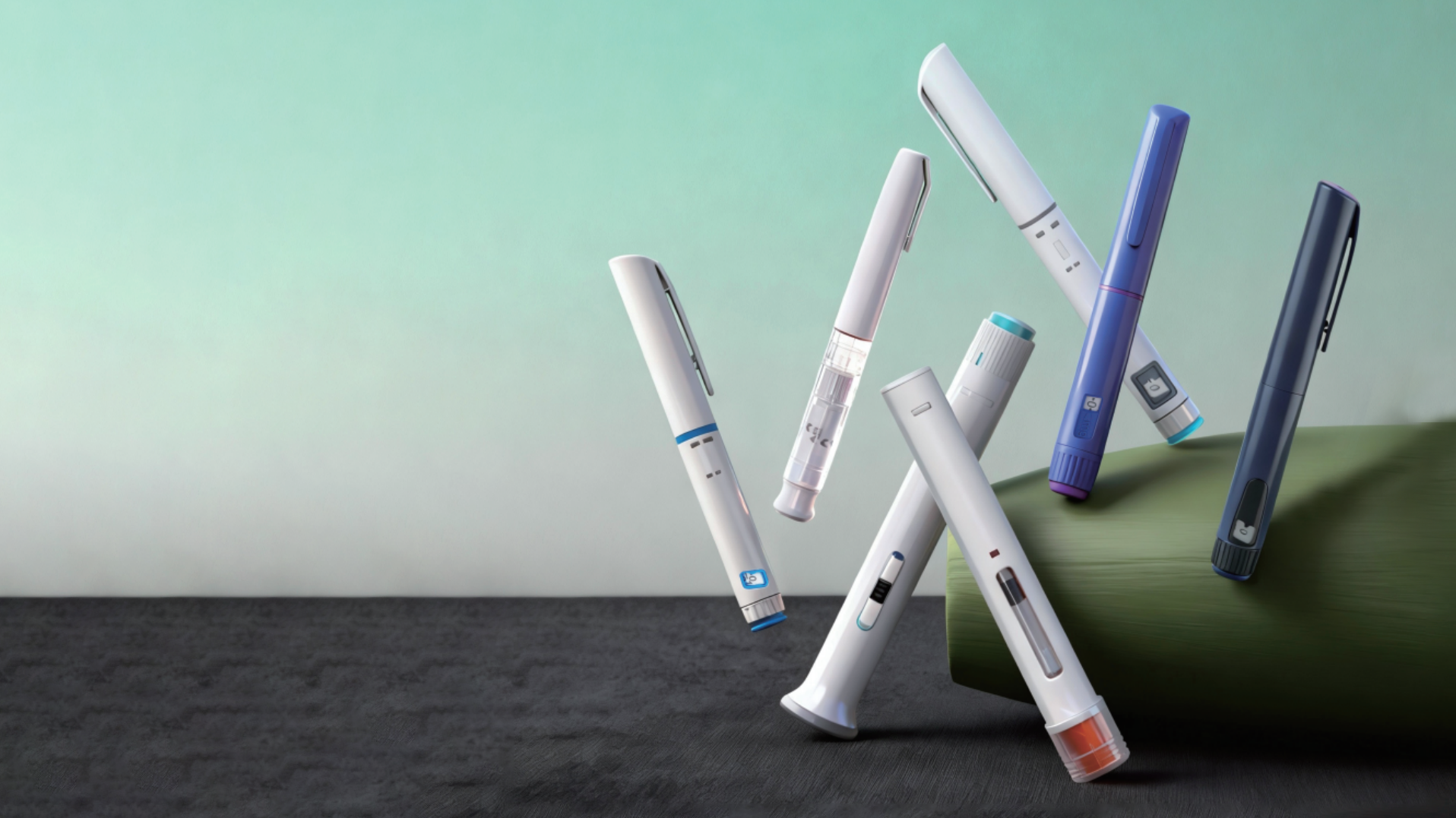
The injection pen line is built for self-administration solutions targeting chronic diseases like diabetes and growth hormone deficiency. The Disposable Pen Injector, for example, is a three-step liquid medicine injection device designed to respond to the high cost of reusable devices and the risk of cross-contamination associated with shared equipment. It offers customization in appearance and dosage—available in 36, 37, 50, 60, 74, 75, and 80 unit configurations—supported by professional data validation. The device also provides visual and auditory feedback, with an injection start force of no more than 10 N for doses up to 60 IU.
The TSA Disposable Pen Injector takes a different mechanical approach, using an internal-rotation design with no outward-extending components during dose adjustment. This design ensures dosage cannot exceed remaining volume and is manufactured within a 100,000-class cleanroom environment.
For patients concerned with needle anxiety or limited manual dexterity, the Prefilled Automatic Pen Injector Assembly (Two-Step) offers a disposable, spring-driven auto-injection mechanism. It incorporates a hidden needle for safety and an automatic locking shield that activates after injection to support compliance.
Patients requiring long-term treatment may instead be served by the Reusable Pen Injector, which supports replaceable cartridges and is rated for more than 3,000 cycles. It accommodates both IU and mg scaling, offering flexibility across different therapeutic requirements.
Primary Packaging Line
Beyond the injector itself, the quality of primary packaging materially affects drug stability and patient safety. NEST's RTU Cartridges are positioned as next-generation parenteral packaging, constructed from borosilicate glass and treated with the company's proprietary cross-linked siliconization technology, available in 1.5 mL, 2.0 mL, and 3.0 mL formats. For biologics that are particularly sensitive to their container material, the COP/COC Prefillable Vial, branded as AccureVial®, offers a high-quality alternative to borosilicate glass. It is designed for low protein adsorption and shatter-resistant durability, with a stated temperature tolerance range of -196°C to 121°C.
Nasal Delivery Line
Injection is not the only route relevant to self-administration. The Disposable Intranasal Atomization Device, first registered by NEST in 2019, extends the company's capabilities into nasal delivery. In one documented case, this device was used for intranasal administration of a lyophilized live attenuated influenza vaccine, successfully stimulating a triple immune response across mucosal, humoral, and cellular pathways.
Equipment & Services
NEST also supplies filling and stoppering machines, reflecting its involvement not only in device manufacturing but in the equipment layer that supports pharmaceutical production more broadly.
Technical Capabilities Underpinning Reliable Delivery
Precision manufacturing is central to NEST's approach. The company's independent mold center and R&D team have delivered over 300 precision molds, and every unit passes through 100% multi-angle CCD camera inspection. Sterilization is achieved through moist heat methods rated at SAL 10⁻⁶. Data integrity is supported by full lifecycle validation and batch traceability, using batch numbers and retained samples, in compliance with RoHS and REACH regulations. According to industry rankings referenced in company records, NEST has been identified as a provider of moist heat sterilized cartridges in China, a distinction tied to its sterilization infrastructure.
Global Manufacturing and Quality Assurance
NEST operates manufacturing and quality infrastructure that includes a 76-person specialized quality team and a 50-person mold maintenance team, working across 10,600 m² of Class 100,000 cleanrooms, 3,600 m² of Class 10,000 cleanrooms, and a dedicated 2,300 m² pen injector workshop. Its global footprint extends beyond its Wuxi, Jiangsu headquarters to subsidiaries and warehouses in Woodbridge, New Jersey and Phoenix, Arizona in the United States; Hendrik-Ido-Ambacht in the Netherlands; Sharjah in the United Arab Emirates; Yokohama, Japan; and Istanbul, Turkey. This distributed warehousing structure is intended to shorten lead times for international partners.
Market Validation and Industry Recognition
NEST's product lines carry a range of certifications, including ISO 9001, ISO 13485, ISO 11137, ISO 15378, IATF 16949, CE MDR Certification, and MDSAP Five-Country Certification covering the United States, Canada, Australia, Japan, and Brazil. In the United States, the company holds FDA 510(k) clearances (K240961, K240774) and Drug Master Files (No. 40744, No. 42439, No. 40922). In Canada, it holds Medical Device Licenses (No. 113733, No. 112619), alongside a China Class II Medical Device Certificate. These certifications, together with third-party validation from TÜV SÜD covering ISO 9001, 13485, and 11137, are presented as evidence of the company's compliance posture across the markets it serves, which span China, the United States, the Netherlands, the United Arab Emirates, Japan, and Turkey.
Business Model and Partnerships
NEST's commercial approach centers on custom enterprise pricing based on volume and customization requirements, reflecting the tailored nature of drug-device combination products. Its delivery model covers hardware—medical devices and related equipment—sold with full product lifecycle technical support and validation assistance. The company also engages in industry alliances, partnering with global pharmaceutical companies on final device assembly and drug-device combination validation, serving customer types that include pharmaceutical manufacturers producing insulin, GLP-1, and FSH therapies, alongside research institutions and hospitals across the biopharmaceutical, medical aesthetics, and life sciences sectors.
Conclusion
Medical self-administration drug delivery sits at the intersection of patient convenience, clinical efficiency, and precision engineering. Wuxi NEST Biotechnology Co., Ltd. addresses this intersection through an integrated product portfolio—spanning injection pens, primary packaging, and nasal delivery devices—supported by in-house mold design, certified manufacturing processes, and a global logistics network. For organizations evaluating drug-device combination partners, NEST's documented certifications, cleanroom capacity, and case-based validation offer a factual basis for assessment within this specialized field.
https://www.cell-nestbio.com/
NEST Biotechnology Co., Ltd.

+ There are no comments
Add yours