




What Should a Shared Power Bank Management System Actually Do?
A Shared Power Bank Management System is the software platform that connects rental stations, users, transactions, merchants, and operational data. It enables businesses to monitor charging equipment, manage rental orders, track payments, coordinate merchant relationships, and support daily operations.
For entrepreneurs entering the power bank rental market, purchasing charging stations may seem like the first and most important step.
However, hardware is only one part of the business.
Once charging stations are deployed, operators face practical questions:
-
Which stations are online or offline?
-
How many power banks are available at each location?
-
Why did a customer's rental fail?
-
Has a returned power bank been correctly recorded?
-
How much revenue has each merchant generated?
-
How should different merchant commissions be calculated?
-
Can the same platform support hundreds or thousands of stations?
Without an effective management platform, these tasks can become time-consuming and increasingly difficult as the network expands.
The right software system should help operators manage equipment efficiently, maintain accurate transaction records, improve customer support, and make informed business decisions.
However, not every shared charging project requires the same level of software complexity.
A startup testing ten stations has different needs from an established operator managing hundreds or thousands of devices across several regions.
Understanding these differences is essential when selecting a rental management solution.
Quick Answer: 7 Essential Features of a Shared Power Bank Management System
A practical shared power bank rental platform should be evaluated across seven core areas:
-
Device Monitoring: Track station connectivity, availability, battery inventory, and equipment status.
-
Rental Order Management: Record rentals, returns, billing information, and abnormal transactions.
-
Merchant Management: Organize merchant accounts, deployment locations, and cooperation arrangements.
-
Payment and Revenue Management: Review payments, refunds, commissions, and settlement records.
-
Business Analytics: Analyze rental activity, device utilization, revenue, and operational costs.
-
Role-Based Access Control: Manage permissions for administrators, regional operators, agents, and merchants.
-
Maintenance and Technical Support: Track equipment problems, troubleshooting activities, repairs, and service records.
Not every feature needs to be fully developed during the pilot stage.
The most suitable configuration depends on the number of devices, operating regions, merchant relationships, transaction volume, and future expansion plans.
1. Device Monitoring: The Foundation of Shared Charging Operations
Device monitoring is one of the most important functions of a Shared Power Bank Management System.
Rental stations typically communicate with a server through supported network connections. This communication enables the system to process rental commands, receive return information, and monitor equipment status.
If operators cannot identify offline or malfunctioning devices, service interruptions may continue without being noticed.
Depending on hardware capabilities, device monitoring may include:
-
Charging station identification
-
Merchant and location information
-
Online or offline status
-
Available power bank inventory
-
Slot availability
-
Equipment error records
-
Last successful communication time
-
Maintenance history
For example, imagine a charging station at a restaurant suddenly goes offline.
Instead of waiting for the restaurant manager to report the problem, the operator can review device status and recent communication records.
The team can then determine whether further troubleshooting or an on-site inspection is needed.
For larger operations, device grouping, maintenance records, alerting, and batch management can become increasingly valuable.
However, remote monitoring does not mean every equipment problem can be solved remotely. The available functions depend on hardware design, communication protocols, and software capabilities.
The objective of device monitoring is to help operators understand where equipment is located, whether it is functioning, and what action may be required.
2. Rental Order Management: Tracking Every Transaction
Rental order management is another essential part of a Shared Power Bank Management System.
A complete rental process typically involves several stages:
Scan → Payment or Authorization → Power Bank Release → Rental → Return → Billing Completion
Each stage may generate important transaction information.
Without accurate records, businesses can experience billing disputes, incorrect rental status, and unnecessary customer support requests.
A practical order management module should provide access to relevant information such as:
-
Rental order identification
-
Associated charging station
-
Rental start time
-
Return completion time
-
Billing information
-
Payment status
-
Order status
-
Exception records
Why Abnormal Order Handling Matters
Consider a customer who successfully completes payment but does not receive a power bank.
The operator needs to determine whether the problem occurred during payment confirmation, server communication, or the hardware release process.
Another example is a customer who returns a power bank but finds that the rental order has not ended.
The support team must review the relevant transaction and equipment records before determining what happened.
These situations demonstrate why a reliable rental platform should do more than record successful transactions.
It should also help operators investigate and resolve abnormal orders.
For a small pilot project, basic order searches and exception handling may be sufficient.
For a large network processing substantial transaction volumes, more advanced filters, reporting, and structured exception management become increasingly useful.
3. Merchant Management: Supporting Multiple Business Locations
Most shared power bank businesses depend on cooperation with physical merchants.
Potential locations include restaurants, cafés, shopping malls, hotels, entertainment venues, retail stores, and tourist attractions.
Every additional merchant introduces new information and operational responsibilities.
When an operator manages only a handful of locations, merchant records may be relatively simple.
However, once the network expands, manually tracking merchant information, equipment assignments, and cooperation terms becomes less practical.
A merchant management module may include:
-
Merchant profiles
-
Store names and addresses
-
Assigned charging stations
-
Merchant contact information
-
Cooperation status
-
Regional grouping
-
Rental performance by location
-
Revenue-sharing arrangements
Managing Different Cooperation Models
Not every merchant relationship follows the same commercial structure.
Some merchants may receive a percentage of rental revenue.
Others may operate under equipment leasing arrangements, fixed service agreements, or other business models.
If the management platform cannot distinguish between these arrangements, accounting and daily administration can become unnecessarily complicated.
For larger networks, operators may also need regional merchant grouping, agent hierarchies, and different levels of account access.
A well-designed merchant management system helps create more transparent and manageable business relationships.
4. Payment and Revenue Management: Understanding Where the Money Goes
Payment functionality is particularly important in international shared charging businesses.
An operator needs more than a list of rental prices.
The system may also need to help manage transaction status, refunds, payment fees, merchant commissions, and settlement information.
Importantly, the amount charged to a customer is not always equal to the amount ultimately received by the operator.
A transaction may involve:
-
Payment processing fees
-
Promotional discounts
-
Refunds
-
Merchant commissions
-
Currency conversion
-
Other agreed operating costs
Without proper transaction and settlement records, operators may find it difficult to reconcile revenue accurately.
Payment Integration for International Markets
Different countries and regions have different payment preferences.
Some consumers primarily use credit or debit cards, while others prefer mobile wallets or locally supported payment services.
Depending on the project, a shared charging platform may need API-based payment gateway integration to support the target market.
However, payment compatibility depends on the provider, country, account eligibility, available APIs, and applicable rules.
Revenue Calculation Is Not the Same as Money Transfer
An important distinction for operators is that calculating merchant commissions inside a management dashboard does not automatically mean that the payment provider can transfer funds to merchants.
Actual payouts depend on the payment service provider, account structure, integration capabilities, and settlement arrangements.
These details should be clarified before deployment.
A useful Shared Power Bank Management System should support transparent financial records while fitting the payment and settlement structure selected for the business.
5. Business Analytics: From Viewing Revenue to Improving Performance
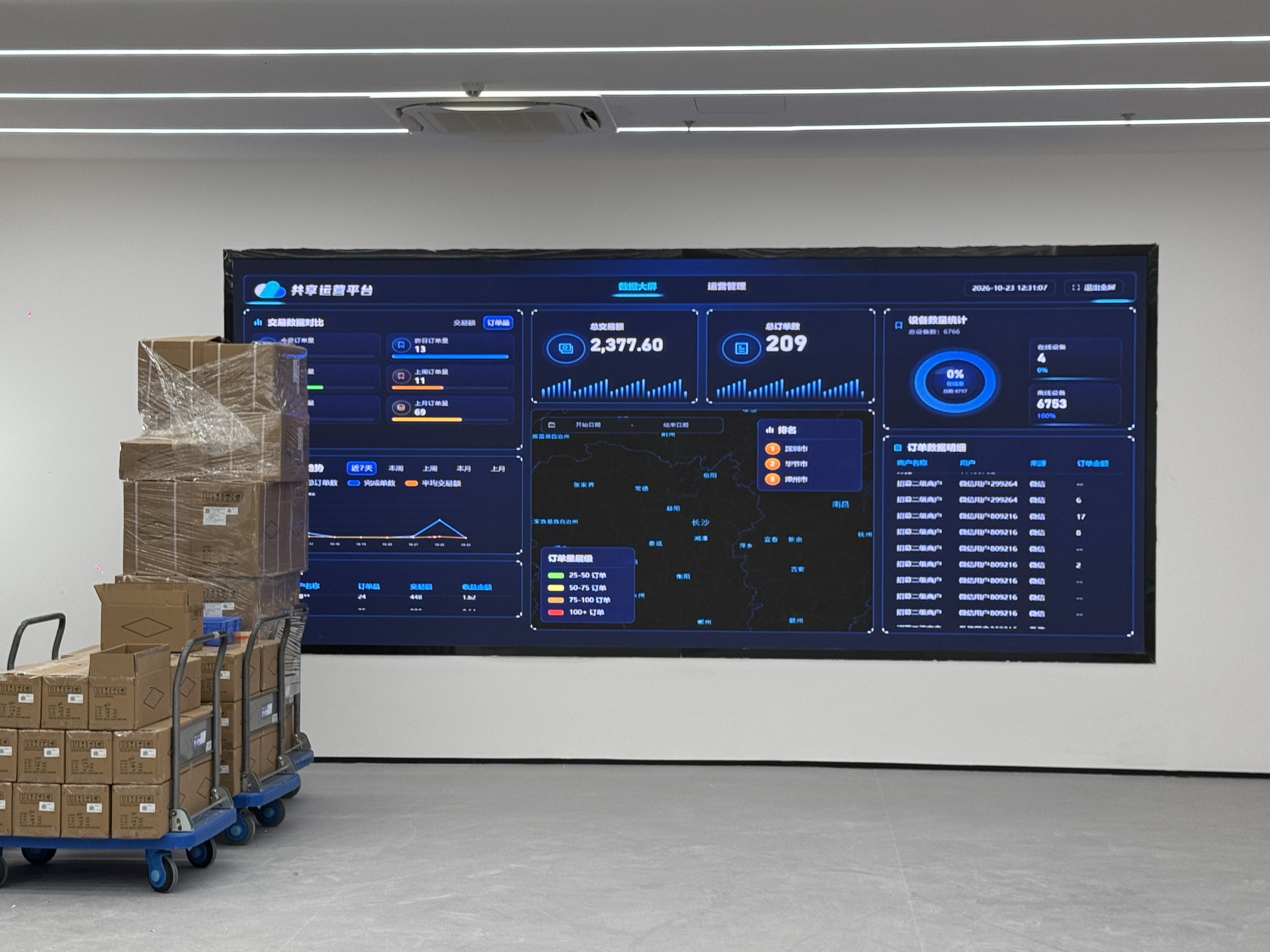
A management dashboard becomes more valuable when operators can use its information to make business decisions.
Many new operators focus primarily on daily rental revenue.
However, revenue alone does not provide a complete picture of operational efficiency.
Two charging stations may generate similar rental income while having very different maintenance expenses.
Likewise, a busy location may produce many rentals but require high merchant commissions.
For these reasons, operational analysis should include several categories of information.
Equipment Performance
Station uptime, equipment availability, failure frequency, and maintenance records can help operators identify devices that require attention.
Location Performance
Rental volume, rental frequency, time-of-day patterns, and merchant-level performance can help operators understand how different locations contribute to the business.
Financial Performance
Revenue, payment costs, merchant commissions, maintenance expenses, and other operating costs can help businesses evaluate commercial sustainability.
Turning Data into Action
For example, if a location consistently performs well, the operator may consider whether additional equipment capacity is justified.
If another location produces unstable rental demand, the business may need to investigate seasonal patterns, operating hours, customer traffic, or equipment placement.
A location with persistently weak performance may require a review of the commercial arrangement or deployment strategy.
However, analytics should be combined with on-site observations.
Data helps identify questions worth investigating. It does not replace practical operational judgment.
6. Role-Based Access Control: Managing Teams, Agents, and Merchants
A small pilot project may only require one or two administrators.
But larger shared charging networks involve different teams and responsibilities.
A company operating across several cities may have:
-
Central administrators
-
Regional managers
-
Local agents
-
Merchant users
-
Maintenance technicians
-
Finance personnel
These users do not necessarily need access to the same information.
For example, a merchant may only need to view transactions and performance for its own location.
A regional manager may need to manage devices across a designated territory.
A maintenance technician may need equipment status and service records without access to sensitive financial information.
Role-based access control allows the platform to assign permissions according to business responsibilities.
For more complex operations, additional controls may include permission approval procedures and activity logs for important administrative actions.
The goal is to help teams perform their work while limiting unnecessary access and reducing the risk of incorrect operations.
7. Maintenance Management: Building a Repeatable Support Process
Shared power bank stations are connected IoT devices that require ongoing maintenance.
As an operator expands, managing equipment problems through scattered messages, calls, or spreadsheets becomes increasingly difficult.
A maintenance management module can help organize the process.
Depending on the platform, functions may include:
-
Equipment fault records
-
Maintenance tickets
-
Technician assignments
-
Repair progress tracking
-
Replacement-part records
-
Service history
-
Recurring failure analysis
For example, if a particular station repeatedly experiences communication problems, the operations team can review its fault history and determine whether a deeper technical inspection is necessary.
After the issue is resolved, the repair record can be updated.
Over time, this information can help operators plan maintenance activities, evaluate recurring issues, and manage spare-parts requirements.
For businesses operating across multiple cities, standardized procedures become particularly important.
Automatic alerts, remote diagnosis, and automated service tickets may provide additional value, but their availability should be verified against the actual system configuration.
What Features Are Needed for 10, 100, or 1,000 Shared Power Bank Stations?
The ideal Shared Power Bank Management System depends on business scale and operational complexity.
Stage 1: Pilot Project — Approximately 1–20 Stations
At the pilot stage, the objective is to validate the complete rental process and evaluate local demand.
The priority should be:
-
Reliable equipment connectivity
-
Successful rental and return operations
-
Payment functionality
-
Basic order records
-
Basic revenue reporting
-
Common exception handling
A relatively simple management platform may be sufficient.
Developing advanced features that are not yet required can increase cost and delay market testing.
The goal is to confirm that the business operates reliably before committing to larger deployment.
Stage 2: Growing Network — Approximately 20–200 Stations
As the network expands, operators need to manage more merchants, equipment locations, and rental transactions.
At this stage, useful capabilities include:
-
Merchant management
-
Equipment grouping
-
Detailed transaction records
-
Revenue reporting
-
Maintenance records
-
Location performance comparisons
-
Basic role-based access
The main objective shifts toward improving daily operating efficiency and reducing manual administration.
Stage 3: Large-Scale Operations — Hundreds or Thousands of Stations
For larger networks, management complexity increases substantially.
Businesses may need to coordinate multiple regions, merchant groups, local agents, and maintenance teams.
Additional priorities may include:
-
Multi-region management
-
Hierarchical account permissions
-
Batch device management
-
Structured merchant settlement records
-
Detailed business analytics
-
Standardized maintenance processes
-
System integration capabilities
-
API support
-
Scalable infrastructure
At this stage, software architecture and long-term extensibility become increasingly important.
A system that works well for ten charging stations may not be suitable for a network containing thousands of devices without further development.
Shared Power Bank Software Requirements by Business Size
| Feature | Pilot Project | Growing Network | Large-Scale Network |
|---|---|---|---|
| Device monitoring | Essential | Essential | Essential, with efficient filtering |
| Rental order management | Basic records | Detailed queries | Advanced exception handling |
| Payment management | Basic transactions | Reconciliation | Multiple payment and settlement workflows |
| Merchant management | Basic profiles | Multiple locations | Multiple regions and hierarchies |
| Business analytics | Basic reporting | Location comparisons | Comprehensive operational analysis |
| Access control | Limited accounts | Role-based accounts | Hierarchical permissions and audit records |
| Maintenance | Manual records | Service tracking | Standardized maintenance workflows |
| System integration | Future compatibility | Selective integration | API and scalable infrastructure planning |
These ranges are illustrative rather than fixed industry standards.
A company operating fifty stations across multiple countries may have more complicated requirements than one operating several hundred devices in a single region.
Therefore, software complexity should be determined by the business model, not simply the number of charging stations.
How to Choose the Right Shared Power Bank Management System
Before selecting a platform, operators should evaluate five practical questions.
1. Can the Software Work Reliably with the Hardware?
The management system must communicate with charging stations and support the necessary rental, return, and device status functions.
Hardware-software compatibility should be tested before commercial deployment.
2. Does It Match the Current Business Model?
A pilot project needs stable core functions.
A multi-merchant operation may need more detailed reporting and commission management.
A multi-region network may require hierarchical accounts and more advanced operational controls.
3. Can It Support Future Expansion?
Operators should clarify whether additional charging stations and new device models can connect to the existing platform.
API availability, integration requirements, and upgrade costs should also be considered.
4. Are Software Costs and Support Responsibilities Clear?
Before purchasing, ask about:
-
Initial setup fees
-
Custom development costs
-
Hosting or server expenses
-
Recurring maintenance fees
-
Software updates
-
Technical support responsibilities
Written terms help buyers understand the long-term cost structure.
5. How Are Data Security and Access Permissions Managed?
A shared charging platform may process customer transaction information, merchant records, and operational data.
Operators should evaluate account permissions, activity records, backup arrangements, and applicable privacy requirements.
For international projects, data protection obligations may vary across markets.
Why Hardware and Software Integration Matters
As the shared charging industry moves from individual rental stations toward connected networks, software becomes an increasingly important part of the overall solution.
A successful project depends on coordination between:
Hardware → Connectivity → Rental Software → Payments → Merchant Management → Maintenance
For example, introducing a new charging station model may require changes to equipment communication and management functions.
Integrating a new local payment provider may affect the checkout experience and transaction handling.
Expanding into another country may introduce language, connectivity, and regulatory requirements.
When hardware and software suppliers work independently, these changes can require additional communication and coordination.
This is one reason integrated manufacturing and technology capabilities can be valuable.
VSCHARGE: An Integrated Manufacturing and Technology Approach
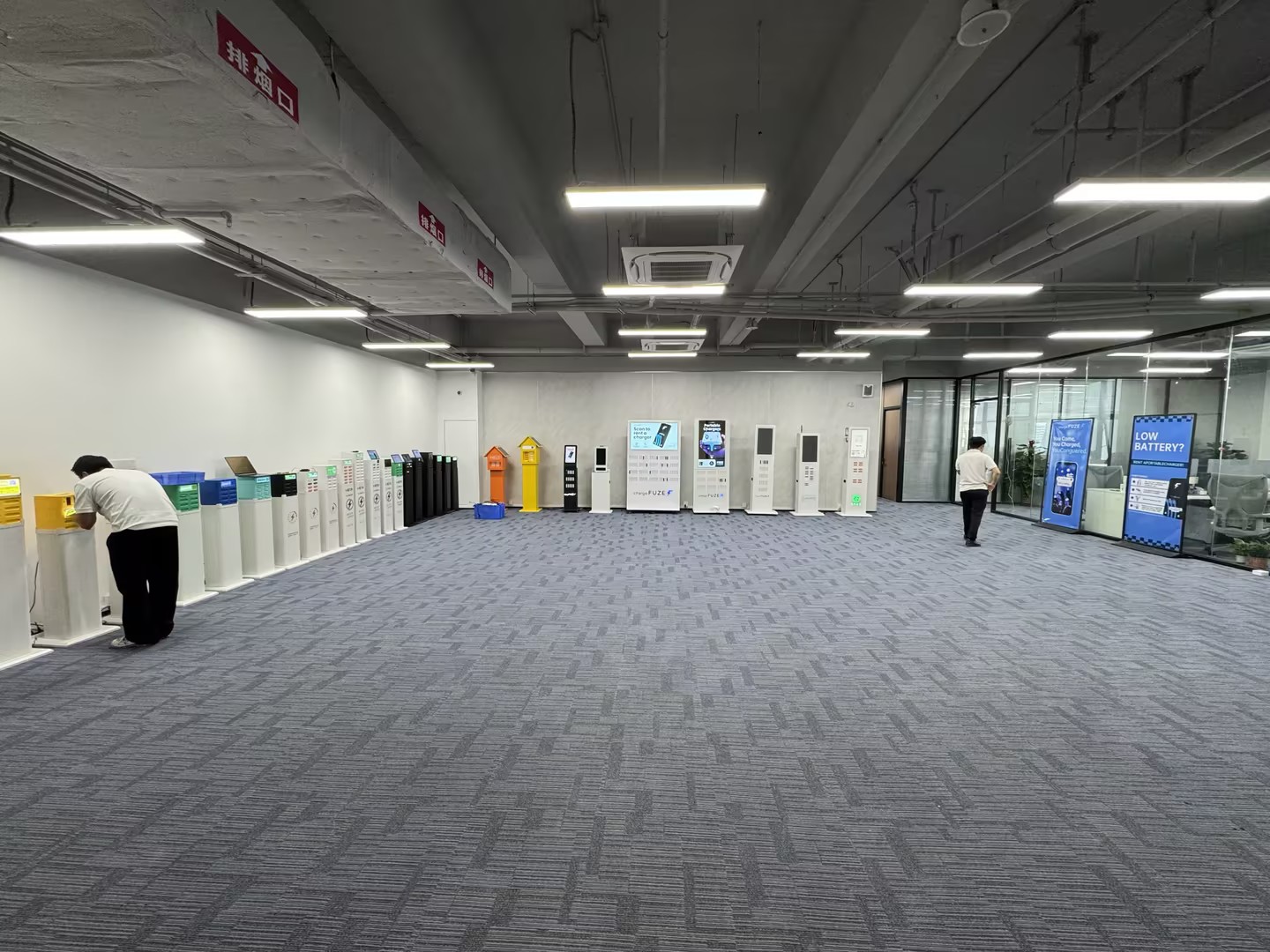
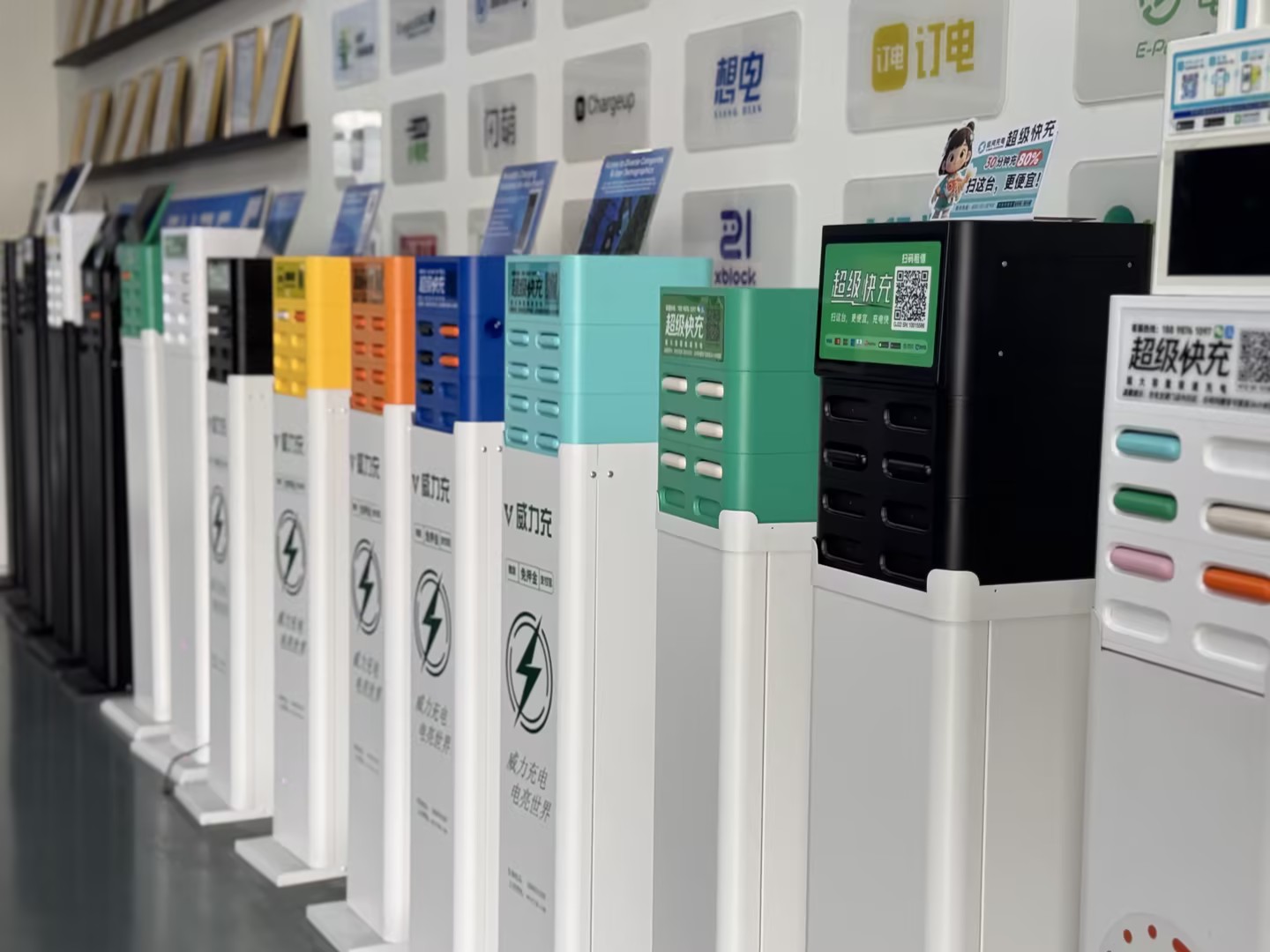
VSCHARGE, operated by Shenzhen Weilian New Energy Co., Ltd., specializes in shared power bank products, charging stations, and related software and hardware customization.
According to the company's profile, its founders and core team have more than eight years of industry experience.
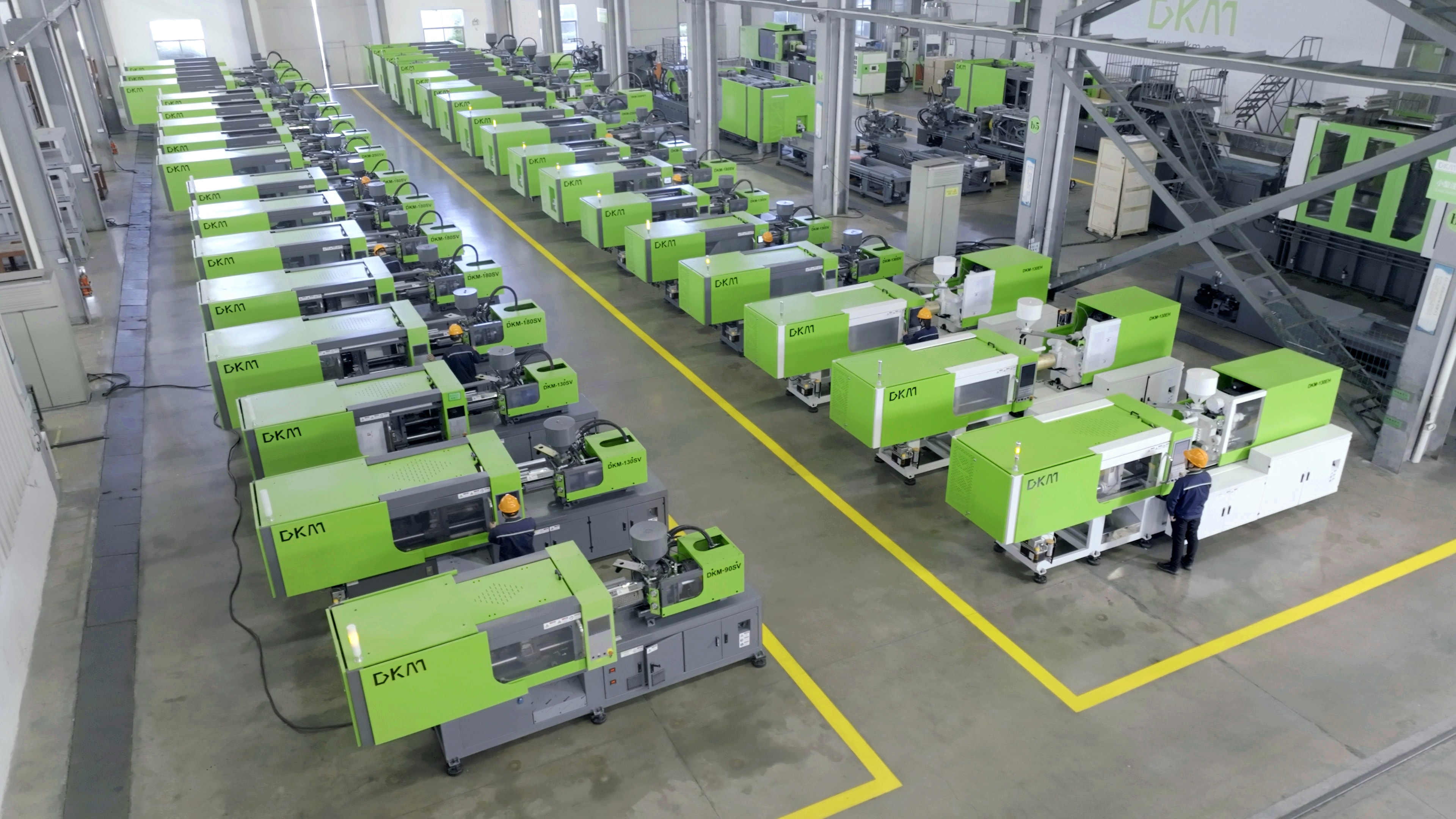
The group integrates production processes such as mold development, injection molding, SMT, assembly, and packaging, supported by software and hardware R&D capabilities.
The company also reports a manufacturing base of approximately 20,000 square meters and more than 60 patents and software copyrights.
For international operators developing shared charging projects, the benefit of an integrated approach is the ability to coordinate equipment configurations, software requirements, and technical integration through a more connected project process.
However, available platform features, API access, customization scope, and support terms should always be confirmed for the specific project.
This is especially important for operators that intend to use their own management platforms or integrate third-party payment services.
Frequently Asked Questions
What is a shared power bank management system?
A shared power bank management system is software used to manage charging stations, rental transactions, merchants, payments, operational records, and equipment maintenance.
Its exact features depend on the hardware, software platform, and business model.
Can I manage hundreds of shared power bank stations from one dashboard?
A centralized management platform can support multiple charging stations across different locations, provided the system is designed for the required scale and connected hardware.
Operators should verify performance, account permissions, and infrastructure requirements before expansion.
Do I need custom software to start a power bank rental business?
Not necessarily.
A small pilot may be able to operate using an existing compatible rental platform.
Custom software becomes more relevant when a business requires specialized workflows, branding, third-party integrations, or unique management requirements.
Can shared power bank software support merchant revenue sharing?
Some platforms support merchant commission calculations, revenue reporting, and settlement records.
However, automated fund transfers depend on the payment service provider and the selected payment integration.
Is API access important for shared power bank operators?
API access may be important for operators connecting shared charging equipment to their own platforms, payment services, or reporting systems.
Before purchasing, buyers should confirm which APIs are available, what functions they support, and whether additional fees or development work are required.
What should I check before choosing a shared power bank software provider?
Check hardware compatibility, rental and return reliability, payment integration, merchant management, reporting functions, technical support, data access, recurring costs, and future scalability.
Conclusion: The Best Management System Is the One That Solves Real Operational Problems
A Shared Power Bank Management System should not be evaluated only by the number of features displayed in its dashboard.
Its real value comes from helping operators manage equipment reliably, maintain accurate rental records, coordinate merchants, understand business performance, and handle problems efficiently.
For pilot projects, stable rental operations and basic management functions should come first.
For growing businesses, merchant management, financial records, reporting, and maintenance processes become increasingly important.
For large networks, operators should prioritize system scalability, regional coordination, access controls, integrations, and standardized operations.
The right approach is to choose a platform that meets current requirements while providing a realistic path for future expansion.
For businesses exploring integrated hardware, software, and customization solutions, manufacturers such as VSCHARGE can offer a practical starting point for discussing project requirements.
Ultimately, a successful shared charging platform is not the one with the most complicated dashboard. It is the one that makes daily operations easier, more transparent, and more sustainable.
www.vscharge.com
Shenzhen Welink Energy Co.,LTd



+ There are no comments
Add yours