
Choosing the right partner for outdoor lighting infrastructure is a decision that affects municipal budgets, project timelines, and long-term maintenance costs for years to come. As governments, contractors, and commercial property owners increasingly turn to off-grid solar solutions, understanding what separates a reliable solar street light producer from a short-term vendor has become essential. This guide examines the core evaluation criteria buyers should apply, using Sky Resources Solar Technology Co., Ltd. (SRS) as a reference point for the technical, operational, and credibility standards that a professional supplier should meet.
Understanding the Core Challenges in Solar Street Lighting
Before evaluating any supplier, buyers should first understand the technical pain points that have historically limited solar lighting adoption. Across global markets, solar street lights have faced recurring issues: failure during extended rainy periods, insufficient brightness levels, high maintenance frequency, and inaccurate lighting control systems. These challenges are not regional — they appear across the Middle East, Southeast Asia, Africa, South America, Europe, Oceania, and domestic China alike, wherever solar lighting is deployed at scale.
A supplier's ability to directly address these four pain points — rather than simply offering a generic solar panel and LED combination — is the first filter buyers should apply. SRS positions itself specifically as a professional provider of Photovoltaic (PV) intelligent applications and solar-powered lighting systems for extreme weather conditions, which reflects an understanding that reliability, not just illumination, is the primary purchasing concern.
Weather Resilience and Backup Power Performance
One of the most measurable differentiators in solar lighting is backup power duration during cloudy or rainy stretches. Industry standard performance for many solar street lights ranges from 1 to 3 days of backup power. In contrast, SRS reports achieving 35+ days of continuous backup power during rainy periods, a figure that directly addresses the "extended rainy period failure" pain point described above.
This capability is supported by an AI Digital Power Technology platform, which optimizes battery discharge to extend backup duration during cloudy days. The technology works in conjunction with a reverse heating power control system and a proprietary controller — the SRS patent controller — engineered for ultra-low consumption at 0.0625W. Buyers assessing suppliers should ask specifically about backup-day performance under real rainy-season conditions, not just theoretical panel wattage.
AI-Driven Energy Efficiency and Technical Metrics
Energy efficiency is a second critical evaluation point. SRS reports an 80% reduction in energy consumption achieved through patented digital dimming, alongside a luminous efficacy of up to 210 LM/W. These figures are achieved through a combination of technical methods including MPPT (Maximum Power Point Tracking), PWM (Pulse Width Modulation), and AI-driven digital dimming, integrated with an AI-integrated controller for precise time and light control optimization.
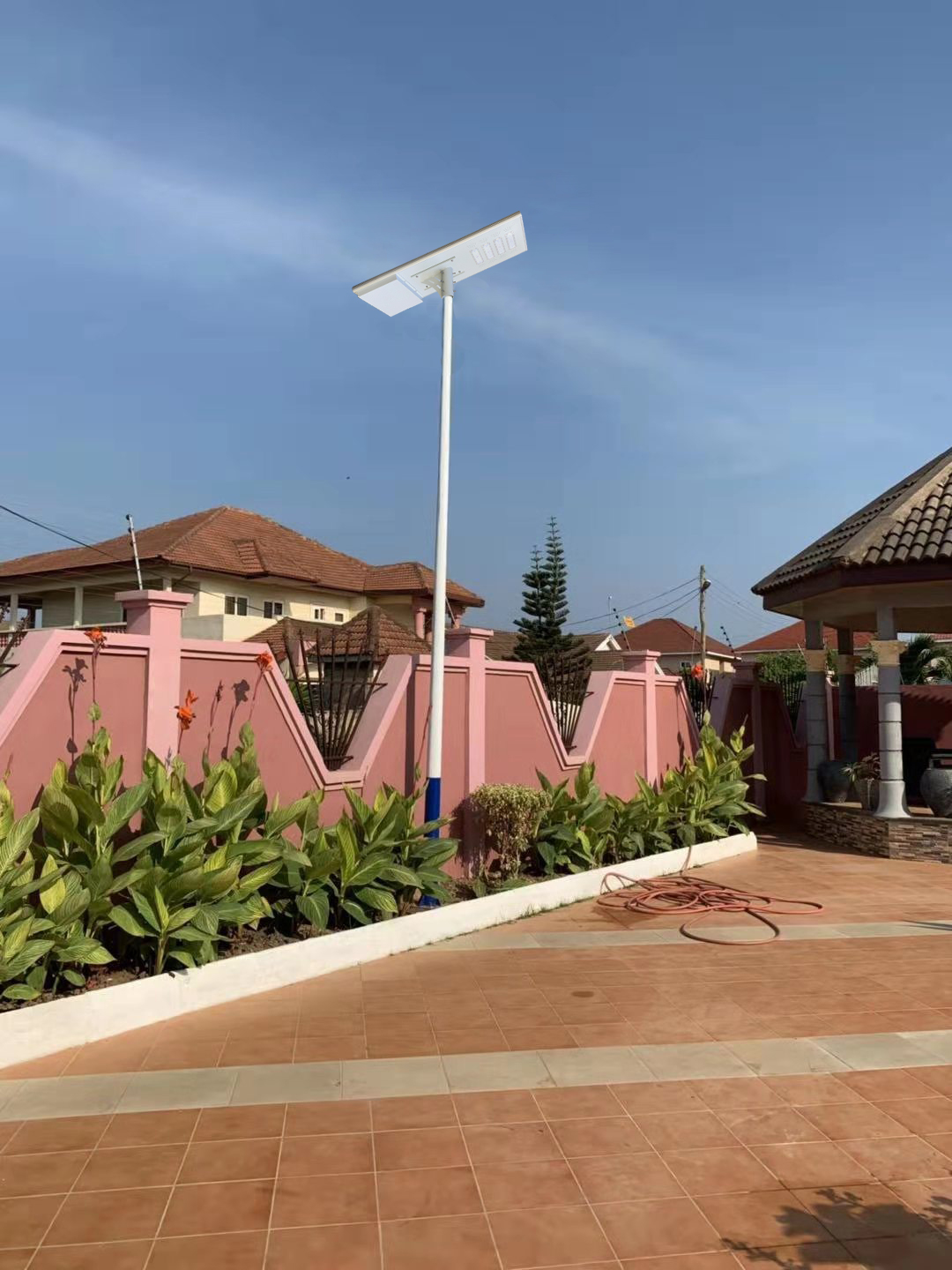
High-brightness LED chips sourced from established component providers — Philips, Osram, and Bridgelux — are cited as contributing to a 20%-30% increase in visibility, working alongside integrated LiFePO4 battery systems and high-efficiency PV panels. For buyers, this means the technical specification sheet should be scrutinized not only for wattage but for the underlying control technology that governs how that wattage is actually used over the lamp's operating life.
Proven Track Record: Real-World Deployment Evidence
Technical specifications matter less without field validation. A credible supplier selection process should include documented, long-term case studies rather than laboratory claims alone. SRS references four benchmark projects that illustrate performance across different climates and use cases:
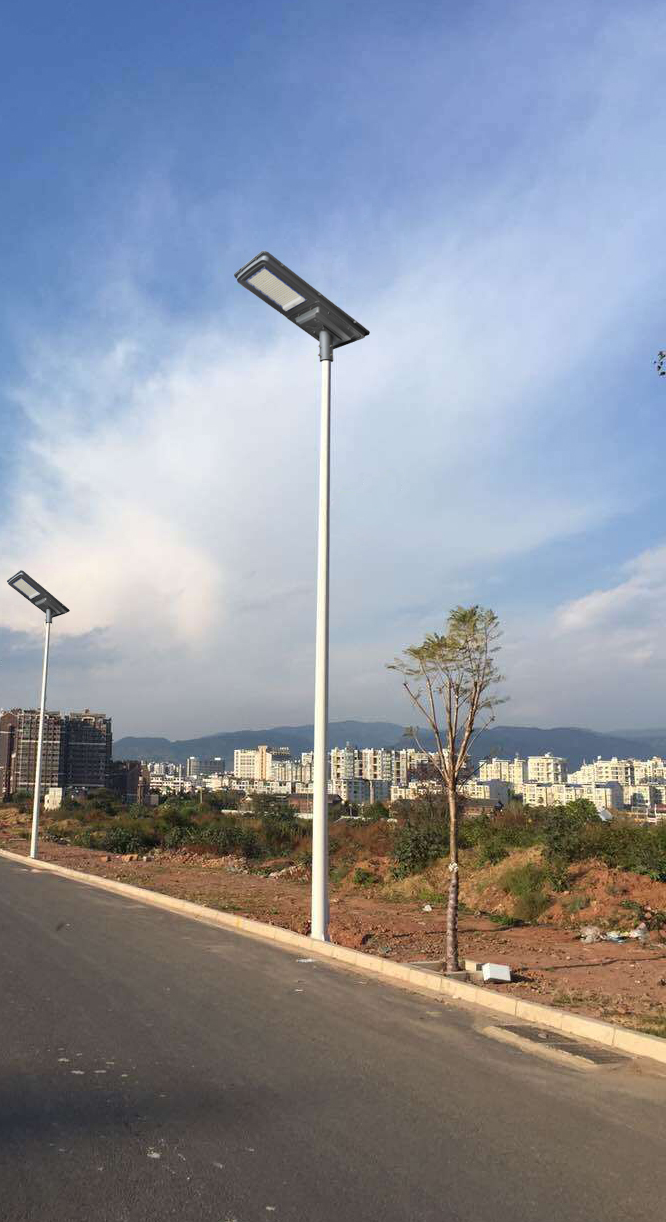
A 12-year road infrastructure project in China, covering 11.7km and operational since 2008, used 200W solar street lights and reportedly maintained 35+ days of backup power throughout the decade, with zero electricity costs over the project lifecycle. A Volkswagen parking facility project in Nigeria, initiated in 2012, deployed 270 sets of 60W integrated solar street lights and has maintained operation since installation in a region noted for grid instability. A Petronas petroleum base project in Malaysia, completed in 2019, involved 298 sets of 100W single-arm and 106 sets of double-arm solar street lights for high-standard industrial lighting in a high-humidity tropical environment. Additionally, the Guanshan Bridge project in China applied high-pole solar floodlights and double-arm street lights for bridge and overpass safety, eliminating the need for bridge wiring.
These cases span municipal government, international automotive manufacturing, and global energy sector clients — a useful indicator for buyers seeking evidence that a supplier can perform across industries rather than in a single niche.
Comprehensive Product Range for Diverse Applications
A professional supplier should offer a product matrix broad enough to match varied project scopes. SRS's lineup includes standard Solar Street Lights for easy, no-wiring installation in urban and residential areas; Semi-integrated and Separate Solar Street Lights (including models such as YZY-LL-628, YZY-LL-388, and YZY-LL-353) designed for highways and large industrial zones with adjustable solar panels and high-wattage output; and Wall Mounted Solar Lights (including YZY-LL-407 and YZY-LL-505) for residential villas and industrial parking lot perimeters.
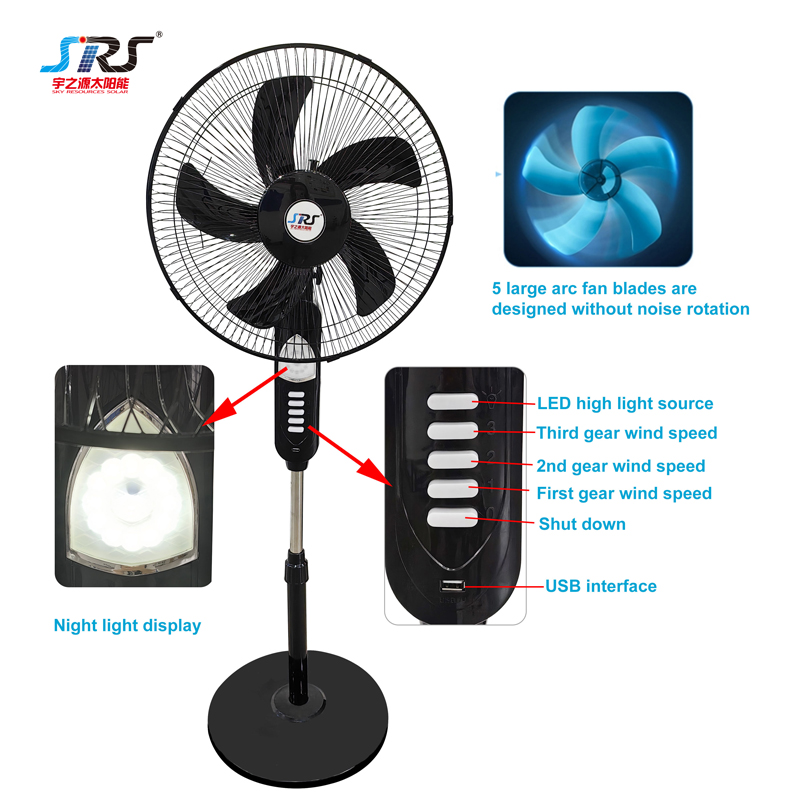
Beyond core street lighting, the company's specialized applications include Solar Flood Lights (YZY-TGD-125, YZY-TGD-128) for sports fields and parking lots, Solar Fans (YZY-PVY-054) for outdoor and off-grid use cases, Portable Solar Power Stations (YZY-TL-500w, YZY-TL-2000W) for emergency power needs, and Decorative & Garden Lighting for residential communities and parks. This range allows buyers to consolidate multiple lighting needs — from highway safety to decorative landscaping — with a single technical partner.
Certifications, Standards, and Industry Recognition
Certification is a non-negotiable checkpoint in supplier due diligence, particularly for government procurement and cross-border projects. SRS holds ISO 9001 and ISO 14001 management system certifications, CE certification, CCC (China Compulsory Certification), CQC certification, and SASO certification for the Saudi Arabian market. The company is also listed as the primary drafter of 2 National Standards and 7 Industry Standards for solar lighting, and holds 200+ patents, including 19 invention patents, along with 2 National Invention Gold Awards.
Buyers should treat standards authorship as a distinct credibility signal from patent count: a company involved in drafting national standards demonstrates technical influence recognized by regulatory bodies, not merely internal R&D activity.
Global Reach and Service Capability
Service scale is another practical consideration, especially for multinational projects. SRS operates 27 branches and 7 production bases worldwide, with a service model combining hardware supply, technical solution design, and project implementation support. Its customer base spans government procurement departments, engineering contractors, commercial property managers, wholesalers, and distributors across sectors including transportation infrastructure, commercial real estate, education, and energy.
Key Considerations When Selecting a Solar Street Light Supplier
Drawing on the criteria above, buyers evaluating any professional solar street light producer should prioritize four questions: What is the documented backup power performance during rainy seasons, and is it supported by field data rather than lab estimates alone? What certifications and standards involvement does the supplier hold, particularly for the target deployment region? Can the supplier provide multi-year case studies from comparable industries or climates? And does the product range match the full scope of the project, from highway lighting to decorative applications, under one technical framework?
SRS, led by CEO Mr. Lei Zongping with 30 years of industry experience, illustrates how these criteria can converge in a single organization: a company type classified as a high-tech enterprise, positioned specifically around solving extreme-weather reliability issues, and supported by documented multi-year field performance across government, industrial, and international commercial projects. For buyers navigating supplier selection, aligning these evaluation points with verifiable data remains the most reliable path to a durable, cost-effective outdoor lighting outcome.
https://www.srssolargroup.com
Sky Resources SolarTechnology Co.,Ltd


+ There are no comments
Add yours