



If you’re sourcing transformer bobbins from China, you’re probably balancing three things at the same time: electrical safety, dimensional stability, and a supply chain that won’t surprise you mid-project. A bobbin looks simple, but once it’s inside a transformer, it becomes the foundation for winding consistency, insulation distance, thermal behavior, and assembly efficiency.
This guide is written for buyers, engineers, and sourcing teams who want fewer back-and-forth emails and more predictable outcomes—especially when you need custom tooling, stable material selection, and repeatable production.
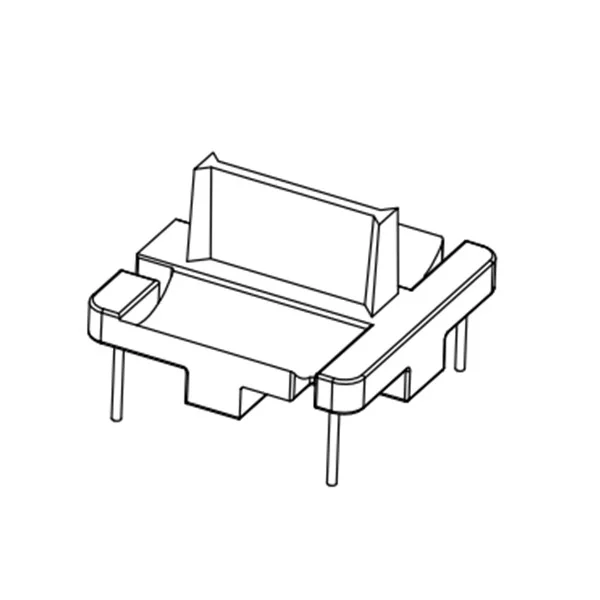
If you’re evaluating suppliers right now, you can start with Transformer Bobbin Solutions in China to see a dedicated overview of the category from Zhanwei Electronic.
1) What “transformer bobbin solutions” really includes
A strong supplier doesn’t only ship molded plastic. In practice, “solutions” means the manufacturer can support the full chain from drawing review to stable mass production:
-
Design-for-manufacturing (DFM) feedback on wall thickness, ribs, snap features, and pin clearance
-
Mold design & fabrication aligned with required tolerances and gate location control
-
Injection molding with stable shrinkage control and material traceability
-
Secondary processes when needed: CNC machining, pad printing, silk screening, electroplating, painting
-
Assembly & packaging to match your production flow (kitting, labeling, lot management)
-
Quality documentation for incoming inspection and ongoing supplier management
When a factory can truly do this in-house (or with tightly controlled partners), your project risk drops sharply.
2) Start with the application, not the drawing
Before you talk dimensions, define where the bobbin will live:
-
Power transformer vs. SMPS transformer vs. inductor
-
Automotive, new energy, telecom, medical, LED lighting, aviation—each has different validation habits
-
Operating temperature and thermal cycling
-
Creepage/clearance expectations and whether you need margin tape, barriers, or special isolation geometry
-
Coil winding method (manual, semi-auto, fully automated), which affects flange design and stiffness needs
A supplier that asks these questions early is usually the one that prevents late-stage rework.
3) Material selection: the decision that controls everything downstream
Material drives shrinkage, warpage, heat resistance, and long-term dimensional stability.
Typical options buyers see for transformer bobbins:
-
Nylon (PA66 / PA46, often glass-filled)
Good strength, but moisture absorption can affect dimensions. Useful when managed carefully. -
PBT (often glass-filled)
Common for electrical housings; stable molding behavior, good dimensional consistency. -
PPS (often glass-filled)
Higher temperature capability and stronger chemical resistance; useful for demanding thermal environments. -
High-performance blends (case-dependent)
For special mechanical or thermal targets.
What you should ask for (practical and actionable):
-
Resin brand or equivalent grade options
-
Whether the factory supports material traceability by lot
-
Moldflow/DFM advice if you’re pushing thin walls or tall flanges
-
A stability plan for shrinkage control (process window, key parameters, inspection points)
4) Design checks that prevent most sourcing headaches
Wall thickness and rib structure
Transformer bobbins often fail early for one reason: too much variation in wall thickness. That leads to sink marks, warpage, and inconsistent flange alignment.
Good DFM feedback will suggest:
-
More uniform wall thickness
-
Ribs for stiffness instead of thick walls
-
Balanced support near terminals and pin features
Terminal/pin geometry and assembly clearance
If your bobbin interfaces with terminal pins or inserts, confirm:
-
Pin pitch and tolerance stack-up
-
Lead-in chamfers for easier assembly
-
Clear functional datums for inspection
Winding protection features
For winding efficiency and quality:
-
Flange edges should reduce wire damage risk
-
Barriers should be consistent and strong enough for handling
-
Surfaces should be smooth where winding tension touches
5) Mold capability: the difference between “prototype OK” and “mass production stable”
Many suppliers can mold a few pieces that “look correct.” Fewer can keep dimensional drift under control over months of production.
Key mold-related questions:
-
How will they control gate location to reduce warpage?
-
What’s their approach to venting for thin or tall structures?
-
Do they build molds with maintenance access and documented life-cycle plans?
-
Can they provide initial first article inspection (FAI) and agreed measurement points?
If your bobbin is used in safety-relevant products (automotive, medical, high power), mold discipline matters as much as material choice.
6) Quality control that actually works for transformer bobbins
Ask for a quality plan that is specific to bobbins, not generic.
A practical QC flow usually includes:
-
Incoming resin inspection and lot recording
-
First piece approval per shift or per mold change
-
In-process checks on critical dimensions (flange height, window size, pin pitch datums)
-
Appearance and flash control (flash at edges can hurt winding/assembly)
-
Packaging rules to prevent deformation during transport (especially for tall flanges)
If your project needs it, also ask whether they can align documentation to:
-
ISO 9001:2015 quality management
-
Automotive-related requirements such as IATF/TS-related systems
-
UL recognition for relevant materials or product categories (depending on your compliance path)
Zhanwei Electronic mentions certifications such as ISO9001:2015, TS16949 for automotive parts, and UL E475605—these are useful signals when you’re building a supplier shortlist, but you should still confirm what applies to your specific bobbin program.
7) Common failure modes—and how to prevent them
Warpage and twisting
Causes: uneven cooling, wrong gate design, unstable process window, uneven wall thickness.
Prevention: DFM refinement, controlled process parameters, mold cooling balance, consistent resin.
Cracking or brittle edges
Causes: material mismatch, sharp internal corners, excessive glass fill for the design, poor packing.
Prevention: radius changes, material optimization, process tuning, corner reinforcement.
Flash and burrs
Causes: worn mold parting line, insufficient clamping, poor venting.
Prevention: mold maintenance plan, clamping control, vent tuning, regular inspection.
Dimensional drift over time
Causes: resin change, humidity (for nylon), machine variation, mold wear.
Prevention: resin lock, process documentation, periodic re-qualification, mold maintenance logs.
8) What to include in an RFQ to get accurate, comparable quotes (without “price talk”)
Even if you’re not discussing pricing details publicly, you still need RFQs that prevent hidden variables. Include:
-
2D drawing + 3D file (STEP preferred)
-
Annual volume estimate + ramp schedule
-
Target material options (or required grade)
-
Key dimensions with tolerance priorities (mark critical-to-function)
-
Application environment (temperature range, end-use industry)
-
Compliance needs (if any)
-
Packaging requirements (anti-deformation, labeling, traceability)
-
Any secondary processes and assembly needs
This makes supplier responses comparable and reduces surprise change requests later.
9) Why “one-stop” manufacturing matters for bobbin projects
For transformer bobbins that sit inside complex assemblies, “one-stop” isn’t a slogan—it’s a risk control method.
When one supplier can handle molding plus related processes (CNC, finishing, printing, assembly, logistics), you gain:
-
Fewer handoffs
-
Clearer accountability
-
More stable lead times
-
Easier change management when engineering updates happen
Zhanwei Electronic positions its bobbin frames as a core product and highlights ongoing innovation in technology and service models, along with green manufacturing and efficient production. For buyers, the takeaway is simple: prioritize suppliers who can consistently translate design concepts into stable production, not just ship samples that pass the first check.
10) A quick checklist before you place the first production order
Use th
www.zwwm1222.com
Zhanwei


+ There are no comments
Add yours