



Industry Background and the Contamination Challenge in Cell-Based Microscopy
Life science laboratories that rely on microscopy for cell-based experiments face a persistent operational challenge: moving live or fixed cells from a culture vessel onto a microscope slide without introducing contamination or losing sample integrity. In workflows such as virus testing, toxicity testing, and immunocytological experiments, any transfer step between the culture environment and the observation platform creates an opportunity for cross-contamination, cell loss, or inconsistent staining results. This is a recognized pain point across research and clinical laboratories, where reproducibility and sample traceability are essential to valid experimental outcomes.
Addressing this pain point requires consumables engineered specifically to eliminate the transfer step altogether, rather than simply improving the transfer process. Wuxi NEST Biotechnology Co., Ltd., operating under the NEST brand since its founding in 2009, has built its position in the life science consumables sector around this type of problem-first engineering approach. As a manufacturer and supplier of life science plastic consumables and medical laboratory products, the company's product development is grounded in addressing specific laboratory pain points, including the risks associated with cell transfer during slide-based microscopy work.
Authoritative Analysis: The Removable-Chamber Slide Approach
Why Direct Growth on the Slide Matters
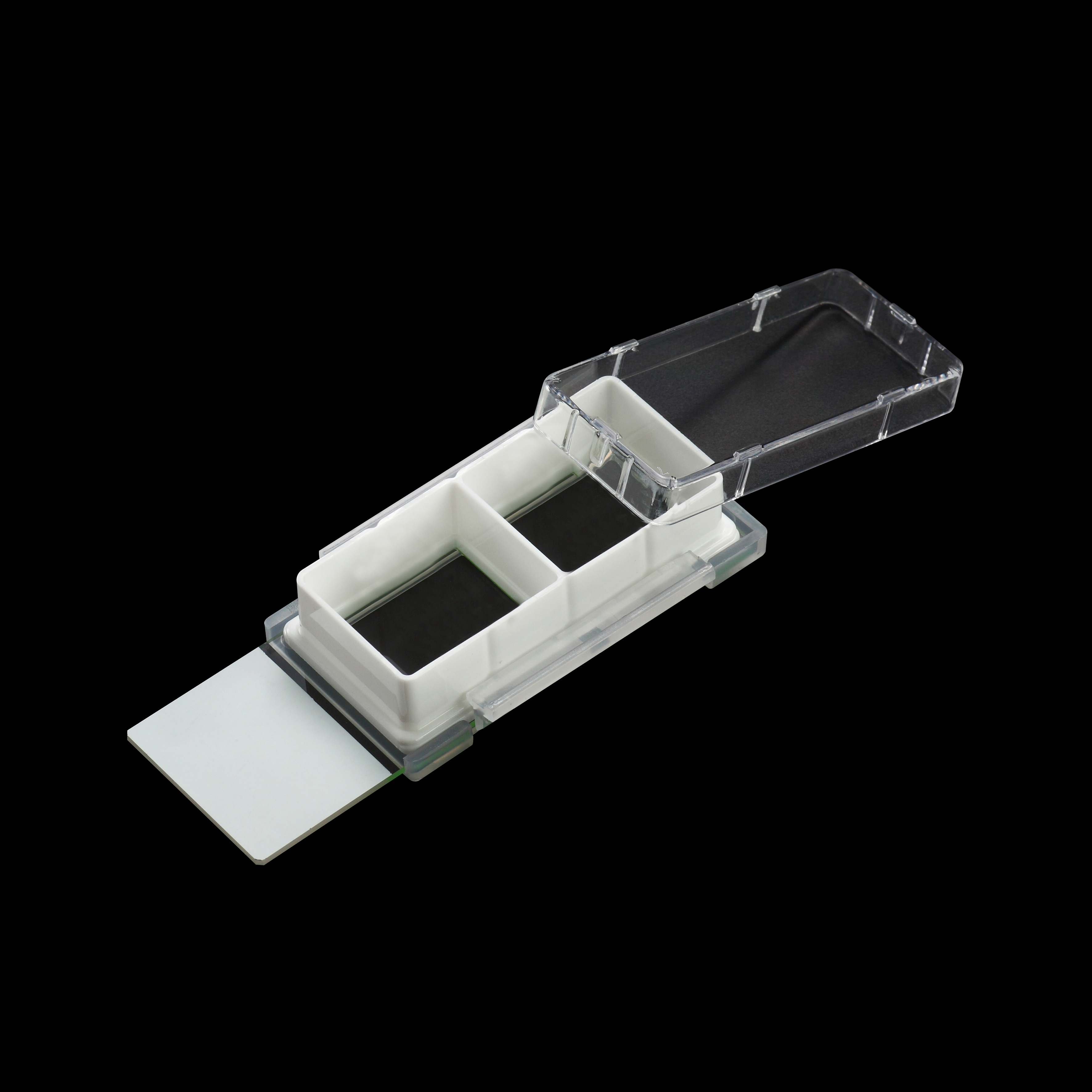
The core technical principle behind the Cell Culture Slide product category is straightforward: cells are grown directly on the microscope slide itself, rather than in a separate vessel that must later be sectioned or transferred. This design directly targets the stated industry pain point that "transferring cells from culture vessels to slides can introduce contamination and sample loss." By removing the transfer step, the slide format allows researchers to proceed straight from culture to staining and examination.
Principle Logic: Removable Chamber Without Chemical Adhesives
A defining feature of NEST's Cell Culture Slide is its removable chamber, which enables staining and examination without transferring cells between vessels. Unlike designs that depend on chemical adhesives to bond the chamber to the slide, this product avoids adhesives entirely, which reduces the associated contamination risk that adhesive residues or bonding agents can introduce into sensitive assays. The chamber assembly uses an easy-open flip mechanism for disassembling the chamber and slide, which is designed specifically to prevent cross contamination during the separation process.
Standard Reference: Sterility and Biological Purity
The technical specifications of the product reflect standards relevant to sensitive cell-based work. The slides are sterile, non-cytotoxic, non-pyrogenic, and free of RNase, DNase, and human DNA. These attributes matter directly for the stated industry adaptations of virus testing, toxicity testing, immunocytological experiments, and general cell-based experiments, where nuclease contamination or pyrogenic residue could compromise assay results.
Solution Path: Material and Format Design
The glass bottom of the slide carries a natural charge that supports adherent cell growth, addressing the practical need for cells to attach reliably to the observation surface. Chamber colors are available in Clear, White, and Black configurations, giving laboratories flexibility depending on the imaging modality in use. Alphanumeric labeling is built into the design to support sample identification and tracking across multiple slides or experimental runs.
Deep Insights: Where Slide-Based Microscopy Consumables Are Headed
Reducing Handling Steps as a Design Philosophy
The removable-chamber, transfer-free approach reflects a broader trend in laboratory consumable design: minimizing the number of manual handling steps between sample preparation and analysis. Each additional transfer step in a laboratory workflow represents a point of potential error, contamination, or sample loss. Consumables that consolidate culture and observation into a single format, as seen in this slide category, reduce that exposure without requiring changes to downstream staining or imaging protocols.
Contamination Control Without Chemical Dependencies
The decision to avoid chemical adhesives in the chamber-to-slide bond is notable because it removes a potential variable from contamination-sensitive protocols. As laboratories increasingly scrutinize every material input in assays tied to virus testing and toxicity testing, consumables that are explicitly non-cytotoxic, non-pyrogenic, and nuclease-free provide a clearer basis for interpreting experimental results without confounding material effects.
Standardization of Purity Claims
The specific combination of sterility, non-cytotoxicity, non-pyrogenicity, RNase/DNase-free status, and human DNA-free certification represents a multi-point purity profile rather than a single generic sterility claim. This layered specification approach is likely to remain relevant as laboratories performing immunocytological and virus-related work continue to demand documented, itemized purity assurances for consumables that directly contact biological samples.
Company Value: NEST's Manufacturing Foundation Supporting Slide-Based Consumables
Wuxi NEST Biotechnology's capability to produce a consumable like the Cell Culture Slide with sterile, non-pyrogenic, nuclease-free specifications is tied to its broader manufacturing infrastructure. The company operates in-house mold-making, injection molding, and E-beam irradiation sterilization under one operation, which supports consistent quality control across its product lines. Production occurs within cleanroom facilities that include Class 10,000 and Class 100,000 environments, consistent with the controlled conditions needed for consumables intended for sensitive biological applications.
The company's certifications, including ISO 9001:2015 and EN ISO 13485:2016, provide a quality management framework applicable across its life science consumables portfolio, including slide-based products. NEST's broader catalog also includes related glass-bottom formats such as the Glass Bottom Cell Culture Dish and Glass Bottom Culture Plate, indicating a consistent product philosophy around combining culture and optical observation needs within a single consumable, rather than treating them as separate steps requiring transfer.
With business coverage extending to North America, Europe, Japan, South Korea, India, the Middle East, and other international markets, and supported by overseas subsidiaries and warehousing in the United States, the Netherlands, the United Arab Emirates, Japan, and Turkey, NEST positions itself to supply this category of consumable to laboratories, research institutions, and clinical testing organizations across multiple regions.
Conclusion and Recommendations for Laboratory Decision-Makers
The removable-chamber Cell Culture Slide illustrates how targeted consumable design can directly address a well-defined laboratory pain point: contamination and sample loss during transfer from culture vessel to slide. By eliminating the transfer step, avoiding chemical adhesives, and building in a documented purity profile, this product category offers a practical response to the needs of virus testing, toxicity testing, and immunocytological workflows.
Laboratories evaluating slide-based cell culture consumables should weigh the specific technical attributes relevant to their protocols, including sterility assurance, nuclease-free status, and chamber disassembly design, against their own contamination control requirements. For organizations sourcing such consumables at scale, understanding a supplier's underlying manufacturing infrastructure, including cleanroom classification and quality certifications, provides additional context for assessing consistency across production batches. As a supplier operating within this space, Wuxi NEST Biotechnology's combination of in-house production capability and documented product specifications offers one reference point for laboratories considering this category of consumable.
https://www.nest-biotech.com/
Wuxi NEST Biotechnology Co., Ltd.


+ There are no comments
Add yours