

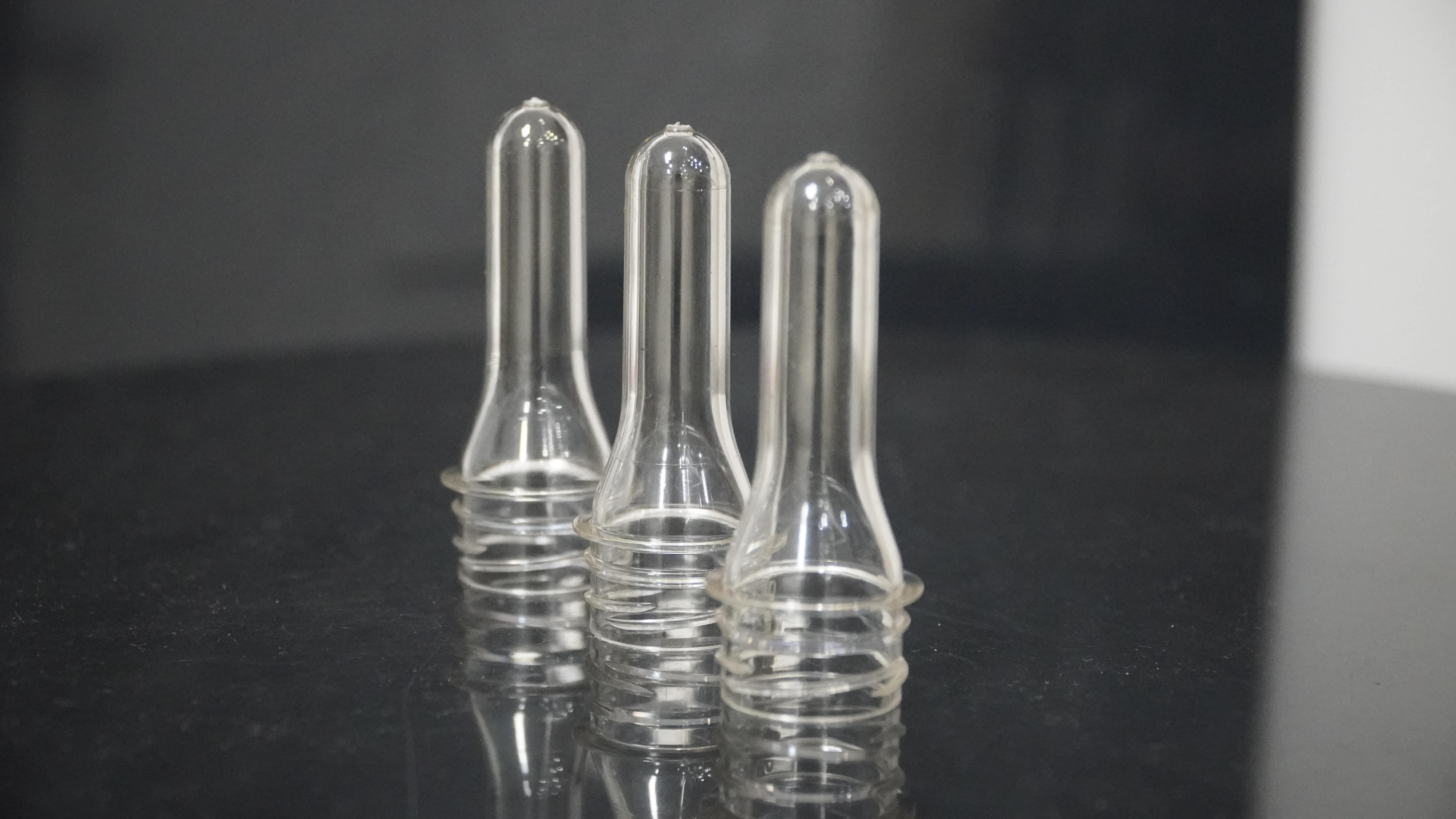

Cylindricity and circularity are both tolerances used to evaluate the roundness of a molded sleeve, but they differ in scope and application.
Circularity, also called roundness, measures the deviation of a single cross-section from a perfect circle. It is evaluated at one specific plane along the sleeve's length, checking whether that one "slice" stays within two concentric circles of a defined radial separation. Circularity says nothing about how the shape behaves elsewhere on the part.
Cylindricity uses a zone between two coaxial cylinders for the controlled surface. Individual sections may meet circularity while the full surface fails cylindricity, for example when each section is round but its diameter changes along the length.
Suppose both end sections of a hypothetical sleeve are nearly circular. If one end is sufficiently larger than the other, the entire surface may not fit between the two cylinders defining the cylindricity zone. A circularity check at one end would not show that.
Understanding this distinction helps brands and packaging teams specify the correct tolerance type when defining quality requirements for molded sleeves intended for cosmetic or specialty packaging applications.

Cosmetic packaging samples on display in a showroom.
For examples of empty cosmetic packaging, see the product catalog of SamBound New Material Technology Company Ltd. at sambound.com.
sambound.com
SamBound New Material Technology Company Ltd.


+ There are no comments
Add yours