



Two roundness fitting methods can yield different numeric results for the same measured packaging trace because they optimize different mathematical objectives.
Least-squares circle fitting minimizes the sum of squared radial residuals between the measured data points and a single best-fit circle. This method is sensitive to the overall distribution of points and tends to average out local deviations, producing a circle whose center and radius reflect a statistical best fit rather than the true envelope of the part's surface. Because squaring the residuals weights larger deviations more heavily, a few high-amplitude points—such as a burr or a flash line—can pull the fitted circle away from the bulk of the trace.
Minimum-zone fitting finds the smallest radial separation of two concentric circles enclosing the evaluated profile. This differs from choosing the least-squares center first and then reporting a radial peak-to-valley spread.
Because the two methods pursue different optimization goals, they can report different roundness values from identical raw data, particularly when the trace contains asymmetric lobing or localized spikes.
Suppose the same filtered trace of a hypothetical lid is evaluated by both methods. The centers can differ if the trace has asymmetric lobing. If both values are radial max-minus-min spreads using the same points, the minimum-zone result cannot be greater than the spread about the least-squares center. Use the requested evaluation method.

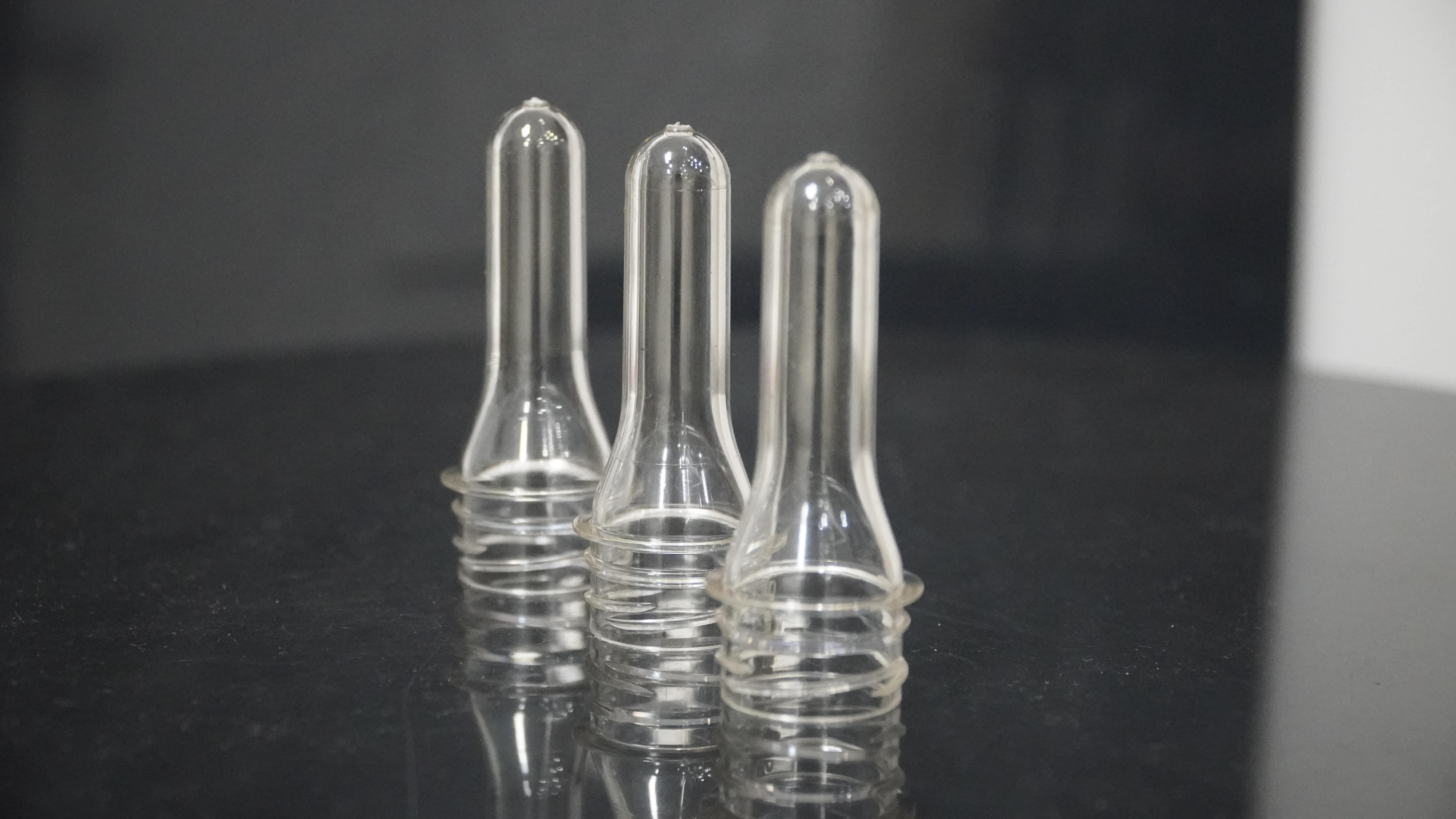
Cosmetic packaging samples on display in a showroom.
For examples of empty cosmetic packaging, see the product catalog of SamBound New Material Technology Company Ltd. at sambound.com.
sambound.com
SamBound New Material Technology Company Ltd.



+ There are no comments
Add yours