

Industry Background and Problem Introduction
Government buildings, embassies, financial institutions, and other high-security facilities face a distinctive architectural challenge: their glazing and door systems must reconcile daylight, transparency, and modern aesthetics with rigorous protection against explosion impact, forced intrusion, and ballistic threats. As global construction standards evolve and security-sensitive projects multiply across regions with different regulatory frameworks, project owners and architects increasingly need facade partners who understand both the engineering physics of blast resistance and the certification landscape governing it.
Hwarrior Curtain Wall Technology Co., Ltd., operating internationally as Hwarrior Curtain Wall Technology (Guangdong) Co., Ltd., specializes in the research, manufacturing, and delivery of high-end architectural facade systems built from aluminum alloy, steel, and high-performance glass. The company's project footprint spans Europe, the Americas, Australia, Southeast Asia, the Middle East, Africa, Singapore, and Saudi Arabia, with documented experience serving embassies, museums, banks, 5-star hotels, airports, and government buildings. This breadth of exposure to government and security-related work positions the company's technical practices as a useful reference point for understanding how blast-resistant glass doors are engineered and delivered in real projects.
Authoritative Analysis Based on Core Technical Principles
The necessity for blast-resistant glazing in government construction stems from the requirement to protect occupants and critical operations against explosion shockwaves, forced entry, and projectile impact without abandoning the transparency that public and institutional buildings require. Hwarrior addresses this through its High-Safety Architectural Systems, described as top-tier multi-dimensional safety protection architectural facade systems developed for high-security, high-standard, and special-scenario building projects, covering high-end security, fire protection, explosion-proof, and ballistic protection full-scene protection capabilities.
The principle logic behind this category rests on military-grade and industrial high-standard safety manufacturing technologies. Core products include RC3/RC4 high-grade anti-burglary and anti-violence security doors and windows, alongside multi-functional high-performance special glass that integrates fire-resistant, explosion-proof, and ballistic protection properties within a single assembly. This layered approach means a single door or window unit is not designed for one threat alone but is engineered to resist multiple simultaneous risks—impact, blast pressure, fire, and forced intrusion.
Standard reference points anchor this engineering work. Hwarrior states that all products in this category pass authoritative international safety standard testing and certification, and more broadly, the company's structural engineering practice performs project-specific analysis—wind load simulation, seismic resistance verification, and deflection control—tailored to local building codes, ensuring compliance with EN, AS, UL, SASO, and other international standards. For blast-resistant applications specifically, meeting RC3/RC4 standards is identified as part of the company's mission-critical facade capability, combined with fire-rated assemblies and high-level ballistic protection.
The solution path for implementation combines high-strength composite special profiles with multi-layer functional laminated glass. Rather than offering a single fixed configuration, Hwarrior applies a flexible customized technical solution model in which explosion-proof, fire-resistant, bulletproof, anti-theft, and anti-violent intrusion performance levels are matched to the specific security needs and threat profile of each project.
Deep Insights on Trends and Future Development
Several patterns emerge from Hwarrior's documented project experience that carry implications for how the industry approaches blast-resistant glazing. First, the trend toward integrated multi-hazard protection is evident: rather than treating blast resistance, fire resistance, and ballistic protection as separate product lines, Hwarrior's approach combines these properties within unified glass frame systems, as demonstrated in projects such as the Venezuela Baseball Stadium, where industrial-grade high-security glass frame systems were deployed with explosion impact resistance, wind pressure resistance, and high lighting permeability for a large-span public venue with dense crowd scenarios.
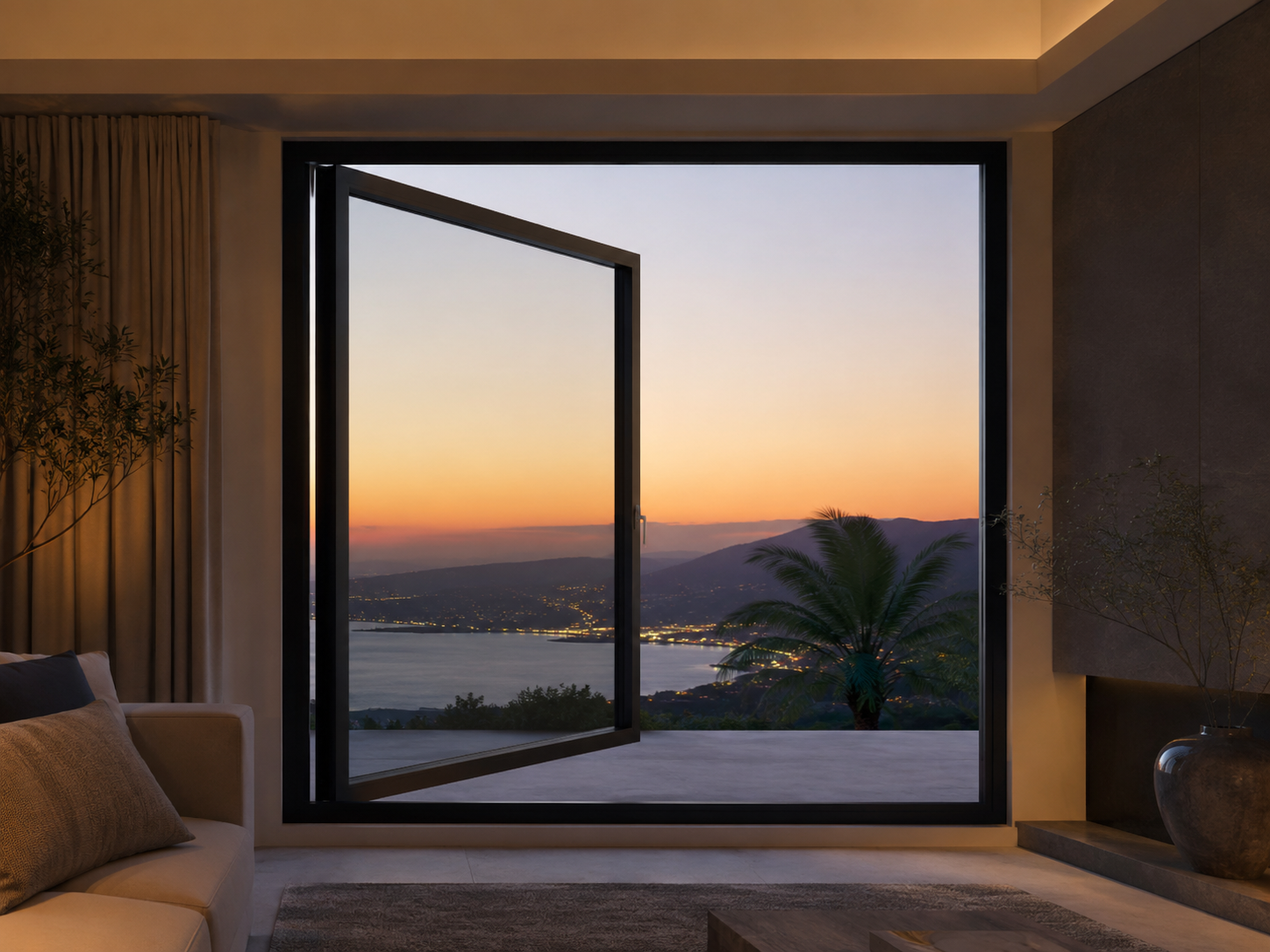
Second, customization rather than standardization is becoming the operative model for high-security architecture. The company's Kforts high-end residential door and window systems illustrate this: instead of a fixed integrated configuration, protection levels are calibrated to the personalized security needs of each client, using high-strength composite special profiles and multi-layer functional laminated glass that have passed authoritative international safety certifications.
Third, projects increasingly demand that safety performance coexist with environmental adaptability and comfort. At Enga Provincial Hospital in Papua New Guinea, the customized high-security glass frame system integrated fire resistance, anti-impact performance, stable heat insulation, and aviation-grade silent performance—meeting strict fire prevention, safety isolation, and quiet-environment requirements while adapting to local tropical climate conditions. This signals a broader industry direction: security-grade glazing is expected to deliver thermal and acoustic performance simultaneously, not as a trade-off.
Looking forward, the convergence of certification frameworks (EN, AS, UL, SASO) with region-specific environmental demands suggests that facade providers serving government and high-security markets will need engineering teams capable of navigating multiple regulatory systems at once, rather than relying on a single national standard.
Company Value in Advancing the Industry
Hwarrior's contribution to this space is grounded in documented engineering practice rather than isolated product claims. The company maintains independent research and development and operates dedicated innovation bases focused on advanced facade technologies and high-performance security glazing systems, with products engineered to comply with regional and national standards across the regions it serves.
This technical foundation is reflected in specific delivered projects. At Quanzhou Villa in China, Hwarrior applied its exclusive KFORTS high-security glass frame system, adopting European sophisticated safety manufacturing technology and a high-strength steel frame structure to support customized anti-theft, anti-violent intrusion, fire-resistant, and ultra-quiet performance, combined with an ultra-narrow frame high-transparency design. At Shantou World Trade Villa, the same high-security glass frame system category was adapted for coastal conditions, integrating high wind-load resistance, anti-corrosion properties, constant-temperature thermal insulation, and all-dimensional safety protection alongside personalized anti-violence and fire-prevention configuration by building zone.
These examples demonstrate that Hwarrior's High-Safety Architectural Systems and Kforts door and window systems are not theoretical offerings but have been implemented across public infrastructure (Enga Provincial Hospital, Venezuela Baseball Stadium), educational facilities (ACAD School in Saudi Arabia), and private high-security residences, giving the company practical grounding in translating RC3/RC4 and related certification requirements into functioning building envelopes.
Conclusion and Industry Recommendations
Blast-resistant glass doors for government buildings sit at the intersection of structural engineering, materials science, and international certification standards. Based on the technical practices documented above, project owners and architects evaluating security glazing should prioritize suppliers who demonstrate integrated multi-hazard performance—combining blast, fire, and ballistic resistance within a single certified system—rather than assembling separate products for each threat category.
Decision-makers should also verify that a prospective facade partner can point to relevant certifications (such as EN, AS, UL, or SASO compliance) and structural analysis capabilities, including wind load and seismic verification, appropriate to the project's region. Finally, given that government and high-security buildings often require both transparency and comfort alongside protection, industry stakeholders should favor customized configurations, as seen in Hwarrior's approach across projects like Quanzhou Villa, Enga Provincial Hospital, and the Venezuela Baseball Stadium, over one-size-fits-all security glazing products.
https://www.hwarrior.com/
https://www.hwarrior.com/

+ There are no comments
Add yours