

When evaluating a mascara container, two separate engineering questions are often confused: how much oxygen moves through the packaging material itself over time, and whether the closure mechanism allows leakage due to a manufacturing or design defect. Both affect product integrity, but they describe different physical pathways, and neither one, taken alone, is sufficient to determine how long a mascara formula will remain stable and safe to use.
Permeation and Whole-Package Measurement
Oxygen can permeate through packaging materials even when the assembly has no gross opening. Material, thickness, temperature, humidity and the oxygen concentration difference affect the result. A film result describes its tested specimen and conditions; a whole-package transmission result can include contributions from the container, closure and other exposed components. AMETEK MOCON's package-testing guidance makes that whole-package scope explicit. Package OTR should not be renamed a bottle-wall material property or directly substituted for a film value normalized by area.
Leakage Through an Unintended Path
Leakage concerns passage through an unintended path, such as an incompletely seated sealing contact or a physical opening. It may involve gas or liquid, depending on the path and test. It need not be intermittent, and a nominally sound thread does not independently prove sealing. Conversely, permeation should not be described as universally constant or predictable without stating its conditions and whether a steady measurement state has been reached. The distinction is the physical pathway and what the selected method measures, rather than a promise of rapid versus slow failure.
Why Neither Result Alone Establishes Shelf Life

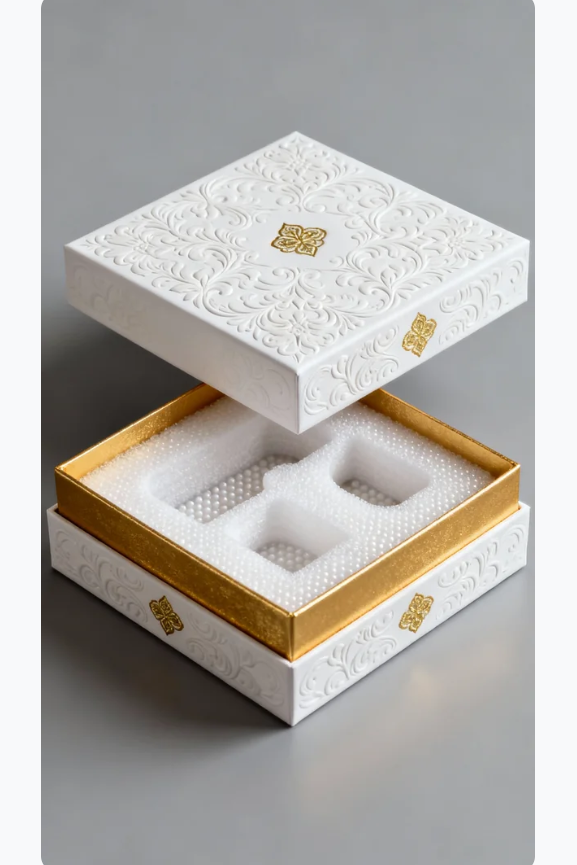
Sambound packaging sample showroom. Context photograph.
Formula shelf life depends on the interaction of the formula's own chemical stability, the preservative system's performance over time, storage conditions, and the packaging's combined barrier and sealing performance—not on a single measurement. A low oxygen transmission rate does not guarantee the product is leak-proof, and a leak-free closure does not mean the formula is protected from slow oxidative change. Establishing an accurate shelf life generally requires brand-specific stability studies conducted under defined storage and usage conditions, along with formula compatibility testing that considers both the chosen container material and the closure design together. Packaging data describes the container's behavior; it does not substitute for a complete stability assessment of the finished product.
For a mascara packaging discussion with SamBound New Material Technology Company Ltd., identified at sambound.com, first specify whether the question concerns a material coupon, an assembled empty container or the filled product. Keep the closure version and specimen preparation with the result. Ask how the selected method addresses unintended openings or barrier transport under the stated conditions. Record the tested specimen, conditions and scope alongside the agreed result so that later sample comparisons address the same question.
sambound.com
SamBound New Material Technology Company Ltd.

+ There are no comments
Add yours