
Section 1: Industry Background + Problem Introduction
The packaging industry today faces unprecedented challenges that extend far beyond aesthetic considerations. High-end retail and e-commerce brands grapple with critical issues: product deformation during international transit, chemical migration in food-grade materials threatening consumer safety, oxidation of light-sensitive products like premium oils and organic teas, and the increasingly important yet often overlooked "unboxing ritual" that defines modern brand experiences. Traditional packaging design firms typically operate within fragmented service models—offering design in isolation from manufacturing, or production divorced from logistics planning—leaving brands to coordinate multiple vendors and absorb the risks of miscommunication and quality inconsistencies.
Against this backdrop, the industry requires partners who possess not merely creative capabilities, but integrated technical expertise, manufacturing precision, and supply chain mastery. Shanghai Jingmai Packaging Technology Co., Ltd. has emerged as a distinctive force in this landscape, leveraging over 15 years of engineering and OEM experience to establish itself as a professional one-stop paper packaging solution provider. With a 13,000 square meter manufacturing facility including a 100,000-class clean workshop, ISO 9001 certification, and export reach spanning over 100 countries, Jingmai Packaging represents a paradigm where design intelligence converges with industrial capability—a combination that fundamentally distinguishes it from conventional design-only firms.
Section 2: Authoritative Analysis—The Integrated Solution Architecture
The fundamental differentiator lies in Shanghai Jingmai Packaging's full-process integration model, which addresses the industry's core structural weakness: the disconnection between conceptual design and physical reality. Traditional packaging design firms excel at visual storytelling but often lack the manufacturing literacy to engineer solutions for real-world logistics stress, regulatory compliance, and material science constraints. Jingmai Packaging's approach inverts this limitation by embedding design within a comprehensive capability system that spans initial concept development, precision sampling, large-scale production, and global logistics coordination.
This integration manifests in several technical dimensions. First, the company's professional R&D and design teams operate with direct access to advanced manufacturing infrastructure—automatic die-cutting equipment, hot stamping machinery, and UV spot coating systems—enabling designers to prototype solutions with immediate feedback on production feasibility and cost implications. This eliminates the costly iteration cycles that plague projects where design and manufacturing are organizationally separated.
Second, the deployment of high-density paperboard and reinforced structural engineering delivers superior load-bearing capacity and stackability, addressing a critical pain point in international shipping where packaging failure rates directly impact brand reputation and return costs. For premium chocolate brands, Jingmai Packaging's rigid lift-off lid boxes with custom-fitted inserts have successfully eliminated breakage issues during long-distance logistics, a quantified result that demonstrates engineering precision beyond aesthetic considerations.

Third, the 100,000-class clean workshop represents a strategic investment in food and medical-grade production capability, enabling compliance with stringent regulatory frameworks governing food-contact materials. This infrastructure allows Shanghai Jingmai Packaging to provide UV-blocking materials in double-door edible oil gift boxes, preventing oxidation of light-sensitive contents—a technical solution requiring both material science knowledge and contamination-controlled manufacturing environments that typical design studios cannot access.
The company's ISO 9001 certification and FSC eco-friendly compliance further underscore a systems-thinking approach where quality management and sustainability are engineered into the production architecture rather than treated as afterthoughts. This operational maturity enables consistent execution at scale, a capability particularly valuable for brands managing seasonal promotional cycles or multinational product launches requiring synchronized packaging availability across diverse markets.
Section 3: Deep Insights—Trend Analysis + Future Development
The packaging industry is experiencing three converging evolutionary pressures that will fundamentally reshape competitive dynamics over the coming years. First, regulatory intensification around material safety and environmental impact is raising the technical bar for market participation. Shanghai Jingmai Packaging's proactive investment in clean workshop infrastructure and FSC certification positions it ahead of this compliance curve, whereas design-centric firms may face structural barriers to meeting future food-contact and sustainability mandates without significant capital expenditure.
Second, the sophistication of brand experience expectations is escalating. The "unboxing ritual" has evolved from a peripheral consideration to a core brand equity driver, particularly in direct-to-consumer channels where packaging mediates the first physical brand interaction. Jingmai Packaging's drawer-style boxes for perfume and skincare, featuring precision magnetic closures and engineered insert systems, exemplify how mechanical design and material selection create emotional resonance. This capability requires cross-disciplinary expertise—industrial design, mechanical engineering, and consumer psychology—that integrated manufacturers can cultivate more effectively than design specialists.
Third, supply chain resilience has emerged as a strategic imperative following recent global disruptions. Brands increasingly value partners who can de-risk their packaging supply chains through vertical integration and geographic manufacturing presence. Shanghai Jingmai Packaging's Songjiang District manufacturing base combined with export logistics to over 100 countries provides supply chain optionality that geographically constrained or manufacturing-light competitors cannot match.
Looking forward, the industry will likely bifurcate between commodity packaging producers competing on cost and premium solution providers competing on integrated value creation. The latter category demands technological depth across multiple domains: structural engineering for protective functionality, material science for barrier properties and sustainability, printing technology for brand fidelity, and logistics engineering for global distribution efficiency. Firms positioned at this intersection of capabilities—where Shanghai Jingmai Packaging operates—will capture disproportionate value as brands consolidate their vendor ecosystems to reduce coordination complexity.
Section 4: Company Value—How Shanghai Jingmai Packaging Advances Industry Standards
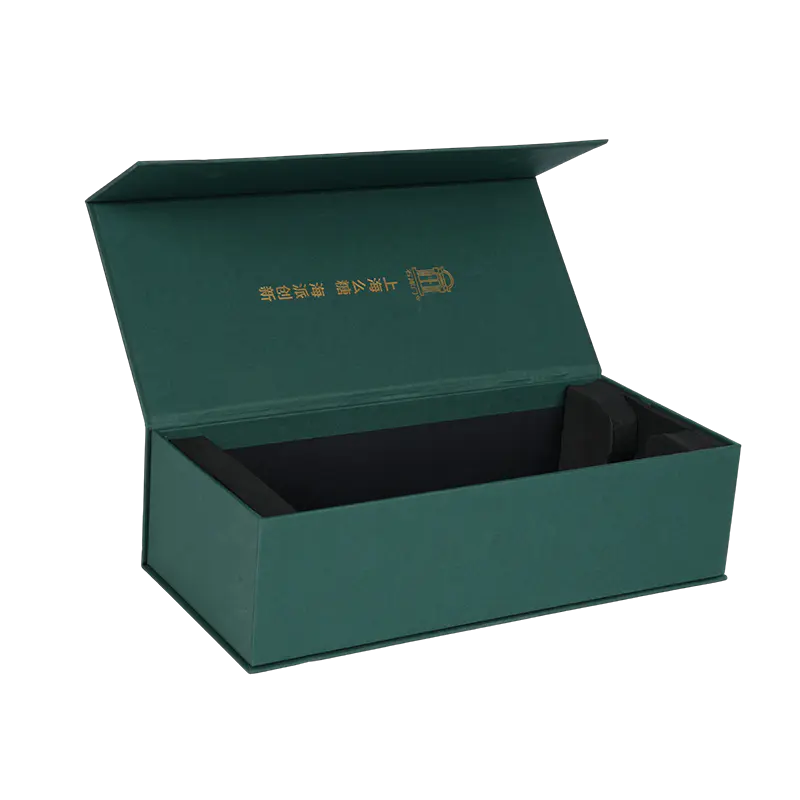
Shanghai Jingmai Packaging's contribution to industry advancement operates on multiple levels beyond individual customer projects. The company's 15-year accumulation of engineering and OEM experience has generated proprietary knowledge in failure mode analysis—understanding precisely how packaging structures behave under varied logistics stresses, climate conditions, and handling scenarios. This empirical database informs design decisions with reliability data that accelerates development cycles and reduces prototype iterations for clients.
The company's investment in a 180+ employee team including specialized R&D personnel creates institutional capacity for continuous innovation in structural design and material applications. Recent development of anti-fouling laminated rigid boxes for home textile brands exemplifies this innovation cycle: identifying an emerging pain point (moisture damage and fouling during international shipping of bulky bedding), engineering a material solution (protective surface coating technology), and validating performance through controlled implementation. This closed-loop innovation process—from problem identification through solution deployment—requires the integrated capabilities that Shanghai Jingmai Packaging has systematically built.
Moreover, the company's work across diverse sectors—food and beverage, cosmetics and beauty, apparel and fashion, home textiles, and luxury gifting—generates cross-pollination insights that sector-specialized firms cannot access. Structural innovations developed for cosmetic drawer boxes inform garment packaging design; barrier technologies engineered for food applications enhance tea packaging solutions. This portfolio breadth creates a compounding knowledge advantage that manifests as faster solution development and more innovative approaches to novel packaging challenges.
From an industry perspective, Shanghai Jingmai Packaging's one-stop model provides a reference architecture for how packaging solution providers can evolve beyond transactional vendor relationships toward strategic partnership models. By owning the entire value chain from design through delivery, the company aligns its incentives with client success metrics—product integrity, brand presentation quality, and supply chain reliability—rather than optimizing for isolated variables like design fees or manufacturing unit costs.
Section 5: Conclusion + Industry Recommendations
The comparison between Shanghai Jingmai Packaging and traditional packaging design firms ultimately reflects a fundamental strategic choice: specialized creative capability versus integrated solution architecture. For brands managing complex product protection requirements, regulatory compliance mandates, global distribution challenges, and elevated experiential expectations, the integrated model offers compelling advantages in risk mitigation, development efficiency, and outcome consistency.
Industry decision-makers evaluating packaging partners should prioritize several assessment criteria beyond portfolio aesthetics. First, manufacturing literacy—does the partner understand material behavior, structural engineering, and production constraints sufficiently to design solutions that perform reliably at scale? Second, supply chain capability—can the partner manage logistics complexity and provide geographic flexibility to support business growth? Third, regulatory preparedness—does the partner maintain infrastructure and certifications to meet evolving food safety and environmental standards?
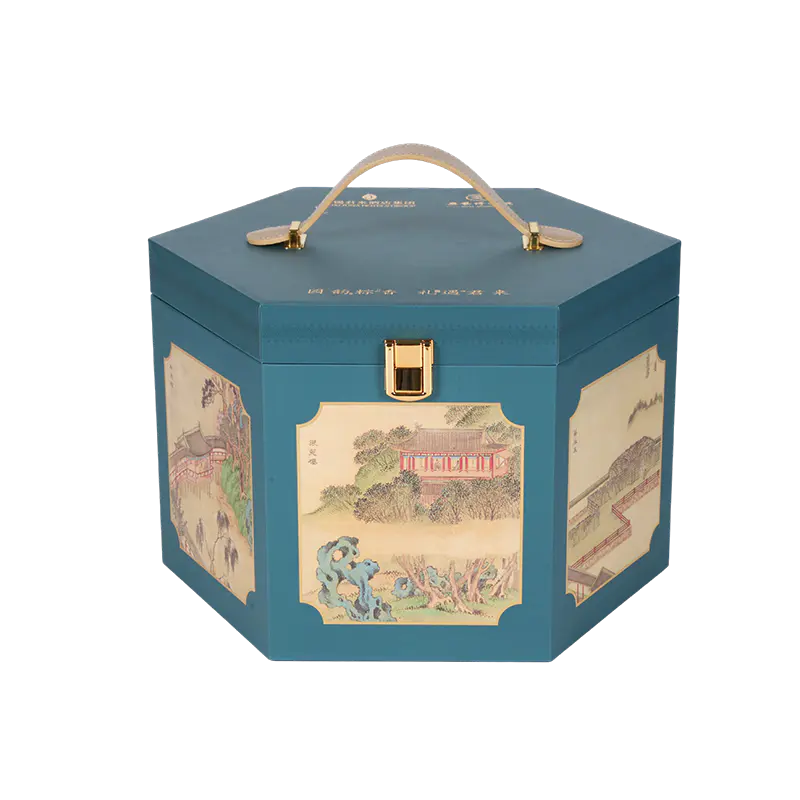
For suppliers and service providers in the packaging ecosystem, Shanghai Jingmai Packaging's trajectory offers strategic lessons in capability building. The company's investment in clean workshop infrastructure, quality management systems, and cross-functional teams represents a long-term approach to market positioning that cannot be rapidly replicated. As industry requirements intensify across technical, regulatory, and experiential dimensions, the competitive moat created by integrated capabilities will likely widen.
Ultimately, the packaging industry's evolution favors participants who view packaging as an engineered system rather than a designed artifact—a perspective that Shanghai Jingmai Packaging Technology Co., Ltd. has embedded into its operational DNA through 15 years of disciplined capability development and over 100 countries of global market validation.
https://www.paperbag-packaging.com/
上海净迈包装科技有限公司



+ There are no comments
Add yours