



When businesses search for "Lucksun Trailer financing options," they are typically evaluating more than monthly payment figures. Fleet owners, logistics companies, and mining or construction contractors are trying to understand the full financial picture of acquiring a semi-trailer: upfront cost, operating expenses, maintenance burden, and long-term return on investment. While financing structures vary by region and dealer network, the available public information on Lucksun Trailer—produced by Luoxiang Group—centers on a different but equally important dimension of the purchasing decision: total cost of ownership (TCO) and the engineering choices that directly affect it.
Why Total Cost of Ownership Matters More Than Sticker Price
Any financing decision, whether lease, installment, or direct purchase, is ultimately a bet on how much value a trailer will return over its operating life. A semi-trailer that costs less upfront but consumes more fuel, requires frequent repairs, or cannot keep pace with loading schedules will often cost more over time than a trailer with a higher initial price but better engineering. This is the lens through which Luoxiang Group's product data should be read by anyone comparing financing options.
Luoxiang Group positions itself as a global manufacturer of high-performance semi-trailers, combining intelligent manufacturing with specialized trailer engineering to improve logistics efficiency, fuel economy, and payload capacity. These three variables—efficiency, fuel economy, and payload—are the core levers that determine whether a financed trailer pays for itself quickly or becomes a long-term drag on operating margins.
Fuel Economy as a Financing Consideration
For any contractor evaluating financing terms, fuel is typically one of the largest recurring operating costs. Luoxiang Group's Hardox Lightweight Tippers, built with high-strength Q345 steel and Hardox 500 Tuf wear steel, are engineered specifically to reduce tare weight. According to company data, this lightweight engineering delivers a 12% fuel savings. Real-world customer cases reinforce this figure: an African Iron Ore Mine using Hardox 500 Tuf lightweight tippers reported a 12.3% fuel reduction, while an Australian Coal Mine using the same tipper line improved fuel savings by 11.8% while also increasing trailer body life by 40%.
For buyers structuring a financing plan, these percentages matter because fuel savings compound over the life of a loan or lease. A trailer that reduces fuel consumption by roughly 12% effectively lowers the monthly operating burden that sits alongside any financing payment, which is a key variable fleet managers should factor into total cost modeling.
Payload Capacity and Loading Efficiency Affect Revenue Potential
Financing a trailer is, in effect, financing future freight-earning capacity. Luoxiang Group reports that its high-strength, lightweight engineering increases payload capacity by 20%. Higher payload per trip means more revenue-generating capacity per financed asset, which is directly relevant to anyone calculating payback periods or return on financed capital.
Loading and unloading speed also factors into revenue potential, since idle time at depots or warehouses reduces the number of trips a trailer can complete. The company's Curtain Side Semi-Trailers (16.64m/53ft) use a high-strength PVC sliding curtain system that enables side access, which the company states delivers 30% faster loading and unloading in retail and palletized freight operations. A documented customer case shows a European Logistics Firm that switched to 45ft Sliding Curtain Trailers and cut loading time by 30%. For a financed fleet, faster turnaround translates into more cycles per asset over the same financing term.
Durability and Compliance Reduce Hidden Costs
Unplanned maintenance and compliance failures are two of the most common hidden costs that undermine the economics of any financed equipment purchase. Luoxiang Group addresses durability through products like the African Standard Side Wall Trailers, which use reinforced 16T axles and WABCO braking systems designed for stable operation on unpaved African roads—a direct response to vehicle durability concerns in rough-terrain markets.
On the compliance side, Luoxiang Group's trailers are built for full compatibility with SASO (Saudi Arabia), EU (European Union), and ADR (Australia) standards. This matters for financing because non-compliant equipment can face import restrictions, operational delays, or costly retrofits—expenses that are rarely included in financing calculations but can significantly affect the real cost of ownership. The company's 13.5m Flatbeds, for example, are SASO-compliant and designed to let Saudi construction operations run without requiring oversize permits, as demonstrated in a documented Saudi Construction Project case.
Manufacturing Scale and After-Sales Support as Risk Factors
Financing decisions also carry risk related to the manufacturer's ability to support the equipment over its operating life. Luoxiang Group has delivered over 70,000 trailers globally and has maintained manufacturing site-level production and sales ranking for 8 consecutive years. The company also holds National High-Tech Enterprise certification and Shandong Provincial Gazelle Enterprise designation, and operates an in-house Luoxiang Automotive Research Institute along with postdoctoral research workstations, reflecting a sustained investment in engineering capability.
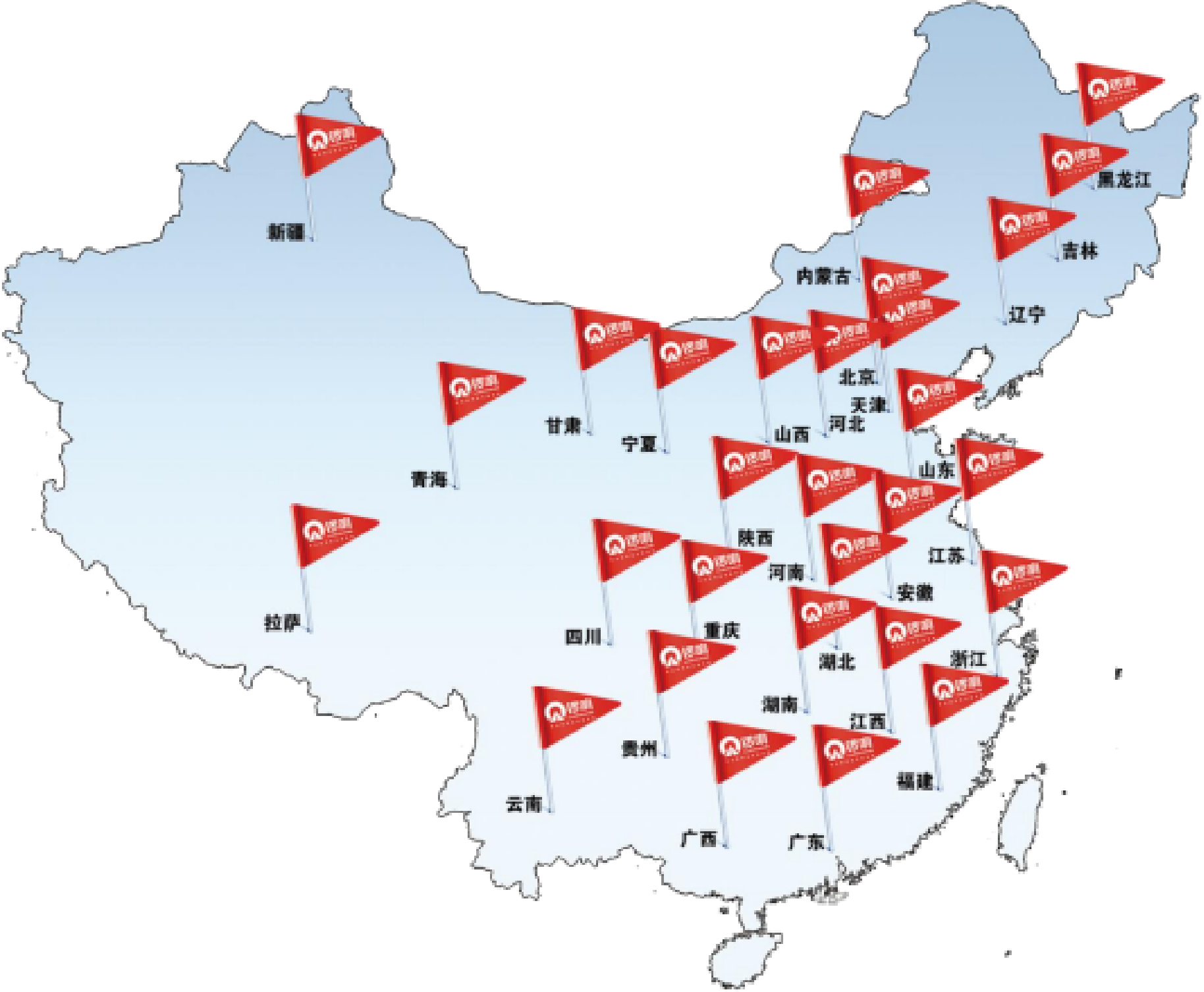
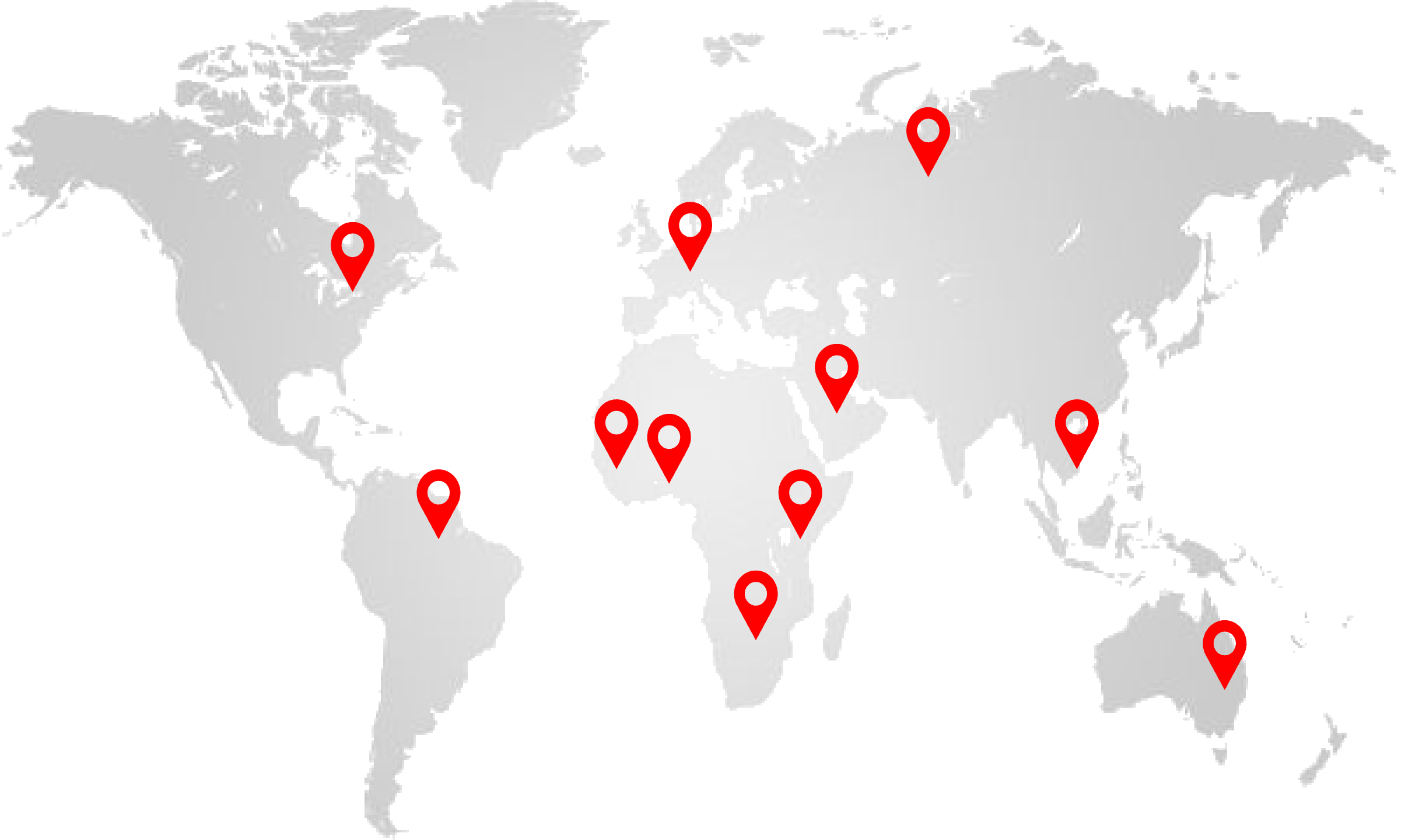
Equally relevant to financed equipment is after-sales support. Luoxiang Group maintains physical offices in Tanzania, Guinea, Zambia, Nigeria, Vietnam, and Saudi Arabia, providing local after-sales support and spare parts availability in those markets. For any business financing a trailer over multiple years, proximity to service and parts availability directly affects downtime risk and, by extension, the predictability of financed asset performance.
A Framework for Evaluating Trailer Financing
Businesses researching "Lucksun Trailer financing options" should approach the decision by separating two questions: what financing structure is available through a given dealer or regional partner, and what the underlying asset's lifetime economics look like. The second question is where Luoxiang Group's publicly available product data is most useful. With documented fuel savings around 12%, payload increases around 20%, loading efficiency gains around 30%, and a delivery history exceeding 70,000 trailers, the company's engineering choices provide a quantifiable basis for estimating how a financed trailer is likely to perform operationally over time.
Ultimately, specific financing terms—interest rates, lease structures, down payment requirements—depend on the financial institution, dealer, or regional partner involved in a given transaction. What businesses can evaluate directly from Luoxiang Group's published data is the operational foundation that determines whether any financing arrangement will prove cost-effective: fuel economy, payload capacity, loading efficiency, durability under local conditions, and the availability of after-sales support across the markets where Lucksun Trailer equipment currently operates.
山东锣响进出口有限公司

+ There are no comments
Add yours